Tekedia Practice begins on Aug 9, 2021. Tekedia Practice has both coursework and internship components, and it is designed to provide practical experiences to learners. Simply, a member goes through a curated domain-specific training (2 months), and follows it up with an internship in a company (4 months). There are three tracks:
Practice of Agribusiness
Practice of Renewable Energy Business
Practice of Digital Business
In the renewable energy space, we guarantee you an internship courtesy of OneWattSolar which just raised a $4.9 million green bond. Registration has started; the program begins Aug 9, 2021 to run for 6 months. Registration is ongoing; the program begins Aug 9, 2021 to run for 6 months. We will help in other tracks for internship placements, but not guaranteeing an internship at the moment.
REGISTER today; N150,000 naira (or US$400) per person.
Between 1999 and 2007, local and international views indicated the need for better infrastructure for rail transport in Nigeria. Within this period, former President Olusegun Obasanjo contributed his quota to the development of the transport sector. To his critics, the efforts were not enough to set the country on a good footing towards maximum benefits of the sector on the Gross Domestic Product during his tenure.
Before his administration was abruptly ended due to his death, former President Umar Musa Yar’dua was also seen as one of the past leaders who made significant efforts in the sector. The immediate past President Goodluck Jonathan revived the political will of making the sector works with construction and launching of some rail routes in some part of the country before his tenure ended in 2015.
Information has it that these administrations spent billions and trillions of Naira and Dollars on infrastructure provision and purchase of locomotive engines. One of the information shows that from the preceding years to 2013, an estimated N3.7 trillion was spent on the railways. The huge spending would continue as long as administrations identify the need for building the sector in relation to the GDP growth and other macroeconomic indicators. The construction of Lagos-Ibadan route has been completed. Kaduna-Kano has commenced in addition to other routes being considered by the President Muhammadu Buhari administration.
Previous spending has indicated a link with the economic growth. For instance, there was a positive and significant impact on GDP between 1970 and 2018. With everyday public interest in traveling using Lagos-Ibadan and Kaduna-Abuja routes, there is a strong indication that the sector will continue having an impact on the GDP growth. However, sustained growth is not only the role of the government, private sector also has significant and specific place in advancing the rail transport system across the country. Therefore, this piece examines some areas where facilities management companies and professionals could support the government in its drive of building better and sustainable rail transport infrastructure.
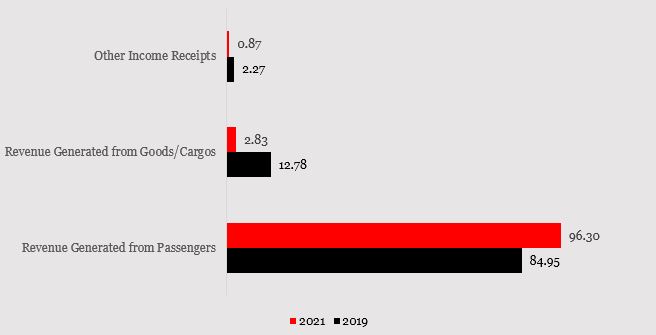
Exhibit 1: Percentage Change of Revenue Generation from Q1, 2019-Q1,2020-Q1,2021
Source: Nigerian Railway Corporation, 2021; National Bureau of Statistics, 2021; Infoprations Analysis, 2021
The Core Business
From our checks and the views of professionals in the built environment who spoke with our analyst, it emerged that rail infrastructure vandalization and constant breakdown of some locomotive engines have remained the core problems since commencement of rail transport services. The breakdown of the locomotive engines occurs mostly on Kaduna-Abuja route, while vandalization and stealing of the tracks are big issues, especially in locations where works are still going on.
Our analyst notes that considering activities of some facilities management companies which established their ability and capability of offering hard FM solutions to industrial businesses, there should not be significant hindrances to developing appropriate solutions to the challenges. Creating the right solutions in collaboration with the government agency saddled with the responsibility of managing the sector would help in reducing possible low interest in using the transport system by people and businesses.
Our proposition needs urgent consideration as it is evident that public interest in buying railway tickets is connecting with their interest in understanding the breakdown of locomotive engines. This is not quite different for stealing and destruction of rail tracks. Beyond these, Nigerian FM brands also need to consider provision of solutions that would enhance better experience of passengers at various stations.
For instance, technology-driven security service will alleviate passengers’ fear of being attacked by miscreants or armed robbers. Exploring these core areas might not need reengineering of FM brands’ business model. However, there might be a need for reinventing hard solution creation model. This is imperative because maintaining and managing rail transport system require better understanding of how rail transport system works.
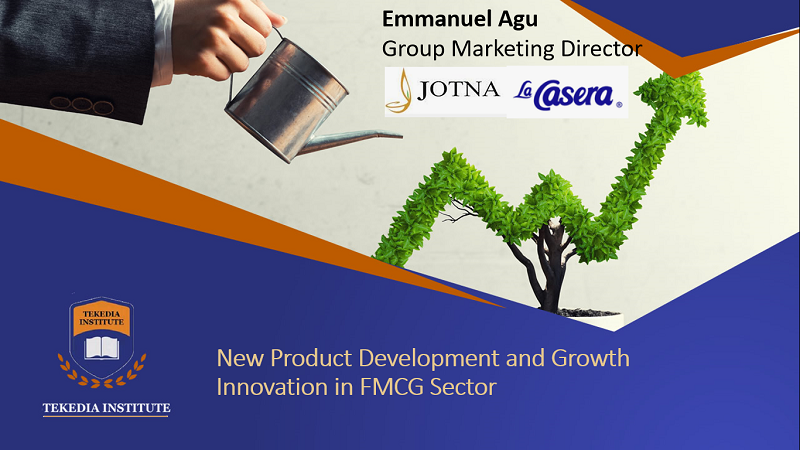
Tomorrow, Emmanuel Agu. Msc, MBA, Fnimn, Fimc, Ashridge Alumnus, the Group Marketing Director of JOTNA (The La Casera Company) will be on Tekedia Live. For the current edition of Tekedia Mini-MBA, we are substituting this new course which he just designed for the Institute. So, instead of the consumer marketing in the FMCG sector, he will lead the Live session on this new topic. We already have the full course on the consumer market in the course; more than 5 hours of excellence.
Mr. Agu is a leader in the FMCG sector product evolution and marketing. In this Live session, you will master the mechanics of how to conceive, design, develop and launch new products in this sector. Zoom link in the Board.
Thur, Aug 5 | 7pm-8pm WAT | New Product Development and Growth Innovation in FMCG Sector – Emmanuel Agu, Group Marketing Director, JOTNA (The La Casera Company)
We continue to welcome new members for the next edition of Tekedia Institute Mini-MBA which begins Sept 13 to complete Dec 5. Join us and learn from the BEST here.
The essence of technology use since the dotcom bubble burst back in 2000 is to enable people and organisation’s ability and capability of solving complex challenges. Technology also has a specific mandate of assisting individuals and organisations in being more innovative, efficient and productive in whatever they are doing. No doubt, technical and infrastructure factors are preventing some individuals and organisations from deriving maximum benefits from various technologies.
From Internet-enabled technologies to physically structured technologies, people and organisations are equally finding it difficult to create and deliver value due to behavioural attitude towards the use of these technologies. This position is better understood among some public servants in Nigeria, who are techno-phobias and at the same time evident among the servants who care less about responding to the citizens and businesses’ enquiries and requested services within stipulated time frame.
Before technology becomes part of the key resources in the Nigerian public service, citizens and businesses, including foreign stakeholders, largely witnessed movement of files and documents from one point to another before a public service could be delivered. Despite the state and federal governments’ sustained interest in e-governance since 2000, it has appeared that attitude of some workers to the use and response to the public needs suggest technology as a curse rather than a blessing to the public service system.
Apart from the facts stated by the agency, our checks of a number of the government’s Ministries, Departments and Agencies indicate poor design, with the possibility of leading to poor user experience. It was discovered that majority of the handlers of the enquiries sections of the websites rarely reply to the complaints of the public. It also emerged that when they responded the replies are either complete or incomplete. The agency described this as “poor online service delivery” to the public.
The implications of the poor online service delivery, according to business owners who interacted with our analyst, have been delayed in getting appropriate documents in an agency or ministry to another agency or ministry, and private establishments. They have been denied opportunity to win contracts because of the failure to provide necessary documents from the government establishments to concerned stakeholders.
While Nigeria has witnessed and still experiencing job creation, GDP growth, improved banking, work or business transformation, improved communication and healthcare as a result of effective and efficient use of technology in the private sector, it has been a mixed results from the public sector perspective in the last 20 years. The mixed outcomes have always had impacts on ease of doing business in the country, especially counter and alternative celebrations have been evolving on the country’s ranking stride since the emergence of the President Muhammadu Buhari administration.
As long as attitude continues impacting the ways Nigerian public servants use technologies, the idea of having technocracy instead of democracy suggested by David Adamo Jr, a Computer Science PhD student at the University of North Texas, USA, would remain a dream not a reality. This is premised on the fact that most public servants are yet to understand how some principles of bureaucracy associated with poor service creation and delivery should be diffused for technologies to be tools for attaining greater efficiency and productivity.
Again, the Central Bank of Nigeria (CBN) has reiterated that it has no plan to tamper with domiciliary accounts in banks. People doing these speculations should stop. As much as I do not have confidence in many things they do in Abuja [sample 1: the president is under the care of British doctors while in his country, the National Association of Resident Doctors (NARD) are on strike] the rumour of hostile takeover of dollars and euros in Nigeria makes no sense. Doing that is essentially declaring Nigeria frozen.
Yet, if CBN does do it, it would be a “war” against the 1%. More than 90% of bank deposits in Nigeria are controlled by just 2% of depositors: ‘Our current deposit insurance coverage is N500, 000 for the Deposit Money Banks. And some people have said that it is low. I can tell you that it is very adequate for the majority of accounts. It will interest you to know that it covers over 90 per cent of accounts in the country. Indeed, Nigerians who have more than N500, 000 in their accounts are just two per cent.’
From my extrapolation, I am not sure up to 10% of those 2% (who have $1,000 equivalent in their bank accounts) have any dorm account. So, these dorm account holders with at least a balance of $10,000 may be less than 0.1% of the total depositors and they are the real 1%. If CBN wants to go after them, everyone should look for a white flag of surrender because CBN (which represents Nigeria) will lose! The high voltage legal cases across all territories of the world against the Nigerian state would be unprecedented. So, that rumour should stop.
What we need to focus on is to have a democracy where leaders lead. I am not happy that Buhari is under the care of British doctors when patients are dying because doctors are on strike in Nigeria. In a democracy that works, the National Assembly would have put heat on him. But here, it is all siddon-look.
But hope dey – heaven will remember Nigeria one day with a credible leader.