DD
MM
YYYY

PAGES

DD
MM
YYYY

spot_img

PAGES

Home Blog Page 5641

The Biden Administration Begins Normalization of Bitcoin and Cryptocurrency Sector

2

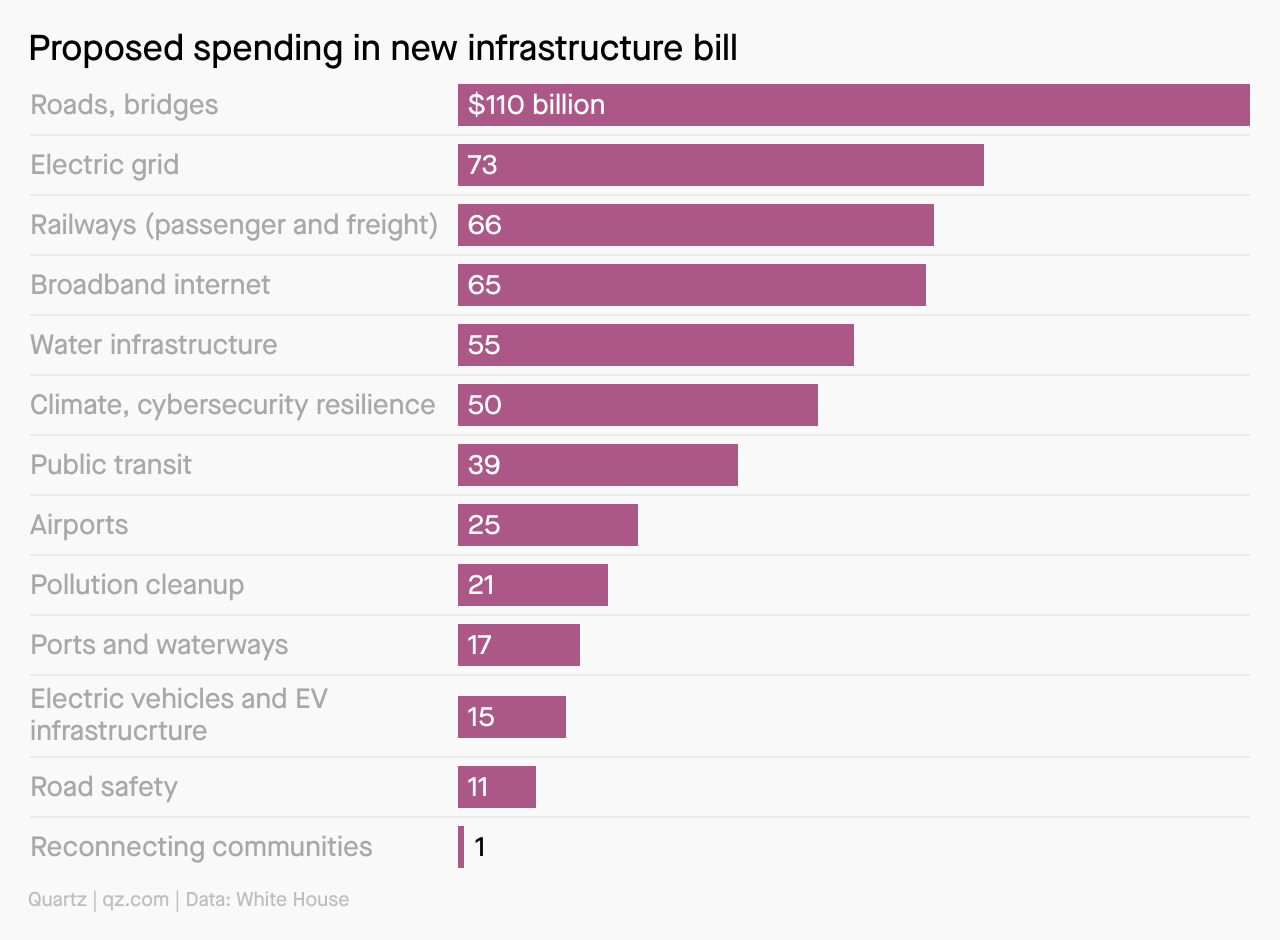
The content of the US Infrastructure Investment and Jobs Act shows that crypto cannot hide and the government wants technologies that will normalize crypto: ” Buried in the bill is a provision that would require the reporting of cryptocurrency transactions to the I.R.S”. IRS is the US tax agency.

“The industry is fighting this, calling it a job killer, but it looks like it just puts crypto in the same category as many other financial assets. Maybe it’s just me, but if tax avoidance is central to a relatively developed industry’s growth plan, it doesn’t sound like a winning political argument.” (Fortune)

As that was happening, the Securities and Exchange Commission’s head threw a bomb against the cryptocurrency sector, calling for more regulation and oversight of digital currencies and assets. “Right now, we just don’t have enough investor protection in crypto,” said SEC Chairman Gary Gensler, who went on to compare the assets to the “Wild West.”

The Securities and Exchange Commission will regulate cryptocurrency markets to the maximum extent possible using its existing authority, Chairman Gary Gensler said Tuesday, while also calling on Congress to grant the agency more scope and resources to oversee the sector.

Calling the asset class rife with “fraud, scams and abuse,” Mr. Gensler signaled the SEC is likely to become more active in policing crypto trading and lending platforms, as well as so-called stablecoins.

“We just don’t have enough investor protection in crypto. Frankly, at this time, it’s more like the Wild West,” Mr. Gensler said in prepared remarks to the Aspen Security Forum. “We have taken and will continue to take our authorities as far as they go.”

U.S. financial regulators have struggled to get their arms around the fast-growing world of cryptocurrency and related financial technologies. Unlike in the securities and derivatives markets, no single regulator oversees crypto exchanges or brokers. As the market value of the asset class has exploded to more than a trillion dollars, so have scams.

Mr. Gensler said large parts of the sector operate outside of regulatory frameworks that seek to protect investors and consumers, reduce crime, promote financial stability and protect national security.

Bitcoin went marginally down after his remarks. But that may not be a bad thing. Yes, by the time these processes are over, the stable state of Bitcoin will arrive, and by then it would become like a typical asset class which would be more widely investable.

And of course, the illusion of crypto “hiding’ from government will go because government will be in charge!

Free Tickets for Helicopter Rides in Lagos

2

Good People and amazing LinkedIn community, I am going to share tickets here for free flights on helicopters in Lagos! Something amazing is coming….stay tuned Africa. Fly over traffic. And arrive in style….this month, people.


Pegasus Spyware: Technology Dystopia Is Here

0

After the Pegasus scandal broke out, AWS disconnected cloud sites linked to NSO Group. Pegasus is one of NSO Group’s products. This is because NSO Group used AWS CloudFront platform – one of its content delivery infrastructures that allow it to transfer data, videos, apps, and APIs quickly and safely. It gives it the capacity to conduct the early stages of the attacks against mobile phones. Also, AWS CloudFront enables it to breach and conceal its surveillance activity. AWS alleged that Pegasus has significantly misused and it has undermined the freedom of the press, freedom of thought, and free and open democracies.

Pegasus scandal has brought us to an epochal time with frightening dimensions as sophisticated spyware of its kind comes into the open market. We should expect to see similar and even more sophisticated tools with vicious potentials to bring businesses and agencies of government to their knees. As a result, Edward Snowden has called for an international spyware ban. Today, no device is safe. If what we saw with Eternal Blue (Wannacry saga) is anything to go by, we may experience the same fate with Pegasus as its source code finds its way onto the dark web, to be weaponized by criminal hackers. The DYSTOPIA era may have just arrived.

Right to repair

In the USA, we have seen the advancement of legislation pushing for the ‘right to repair’. But experts worry that spyware firms like NSO Group might get a boost from such. Noting that NSO Group spyware which exploited mobile device operating systems should compel policymakers to ensure that software designs continue to enjoy maximum protection. More so, critically there’s a need for policy rethink, we should look into NSO Group’s “zero-click” exploits, which leverage flaws in the phone’s operating system to access our devices without any help. Firming up the security of smartphone OS is key.

The experts argue that if we allow the device to be made deliberately or indirectly vulnerable through making their source codes and patented design schematics easily accessible, we will be inevitably making our digital life hackable. While we can make repairs happen at scale, we mustn’t be compromising data security, privacy, safety, and other legitimate goals advanced by manufacturers. We must address the fears of potentially degrading, destroying, or compromising our devices.

NSO Group’s Pegasus impact has reverberated across the Global South. Nigeria has even gone to the spyware market too, to bring in a similar capacity in its fight against terrorists and also setting the stage for grievous abuse. Using Pegasus-style malware may be appealing in critical circumstances, yet it is time for us to take deep thinking into the consequences of having an entity with such brutal capacity.

Global regulation?

We need global regulations to address its abuse. Spywares and their corporate owners have to be held accountable for misuse by entrenching oversight in the way they are deployed. We have to move beyond debates, as enforcing controls on the creation and sale of these corporate spyware has become important. This is because Pegasus and future spyware tools represent a significant threat to both our privacy and human civilization.

The question on everyone’s lips is, “Could Pegasus have slipped into private hands?” That fear must be entertained as the world dives deeper into digitalization and smartphone sophistry. No one should be trusted with spyware of any sort.

With accusations that 50,000 people targeted by NSO found that Pegasus was tracking 65 executives, 85 activists, 189 journalists, and more than 600 government officials, we have to examine the import for continually allowing private companies to wield such brutal capacity in exercising judgment over the key to our digital locks.

Microsoft called NSO Group “private-sector offensive actors” and “mercenaries.” The fear of conferring sovereign immunity protections to NSO Group is that it may it unaccountable to anyone, such status is the exclusive reserve of the State. Our cyberspace is morphing at a rapid pace. That is the reason we have to raise our awareness about new surveillance levels and most importantly upgrade our digital skills to address complex legal issues and challenges that have cropped up at the dawn of this new era of cyberspace.

Finally, since we now have new technological advancements in surveillance techniques, we must see it as a necessity to insert appropriate checks and balances in our various legal structures, to prevent the misuse of such advancements. We must democratize the capabilities to detect spyware such as Pegasus. All nations who understand this threat to our civilization and democracy must do something about banning the trade in commercial spyware technologies, which is completely under-regulated across the world. We must appreciate the fact that spytech such as Pegasus is a weapon and taking away the profit motive will save us from its liabilities.

Tekedia Practice Begins Aug 9 – Register Today; We Guarantee Internship In Renewable Energy Track

6

Tekedia Practice begins on Aug 9, 2021. Tekedia Practice has both coursework and internship components, and it  is designed to provide practical experiences to learners. Simply, a member goes through a curated domain-specific training (2 months), and follows it up with an internship in a company (4 months). There are three tracks:

  • Practice of Agribusiness
  • Practice of Renewable Energy Business
  • Practice of Digital Business

In the renewable energy space, we guarantee you an internship courtesy of OneWattSolar which just raised a $4.9 million green bond. Registration has started; the program begins Aug 9, 2021 to run for 6 months. Registration is ongoing; the program begins Aug 9, 2021 to run for 6 months. We will help in other tracks for internship placements, but not guaranteeing an internship at the moment.

REGISTER today; N150,000 naira (or US$400) per person.

The Core Business of Facilities Management Brands in Nigeria’s Rail Transport Sector

0

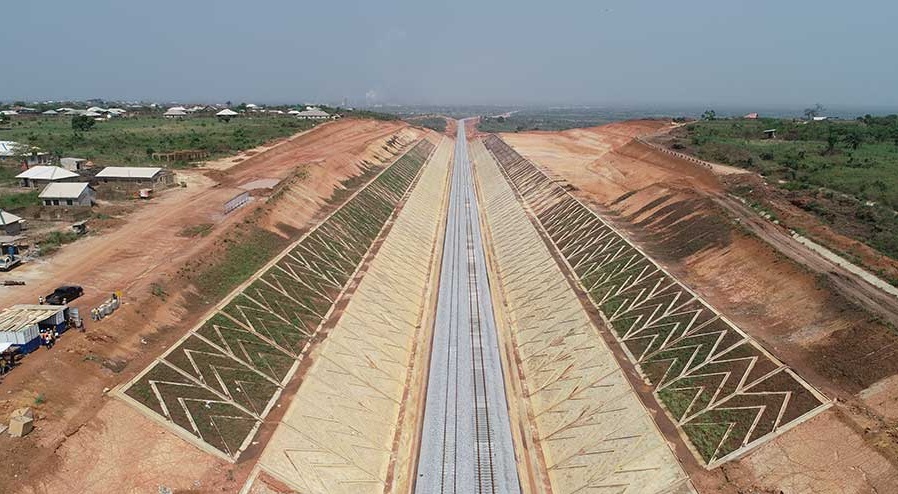
Between 1999 and 2007, local and international views indicated the need for better infrastructure for rail transport in Nigeria. Within this period, former President Olusegun Obasanjo contributed his quota to the development of the transport sector. To his critics, the efforts were not enough to set the country on a good footing towards maximum benefits of the sector on the Gross Domestic Product during his tenure.

Before his administration was abruptly ended due to his death, former President Umar Musa Yar’dua was also seen as one of the past leaders who made significant efforts in the sector. The immediate past President Goodluck Jonathan revived the political will of making the sector works with construction and launching of some rail routes in some part of the country before his tenure ended in 2015.

Information has it that these administrations spent billions and trillions of Naira and Dollars on infrastructure provision and purchase of locomotive engines. One of the information shows that from the preceding years to 2013, an estimated N3.7 trillion was spent on the railways. The huge spending would continue as long as administrations identify the need for building the sector in relation to the GDP growth and other macroeconomic indicators. The construction of Lagos-Ibadan route has been completed. Kaduna-Kano has commenced in addition to other routes being considered by the President Muhammadu Buhari administration.

Previous spending has indicated a link with the economic growth. For instance, there was a positive and significant impact on GDP between 1970 and 2018. With everyday public interest in traveling using Lagos-Ibadan and Kaduna-Abuja routes, there is a strong indication that the sector will continue having an impact on the GDP growth. However, sustained growth is not only the role of the government, private sector also has significant and specific place in advancing the rail transport system across the country. Therefore, this piece examines some areas where facilities management companies and professionals could support the government in its drive of building better and sustainable rail transport infrastructure.

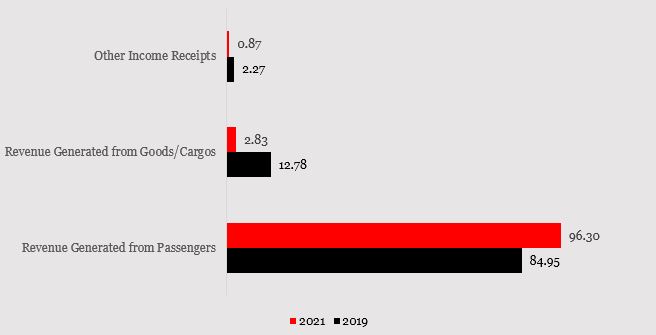
Exhibit 1: Percentage Change of Revenue Generation from Q1, 2019-Q1,2020-Q1,2021

Source: Nigerian Railway Corporation, 2021; National Bureau of Statistics, 2021; Infoprations Analysis, 2021

The Core Business

From our checks and the views of professionals in the built environment who spoke with our analyst, it emerged that rail infrastructure vandalization and constant breakdown of some locomotive engines have remained the core problems since commencement of rail transport services. The breakdown of the locomotive engines occurs mostly on Kaduna-Abuja route, while vandalization and stealing of the tracks are big issues, especially in locations where works are still going on.

Our analyst notes that considering activities of some facilities management companies which established their ability and capability of offering hard FM solutions to industrial businesses, there should not be significant hindrances to developing appropriate solutions to the challenges. Creating the right solutions in collaboration with the government agency saddled with the responsibility of managing the sector would help in reducing possible low interest in using the transport system by people and businesses.

Our proposition needs urgent consideration as it is evident that public interest in buying railway tickets is connecting with their interest in understanding the breakdown of locomotive engines. This is not quite different for stealing and destruction of rail tracks. Beyond these, Nigerian FM brands also need to consider provision of solutions that would enhance better experience of passengers at various stations.

For instance, technology-driven security service will alleviate passengers’ fear of being attacked by miscreants or armed robbers. Exploring these core areas might not need reengineering of FM brands’ business model. However, there might be a need for reinventing hard solution creation model. This is imperative because maintaining and managing rail transport system require better understanding of how rail transport system works.