DD
MM
YYYY

PAGES

DD
MM
YYYY

spot_img

PAGES

Home Blog Page 5648

Reddit Hits $10 Billion Valuation After A New Round

0

Reddit, announced on Thursday it is now valued at more than $10 billion after raising an additional $410 million in funding, with the final round expected to grow to up to $700 million.

The round was led by Fidelity Investments to push the valuation of the self-proclaimed ‘front page of the internet’ up.

The company has continued to build and sanitize its business, removing racist, misogynist, and otherwise controversial communities, as it prepares to go public at some point in the future.

“We are still planning on going public, but we don’t have a firm timeline there yet,” Reddit’s co-founder and CEO Steve Huffman told The New York Times in an interview. “All good companies should go public when they can.”

The company previously raised $250 million in funding earlier this year for a valuation of $6 billion. But Huffman told the Times the company was approached with this recent financing round by Fidelity Investments and were made “an offer that we couldn’t refuse.”

Reddit makes most its money from advertising on the site, and although it’s a minnow compared to the likes of Facebook and Google, it’s growing its business quickly. The company says it made $100 million in advertising revenue in the second quarter of 2021, up 192 percent compared to the same period last year. Though for context, Google made $61.9 billion in this year’s second quarter, mostly from YouTube and Search advertising.

However, Huffman said the social media platform has come a long way.

“We’ve grown up in the shadow of Facebook and Google, and pretty much every dollar we make we’ve had to fight for,” he said.

Reddit now has roughly 52 million daily users (compared to 1.85 billion daily Facebook users) and more than 100,000 active sub-reddits. Earlier this year, the company said it planned to double its staff count by the end of 2021 to around 1,400 employees.

Huffman told the Times that the new funding would be used to improve product features, focusing on how to make the site easier for first-time users and help its communities expand internationally. He said Reddit is working to enhance its video products to expand its advertising revenue, part of it is its self-service advertising system targeting small and medium-size business marketers.

“The first priority on the product is just making Reddit awesome,” he told Times. “We want to build what is best for new users, because over time it will be best for everyone.”

Part of the plan is expanding internationally. Huffman said the platform has been US-focused and he intends to change that.

Winning With The One Oasis Strategy

1

The One Oasis Strategy is the proposition that if the best product drives key investments in a firm, it has the capacity to help other products in the business. Other products would feed from the best product, and overall, the company would flourish. Your best product is your one oasis; your business draws life from it, just as the oasis supports the inhabitants in a desert.

As you anchor critical investments to make the one oasis the best in the industry category, you need to have a double or multiple strategy to capture value out of it. It is symphonic like a great orchestra: the one oasis could be the known brand, but capturing value in the business could come from other areas.

In other words, most times, the brands which make companies popular are not where they generate most financial value. Amazon is known for ecommerce, but the bulk of its profits come from AWS. But without the ecommerce, AWS would not have been built. AWS is the play on Amazon’s one oasis which is the ecommerce!

What is your one oasis? What are your plays to capture value from it? I wrote in Harvard how this strategy shapes my investment calls.


Comment on LinkedIn Feed

Question: A member asked for the difference between One Oasis and Cash Cow?

Response by E.A.: “The concept is a bit different. Cash cow is a product or service that gives a lot of profit. One oasis may be a product or service that does not generate any profit but very vital to enable other products and services the company provides to make a lot of profit. Example Alibaba offers logistics at a loss to help Alipay grow. Amazon runs e-commerce at a loss because AWS is the goose that lays the golden eggs. This is possible because loss making e-commerce and logistics provides the critical number of people and data needed to drive other more profitable businesses.”

cash cow

Something Big Is Coming from BusinessDay for Tekedia Mini-MBA

0

Good People, the best business journalism in Africa, BusinessDay, has something amazing for the world of business. It’s coming…from the best team. I read BusinessDay because the best way to WIN markets is to develop frameworks, models and systems with flavours of trusted, reliable and on-time market news! What do you read as Shakespeare put in the mouth of Lord Polonius in the Hamlet?

Lord Polonius: “What do you read, my lord?”

Hamlet: “Words, words, words”.

Is your business education also providing a mechanism to help you read business words? Wait for something amazing!

Tekedia Institute Mini-MBA >> business education for innovators and project champions on the tenet of entrepreneurial capitalism, postulating Innovation, Growth and Digital Execution. Nations rise when pioneering entrepreneurs emerge; we’re agents for building tomorrow’s Africa.

US Congress And Unbundling Google-Apple App Store Duopoly

1

Option A: a digital market with only one payment processor and means to pay (Apple iOS)

Option B: a digital market where any merchant can build a preferred payment processor (what a new US bill wants).

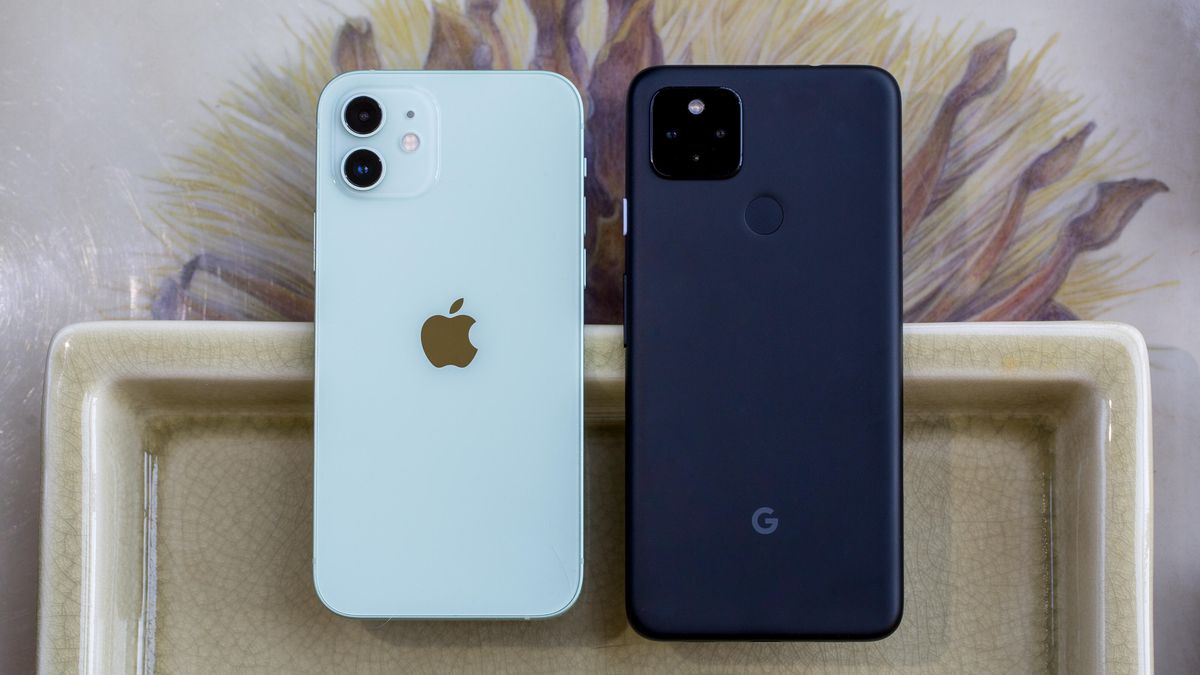
A new US bill wants to break the duopoly of the Google Android store and Apple iOS store. Among others, it wants to give people the opportunity to setup their own payment systems within these ecosystems: “The legislation applies to companies that own or control an App Store with more than 50 million users, and it would prohibit Apple from forcing developers to use its own in-app purchase system, allowing developers to distribute apps through alternative app stores.”

On Wednesday, a new bipartisan antitrust legislation that targets Apple’s App Store and Google’s Play Store was introduced by three U.S. Congress members, in a first attempt to change how app stores are dominated by Google and Apple operate.

US Senators Richard Blumenthal (D-Conn.), Marsha Blackburn (R-Tenn.), and Amy Klobuchar (D-Minn.) introduced their Open App Markets Act.

“Google and Apple have gatekeeper control of the two dominant mobile operating systems and their app stores that allow them to exclusively dictate the terms of the app market, inhibiting competition and restricting consumer choice,” the lawmakers said.

I have checked Google and Apple stocks and the bill did not influence markets. In other words, investors did not see the new rules as a threat. If you force Apple to provide access, it can do so if that becomes the law but it can put a notice “this seller processes payments outside Apple” – a critical warning that may even affect the reputation of the merchant within the ecosystem.

This is not new. Amazon lists items after search and tells you the items which are fulfilled by Amazon. Typically, if prices are relatively the same, many buy from the items which are under the control of Amazon, instead of dealing with merchants they do not know. If Apple does not provide the confidence on the payment system, many will stop spending.

Yet, there needs to be a balance on the fees but Congress must be very careful not to legislate out what makes people use these apps  – security of payment in trusted platforms- in the age when cyber related issues have ballooned.

The US Moves to Break Up Apple-Google App Store Duopoly

The US Moves to Break Up Apple-Google App Store Duopoly

0

On Wednesday, a new bipartisan antitrust legislation that targets Apple’s App Store and Google’s Play Store, was introduced by three U.S. Congress members, in a first attempt to change how app stores are dominated by Google and Apple operate.

US Senators Richard Blumenthal (D-Conn.), Marsha Blackburn (R-Tenn.), and Amy Klobuchar (D-Minn.) introduced their Open App Markets Act.

“Google and Apple have gatekeeper control of the two dominant mobile operating systems and their app stores that allow them to exclusively dictate the terms of the app market, inhibiting competition and restricting consumer choice,” the lawmakers said.

The legislation applies to companies that own or control an App Store with more than 50 million users, and it would prohibit Apple from forcing developers to use its own in-app purchase system, allowing developers to distribute apps through alternative app stores.

The summary of the legislation highlights the government’s concern over Google and Apple’s dominance which has stifled competition and gives smaller players a little or no say in the app market. The summary of the legislation is as follows:

The Open App Markets Act would protect developers’ rights to tell consumers about lower prices and offer competitive pricing; protect sideloading of apps; open up competitive avenues for startup apps, third party app stores, and payment services; make it possible for developers to offer new experiences that take advantage of consumer device features; give consumers more control over their devices; prevent app stores from disadvantaging developers; and set safeguards to continue to protect privacy, security, and safety of consumers.

It would also prohibit the app-store operators from requiring developers to use the Apple and Google in-app payment systems and from imposing terms that block or penalize developers who offer the same app at a different price elsewhere. Apple and Google also would not be allowed to prefer their own apps in search “unreasonably,” which is defined as “applying ranking schemes or algorithms that prioritize apps” simply because they are owned by Apple and Google or their business partners. Clearly disclosed advertising is exempt from that provision.

To help third-party software developers, the bill says Apple and Google must provide “access to operating system interfaces, development information, and hardware and software features” to developers “on a timely basis and on terms that are equivalent or functionally equivalent” to the terms that apply to Apple and Google or their business partners.

Violations of the bill would be considered unfair methods of competition under US law. The Federal Trade Commission, US attorney general, and state attorneys general would be able to sue companies over violations. Developers who are “injured by reason of anything forbidden in this act” would be able to sue the companies for damages and injunctive relief.

A group funded by Apple and Google sent a statement to the media claiming that the proposed law “is a finger in the eye of anyone who bought an iPhone or Android because the phones and their app stores are safe, reliable, and easy to use.”

The statement came from the “Chamber of Progress,” which calls itself “a new center-left tech industry policy coalition promoting technology’s progressive future.”

“I don’t see any consumers marching in Washington demanding that Congress make their smartphones dumber. And Congress has better things to do than intervene in a multi-million dollar dispute between businesses,” said Chamber of Progress CEO Adam Kovacevich, who was formerly a longtime Google lobbyist.

In a separate statement, Apple defended its app store practice, saying that “our focus is on maintaining an App Store where people can have confidence that every app must meet our rigorous guidelines and their privacy and security is protected,” while Google has pointed out that Android is more open to app stores and sideloaded apps than iOS. But despite Android’s openness relative to iOS, 36 states sued Google last month, claiming it worked to “preemptively quash” competing app stores.

Blackburn said that “Apple and Google want to prevent developers and consumers from using third-party app stores that would threaten their bottom line,” while Blumenthal said the two companies “have squashed competitors and kept consumers in the dark—pocketing hefty windfalls while acting as supposedly benevolent gatekeepers of this multi-billion dollar market.”

“This legislation will tear down coercive anticompetitive walls in the app economy, giving consumers more choices and smaller startup tech companies a fighting chance,” Blumenthal said.

Last month, after the 36 states filed their antitrust lawsuit against Google, it called the complaint meritless and said it is “strange that a group of state attorneys general chose to file a lawsuit attacking a system that provides more openness and choice than others.”

For developers and many app users, the legislation is long overdue. The “Coalition for App Fairness,” with members such as Spotify, Epic Games, Match Group, Basecamp, ProtonMail, and Deezer, are all backing the Open App Markets Act, hoping it would ease the monopolistic policies that have sometimes landed them in court.

“The Open App Markets Act would fix a broken app marketplace by barring app stores from requiring apps to use their in-app payment systems, through which they charge exorbitant fees and block communications between developers and their own customers,” the group said. “It would also strengthen consumer freedom by allowing people to choose and install the app store and default apps that make the most sense for them and easily delete preinstalled apps they don’t want to use.”

The legislation is one in many antitrust issues Google and Apple are facing. The speedy response from Google and Apple shows the impact the bill will have on their app operations if it becomes law will be immense – it will be the end of app store duopoly.