DD
MM
YYYY

PAGES

DD
MM
YYYY

spot_img

PAGES

Home Blog Page 5649

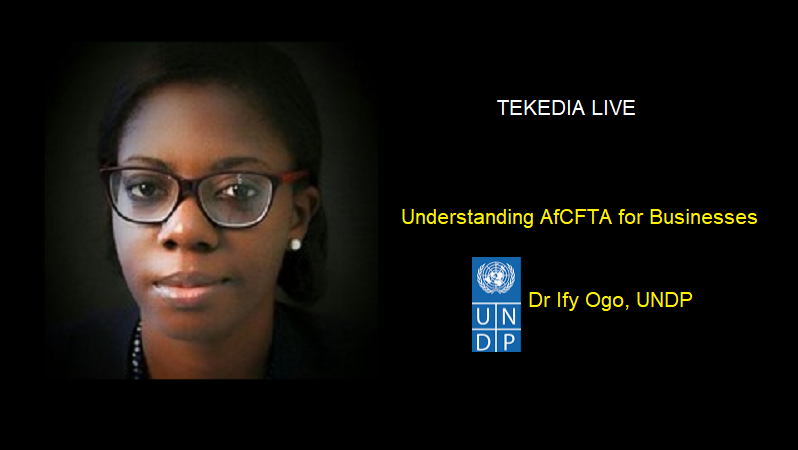
Tekedia Live – Understanding AfCFTA for Businesses by Dr. Ify Ogo, UNDP, July 27

0

A brilliant legal economist and trade specialist, Dr. Ify Ogo of United Nations Dev Programme (UNDP), is our faculty for Tekedia Live, the zoom sessions of Tekedia Mini-MBA, on July 27 at 7pm WAT. Dr Ogo will educate on “Understanding AfCFTA for Businesses”.

Tue, July 27 | 7pm-8pm WAT | Understanding AfCFTA for Businesses – Dr. Ify Ogo, UNDP  

Dr. Ogo’s experience includes working as the UNDP Regional Coordination Specialist on the AfCFTA, as well as Trade Policy Expert at the African Trade Policy Centre, UN Economic Commission for Africa, where she led the trade in services work stream, and was a focal point for trade diversification covering the digital economy, blue economy and green economy portfolios. Ify has also supported the AfCFTA negotiations, as well as country-level implementation processes. Other roles have included investment advisory within the private and public sectors.

Zoom link in the Board. Tekedia Mini-MBA >> learn from the best. Registration continues for the next edition of Tekedia Mini-MBA.

Cost of Coking Gas Rises by More than 60% in Seven Months

0

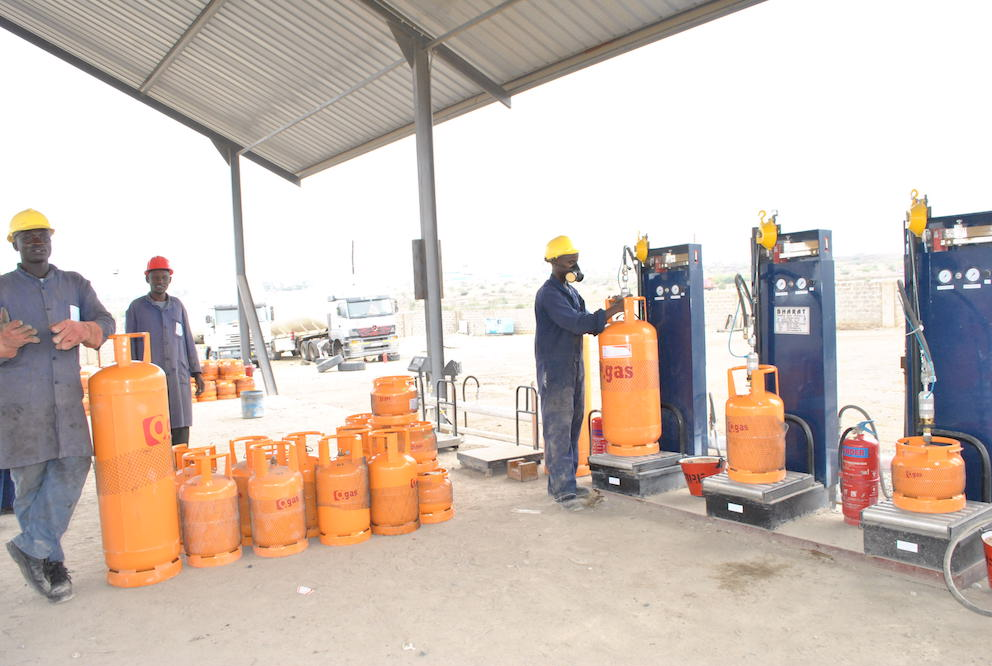
The cost of Liquefied Petroleum Gas (LPG), popularly known as cooking gas, has risen by more than 60 per cent between December 2020 and July this year.

The price now goes as high as N500 per kilogramme, forcing many Nigerians to adopt charcoal, kerosene and firewood as alternative fuels, amid the biting economic situation in the country.

According to The PUNCH,  the price of 20 metric tonnes of LPG, which was sold to marketers in the country for N5.5m in January, is now N7.2m as of Thursday, July 22, 2021.

In Nigeria, biomass is the major energy source, contributing about 78 per cent of Nigeria’s primary energy supply. According to the International Centre for Energy and Environmental Development (ICEED), over 70 per cent of households in Nigeria use firewood as a source of cooking energy, a development that has led to deforestation, climate change and caused the death of over 93, 000 Nigerians yearly.

This rooted culture of using firewood, sawdust and charcoal as cooking energy sources over LPG that is cleaner and safer, is likely going to continue if the current high price of the product is not addressed.

In its Petroleum Product Import and consumption report, the National Bureau of Statistics (NBS) said   the country imported 5.6 billion litres of petrol in Q2  and 5.09 billion litres  in Q3 2019 . The bureau stated that the country imported  354.7 million litres  of Liquefied Petroleum Gas (LNG)  in Q2  and 429.38 million litres  in Q3 2019.

Further breakdown of the report showed that the country consumed 4.9 billion litres of petrol in Q3 2019, compared to the 5.18 billion litres consumed in Q2, which indicated a decrease of 1.09 billion litres in consumption in 3 months. The volume of petrol imported into the country in September in the year under review, stood at 1.46 billion litres, dropping from 1.64 billion litres in August and 1.99 billion litres in July 2019. The report also showed that the importation of Petrol reduced by 9.13 percent, while the importation of LPG (Cooking Gas) increased by 21 percent.

The continuous increase in the price of LPG is not unconnected with the country’s overreliance on importation of the product and the demand for scarce foreign exchange by marketers to import.

The Central Bank of Nigeria (CBN) in May, adopted the NAFEX exchange rate of N410.25 per dollar as its official exchange rate.

As a result of the devaluation of the naira, marketers now spend what they used in buying 40 metric tonnes some months ago to get 20 metric tonnes.

In recent years, the Federal Government has initiated a number of actions to reaffirm its commitment to ending the practice of gas flaring in the country’s oil fields. As part of its commitment, the government ratified the Paris Climate Change Agreement and is a signatory to the Global Gas Flaring Partnership (GGFR) principles for global flare-out by 2030. These efforts have led to increase in domestic usage of gas in the country.

In January this year, the Petroleum Products Pricing Regulatory Agency (PPPRA) in a statement said the country’s domestic consumption of LPG) exceeded one million Metric Tonnes (MT) in 2020.

“Nigeria consumed 840,594.37 MT LPG in 2019, indicating an increase of 60.5 per cent over 635,452.061MT recorded in 2018.

“This steady and sustained pattern of growth culminating in the over one million metric tonnes of LPG domestic consumption milestone in 2020 has placed the country 1st in West Africa and one of the leading LPG consuming nations on the continent.

“With this laudable feat, the country is on track to meet the five million MT by 2022 target, set in the Nigeria Gas Policy (NGP) of 2017,” the agency said in a statement signed by its Executive Secretary, Abdulkadir Saidu.

As part of the solutions to the current hike in the price of the product, the Federal Government needs to develop a workable framework with the Nigeria Liquefied Natural Gas (NLNG), so that the company can increase its annual supply to the domestic market.

The board of NLNG in the Q3 of last year had approved the increase of its supply to the domestic market from 350,000 metric tonnes to 450,000 metric tonnes. But this is not enough to meet domestic demand.

The Federal Government encouraging the NLNG to increase its supply of the product to at least 1.5 million metric tonnes, will not only meet domestic demand, but will also ease the demand for scarce foreign exchange, and sustained the country’s commitment to Paris Climate Change Agreement.

AXA Mansard Offers FULL Scholarships To Many To Attend Tekedia Mini-MBA

0

It was a great moment at AXA Mansard’s Out of the Box event last week. Yetunde Osanyin, CFA summarized the outcome here  and added this line: “Thanks to the AXA Mansard team for putting together an amazing session and for giving out Tekedia Institute MBA Scholarship to some of the participants”.

Yes, AXA Mansard is sponsoring makers, innovators and project champions to Tekedia Institute Mini-MBA on full scholarships. We look forward to co-learn and co-advance with these recipients.

Thank you AXA Mansard; Tekedia offers more scholarships than any university in Nigeria using public data!


Last week, I had the privilege of hosting Ngozi Ola-Israel and Professor Ndubuisi Ekekwe at the Sixth Edition of AXA Mansard’s Out of the Box program. It was indeed a memorable experience!

Both speakers did justice to their assigned topic. Ngozi Ola-Israel spoke about the “Role of Finance in Business Modernization”, while Ndubuisi Ekekwe discussed “Innovation and Making Changes in the Workplace”. I took the following points from the session:

  1. The role of finance in business is evolving to include; Strategic, Disruptive, Digital … really, you need beyond the accounting and finance skill set to function successfully in any finance role

  2. The CFO is the Chief Priest…they posses extraordinary ability to guide the business

  3. The world revolves around numbers, to create value you need to know your numbers…Show me your business data and I will tell you who you are and what you need to be

  4. Innovation without commercialization is just an invention

  5. People remain the most critical factor of production across all industries

Thanks to the AXA Mansard team for putting together an amazing session and for giving out Tekedia Institute MBA Scholarship to some of the participants

Innovators, Founders And Project Champions, Let’s Fund You

0

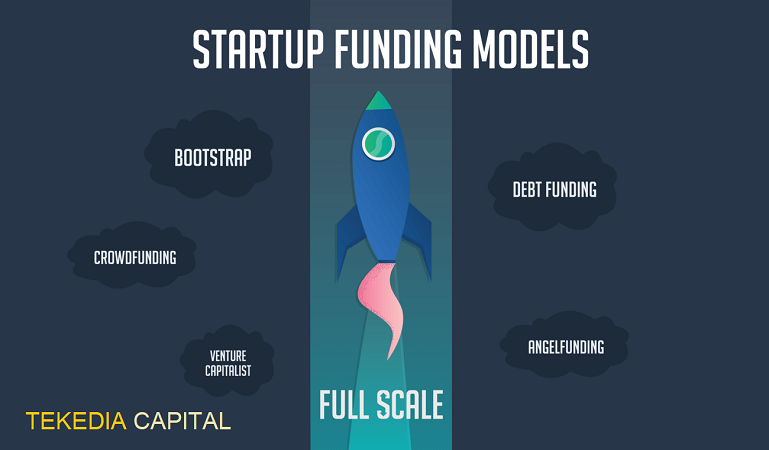
Innovators, founders and project champions, if you are building something amazing and need capital, Tekedia Capital will like to partner with you. In Q2 2021, we invested $3.5 million. Visit our site and see what we do and explore how we can help you. We fund great ideas, helping you with money, contacts, networks, and things you will need to thrive. Visit Tekedia Capital .

China Orders Tencent to Give up Music Right, Continuing the Crackdown that May Jeopardize Its Internet Future

0

Chinese regulator’s hammer has kept hitting players in its tech industry for months now, accelerating the government’s push to keep the industry under control.

China’s market regulator on Saturday said it would bar Tencent Holdings Ltd from exclusive music copyright agreements and fined the company for unfair market practices in the online music market after its acquisition of China Music Corporation. Reuters has the report.

It follows other antitrust actions that have in recent months been leveled against the country’s large tech companies, including a record $2.75 billion fine on e-commerce giant Alibaba for engaging in anti-competitive behaviour.

Tencent and Tencent Music Entertainment Group, the unit created from the acquisition, said they would abide by the decision and comply with all regulatory requirements.

The State Administration of Market Regulation (SAMR) said it had investigated Tencent’s activities in the online music broadcasting platform market in China, in which music copyright is the core asset, in a notice posted on its official website.

Reuters reported in mid-July that the antitrust regulator would order Tencent’s music streaming arm to give up exclusive rights to music labels that it has used to compete with smaller rivals, citing people with knowledge of the matter.

Tencent held more than 80% of exclusive music library resources after its acquisitions, the regulator said, increasing its leverage over upstream copyright parties and allowing it to restrict new entrants, the regulator said.

SAMR said Tencent and its affiliated companies must not engage in exclusive copyright agreements with upstream owners of such rights, while existing agreements must be terminated within 30 days of the regulatory notice.

The regulator also ordered Tencent to pay a fine of 500,000 yuan ($77,150).

Earlier this month, the regulator said it would block Tencent’s plan to merge the country’s top two videogame streaming sites, Huya and DouYu, on antitrust grounds.

The culminating crackdown, which is fast touching the big names in China’s online space, is not only depleting the companies’ value but it’s also creating uncertainties for them. Earlier this month, Didi, the fast-rising ride-hailing company got its fair share of the treatment two days after going public in the US. Didi was stopped from registering new customers, and had its app pulled from China’s app market. The authorities are also after a video platform run by ByteDance that it said glorifies teenage pregnancy.

On Friday, the government’s decision to turn its $100 billion edtech industry to non-profit was confirmed, heightening investors’ fear about the future of Chinese startups and established companies.

“They (the crackdowns) send a stark message to Chinese businesses about the government’s authority over them, even if they operate globally and their stock trades overseas. And they are a reminder to international investors in Chinese companies about the regulatory curveballs that can sometimes come hurtling their way,” New York Times noted in a report.

But there is more. In the competitive digital age that has been narrowed to a battle of dominance between China and the United States, clipping the high-flying wings of its internet companies places China in a jeopardizing position.

Although the US has been mulling breaking up the big tech, a move that will curtail the global dominance of its tech giants, it may unlikely be, and China’s crackdown on the big names in its internet space will mean that the US tech industry will for long stay dominant.