DD
MM
YYYY

PAGES

DD
MM
YYYY

spot_img

PAGES

Home Blog Page 5652

Scheduling Tekedia Growth Hour for Your Firm/ Group

0

We are sharing here for group  members who might have missed the email (spam mail issues)

Dear Member,

(Please talk to others in your company/group as we need one session per group or company)

Tekedia Institute is scheduling Tekedia Growth Hour where we have conversations with group or corporate participants at Tekedia Mini-MBA edition 5. This meeting is essentially to discuss at more specific levels the mechanics of business systems as they relate with business innovation and growth, in your company and sector. We do batch this throughout the program and we have opened a link for your batch.

Go to this link (provided) and select a time slot for your company – one slot only as we will meet all the members at once.

Once you do that, on the day and time, each member should visit this Zoom link (provided) (If you have other alternatives like Microsoft Teams, please send and we will use it).

Please note that besides your members currently attending Tekedia Mini-MBA, you are free to bring other staff, associates, clients and partners of the company to this meeting.

Our Lead Faculty, Prof Ndubuisi Ekekwe, personally coordinates this. His vision is that through these specific conversations, we can point out areas of growth and opportunities in the business, using some frameworks discussed in our school.

If you have any questions, let me know.

Regards,

Tekedia Team

Safest or most dangerous country in Africa – Will the real ranking system please stand up?

1

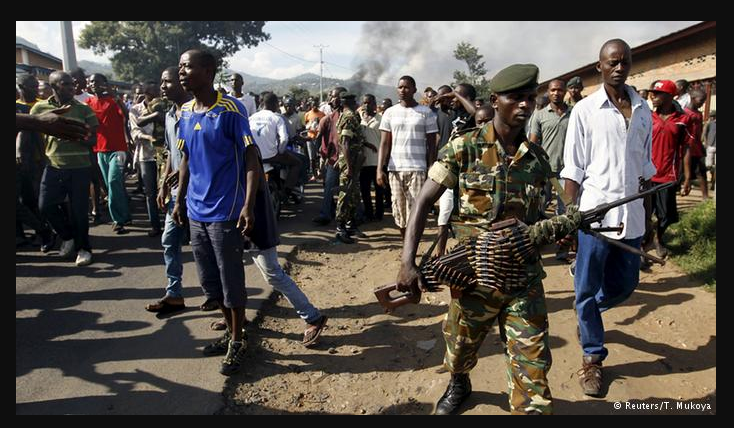
I saw this picture today heading up a post by a Moroccan contact who was very pleased with her country rating the safest place in Africa – nothing wrong with that – It is good to see people having pride in their nation and wanting to celebrate when they find something that is reflecting their nation well.

Anybody who knows me well, or even has become engaged with me over time on LinkedIn, will know that I have a strong personal investment in Nigeria, so my first focus in an African context will be to look at how Nigeria fares.

Obviously I was unpleasantly surprised to find Nigeria bottom of the Africa list. I thought back to the wake of the #ENDSARS protests but then reflected on what recently happened in South Africa in the wake of the jailing of Jacob Zuma and notionally considered South Africa’s situation to be in a more desperate league.

Equally, when I consider the various paramilitary actors that are beleaguering Nigeria at the moment, while a massive concern, they pale compared to some of the things that have been happening in South Sudan and the Tigray Region of Ethiopia.

So obviously I do what I always do, and go looking for independent validation. Sure enough, searches on ‘ African safest countries 2021’ generated a generous choice of websites to visit, often with very different results.
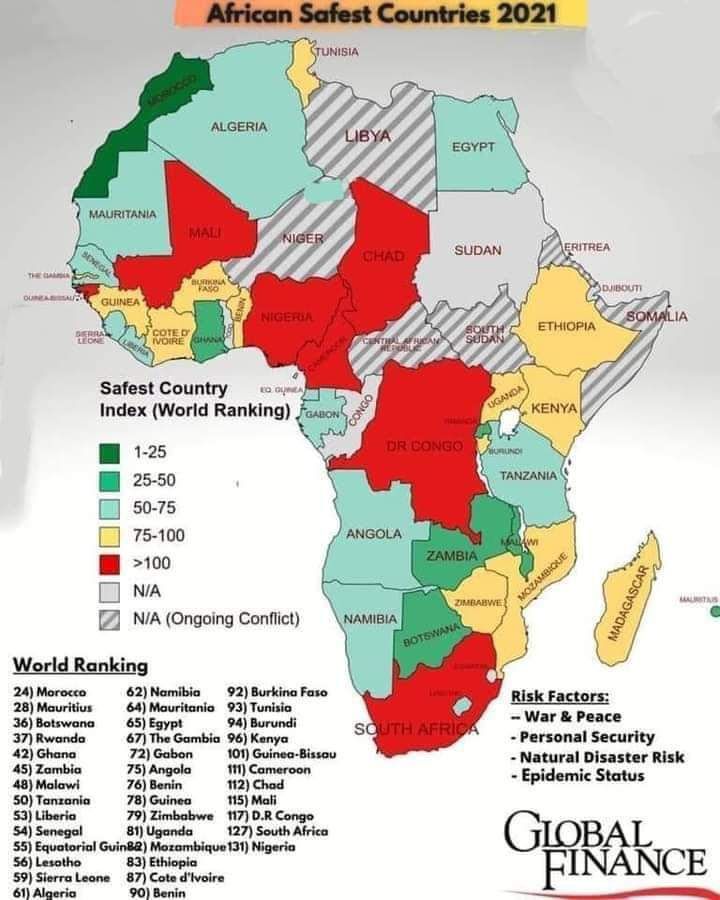
While Nigeria finished bottom in many, South Sudan finished bottom in several. I didn’t find Morocco safest on any other list, and several cited Botswana. The ‘Africa’ data was generally a subset of global data and while Iceland was quoted world’s safest right across the board, New Zealand ranked #2 on many of the other lists and only #10 on the ‘Global Finance’ list.

So why did all of these sources vary so much? Well the first thing is methodology. If two sources are not using the same measurement criteria, and even then, are not using the same weighting across the criteria set, then the ranking they generate is going to end up being different.

The second thing is that just because content is online somewhere, does not mean it is true. Several of the sites I visited only listed a top 10, interlaced with pleasant pictures and content with a promotional narrative including superfluous information about the featured countries cultures or tourist attractions, and this isn’t required of a site that is strictly ranking countries according to safety issues.

If they are not citing a credible source of their primary data, and they are not explaining the methodology, then this puts their content in doubt.

Internet database Numbeo last year placed my former home, Trinidad and Tobago at #6 in a global list of the most dangerous countries in which Nigeria ranked #17

The ‘Global Finance’ list is detailed and transparent about its methodology and covers over 130 countries globally in its ranking list, though that doesn’t necessarily make it the right reference point for you. So which one would be?

Well, anybody travelling has to consider their own circumstances. One group is people who are travelling to be domiciled somewhere for work. This could be a foreign person or a Diaspora considering repatriating. While most African countries have some sort of immigration protocol that needs to be followed by non indigenes entering a country for work,  even with citizenship or permanent status, it’s never a good idea to just move countries jobless. This should only be considered if there are over-riding circumstances, such as a close relative is terminally ill and you are needed at home. Even then, people abroad for long should be aware much may have changed. On arrival, go directly to your best comfort zone, and gradually move out of it cautiously, methodically and deliberately to re-assimilate. Any person from any tropical home, Africa, the Caribbean… returns home after a long period of absence, they don’t look the same. Their skin has this sort of dull, matt complexion. They have lost this glossy magic glow that comes from living in this environment for a sustained period. If I see that, then all local area boys, touts and miscreants are picking that from scope rifle distance like blood hound sniffing the air. Dry fish dey fresh now-oh.

Another  group is people who are visiting for a limited time for business and arriving for business meeting. They should only be concerned about the safety of the citie(s) they need to visit and any local commuting they need to do. Stats for a country as a whole might be misleading and unhelpful.

The third group is holiday travelers who want to explore with view to seeing certain types of attractions or participating in certain types of activities. These people need to draw up short lists of countries that offer what they want, and do their security analysis of each country separately.

The fourth group is inter-Africa migrants. Just because an African chooses to leave their own country, it can’t be presumed they want to leave Africa altogether. Regional options may be cheaper to relocate to, and involve less or no immigration red tape. A person may wish to move regionally for what they perceive as better employment opportunities, cheaper cost of basic amenities and supplies, a higher quality of education or a more conducive economic environment to start a new business. Always check to ensure indigenes of a host country have no heightened sensitivity to citizens of your country as this can increase safety concerns on an individual basis.
Different kinds of travelers have variable vulnerability to different types of safety concerns. It is a good idea to check the assessment methodology used by ranking systems are weighted in the direction of the safety concerns of most impact to people on an individual basis. Sometimes the focus is (a) specific city(ies) rather than a country as a whole.

Finally, it is always good to check travel advice from your government on intended destinations if they provide it.

Some of the ranking websites I found:

gfmag.com/global-data/non-economic-data/safest-countries-world

travelinglifestyle.net/most-dangerous-countries-africa

internationalcitizens.com/living-abroad/safest-places/africa.php

youngpioneertours.com/safest-countries-in-africa/

worldpopulationreview.com/country-rankings/safest-countries-in-africa

owupress.com/safest-countries-in-africa-to-visit-in-2021-1456

atlasandboots.com/travel-blog/most-dangerous-countries-in-the-world/

adventuresdream.com/safest-countries-in-africa/

insidermonkey.com/blog/25-most-dangerous-countries-in-the-world-966826/


The Facebook’s Existential Threat …TikTok

0

TikTok killed Quibi even before it began. Quibi’s business model was to make a few short videos by legends and serve them to the world while TikTok’s model is to make many videos by amateurs, using AI, find the best, and serve the world. TikTok won because the probability of finding hits compounds for TikTok provided you have the capacity to process the data at scale. With cloud computing, that is not an issue.

In 2000, Option A would have been a good business because the computing resources to run AI and crunch the numbers were not (commonly) available for Option B. But with cloud computing and the age of AI here, Option B wins. The probability of getting a hit video compounds in Option B while A is limited by the insights of just 10 people; virality is key for short movies. That is why Tiktok will remain a better business than Quibi which is looking for a buyer despite being under the guidance of legendary Jeffrey Katzenberg. People, as I have noted in the Grand Playbook of Business, your business model is more important than your ability to execute.

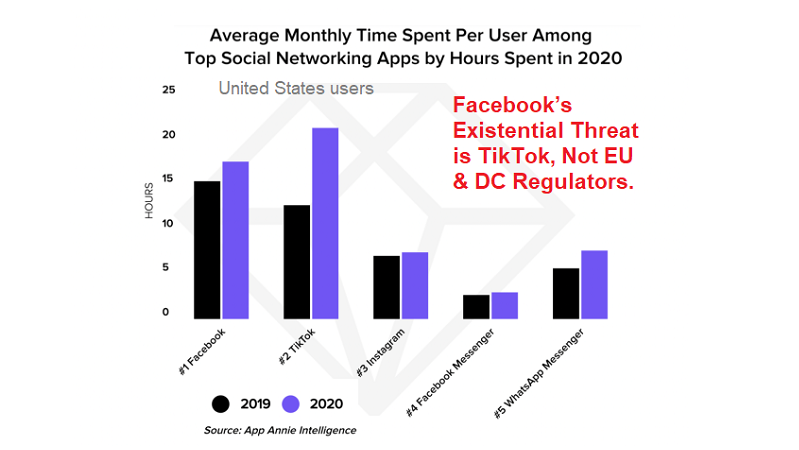
That algorithm will cause more problems for many social media firms ahead. It has eclipsed Facebook. If the growth rate continues, in 5 years, TikTok will be more popular than Facebook, Instagram, FB Messenger and WhatsApp combined. That is the real Facebook’s existential threat, not EU and Washington DC regulators.

The wealth of most modern digital empires have come from aggregation. The next wave will come from the capacity to rapidly find gold in the rumble; TikTok is a king there.

We are moving into the AI age where dominant consumer companies could fade despite their network effects and the associated virtuous circle. Yes, having more data will not save you if the mathematics is not great. The future belongs to numbers and AI has supercharged that. Time for Nigeria and Africa to at least play on mathematics.

LinkedIn Comment on Feed

Comment #1: Prof I stand to be corrected but I don’t believe this analyses. In tech ecosystem governing social media Facebook and Tiktok are in different niche. Facebook can’t be afraid of TikTok because they are not using say keywords algorithms. Let me remind you about 500 million users of Facebook especially in Africa go with Java and non java phones. Tiktok narrowed her uses to android and iPhone. The analyst focus on USA alone. Africa spends more money on Facebook than any other continent.

My Response: Interestingly, investors do not really spend so much time thinking about Africa and what it uses. They focus on the hours spent per platform in US and Europe. Those are the places where the money comes. If TikTok wins that time, it wins advertisers. Africa provides the IP addresses but our revenue is not there and the value while key remains marginal.

Facebook revenue in 2020:
US – $38b
EU – $20b
Asia Pacific (Japan, Canada, Australia etc) – 19.848
REST of the world (Africa, LatAm, etc) – $7B

So, if you have 4 hours for social media and TikTok takes 70% and FB keeps 30%, advertisers care.

Comment #2: Interesting analysis. Tiktok is rising but let’s put things into perspective by size and not time spent online.

Tiktok:
2020 Revenue – $34.3B up 111% from 2019
BUT
operating LOSS of $2.1B despite posting a profit in 2019

Facebook:
2020 Revenue – $86B up 21.59% from 2019
BUT PROFIT of $29.1B

So if TikTok posts another stellar year with 100% growth(which will be tough) they will still be at only $68.6B, and profit would be questionable.

Meanwhile if FB posts another increase at roughly the same %(22) then they’ll be at $104.9B with arguably another $35.5B in profits……big difference between the two.

My Response: Good analysis but this is an industrial way of looking at it. It is like saying that because Toyota revenue is $247 billion, selling close to 10 million cars, it is better than Tesla which has revenue of $31 billion, selling about 500k cars. Toyota market cap is below $300b while Tesla is above $600 billion.

The absolute numbers do not matter. What drives now is momentum/perception. If advertisers see that TikTok keeps people more engaged, the Myspace experience will come to Facebook.

How Data Drives Our Program Policy At Tekedia Mini-MBA, Pushing Completion to 92%

1

I want to address this today because the question keeps coming: why not offer permanent access to Tekedia Mini-MBA courseware to participants? Answer: our internal data has shown that if we do that, we will underperform on VALUE created for our members. Here is the deal: if you register, you attend the 12-week program and after that we extend access by another 9 months. So in total, access is offered for 12 months.

I did some modelling and observed that by capping the time to access materials, people make time to study the materials. If we make access unlimited or permanent, no one will have time. And if members do not study our materials, they get no value – and that hurts us as they cannot have tangible things to discuss about Tekedia Mini-MBA. No impact and that means unhappy clients.

Imagine if someone pays for a course and is offered unlimited access and in the 5th year, he has not found time to take the course. If people ask him about the program, he will have nothing of value to say. Yet, he has been enrolled for 5 years.

So, we remain very strict and that has forced members to make time available to study the materials since they know that time is limited. But where they want more time, we ask them to pay to unlock it. That is part of ensuring they not just invest money, they invest time.

I don’t really care what other platforms do. Yes, some offer life-time access. Check their data, people rarely make time to complete their programs.

Yes, one of the worst things about online courses is that there is no deadline and because there is no deadline, there is no time to study. Tekedia Mini-MBA uses data on everything here and by imposing limitations on access, we’ve see higher engagements and completion rates. We hit 92% now at 4th month. If we remove that, we are not sure we will hit 25% because there is always the next month to study!

For alumni, you get a 50% discount for next editions with extended access to past editions you attended. Meanwhile, beat the early bird registration deadline for the next edition of  Tekedia Mini-MBA which begins Sept 13.

LinkedIn Comment on Feed

Comment: This is true. I’ve purchased courses online through other platforms and just having the notion that it’s a lifetime access, I’ve never gone above 30% completion. It encourages laziness for me?

My Response: That is what our data has shown. And because of that 30%, you may not have much to say about that platform. At Tekedia, we do not want that. We want impacts and that is why we put end dates. We are happy that members are adjusting to it even though some are not happy. We want people to complete our programs because that is how we get referrals.

How Bitcoin will change the world

0

Can you tell me what interests you most about the internet? I will tell you in a moment what interests me most about the internet.

It is the fact that the internet or information technology has solved great problems. That is not all; it is also very interesting to see the huge innovations springing up as a result of the internet.

One among them is the Smartphone. With the Smartphone, you are connected to the world in real-time at all times.

 Truly the world has become portable and a global village with our smartphones.

In addition, are you aware that many industries exist today because of the internet? Industries like e-commerce such as Amazon, eBay etc, hailing services such as Uber, Bolt, Vaya, and a host of other marketplace and shared business models.

The next wave of technology innovation is already happening. It is going to add more value and solve more problems than the internet does.

That innovation is Bitcoin and Blockchain which now supports some new industries such as Defi, NFT, Crypto etc

But, wait for a second, how will that happen? I will show you exactly how it will happen in the next section.

Ways Bitcoin will change the world more than the Internet

During the B-word conference, the Bitcoin conference was organized by Jack Dorsey. The event has very impressive entrepreneurs in attendance such as Elon Musk, Jack Dorsey and investor Cathie Wood. 

They discussed a couple of bitcoin features that with them, the Bitcoin invention will change more lives and solve some of the problems left by the internet invention.  

Here are the three of the foremost problems that Bitcoin will solve

Remittance Cost

There are many countries that their economy depends heavily on remittance. Examples of such countries include emerging countries such as El Salvador and Nepal. 

One of the problems these countries faced is the high cost of remittance coming into the country.

What is the cost of the high remittance? It is due to the centralized nature of the financial system. Money has to pass through several mediums before it finally arrives at the expected destinations. In the process, the cost increases, this leads to many problems for the receiving economy.

When bitcoin becomes the native currency of the internet, sending money will become as fast as sending a chat or a tweet, even faster. When this happens life will become better for these countries, leading to economic growth.

Hedge against Global Inflation

How many burgers can $5 buy in 1970 and how many burgers can it buy today?  The correct answer would be that fiat currency has reduced in real value while wages remain constant.

This is a serious problem because; people will not be able to live the lifestyle that they dreamed of. The reason for this is due to the unlimited money supply by the monetary system. 

Imagine the Federal Reserve or central banks printing more money. This increase in money supply fuels inflation which will deplete purchasing power. You know what your purchasing power is your real power, without it you will die.

The Bitcoin monetary system is based on a currency supply of 21 million. It means that it can help any country hedge against inflation. The standard of living of the people will increase with Bitcoin.

Bitcoin Fixes the Money Error

The central bank monetary system has errors. The errors range from devaluation to printing of massive volumes of fiat now and then. 

The reason for this is due to the centralization system of fiat and it is less of an information system.

According to Elon Musk during the B world conference, bitcoin fixes this error because it is an efficient information system. An information system that is decentralized, open-source and has a scarce maximum supply

Conclusion

Though Bitcoin technology is still evolving, it has promising solutions for the world. With layer 2 innovations such as Lightning Network, these solutions are already being enjoyed by people.

This new information system will practically change the way many things have been, from inequality to a more equal society.

The next Wave of bitcoin price will be determined by Jack Dorsey, Elon musk and Michael Saylor as explained in this article.