DD
MM
YYYY

PAGES

DD
MM
YYYY

spot_img

PAGES

Home Blog Page 5663

Netflix Introduces Affordable Mobile Plan for African Market

0

Streaming service firms have continued to devise means to grab market shares as competition grows in the untapped African market.

To this end, Netflix, the global movie streaming firm, has introduced a Mobile plan across 43 countries in the sub-Saharan Africa region, including Nigeria. The Mobile plan is a 50-60% reduction in the price of the basic Netflix offering and is available to members in Nigeria from N1,200 per month alongside the other three Netflix plans; namely basic, standard, and premium.

Different people have different entertainment preferences. Some want Ultra HD and the ability to stream on four screens at once. Some only watch movies and shows on their phone. Adding a mobile plan gives consumers more choice no matter what their budget or requirements

Country Currency Mobile Price Basic Price Standard Price Premium Price

  • Nigeria NGN 1,200 2,900 3,600 4,400
  • Kenya KES 300 700 950 1,200
  • South Africa ZAR 49 99 139 169
  • Other SSA Countries USD 3.99 $7.99 $9.99 $11.99

Additionally, Netflix members can now watch titles that are partially downloaded through the Play Partial Download feature on Netflix.

Innovation Village reported that between the Nigerian and South African markets, there will be 475 million people using the mobile internet by 2025. Also, Netflix members within these countries already watch 2x more Netflix on their phones than the rest of the world, therefore in order to ensure a much more enjoyable user experience, Netflix has given its members the Mobile plan as well as eliminated the problem of prohibited access to titles that are not fully downloaded.

According to research done by the streaming platform, the African market is most popular for downloading titles which means that the launch of the Play Partial Download feature is apt for the market. This feature will enable members to save time because they no longer must wait more than 10 minutes for complete downloads before watching their favorite titles. Additionally, it would save cost because members across Africa, have pivoted to using offline viewing after cellular data prices have increased in markets.

Additionally, any member using the Mobile plan still has access to all available Netflix titles. With the Play Partial Download feature, Netflix allows members to watch their favorite titles, like Fatherhood or the next episode of Elite, even if it hasn’t been completely downloaded. Once you’ve regained a strong enough connection, the feature allows you to choose to finish the download and keep watching, avoiding those surprise notices that you’ve gone over your data limits.

According to Keela Robinson, VP of Product Innovation at Netflix, “We always want to make it easier for members to access their favorite series or movies regardless of language, device, connectivity, or location. So partial downloading is now available on Android phones and tablets.” In addition she stated, “We’ll begin testing on iOS in the coming months. That’s the download on Netflix’s latest improvement for now.”

To access this feature from the download menu on their mobile device or from the continue watching menu. If a member starts watching a title that has not finished downloading, they will be prompted to download the rest of that movie or episode in a series once they’re connected to Wi-Fi or cellular network.

Netflix is committed to ensuring that their best-in-class titles are available at the utmost convenience of their members. Through the Mobile Plan and features like the Partial Play Download, Netflix members can access their favorite titles at a lower cost and comfortably enjoy them with just 5-10% of the title being downloaded.
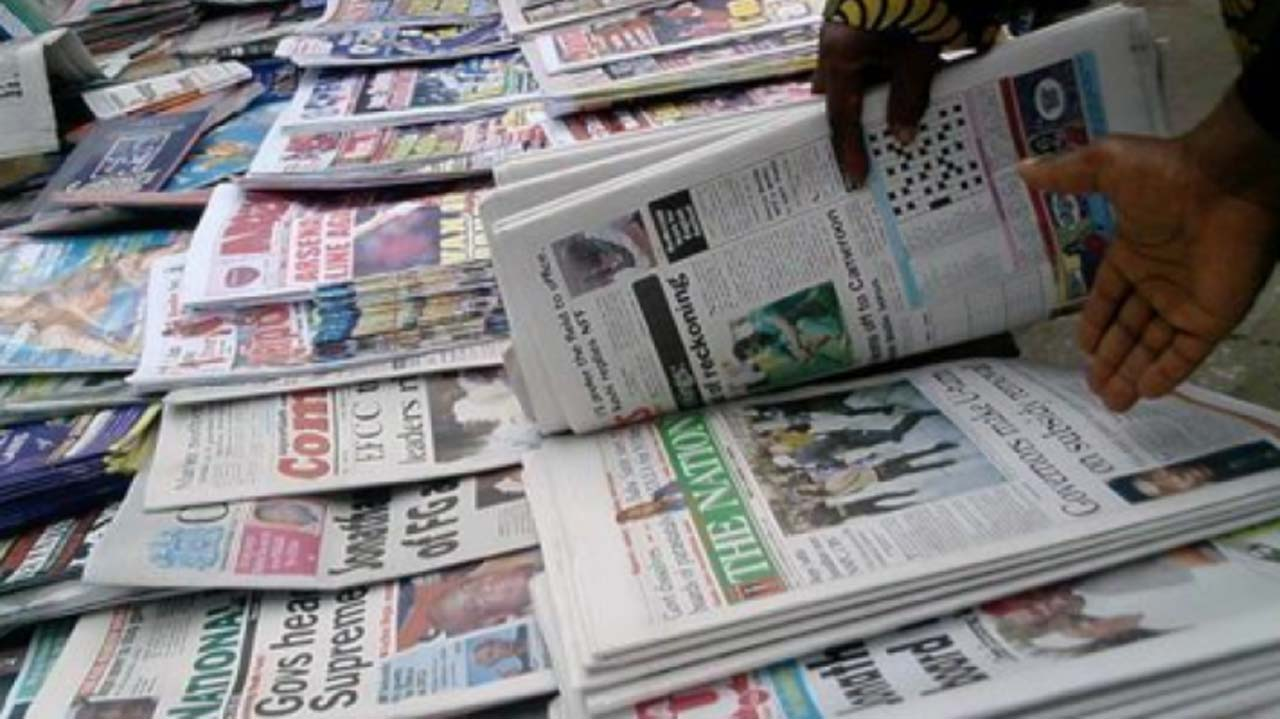
Interrogating Nigerian Newspapers Presentation of Source Logic in News

2

The idea that the media should be free is an extension of democracy. Globally, the belief remains that when the media is free, it would be able to hold leaders and individuals accountable based on their direct and indirect dealings. In the spirit of being freed, we have seen situations, where journalists and other media practitioners abused the privilege, damaging corporate and individual’s reputation through unverified and malicious news reports.

When the reports are pushed out, only a few of their audience has the ability and capacity of interrogating the frames and agendas set in the reports, which requires applying the rudiments of logic. Isn’t it time we needed to be teaching logic right from secondary schools? Or is it better to say our Quantitative and Verbal Reasoning subjects should better be taught with practical/real-life examples? I developed this curiosity some days ago when many Nigerian newspapers (with digital presence) kept reporting that one of Chief Sunday Igboho’s aides who was said to have been killed by the DSS in a “raid” to Igboho’s house in Ìbàdàn, was shot 48 times! One of Chief Igboho’s men was said to have told journalists that number. Thus, this short logical questioning isn’t about the legality of the DSS actions and Igboho’s aides’ counter-actions- the court will decide that. This opinion is therefore about the need for journalists and the citizens they disseminate information to to always question certain points made by news sources. That’s what I called “logical questioning” up there!

Yes, the source said the aide was shot 48 times, but that doesn’t mean the source was right. We, as journalists, shouldn’t just hide under the principle of “sourcing” or the concept of “our source said” to dish us utterances we should have questioned before going to press at all! As a professional, if you are moved by emotions, your intelligence can be rendered questionable. Now, let’s think together: Someone was shot at 48 times; he didn’t die, yet he refused to run away- he relied on charms bá (that’s not my focus here)? Who was counting the times the bullets were shot? We hardly need an expert’s explanation of how our minds work when fright knocks at our doors. The DSS was said to have continued to shoot and attack the house for about an hour (in some quarters, it was a gun duel between the DSS and Igboho’s boys). In that situation, it was expected that nobody would even be thinking straight than to leave or remain in that scene unhurt. Maybe the mind of the person who counted the “48 gunshots” was special that he/she concentrated on the number of shots more than his/her own safety.

Another case where logic should have been used by journalists was when a governor said he ran about one and half kilometres on foot to escape from being assassinated while visiting his farm. Where were his details when he was running (though he later thanked them for repelling the “attack)? Didn’t his security details hold guns to have used to kill the “killers” or to chase the “killers” away, at least? If the Governor ran, who measured the kilometres he told journalists? But, do we question some of these things as journos? Peem, “they (the sources) have said it, and we should publish it!” is traditional journalism practice– in as much as it has been credited or attributed to a source or sources, the rest na story! However, I strongly suggest it is time Nigerian journalists started questioning some utterances from their sources and questioned the logicality of their utterances in matters of great importance. They shouldn’t be interested in attributing questionable headlines to questionable sources just to gain traffic and sell such news. We should all be socially responsible as news producers and consumers!

Additional report by Umar Ajetunmobi

Tekedia Capital Makes Investment in California-Based TradeGrid

0

Good People, I am excited to announce that Tekedia Capital just invested in California-based but Africa operating TradeGrid. TradeGrid is digitizing the downstream sector of the oil & gas, and new energy sectors, by building an orchestration network via digital technology to connect buyers and sellers at scale, on the feedstuff, equipment & parts, finished products, etc.

It manages many components within the energy sector, from financing to logistics. More so, TradeGrid holds core IPs, filing patents in the United States on its trading protocols. The company is expanding to Latin America and Asia in the next coming months.

Tekedia Capital will be here to fund the NEXT Africa. To join our syndicate, go here and learn more https://school.tekedia.com/tekedia-capital/ . Join us; we will provide you access to invest in leading tech-anchored companies, majorly operating in Africa.

Delivering Big Development Should Not Be a Campaign Rhetoric Alone: An Interview with Save Iwoland Group’s Convener

0

Editor’s Notes

This year Nigeria celebrated her over 20 years of returning to a democratic system of governance after several years of the military interruptions. From social commentators to public affairs analysts, there are reasons for celebration and reflecting on the socioeconomic and political development that occurred during the years. In this piece, our analyst spoke with Ganiyu Maroof Babatunde (GMB), an Estate Surveyor and Valuer, and a Community Development enthusiast. To him, delivering sustainable projects in villages, towns and cities should not be seen as mere rhetoric during electioneering campaigns. He also believes that political leaders and individuals, who have interest in the growth and development of their communities need to be constantly reminded of the essence of facilitating or initiating projects.

Excerpts

Tekedia: Since the return of Nigeria to democratic governance in 1999, a number of developments have been witnessed across the country’s six geopolitical zones. How would you describe infrastructure development in the South West region so far?

GMB: Before now, we’ve not been fortunate to have a government that’s ready to develop infrastructure in Nigeria and not to talk of South West. Our region was the first to produce the President in 1999 and throughout the 8 years, no meaningful infrastructural development was found in any state in the zone including the National assets that will be beneficial to us. This trend was on till 2015 and not until the government was changed from the previous party, we may not be able to point to any reasonable infrastructure in the South West. In a nutshell, there’s an ongoing development on the level of infrastructure and if this trend continues, we’ll get there as soon as possible.

Tekedia: Would you say the political parties that have governed and still governing Osun state have done well compared to the same parties in other states within the South West region?

GMB: Initially, the party that governed Osun state tried their best but, their best failed to be the best for the state. Throughout their tenure, we hardly seen any meaningful infrastructure in the state and little was also facilitated from the Federal Government. The allocation then only meant for salary payment and no provision for road construction, water supply, and others community projects needed.

Fast-forwarding to the era of another party, we started seeing a few roads construction, renovation of dilapidated structures and initiating of new projects, which the present government is building upon. However, we may not be able to compare some states being ruled by the same party mainly because of their individual peculiarity and political antecedents. Some states have resources than the other which automatically gave them an edge in infrastructural development than others, but all the same, the state is trying its best based on the available resources in their disposal.

Tekedia: Let us examine the development across senatorial districts and federal constituencies in Osun State. What are your views about the development so far?

GMB: There are 3 senatorial districts in every state and Osun state will not be exempted and if go by the present infrastructural development so far, we still have a long way to go. Presently, all the major roads in Osun state yet to meet the require standards and even the inner roads in each district can’t be proud of.

The recent development has shown we’re getting it right and the new Federal College of Education in Iwo, Osun West and the recent Federal University of Health and Science in Ila, Osun Central is clear indication that Osun state are ably represented at the Federal level.

Although, we’ve many Federal projects going on in the state and at the same time expecting many Federal roads to be done in the state, but the bottom line here is that we’re gradually moving towards a better infrastructure in the state, but if truth must be told, it’s not yet enough and we’ll never relent in our efforts to ask for what belong to us.

Tekedia: Does it mean that your views about the delay in bringing rapid developments to towns, cities and villages as expected, despite promises during electioneering campaigns, led to the creation of the Save Iwoland Group (SIG)? What is the strategic mission of the group?

GMB: Actually, the birth of the Save Iwoland Group was formed based on a passion to create a platform to develop the community. From time immemorial, I’ve been thinking of having a forum with a like mind to have impacts on the community and couple with the present condition of the major road networks in our land including many moribund assets unattended to led to this official launching of this group.

Sincerely speaking, many promises were made to us in Iwoland but it’s unfortunate that after 3 years of governance, all the promises made yet to be fulfilled up till now. And, what really baffle me was that nobody is speaking against it and we hope if we refused to speak now, we may not be able to speak again since the time for another electioneering is almost near.

However, the objectives of the group include; identification of possible projects that will be beneficial to the people of Iwoland, calling attention of the relevant stakeholders to moribund assets and projects and facilitating new projects. We hope to achieve these using our home and abroad resources.

Tekedia: Considering that a significant number of socio-political groups are in existence in Iwoland, working towards socioeconomic and political advancements of the region, what are the differentiating factors of your group and how do you want to achieve your aims?

GMB: Yes, we have many groups already existing with a related objective, infant I’ve once launched the Iwoland Development Forum (IDF), through the platform we did Iwoland Political Summit in 2017. Apart from that, I also belong to others which I have been following their activities so far.

But the Save Iwoland Group is unique with a specific task solely for the development of the community and this is one of the areas where the differentiating factor will come in. Our approach will be purely research based with a developmental template to guide us. We’re going to inaugurate Ward Development Ambassadors (WDA) in all the 35 Wards in Iwoland and at the same time inaugurate another set of LG Development Ambassadors in each of the 3 local governments in Iwoland.

Their major roles will be to help us to identify which project needed to be fixed through infrastructure assessment survey to be done in the entire Iwoland and came up with a communique that will be presented to the stakeholders that can help us develop Iwoland. In summary, the Save Iwoland Group will shake Iwoland with his new initiative and the entire Osun state because it’ll be a vehicle to drive developments to our land.

Social Toxicity and Its Impact on Nigerians

0

Can a person excel under toxicity? I doubt that. One thing that is certain is that people find it hard to be creative and progressive under toxic environments. Children that grow up in homes or neighbourhoods, where they are constantly harassed and abused (whether physically or verbally) usually turn out wrong. Women, and even men, that endure toxic marriages do not perform well in their careers or businesses. People that make friends and enter relationships with toxic people also end up toxic and destructive. This is just to tell you how bad it is to be around and/or within harmful and negatively-minded people that can influence you negatively.

The problem here is that toxicity is affecting a lot of Nigerians and it is stopping them from harnessing the opportunities around them. If you want to find out how toxic the Nigerian social environment is, engage people in simple conversations and be ready to endure their complaints and accusations, even when the things they complain about were caused by them. 

Another good way you can get this experience is on the Nigerian roads, where drivers throw insults and threats at one another as their way of showing displeasure at the other persons’ driving skills or style. How about engaging in an argument, where you hold an opinion different from that of the majority? Believe me, someone from the other side will not only insult you but threaten to deal with you. The least they can do is rain curses on you and promise you hail and hell. These are just some of the scenarios that can show how deep in trouble we are.

If you are wondering why the nation is filled with negatively-minded persons, I’ll suggest you look at the agents of socialisation. Consider the type of children that will be raised in families, where parents tell their children they have enemies in the villages or that their neighbours are witches and wizards. Look at the type of persons our religious leaders are pushing into the society after telling them that people from other religious organisations are heading to hellfire or that they are not meant to be related with because they are “sinners” or “infidels”. Imagine the type of students our schools produce after teaching them how to look down on the weak students. How about peers that influence members negatively? Do I need to talk about the press, where negative news sells faster than positive ones? The truth is, it is difficult to live in Nigeria without becoming toxic.

The impact of the toxicity this country is enmeshed in is taking its toll on everyone but the youths feel its brunt the more. It is becoming more difficult these days to find Nigerian youths that know what they want except to make money and “live large”. Ask them how they plan to do so and they will come out empty, except for those that have guides. But many of us are here accusing our youths of being lazy and greedy without understanding what they are passing through. I am not saying we should excuse those that go into crime, but I think we should try to understand why many youths in Nigeria cannot plan their lives ahead of time.

As I mentioned earlier, it is difficult to be creative and progressive under toxic conditions. Nobody thinks straight when he’s angry or when he believes everybody around him is dangerous and wants to kill him. People do not progress when they are divided and in enmity. It is also almost impossible for people to believe in themselves when they are made to see only the negative sides of life. This is the bane of Nigeria, where negativity clouds people’s reasoning and robs them of the good things of life.

Can we change the Nigerian social environment from being toxic? Of course, it is possible. But then, those that reap out of it will do all within their power to maintain the status quo. It is only left for individuals to find ways to block out the toxic people around them. But then, that could be another mission impossible.