DD
MM
YYYY

PAGES

DD
MM
YYYY

spot_img

PAGES

Home Blog Page 5677

Nigeria’s Productivity Paralyses In Logistics and Petroleum Industry Bill

1

This is simply why productivity is dropping in Nigeria: “The cost of transporting a container from Apapa port to Ikeja, Lagos, has increased from N300,000 as of 2018 to N1.6 million or more in 2021. This represents an increase of 500% at the minimum. On the other hand, the cost of trucking the same container from Ikeja to Kano has only hovered around N600,000 within the period under review. This was disclosed by Oluwemimo Joseph, Strategy & Projects Head and Chief Financial Officer of JET Motor Company, during an exclusive interview with Nairametrics on Tuesday.”

“The cost of trucking a container from Apapa to Ikeja is twice the cost of taking the same container to Kano or Kaduna. The cost has increased from N300,000 in 2018 to N1.6 million by January 2021.

The major cause of this is because the truck owners will tell you that such task, which should have taken them two days will end up taking 6 or more days due to congestion at the port,” Joseph said.

With a broken supply chain system, Nigeria has a real challenge in the economy. We need to fix it and make sure that our processes and systems can run efficiently. And the nation seems to have a playbook with the selection of four asset managers to run the $37 billion fund for Infrastructure Corporation of Nigeria Limited (Infra-Co) which is set up to deepen investment in roads, railways, power projects, and other sectors in Nigeria. The companies selected include Netherlands-based Sanlam Infraworks; AIIM, a unit of South Africa’s Old Mutual Group; Lagos-based Chapel Hill Denham; and Tripple A, a consortium comprising AfricaPlus Partners and Arc Asset Management as well as Afrinvest West Africa, a Nigerian investment bank.

The company is expected to begin operations in Q3 2021 according to the governor of the Central Bank of Nigeria.

Work has indeed attained an advanced stage and we have received the approval of the Chairman of the Steering Committee, the Vice President, Prof. Yemi Osinbajo, for the approval of the appointment of KPMG as the transaction advisers and only recently we also obtained approval for the appointment of asset managers.

So, following conclusions of these arrangements and further activities, I like to assure all of us that the Infrastructure Corporation of Nigeria is expected to begin full operation by the third quarter of 2021.

We believe that through a partnership with the private sector, Infraco will be able to leverage close to N15 trillion over the coming years to close the country’s infrastructure gap.

I’m happy to acknowledge that the establishment of the Infrastructure Corporation of Nigeria has generated a lot of interest from both local and international private fund managers who are keen to work with the promoters in deploying private sector capital to support investment in key infrastructure in Nigeria.’’

Meanwhile, the Petroleum Industry Bill is causing a problem with this line: “Section 317(8) in the Senate’s version of the Bill states that licence to import any product shortfalls shall be assigned only to companies with active local refining licences.” Expectedly industry players are concerned that refiners like Dangote Refinery will simply take over the market if this has to stay.

Any provision that does not guarantee a free and open market will give room to price inefficiencies and eventually kill off small businesses in the downstream sector.

“This provision will stifle price competition and leave pricing to be solely dictated by a few local refiners. If Nigerians are to pay higher international prices at the pump, we should also benefit when prices go down internationally,” they stated

They argued that this was not guaranteed unless there was healthy competition.

“Prices must be kept competitive at the pump for the benefit of the average Nigerian whose income is constantly being eroded by inflation.

“Allowing imports by major players across the supply chain will protect consumers by ensuring that local pump prices are not higher than regional and international prices.

“MOMAN and DAPPMAN remain committed to the sustainability and institutionalisation of a viable downstream petroleum industry for the social and economic growth of Nigeria,” they stressed.

I pointed this out many months ago: “So, the problem is not just refiners importing, the problem is that some could become exporters. Yes, they get the local crude oil and they simply export it! The Petroleum Industry Bill  must fix these loopholes with criminal penalties”

If you are in the business of importing crude refined products, there is a disintermediation on the way. Yes, Dangote Refinery is pushing that “license to import any product shortfalls should be assigned only to companies with active refining licenses. Import volume to be allocated between participants based on their respective production in the preceding quarter. ’’

Punch had reported that Dangote Group has desired  for inclusion in the Petroleum Industry Bill a requirement that the license to import petroleum products should be given only to companies with active refining licenses. The company does think that by having that requirement, companies will invest in local refining business.


How to Curb the Problem of Unclaimed Certificates in Schools

0

On 1st July, 2021, Mr. Gabriel Egbe, the Registrar of University of Calabar (UNICAL) revealed that forty-two thousand (42, 000) unclaimed certificates have been discovered in the school. According to him, some of these certificates date back to the 1980s and they were found in different faculties of the school. He threatened to publish the list of the owners of the certificates and to surcharge them when they come to pick them up. Mr. Egbe’s threat will likely yield a good result, for those that still care about their certificates, but it will not solve the existing problem. Unless he and the administrators of other schools and exam bodies change their modus operandi when it comes to issuing certificates, this type of problem will persist.

The management of UNICAL might be the first to declare the high number of unclaimed certificates in the school but that does not mean the school is the only one witnessing this issue. Every Nigerian school has piles of unclaimed certificates gathering dust somewhere. Exam bodies, such as WAEC and NECO will also have theirs. What about our primary and secondary schools? Those ones also have a share of their stories to tell. So, unclaimed certificates are a common phenomenon in Nigerian schools. In fact, most people don’t even know they have to go back to their schools to collect their certificates. That’s how bad it is.

But, as I said earlier, unless Mr. Egbe, his colleagues in other schools, and the Nigerian exam bodies decide to change how things are done in the education sector, more unclaimed certificates will emerge. The first thing that should be changed is the delay in issuing certificates. It is quite odd that an individual has to go back to his alma mater four or five years after graduation to collect his certificate. 

This number of years is enough for the person to acquire another education, maybe a higher one, and decide to move on without going back for the lesser certificate. Or, he must have left town, and so, had no way of picking the certificate when it “comes out”. This is where the second problem comes in: the inability to collect the certificate by proxy. I can bet you that most of the owners of those certificates are either out of the country or in other states of the federation. Some of them must have sent someone to pick it up but the person was greeted with a “we don’t give it to another person” story. It is well.

Another thing I don’t understand is why schools are fast to issue statements of results but delay in giving certificates. Why won’t the time used to prepare statements of results be spent on producing certificates? Why give students statements of results first and then spend years issuing certificates? I understand that the statement of result can be recalled for minor or major corrections but should that be the reason for delaying certificates? Well, your guess is as good as mine.

Anyway, the reasons people don’t go back for their certificates are many. Many have lost interest in that “piece of paper” because they have found careers their certificates could not provide or sustain. Some people have forgotten their school registration numbers and do not want to stress themselves thinking hard about it. There are those that are comfortable with their statements of results because their employers are not bothered about certificates. So, the best thing schools can do to prevent the sort of thing revealed by the Registrar of UNICAL is to present students with their certificates upon graduation.

Messi Agrees to A New Five-Year Contract with Barcelona After Winning Copa America

0
Stars like Messi are the attraction

Finally, Lionel Messi is set to commit his future to Barcelona, ending the uncertainties that have surrounded his career ever since his contract expired on June 30th.

The sixth time Ballon d’Or winner will sign a new five-year contract at Barcelona after agreeing to a 50 per cent wage cut. The Spanish side will announce his re-signing in a few days.

The news came a few days after the Argentine captain lifted the Copa America for the first time, ending the stigma of not winning any major trophy in his national career.

Last year, fed up with the lacklustre situation in Barcelona, Messi had thrown in the towel, requesting to leave his childhood club at the end of the season. Messi has spent his entire career to date on Barca’s books, having initially made his debut for the club as a teenager in 2004.

The new contract means the 34 years old will spend the best part of his career in Camp Nou. Barcelona has had to get around a lot of hurdles to re-sign Messi after he became a free agent, following the expiration of contract.

The hurdles include getting Messi’s wages to fit into La Liga’s financial framework. Barcelona exceeded La Liga’s wage limit at the end of the 2020-21 campaign, making it impossible for the Spanish giants to offer their most valued asset a lucrative deal.

Messi earned a staggering £468m/$650m over the course of his last five-year contract at Camp Nou, which equates to around £64m/$89m per season. The new contract means he will earn half of the money in the next five years. The new contract also reportedly has a termination clause of £320 million ($444 million).

The pressure piled up on Barca as La Liga president Javier Tebas warned that the Blaugrana, who would need to register Messi as a new signing, will not legally do so without significantly reducing their wage bill.

Messi’s father and agent, Jorge Messi, has been in talks with Barca’s newly elected president Joan Laporta, for weeks now. Laporta was elected on the promise of revitalizing Barcelona’s philosophy which Messi said had significantly waned under former president Josep Bartomeu. Barcelona was thrown into disarray after Messi sent a burofax to the former president, requesting to leave the club in June last year. His decision forced Bartomeu to resign, paving the way for the election that ushered in Laporta.

The fulfillment Messi derived from Argentina’s Copa America’s win is believed to have played a huge role in his agreement to a new contract. There was an array of interest from other clubs in the Argentine astro last year, with Guardiola’s Man City leading the charge.

Although Messi has expressed interest in retiring from his football career after a possible spell in United States’ MLS or a possible return to boyhood club Newell’s Old Boys, his new contract means he will continue playing for Barca until 2026 – at which point he will be 39 years of age.

Barcelona is yet to publish more details about Messi’s new contract, but rumor has it that part of it will see him working with the club after he retires.

Nigeria Crude Oil Export Down 42%, New Health Agency And Challenge of Revenue

1

One month, one new bureaucracy in Nigeria. The latest one is the National Emergency Medical Services Agency. Yes, Nigeria plans to establish the National Emergency Medical Services Agency to magically deal with our lack of healthcare services. Of course, nothing will change since the healthcare budget is not changing anytime soon. What will happen is that the available funds will be divided with an additional agency in the mix. 

The Nigerian Senate passed a bill to establish the launch of a  National Emergency Medical Services Agency.

The bill was passed on Tuesday after the Senate considered a report by the Committee on Health Secondary and Tertiary at plenary, presented by the Chairman of the Committee, Sen. Yahaya Oloriegbe.

The Committee said the bill aims to ensure all Nigerians had access to early, good, and quality emergency medical service, and critical care, when needed, adding that after establishment, the agency would provide assistance for the development of a comprehensive area emergency medical services system in Nigeria.

For Nigeria to fix the healthcare services, it needs resources and that will come through higher productivity and economic activity. Yes, improved tax revenue to fund budgets. That is the playbook we need to scale urgently. Crude oil may not help here as it continues to drop: “Nigeria’s crude oil exports fell by a whopping 41.9% year-on-year in the first quarter of 2021. This is according to data contained in the Central Bank of Nigeria’s balance of payment report.” But while crude oil was down, solid minerals did just fine; Nigeria Extractive Industries Transparency Initiative (NEITI) in a report noted that N79.9 billion was earned by Nigeria within the solid minerals sector in 2019.

Nigeria received in its current account, crude oil and gas export proceeds of $6.48 billion in the first quarter of 2021 compared to $11.1 billion in the corresponding period in 2020. It also represents a 16.4% drop when compared to the $7.7 billion recorded in the 4th quarter of 2020.

[…]

Nigeria relies majorly on crude oil exports as its major foreign exchange earner. Thus with export proceeds falling by 42%, hope for a more robust foreign exchange reserve is dimmed. … The fall in reserves corresponds with a depreciation in the exchange rate which has now crossed the N500/$1 ceiling at the parallel market

Yet, the nation could generate significant revenue from its planned concession of Calabar & Kano Free Trade Zones and other infrastructures in 36 states which the Bureau of Public Enterprises has projected could generate as much as N5 billion annually.

The government hopes to inject funds into healthcare services in the nation, according to Director-General of the BPE, Mr Alex Okoh: “In the health sector, the reforms being undertaken by the bureau will involve the implementation of initiatives which will radically transform health care delivery across Nigeria. This will improve availability, accessibility, affordability and quality of health care services with the ultimate objective of having a physically and an emotionally healthy population.”

Despite this drop, the trajectory could look promising in the short-term now that the OPEC+ standoff is officially over as Saudi Arabia and the United Arab Emirates have reached a deal on output levels: “OPEC+ source stated that the U.A.E. is allowed to boost the baseline used to determine how much crude the OPEC+ member is allowed to pump.”


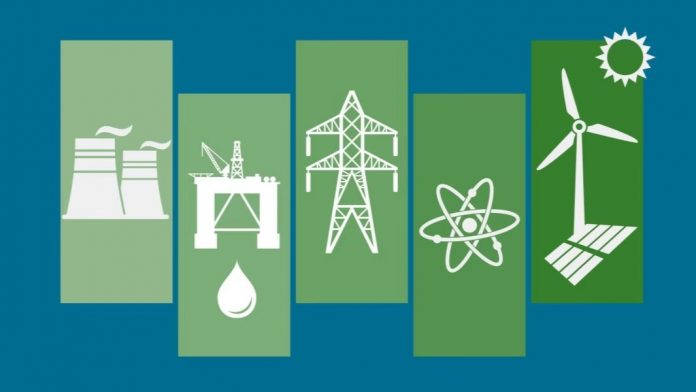
Register for Tekedia Practice On Renewable Energy Business (Lecture + Internship)

0

Tekedia Institute has results – huge ones. The Bank of Industry (BOI) alone has deployed excess of $2 million to members of our Institute through the government loan program. Yes, give people skills and things become easier. I am also happy to note that Tekedia Institute is working with selected companies to provide practical skills to help our young people advance under Tekedia Practice.

Tekedia Practice  involves 2 months of studies and 4 months of internship on agribusiness, renewable energy and more. Our partner on the Practice of Renewable Energy Business is OneWattSolar. OWS pays for, installs, owns, and maintains solar systems with EaaS (Energy as a Service); all technologies run on blockchain. It just raised $milllions on a green bond.

We invite you to register and join the Aug 9 2021 edition of Tekedia Practice. You will attend our online lectures and also intern. With OWS, the internship is guaranteed.