DD
MM
YYYY

PAGES

DD
MM
YYYY

spot_img

PAGES

Home Blog Page 569

African Startups Raise $93M in August Amid Slowdown, But 2025 Outlook Remains Strong

0

African startups raised $93 million in August 2025 through deals valued at $100,000 or more, excluding exits, marking one of the quietest months for the continent’s venture funding this year, according to a report by Africa; The big deal.

The figure reflects a slowdown compared to July’s surge. Recall that last month, 61 start-ups announced at least $100k in funding, which is much higher than what was seen in the first half of the year when the number was hovering around 40 a month.

According to recent data, August was the second-slowest month for funding this year, following March. However, August 2025 funding still surpasses the amount raised in August 2024, signaling steady investor interest. Despite the dip, analysts remain optimistic about the rest of 2025, citing a strong pipeline of deals and growing confidence in Africa’s tech ecosystem.

Analysts say there is no cause for concern, as the number of startups securing funding remained consistent with figures from the same month in both 2024 and 2023.

In total, 33 startups across the continent raised $93 million. Roughly 75% of the funds were raised through equity, while the remainder came from debt financing, including a $9 million securitized bond issuance by valU in Egypt.

Some of the most notable rounds in August included:

  • Koolboks – $11 million Series A

Koolboks, a Nigeria- and France-based cleantech startup, raised $11 million in Series A funding to expand its solar-powered refrigeration solutions across Africa and establish its first assembly plant in Nigeria.

The round, announced in August 2025, was co-led by KawiSafi Ventures, Aruwa Capital, and All On. The funding brings Koolboks’ total raised to $15.4 million, per Crunchbase.

The capital will support scaling its cooling-as-a-service model, which uses IoT-enabled, solar-powered freezers to serve small businesses, particularly women-led enterprises, in markets like Nigeria, Côte d’Ivoire, and Senegal.

  • Hewatele – $10.5 million raise

Hewatele, a Kenyan medical oxygen producer, secured $10.5 million from AfricInvest’s Transform Health Fund to build East Africa’s largest high-purity oxygen plant, producing oxygen at 99.6% purity.

This investment is part of a broader $20 million funding package, including earlier debt and equity from investors like Finnfund, U.S. International Development Finance Corporation (DFC), Soros Economic Development Fund, UBS Optimus Foundation, and Grand Challenges Canada.

The funding aims to address East Africa’s medical oxygen crisis by financing a liquid oxygen (LOX) manufacturing facility near Nairobi and doubling hospital-based production capacity.

  • Breadfast – $10 million Series B

Egyptian grocery delivery platform Breadfast raised $10 million from the European Bank for Reconstruction and Development (EBRD) as part of its Series B2 funding round, led by Novastar Ventures.

The investment, announced in August 2025, pushes Breadfast’s valuation to approximately $382–400 million, making it one of Egypt’s highest-valued startups.

The funds will support the expansion of fulfillment centers, entry into new Egyptian cities, and the growth of its fintech arm, Breadfast Pay, which offers savings, withdrawals, and branded payment cards.

  • Chowdeck – $9 million Series A

Chowdeck, a Lagos-based on-demand delivery platform for food, groceries, and essentials, raised $9 million in a Series A funding round in August 2025.

The round was led by Novastar Ventures, with participation from Y Combinator, AAIC Investment, Rebel Fund, GFR Fund, Kaleo, HoaQ, and angel investors like Paystack co-founders Shola Akinlade and Ezra Olubi.

The funds will support Chowdeck’s quick commerce strategy, leveraging dark stores and hyperlocal logistics to enhance delivery speed and efficiency. The company plans to expand into more cities in Nigeria and Ghana, targeting 40 dark stores by the end of 2025 and 500 by 2026.

Egypt, Kenya, And Nigeria Dominate Funding

Egypt, Kenya, and Nigeria emerged as the top-performing markets, collectively attracting 75% of the total funding raised in August across the African continent.

Sector-wise, funding was fairly balanced, with at least five sectors each accounting for 10% or more of the month’s total, largely driven by these sizable deals.

The month also saw notable exit activity, with Nedbank’s acquisition of iKhokha in South Africastanding out. The deal, valued at over $93 million, marked one of the most significant acquisitions in the African startup ecosystem this year.

Despite the slower pace in August, the continent’s fundraising momentum remains positive.

Future Outlook

So far, African startups have already raised $2 billion in 2025, including $1 billion in equity funding. Analysts are optimistic that 2025 will outperform 2024, marking the first year of positive year-on-year growth after two consecutive years of decline.

Current numbers suggest that 2025 is on track to match or even exceed 2023’s performance. If anticipated mega-deals materialize in the coming months, total funding could approach $3 billion by year-end, signaling a strong rebound for Africa’s startup ecosystem.
Geoffrey Hinton Warns AI Will Enrich the Few and Leave Many Jobless, Blaming Capitalism, Not Tech

0

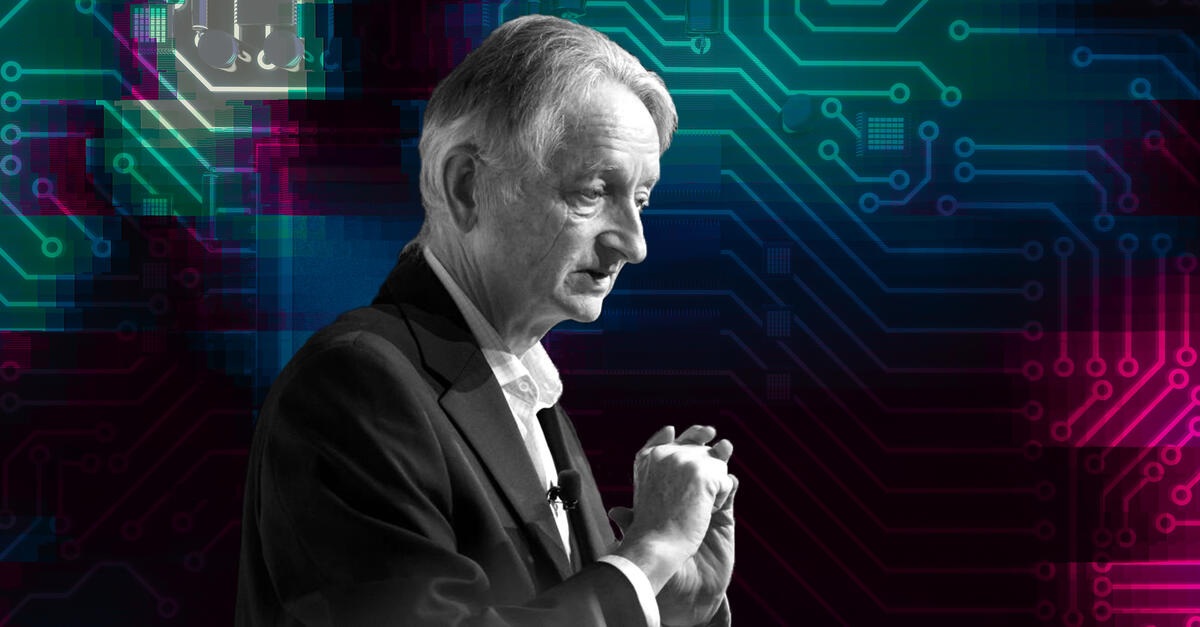
Geoffrey Hinton, the pioneering computer scientist often called the “godfather of AI” and a Nobel laureate, has issued another warning about the future of work in the age of artificial intelligence.

In a wide-ranging interview with the Financial Times, Hinton predicted that AI would trigger mass unemployment alongside soaring profits, enriching a small elite while leaving most people poorer. But crucially, he argued that the fault lies not with the technology itself, but with capitalism.

“What’s actually going to happen is rich people are going to use AI to replace workers,” Hinton said. “It’s going to create massive unemployment and a huge rise in profits. It will make a few people much richer and most people poorer. That’s not AI’s fault, that is the capitalist system.”

His comments echo those he gave to Fortune last month, when he accused AI companies of chasing short-term profits at the expense of preparing for the technology’s long-term societal consequences.

Entry-Level Jobs at Risk

For now, layoffs tied to AI adoption have not spiked, but early signs of disruption are emerging. Evidence is mounting that entry-level opportunities — the first rung for many recent graduates — are shrinking as companies turn to AI for repetitive tasks. A recent survey from the New York Fed found that firms using AI are more likely to retrain existing employees than fire them, but acknowledged that layoffs are expected to rise in the coming months as automation deepens.

Hinton believes that jobs performing mundane or routine tasks are the most vulnerable, while roles requiring highly specialized skills or human judgment may be safer. Healthcare, in particular, is one sector he expects to benefit rather than suffer from AI.

“If you could make doctors five times as efficient, we could all have five times as much health care for the same price,” Hinton said in June during an appearance on the Diary of a CEO YouTube series. “There’s almost no limit to how much health care people can absorb—[patients] always want more health care if there’s no cost to it.”

While some AI leaders, such as OpenAI CEO Sam Altman, have suggested a universal basic income (UBI) to soften the blow of job displacement, Hinton dismissed the idea, saying it “won’t deal with human dignity” or the intrinsic value people derive from having work.

Existential Threats and Regulation Gaps

Hinton has long warned of the dangers of AI without adequate guardrails. He estimates a 10–20% chance that advanced AI could eventually wipe out humanity after the emergence of superintelligence.

He places AI’s risks in two categories: threats inherent in the technology itself — such as runaway intelligence — and threats arising from misuse by malicious actors. For instance, he warned in his FT interview that AI could aid in the creation of bioweapons.

Hinton also criticized the Trump administration for its reluctance to regulate AI more tightly, noting that China is taking the threat more seriously. At the same time, he acknowledged AI’s upside potential, describing the current moment as unprecedented and unpredictable.

“We don’t know what is going to happen, we have no idea, and people who tell you what is going to happen are just being silly,” he said. “We are at a point in history where something amazing is happening, and it may be amazingly good, and it may be amazingly bad. We can make guesses, but things aren’t going to stay like they are.”

An Unexpected Personal Use of AI

Despite his concerns, Hinton is also an active user of AI tools. He told the FT that he uses OpenAI’s ChatGPT mainly for research. In one anecdote, he revealed that a former girlfriend once used the chatbot during their breakup: “She got the chatbot to explain how awful my behavior was and gave it to me. I didn’t think I had been a rat, so it didn’t make me feel too bad?.?.?.?I met somebody I liked more, you know how it goes,” he quipped.

Why He Really Left Google

Hinton also clarified the reasons behind his 2023 departure from Google. Media reports suggested he quit in order to speak more freely about AI’s risks, but he said the truth was more mundane.

“I left because I was 75, I could no longer program as well as I used to, and there’s a lot of stuff on Netflix I haven’t had a chance to watch,” Hinton said. “I had worked very hard for 55 years, and I felt it was time to retire?.?.?.?And I thought, since I am leaving anyway, I could talk about the risks.”

What the evidence says so far about jobs

Actual layoffs tied directly to AI remain limited for now. A recent New York Fed study covering firms in the New York–Northern New Jersey region finds AI adoption rising sharply, and that companies using AI are more likely to retrain workers than to fire them. Still, the survey documents early signs of disruption: some service firms reported scaling back hiring because of AI, and a modest share expect layoffs in the months ahead — effects concentrated at the entry and college-degree levels where recent graduates typically find work. Those patterns are consistent with Hinton’s concern that opportunities at the start of careers are already shrinking.

How other influential voices frame the trade-offs

Hinton’s capitalism critique sits beside a set of alternative — often more technocratic — proposals from other leading figures and institutions. Their responses offer contrasts in diagnosis and remedy.

Sam Altman, CEO of OpenAI, has publicly backed experiments with universal basic income and related pilots as a way to soften disruption while societies adapt. Altman and others in Silicon Valley argue AI could fund broader income supports or other redistributive mechanisms so the gains from automation are shared more widely; proponents frame UBI as a practical bridge while skills, education, and labor markets adjust.

Bloomberg reported on recent UBI experiments backed by groups around Altman and other tech figures, illustrating how the idea has moved from abstract to testable policy.

Bill Gates has emphasized productivity gains from AI while also urging policy responses to manage the distributional effects. Gates has pointed out that AI will make many tasks “cheaper and more accurate,” which will lower costs and boost output, but he has also proposed tools such as taxation or new financing models to ensure society captures part of that value and funds social needs created by the transition. His public discussions of a “robot tax” and other fiscal approaches put the emphasis on using public policy to rebalance gains.

Economic institutions such as the International Monetary Fund frame the issue as a policy design problem: AI can lift productivity and global output substantially, but the benefits will not be automatic or evenly distributed.

The IMF’s work recommends a suite of actions — active labor market policies, retraining at scale, tax and transfer reforms, and stronger governance of AI deployment — to manage transition risks and ensure broader gains. The Fund’s research underlines that policy choices will determine whether AI amplifies inequality or helps raise living standards.

How these views compare with Hinton’s core warning

Hinton’s framing places moral responsibility squarely on economic incentives: the same systems that produce efficiency will, under current rules, concentrate wealth unless governance and institutions change. The technocratic voices — Altman’s experiments with UBI, Gates’ fiscal proposals, the IMF’s policy toolkits — treat the problem as solvable with better policy design and public investment.

They accept automation’s productivity promise and aim to distribute its gains; Hinton accepts the productivity upside too (notably for healthcare) but is far darker on whether market forces will allow a fair outcome without deeper structural change.

Central Bank of Nigeria Hints at Future Rate Cuts, Warns of Political Risks to Economic Stability

0

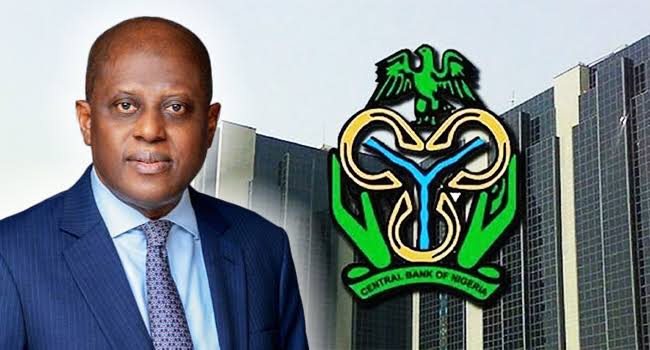
Governor of the Central Bank of Nigeria (CBN), Olayemi Cardoso, has projected that interest rates could trend downward in the coming months, citing easing inflation and more efficient capital allocation as key factors.

Speaking at the European Business Chamber (Eurocham Nigeria) C-Level Forum in Lagos, Cardoso acknowledged the burden of today’s high lending rates, which range between 32% and 36% on commercial loans, but assured investors and businesses that macroeconomic stabilization would likely bring relief.

“There was a substantial potential for interest rates to decrease in the future,” Cardoso said during a fireside chat moderated by Andreas Voss, Chief Country Representative of Deutsche Bank Nigeria.

The apex bank chief outlined the CBN’s priorities, stressing macroeconomic stability, banking sector recapitalization, and positioning Nigeria as a competitive investment hub.

Although headline inflation remains elevated, Cardoso noted that it is beginning to soften as policy measures take effect.

“It is decreasing as a consequence of collective efforts. It is anticipated that the advantages of the CBN tightening posture will persist. We will protect the stability that has been re-established in the financial system with the utmost zeal,” he said.

Cardoso reaffirmed that the central bank would continue its tight monetary stance to preserve stability, arguing that the resilience of Nigeria’s financial system is critical for lending, corporate expansion, and long-term investment flows.

“Our primary objective is to maintain that stability while simultaneously addressing inflation and ensuring that the financial system is sufficiently resilient to facilitate corporate lending and investment,” he added.

What the Numbers Show

A report by the National Bureau of Statistics (NBS) last month revealed Nigeria’s headline inflation rate eased slightly to 21.88% in July 2025, down from 22.22% the previous month. On a year-on-year basis, the figure was 11.52% lower than the 33.40% recorded in July 2024.

Urban inflation stood at 22.01% in July 2025, a notable 13.76 percentage points lower compared to the 35.77% logged in July 2024.

While these figures suggest a positive trend, analysts caution against premature policy loosening.

Experts Urge Caution

Dr. Paul Alaje, CEO of SPM Professionals, while commending the CBN’s reforms, warned that the current inflation decline may not yet be sustainable.

“I think the central bank is making some very good policy. This time, I only hope that some of those policies will be sustained. For instance, relaxing MPR shouldn’t be now.

“We may need to wait a bit more, especially because some of the inflation numbers we are seeing are outliers. I didn’t say they are lies. I’m saying they are outliers,” he explained on Channels Television’s Politics Today.

Alaje argued that a full-year cycle of consistent inflation data is necessary before considering easing, otherwise Nigeria risks undoing recent gains.

Political Risks Ahead of 2027 Elections

Beyond monetary policy, Alaje flagged looming political risks as a major determinant of Nigeria’s economic trajectory. With the 2027 elections approaching, he cautioned that reckless handling of foreign exchange during campaigns could destabilize the fragile recovery.

“Even the danger starts more with the pre-election year. The behavior of politicians will determine whether we are going to have another great four years or another horrible four years. And this is what I want President Tinubu to do. Warn politicians, all inclusive, from federal to local government, no exchange of foreign currency, to delegate or for whatever,” he said.

He noted that 80% of Nigeria’s final goods are imported, making the naira highly sensitive to foreign exchange scarcity. Any political abuse of forex, he stressed, would wipe out the little progress made.

“The little sign of positivity that we are seeing will evaporate overnight,” Alaje warned.

Strain on Small Businesses

For Nigeria’s small and medium enterprises (SMEs), the prevailing lending environment has become a chokehold. With commercial loan rates hovering between 32% and 36%, many small business owners say borrowing has become nearly impossible. SMEs — often described as the engine of Nigeria’s economy — have been forced to shelve expansion plans, cut staff, or rely on informal lending at great personal risk.

Analysts believe that while the CBN’s tightening stance is necessary to fight inflation, it is also stifling the very businesses expected to drive economic recovery. Cardoso’s assurance of “downward pressure” on rates is therefore being closely watched by entrepreneurs desperate for cheaper credit.

How To Scale, and Not Just Grow: Attain Product Market Fit Before Any Attempt to Scale

1

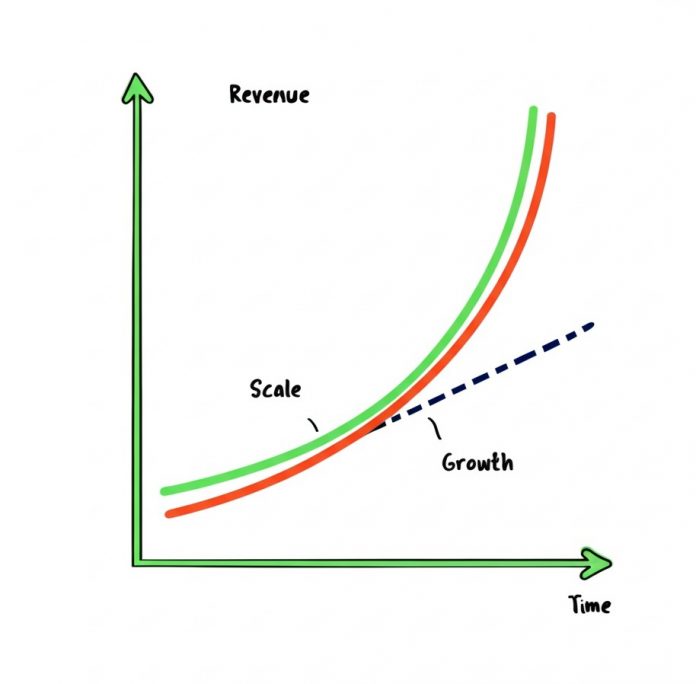
In business, there is a cardinal rule: never scale before you find your product-market fit. Product-market fit is that moment of equilibrium where what you supply is exactly what the market demands. It is when customers are not just buying your product but are also celebrating it. They use it, they love it, and they tell others about it.

Understand this: the first version of your product is rarely the final destination. No matter how brilliant the idea is, customers will expose blind spots. They will test it, complain about it, suggest improvements—and that feedback becomes your most valuable asset. By listening, refining, and iterating, you bring the product closer to their hearts.

But here is the danger: if you bypass this refining process and instead chase growth with heavy media blitz, advertising, and promotions, you might create noise without substance. Yes, people will come because the buzz was loud. But when the music stops, the product must sing its own song. If value is missing, customers will leave. And when customers leave, the vision begins to wobble.

Simply put: find your product-market fit first. Without it, scaling is premature—and as we say in the streets, wahala go dey.

Build. Refine. Attain PMF. Then Scale. You must SCALE, and not just grow.

Join Tekedia SUV by Registering for Tekedia Mini-MBA 18th Edition

0

Tekedia SUV is picking learners, and very soon, the door will shut on registrations for the 18th edition of Tekedia Mini-MBA! If you’ve been planning to join this transformative ONLINE program, now is the time to jump into the SUV by securing your spot. Our program is 100% online.

Classes begin next week Monday, and you don’t want to be left behind. Get your seat here and enjoy the ride to unparalleled knowledge, innovation, and business acumen.

Go here and register https://school.tekedia.com/course/mmba18/