DD
MM
YYYY

PAGES

DD
MM
YYYY

spot_img

PAGES

Home Blog Page 5695

On the Dependence of the Mainstream Media on Social Media Sources

0

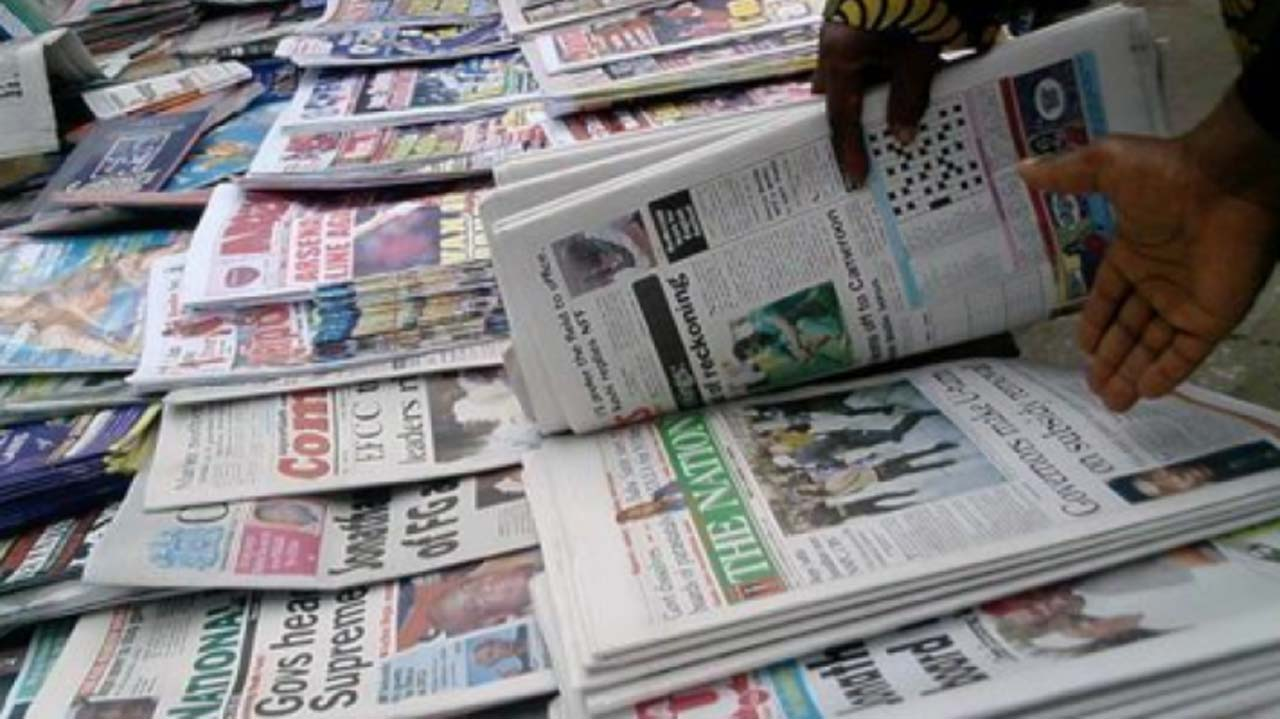
There was a time when I woke up every morning, looking forward to going through the websites of different Nigerian mainstream media platforms to read updates on happenings across the country and even the globe. The crime watch or metro stories were always my favourites back then because I felt more at home with them than the political and financial news. Then, newspapers’ updates on neighbourhood stories were more comprehensive and detailed because they were reported by journalists that visited the scene of the incident. But as time went by, this section became “boring” because their stories became sketchy. It was during this period I decided to go over to gossip blogs for my daily digests.

When I started receiving neighbourhood stories from gossip blogs, I realised they were becoming more detailed than the mainstream media. At least, they are honest by stating the sources of their information, unlike the newspapers that shield that vital detail. If the information the blogs published turns out to be lies, some of them come back later to announce that and also give you reasons why they are not true. Those blogs were doing good jobs even though they could not give in-depth information that could have been passed across by the real journalists in the mainstream media. For instance, a blog writer may not be able to visit a crime scene to interview eye-witnesses or even call the law enforcers to ask for details concerning an event. They have to wait and listen for information that will be released on social media. Hence, many of us decided to turn to social media for the juicy gossips we received from blogs and the mainstream media.

Many people stopped patronising Nigerian newspapers when they discovered that their sources of news articles came from Twitter and, sometimes, Facebook. People did not see the essence of finding out what is published in newspapers when what they read on Twitter is what appears in the newspaper. So, things became more of the case of hearing it directly from the horse’s mouth. Apart from that, you can also read up the analysis and further details about a story (some of which are lies) given by commentators, which will help you to understand the true nature of the incident. With that, Nigerian newspapers began to lose customers and goodwill.

There is nothing wrong with journalists sourcing information and news from social media but total dependence on it is where the problem lies. Journalists are known to be attracted to stories like flies are attracted to a rotten carcass; hence, being attracted to a piece of juicy news on social media is not condemnable. We all experience the same effect because we follow stories around and try to get every bit of it. However, we depend on journalists to dig deeper and bring out facts to fill up the gaping holes in stories, especially the ones that don’t make sense. But when the journalists we depended on turn around to depend on us, don’t you think something is out of place? Why won’t they visit the crime or incident scene, interview eyewitnesses, snoop around a little, and then get back to us? Are they now scavenging news from social media as we do? Should they and blog owners compete for our attention?

I’m not here to teach journalists how to do their jobs but to let them know that I understand why their articles are becoming too bland and narrow. I am here to tell them that I understand why they have been misled into publishing fake news (most of which they don’t come out to debunk). I am here to tell them that in a matter of time, people will stop subscribing or buying newspapers if they, the journalists, don’t change and become real journalists instead of social media scavengers. I don’t know what their challenges are. Maybe they are no longer paid to go into the field to get information. But whatever their challenges are, they need to start now to make a positive difference.

Living vs Living Well

2

About 12,000 years ago, the total number of people living in the world was about 4 million. In the year 1800 (that is more than 200 years ago), the world population was about 1 billion people.

Currently, the number of people living in the world is over 7.7 billion. That means in the past 2 centuries, the population of people living on planet earth increased by approximately 800%.

This is a staggering explosion in population growth within a 200 years period, compared to preceding years.

When a human is born into the world, it is usually a moment of celebration. Those cute little humans with bright eyes and irreproachable mien will make a stony heart melt. They are the reason the human race goes on and on.

But that is not where the story ends…actually, that is where the real story begins.

When that beautiful, innocent-looking baby is born, what you have in your hands is a breathing living consumption machine with needs and desires. As that human keeps growing, his/her needs and desires keep growing in size, scope and complexity.

The fulfillment or otherwise and the rate of fulfillment or otherwise of those needs and desires will determine whether such a human lives a happy life or not, whether they become an asset or a liability to their society, and whether the people who birth them end up being fulfilled parents or having loads of sorrows.

While rapid innovations have brought about diverse better options for people in this 21st century, the quality of living for billions of people around the world has actually decreased compared to people who lived in the world with lesser innovative sophisticated options in preceding centuries.

The word ‘suicide’ has never been more familiar than it currently is in the 21st century. So many people around the world plan and execute their own death by their own hands due to the choking limitations frustrating their living.

According to the World Health Organization, more than 700,000 people die by suicide every year. It was further revealed that ‘’for every adult who died by suicide, there may have been more than 20 others attempting suicide.

That means if 700,000 people die by suicide in a year, more than 14 million people also attempted suicide in that same year.

It is very eye-opening to note that 77% of suicides occur in low and middle income countries. Also instructive to note that a huge proportion of the world population are concentrated in low and middle income countries, especially low-income countries.

So what is the wisdom in recklessly birthing children into an overpopulated world that is increasingly more difficult to live in?

As at 1960 when Nigeria gained independence from her British colonialists, total population was about 45 million people. 61 years later (2021), the total number of people living in Nigeria is currently more than 211 million people.

One do not need to wonder why poverty, hunger, insecurity, suicide rate, conflicts and so on are increasing every day in Nigeria. A major answer to that question is already staring everyone in the face.

Purchasing Power Parity (PPP) as a measure of the strength of a country’s currency compared to other countries also reflects people’s living standard in a country in comparison to other countries.

The International Monetary Fund (IMF) in 2021 did an estimate of PPP in 188 countries which also revealed how well people are living in such countries.

Out of the 188 countries, these are the first five countries with the highest PPP in their chronological order: 1. Luxembourg 2 Singapore 3. Ireland 4. Qatar 5. Switzerland.

  • Luxembourg has the highest PPP in the world, their population is just a little over 600 thousand.
  • Singapore has the second highest PPP in the world, their population is about 9 million
  • Ireland has the third highest PPP in the world, their population is about 5 million
  • Qatar has the fourth highest PPP in the world, their population is about 3 million

Nigeria is number 136 out of 188 countries on the PPP list and her population is over 211 million people.

Population alone does not account for the poor quality of life in a country, but it goes a long way in that accounting.

For the fourth year in a row, Finland has been rated as the country with the happiest people in the world. The total number of people living in Finland is about 5.5 million people.

Poor people are usually the ones who birth more children. I do not understand how a man and his wife with 3 kids would be living in a single room. How could any right-thinking man father 3 children when he could only afford a single room rent?

Even rich parents should be scared of birthing more than 2 humans. The quality of living for a child goes beyond the material comfort you can provide for that child, it also has to do with safety amongst other things.

Nigeria has reached a stage where the rich can no longer rest easy because there are too many frustrated poor people around. For example, you and your child are a goldmine in the hands of kidnappers and armed robbers.

So, instead of having many children due to available sufficient fund, having one or two kids and using the extra fund for human development sponsorship in your sphere of influence could be a better idea. That way, yourself and your children are guaranteed a better chance at peace and safety.

The joke is on the few rich people who think they are living a good life. No! They’re not. Not when they can’t enjoy that money in peace.

The beauty of living is not in the quantity, it is in the quality. It is how well people live that makes them appreciate their existence and develop the enthusiasm to contribute positively to the world they live in.

Otherwise, you have a miserable human being who would either be living in a vegetative state, become a liability/danger to the world or use their very hands to end the life that they had without their own consent.

Nobody owes you gratitude for mere procreation. Nearly everyone with a penis and a vagina can do that. You deserve an applause for birthing humans and giving them wings to fly.

Treat human life with care. Reproduce human life with reverence. The wellbeing of the world and its inhabitants are counting on it to thrive.

Nigeria’s Biggest Risk As Digital Currency E-Naira Emerges

1

There is a massive promise on the ascension of a digital currency, e-naira, in Nigeria. But e-Naira can also crack Nigeria’s economy. I have a 25 document which I have been creating on E-Naira as I continue to evaluate the opportunities and risk.  The fact is this: if E-Naira launches, expect everyone to move his or her money from retail banks to CBN (Central Bank of Nigeria) – and if that is the case, retail banks will have limited money to lend, freezing banking as we know it.

Magically, if people cannot borrow from banks because the money is in the CBN vault, the economy will crash as we cannot have growth. I do expect the CBN to cap how much people can keep in e-Naira; otherwise, our economy will fold. 

Already, my model is that up to 10% of Naira will be in e-wallets by 2025 and with that, retail bank-driven CBN pushed monetary policy will not “affect” 10% of naira. In other words, if monetary policies are designed around control via retail banks and money is warehoused in Pass, Flutterwave, Paystack, expect dislocations.

I am waiting for the CBN technical document on the digital currency. Depending on what they have there and the apparatus it wants to run the show, we will know what the future holds. But one thing is certain: if you disintermediate retail banks through e-Naira, you will destroy Nigerian economy overnight because companies cannot source funds for growth. You cannot expect the citizens to hold money directly with the apex bank and still expect the retail banks to still have money to lend!

Of course, from ease of use, no issues of failed banks to deal with, zero or extremely low transaction costs, to ability to engage citizens directly on monetary policies via many tools like interest rates, e-naira will be a positive.

A Nigeria’s Massive Opportunity Arrives in 2022 As Era of Fintech 2.0 Begins


Tesla outperformed auto stocks with 224% ROI in last one year, but trailed NIO

0

Tesla is among the notable growth stocks that have recorded significant returns for investors. Despite the electric vehicle manufacturer’s stock slumping in 2021, it has maintained an edge over competitors.

According to data acquired by Finbold, Tesla stock registered an ROI of 224.93% between June 2021 and June 2020, outperforming some of its major competitors. Among the selected vehicle manufacturers, Tesla only trailed China-based NIO, which had almost double returns at 539.13%. Ford Motor ranks third with returns of 152.28%, followed by General Motors at 141.08%, while Volkswagen AG ranks fifth at 116.62%.

Other stocks with key returns include XPeng (75.47%), Oshkosh (74.08%), Navistar (60.29%), Toyota  42.19%), and Honda (25.22%)

Between the period, Tesla also maintained a superior stock price growing from $191.95 in 2020 to $623.71 in 2021. Elsewhere, last year, NIO’s stock price was at $6.9, while in June 2021, the stock stood at $44.1.

Tesla benefiting from green energy debate 

Having established its position as a  leader in electric vehicle manufacturing, Tesla stock benefitted from some of the initiatives around environmental conservation. According to the research report:

“In the wake of a new focus towards the climate change agenda, Tesla has been at the center of attention, with more investors betting on the company. Some jurisdictions are also enacting legislation favouring consumers opting for electric vehicles, and as a leader in the sector, Tesla stands to gain.”

Based on the Tesla returns, it is clear the massive gains made in 2020 were enough to sustain profitability for investors despite the stock slumping in 2021. The growth was mainly guided by fundamental factors like greater retail investor interest in the stock and the inclusion of the S&P 500 index.

However, for Tesla to remain with the upper hand, the company needs to look out for competition.

Source: Finbold newsletter

A Nigeria’s Massive Opportunity Arrives in 2022 As Era of Fintech 2.0 Begins

4

The Central Bank of Nigeria plans to unveil Nigeria’s digital currency. Yes, the e-Naira is coming next year. I am looking for startups which are thinking ahead of this new market, and ready to build a product for that future. While we do not know fully what it would look like, one thing I know is this: there would be new or updated payment gateways and possibly Nigeria will have nodes for “agents” at different levels of market stacks, from commercial banks to mama put and akara sellers. This is a cambrian-level opportunity and it looks promising.

The Central Bank of Nigeria (CBN) Governor, Godwin Emefiele, has revealed that Nigeria will launch a digital currency. With this, Nigeria tracks other nations which plan or have launched digital currencies. China is expected to roll out the e-yuan, its digital currency, at scale, later in the year. The United States has also started work on e-dollars.

Next month, Tekedia Mini-MBA LIVE is converging a session to be anchored by Dubai-based Bitfxt (crypto exchange) and BoundlessPay (crypto payment) on Digital Currencies: E-Yuan, E-Dollars, and E-Naira. We do expect to learn a lot about this evolving market and how businesses and entrepreneurs could prepare for that future. Yes, I want to make sure people can pay for Tekedia Mini-MBA with e-Naira once it goes live.

At Tekedia Capital, this is an area we hope to invest if indeed the Central Bank of Nigeria (CBN) decentralizes the distribution of the e-Naira to the extent that our phones, portals, etc become our banks, and our bank accounts are now ‘warehoused” in the CBN, at least up to a level. 

If you have a compelling vision with a roadmap of that future, I will personally write a cheque once CBN shares guidelines on the protocol. More so, we would like to invite you to this exclusive conversation for the Tekedia community. Indicate your interest by commenting below.

The race to Fintech 2.0 in Nigeria is beginning next year. Are you ready? Who builds the first e-naira compatible API?