DD
MM
YYYY

PAGES

DD
MM
YYYY

spot_img

PAGES

Home Blog Page 57

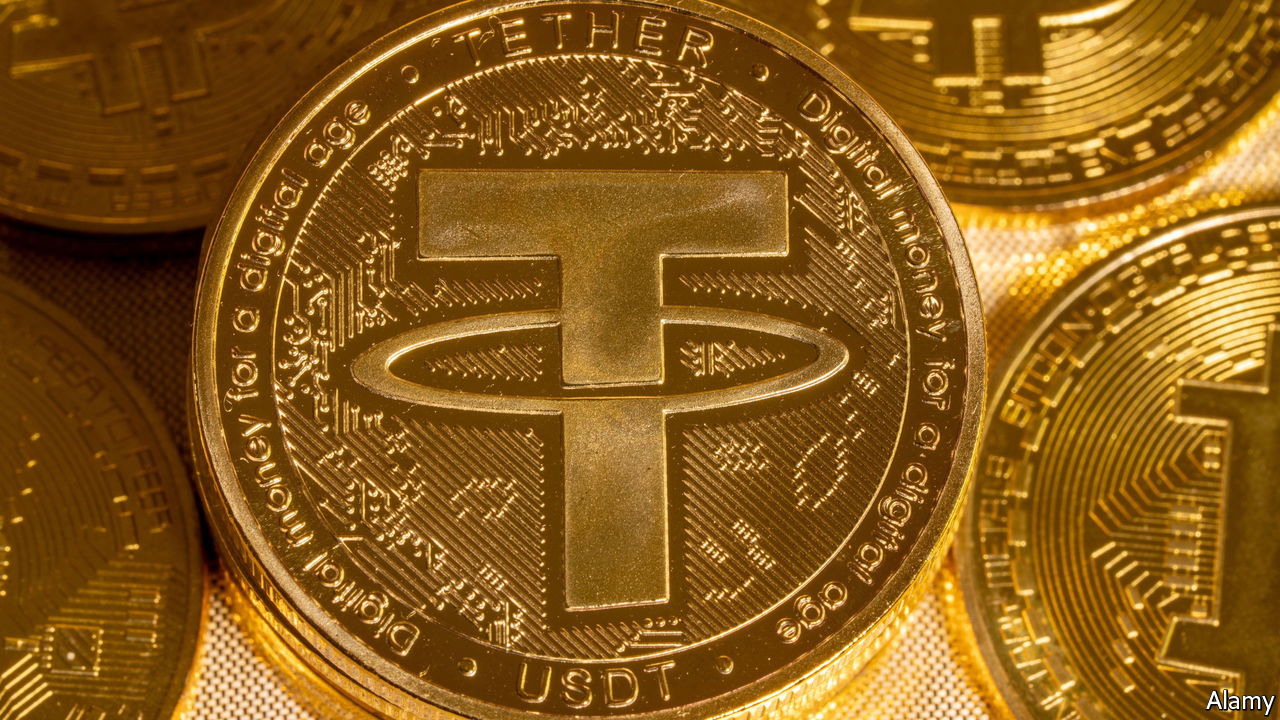
Tether Investor Makes Record £9M Donation to Reform UK

0

The UK’s Electoral Commission released quarterly donation figures revealing that Christopher Harborne, a British billionaire and former shareholder in Tether the issuer of the world’s largest stablecoin.

USDT and its affiliated exchange Bitfinex, donated £9 million approximately $11.4–12 million to Reform UK, the right-wing populist party led by Nigel Farage.

This marks the largest single political donation ever made by a living individual to a UK party, surpassing previous records like the £8 million given by Lord David Sainsbury to the Liberal Democrats in 2019.

The only larger sum on record is a posthumous £10 million bequest from the late Lord John Sainsbury to the Conservatives in 2022. Harborne, a Thailand-based aviation entrepreneur and crypto investor also known as Chakrit Sakunkrit, held a significant stake in DigFinex, the parent company of Tether and Bitfinex, from 2017 to 2018.

He has a history of funding right-wing causes, including £6 million to the Brexit Party (Reform UK’s predecessor) in 2019 and £3 million before the 2019 general election, plus £1.6 million to the Conservatives.

In 2022, he gave £1 million to Boris Johnson’s private office—the largest known donation to an individual MP at the time. Harborne’s son, William, is CEO of Rhino.fi, a stablecoin infrastructure firm that partnered with Tether in 2024.

The donation was made on August 1, 2025, contributing to Reform UK’s total Q3 fundraising of £10.5 million—more than double the Conservatives’ £7 million and Labour’s £2.6 million. It’s reported as a cash transfer, not cryptocurrency, though Reform UK became the first UK party to accept crypto donations earlier this year.

Reform UK, polling strongly ahead of May 2026 local elections, has aggressively courted the crypto sector. Farage has pledged a national Bitcoin reserve if elected and publicly promoted Tether in September 2025.

The party denies any link between Harborne’s gift and its pro-crypto stance, including deregulation pushes. However, the donation has sparked scrutiny amid growing UK concerns over crypto’s role in politics.

Labour’s Pat McFadden called for a donation cap, and the Electoral Commission is reviewing crypto financing rules, with proposals to potentially ban such contributions in a forthcoming Elections Bill.

This infusion has supercharged Reform UK’s finances, enabling expanded campaigning as it challenges the establishment parties. It underscores crypto’s deepening influence on global politics, with Harborne’s total political spending nearing £21 million mostly to Reform UK/Brexit Party.

Critics, including Transparency International, warn of risks from uncapped donations reliant on a few wealthy backers. No evidence suggests impropriety, and Harborne is a permissible donor as a UK electoral register member.

The news has trended on X, with users highlighting Farage’s crypto-friendly policies as a potential catalyst for UK Bitcoin adoption if Reform gains power.

Solana Tokens Now Live on Base

Aerodrome Finance, the leading DEX and liquidity hub on Coinbase’s Base network, has officially integrated the new Base-Solana bridge.

This allows any Solana-based token— SPL tokens, including $SOL itself to be bridged over, deployed for liquidity, and traded natively on Aerodrome in seconds, without wrappers or intermediaries.

It’s a game-changer for cross-chain liquidity, blending Solana’s high-speed ecosystem with Base’s low-cost, Ethereum-aligned infrastructure.

Users bridge assets directly via the Base-Solana bridge, powered by Chainlink’s Cross-Chain Interoperability Protocol (CCIP) and verified by Coinbase nodes for security. Once on Base, tokens can be pooled on Aerodrome for trading, yielding, or distribution—think instant memecoin launches or DeFi strategies across chains.

Already rolling out on Aerodrome, Zora (for NFTs), Virtuals, Flaunch, and Relay Protocol. Developers can fork the open-source bridge code on GitHub to add it to their own apps. Early tests include trading $SOL, $CHILLHOUSE, and $TRENCHER natively on Base.

Creators on Solana can now tap into Coinbase’s 120M+ users for instant exposure via Aerodrome pools. This bidirectional bridge unlocks deeper liquidity pools, potentially boosting TVL on both sides.

Aerodrome’s veAERO holders will vote on emissions to incentivize these new pools, aligning rewards with cross-chain growth.

Access Base’s cheap gas ~$0.01/tx and Coinbase on-ramps without leaving your wallet. Trade Solana assets in Base dApps, then bridge back seamlessly. Instant influx of Solana’s vibrant token ecosystem supercharges liquidity. Aerodrome’s TVL could explode as it becomes the go-to meta-DEX for L2s.

Early volume is already ticking up, with $10M+ in bridged assets reported across similar bridges. If you’re a trader, head to Aerodrome’s app to test bridging a small SPL token. This could be the spark for Base flipping Solana in TVL—watch $AERO and $SOL closely.

Chowdeck Processes N1.4 Billion as Black Friday Campaign Shatters Records

0

Chowdeck, the Nigerian on-demand food delivery service, has once again raised the bar in Nigeria’s food delivery space, after it announced a major milestone that vendors on its platform processed N1.4 billion during its Big Black Friday Weekend campaign.

The company set an ambitious target ahead of the event at 50,000 orders in a single day, double the record from the previous year, and invited the public to witness it in real time.

For the first time, Chowdeck built a BFCM live tracker, allowing anyone to watch orders coming in across its cities. The dashboard displayed real-time app visits, incoming orders, total transaction value, rider kilometres, fastest delivery times, and even featured an interactive puzzle.

The puzzle unexpectedly became a key attraction, transforming passive viewers into active participants. One user solved it in under six seconds, contributing to the 2.5 million app visits recorded during the period.

Restaurant partners, including major brands like Chicken Republic and hundreds of local vendors, experienced their highest single-day sales on the platform. The scale of activity exceeded all prior benchmarks.

The Big Black Friday Campaign by the Numbers:

  • N1.4 billion total vendor transaction volume
  • 183,000+ orders delivered
  • 52,000+ orders on Friday alone (new record)
  • 115 peak orders per minute
  • 5,000+ orders per hour for five consecutive hours
  • 727,000+ kilometres covered by riders
  • N205,000 earned by the highest-earning rider
  • 1 minute 30 seconds fastest delivery time
  • 2.5 million app visits

Commenting on the milestone, Chowdeck CEO and Co-founder Femi Aluko described it as an affirmation of the ecosystem’s collective growth. He emphasized that beyond the numbers, the real triumph lay in the progress of vendors, the increased earnings for riders, and the enhanced experience for customers.

What was expected to be an ambitious sales push quickly turned into a record-breaking milestone, proving Chowdeck’s growing influence, customer loyalty, and operational strength in one of the year’s busiest retail cycles.

Despite the massive surge in activity, the company noted that its infrastructure remained stable and the customer experience stayed seamless. Users engaged deeply with the live tracker, sharing screenshots, solving puzzles, and tracking the real-time progress of the campaign.

Notably, Chowdeck stated that this year’s Black Friday campaign was built around a simple idea, to show what is possible when technology, logistics, and community come together. The outcome validated that vision.

It is interesting to note that, the success of Chowdeck’s Black Friday sales campaign, comes after the company in October this year, surpassed one million orders marking its strongest month to date.

According to CEO Femi Aluko, he stated that the feat reflects not only Chowdeck’s scale but also the strength of its business fundamentals. He revealed that the company closed October with a positive gross margin of 26%, underscoring that it is possible to grow rapidly while maintaining profitability and operational sustainability.

Founded in October 2021 by Femi Aluko, Olumide Ojo, and Lanre Yusuf, the company now operates in 11 cities, including Lagos, Abuja, and Accra, serving over 1.5 million customers with a network of 20,000+ riders. Operating profitably since its inception, Chowdeck’s success is rooted in its strong partnerships with top brands such as KFC and Burger King, as well as several local vendors, which offer customers a mix of African, Asian, and healthy meals.

By surpassing expectations and setting new industry benchmarks, Chowdeck continues to position itself as a dominant force, driving innovation, scale, and competitiveness within the Nigerian food delivery landscape

Base-Solana Bridge Launches is A Major Step for Cross-Chain Liquidity

0

Coinbase’s Ethereum Layer-2 network, Base, officially launched its mainnet bridge to Solana, enabling seamless asset transfers between the two ecosystems.

Dubbed the “Base-Solana Bridge,” this connection is secured by Chainlink’s Cross-Chain Interoperability Protocol (CCIP) in partnership with Coinbase, ensuring independent verification of every cross-chain message to prevent single points of failure.

The launch aligns with Base’s ethos of building an “interoperable global economy” rather than isolated networks, allowing users and developers to access liquidity across both chains without friction.

Users can now deposit SOL directly into Base apps, import any Solana Program Library (SPL) token like meme coins or DeFi assets to Base, and export Base-native ERC-20 tokens to Solana. This supports two-way liquidity flow, making it easier to trade assets like SOL, CHILLHOUSE, or TRENCHER on Base DEXs.

Chainlink CCIP node operators and Coinbase validators independently confirm all transfers, providing robust, oracle-secured interoperability. This design resists hacks and downtime, drawing on Chainlink’s track record with institutional-grade finance.

The open-source bridge is available on GitHub, letting builders integrate Solana support into Base dApps quickly. Early adopters include Zora, Aerodrome, Virtuals, Flaunch, and Relay Protocol, where users can already trade cross-chain assets.

The bridge rolled out progressively starting December 4, with full mainnet access for integrations and user-facing apps by early December 5. Users noted potential for faster, cheaper cross-chain trades, with one developer praising the Chainlink-Coinbase combo over alternatives like LayerZero for its security reliability.

This isn’t just a technical link—it’s a push toward “always-on” capital markets. Base envisions expanding to more L1s and L2s via CCIP, positioning itself as a neutral hub for multi-chain activity.

Chainlink’s Chief Business Officer, Johann Eid, emphasized how this scales onchain finance to handle trillions in global value securely. Solana’s high-throughput ecosystem known for speed now complements Base’s low-cost Ethereum scaling, potentially boosting adoption in trading, NFTs, and social apps.

Chainlink’s Cross-Chain Interoperability Protocol (CCIP) is a standardized, oracle-secured framework for enabling secure communication and value transfer between blockchains.

Launched on mainnet in July 2023, CCIP facilitates three primary capabilities: arbitrary messaging (data payloads), token transfers (native or wrapped assets), and programmable token transfers (conditional actions like swaps or staking upon arrival).

It operates as a “universal standard” for cross-chain interactions, supporting over 60 blockchains including EVM-compatible (e.g., Ethereum, Polygon), non-EVM (e.g., Solana, Aptos), public, private, and institutional networks.

CCIP leverages Chainlink’s Decentralized Oracle Network (DON) infrastructure, which has secured tens of billions in value and enabled over $14 trillion in on-chain transactions, to ensure tamper-proof execution without centralized intermediaries.

At its core, CCIP addresses key cross-chain challenges: fragmentation of liquidity, single points of failure in bridges, and lack of verifiability. It uses a defense-in-depth security model, including independent verification, rate limiting, and privacy features, to mitigate risks like hacks or oracle failures.

As of December 2025, CCIP supports 60+ networks, including Ethereum, Base, Solana, Arbitrum, Optimism, Polygon, Avalanche, Aptos, and private chains like those for CBDCs. “Lanes” are configurable paths between chains, defining rate limits and fees.

CCIP’s open-source repo on GitHub provides core node binaries and contracts for operators. This protocol is pivotal for multi-chain apps, as seen in integrations like Aave’s cross-chain governance and the recent Base-Solana bridge.

SOL dipped about 3% to around $140 on launch day, down over 50% from its January 2025 peak of $293, showing muted initial response amid broader market fear (Fear & Greed Index at 28).

LINK also fell 3% to $14.30, but analysts eye SOL’s potential rebound to $170 as liquidity unlocks new trading pairs. Expect more integrations soon, as this could spark a wave of cross-chain dApps.

This bridge exemplifies how Chainlink is “linking everything” in Web3—watch for ripple effects across DeFi and beyond.

New Research Data Shows that Gold Nanoclusters Could Be Used in Quantum Computing

0

Researchers from the US have revealed some exciting data, which highlights the fact that gold nanoclusters, or superatoms, exhibit properties that are similar to quantum systems used today. Discoveries like this could not only make quantum computers more scalable but also more accessible.

Using Gold Nanoclusters as Building Blocks

Nomis Foundation has reported that quantum information technology could be syndicated with electron spins. This is the magnetic orientation of electrons, and they help to determine how long information stays stable and how it can be controlled. The best systems used trapped atomic ions that are isolated in a gas, as these are coherent, clean, and controllable.

With that said, it’s hard to scale, as the atoms have to remain dilute, and they also have to be isolated. If you expand the system or grow it beyond its capabilities, you may end up introducing interference, which will destroy the information you’re trying to generate. With that said, gold nanoclusters are able to mimic the same results, can be mass-produced, and are also stable when condensed.

Researchers have identified 19 Rydberg-like states in gold clusters, which previously were only identifiable in isolated gaseous ions. This means that, based on current data, gold clusters could end up becoming quantum components that can be tailored to computing.

Quantum Computers Rely on Uncertainty

If you have a qubit in superposition, it behaves in a way that is random. Randomness is essential in the world of quantum computing, but interestingly, it’s also a big part of our lives in other ways. According to Nayaone, banks need large quantities of synthetic data and unpredictable numbers. This could include generating information for customer account numbers, bank card PINs, and even transaction IDs.

Banks use cryptographically secure random number generators that are seeded via entropy sources to guarantee this. Car keys also use rolling code encryption, which means every time you unlock your car, a new code is generated randomly to ensure security. Even in entertainment, random number generators are used.

Slot machines online rely on random number generators. In iGaming, some Megaways casino games have 117,649 ways to win. This applies to titles such as Centurion Megaways and Eye of Horus Megaways, where random number generators are used to ensure each outcome is completely independent, just as it would be on a physical slot machine.

Even though random number generators are essential in a lot of different aspects of our lives, they are a core part of quantum computing, and the concept of having gold nanoclusters is certainly exciting. As gold nannoclusters have quantum properties, they are random at a quantum level. If you excite a nanocluster, the timing of the photon is random on a molecular level. This means that moving forward, it may be that gold nanoclusters are used to create randomness on a higher level, which is not only scalable but also easier to implement on a more global level. Research like this helps to show how important it is to explore new research, but also how even the simplest of concepts can be refined and improved.

Top 3 Tokens to Invest in as Whale Buying Lifts Bitcoin Above $105,000

0

This week, Bitcoin accomplished a significant rally, essentially surpassing the $105,000 mark, and the whole crypto market got kind of lit because of that. Little Pepe, a Layer 2 blockchain combining fast transactions with meme culture, is benefiting from this trend. Large investors entering the market are driving prices higher, prompting interest in similar altcoins and early-stage opportunities. For investors seeking to spread their risk away from BTC, here might be the next turn in the journey of tokens like Little Pepe, TRX, and SUI.

Frogs with Power: Little Pepe’s Meme Kingdom

Little Pepe is making waves with its Layer 2 network designed for speed and ultra-low fees. Currently in Stage 13 of its presale, 1 LILPEPE trades at $0.0022, with nearly $27.6 million raised out of the $28.7 million goal. The presale has sold over 16.7 billion tokens, leaving only a fraction for new buyers. With whales now showing interest, Little Pepe could see accelerated demand as early backers secure positions before the next price jump. The ecosystem is built on security, with a CertiK audit scoring 95.49%. This gives investors confidence that $LILPEPE smart contracts are robust and safe. Besides being secure, Little Pepe has been giving back to its buyers through a series of giveaways, in which more than 15 ETH in prizes were included. Additionally, the coin has no trading tax, allowing users to benefit from staking rewards and from marketing efforts that will attract many social media users through memes, videos, and influencer collaborations.

TRX Gains Quiet Strength While Market Dips

TRON(TRX) has shown impressive resilience amid BTC’s rally. Currently around $0.29, TRX has maintained relative stability while other major coins struggle. Its liquidity heatmap suggests upside clusters above $0.30, pointing to a potential sweep higher. Analysts note that the market is quietly absorbing dips, making this a possible accumulation opportunity for whales. Technical setups on TRX hint at bullish momentum. An inverse head and shoulders pattern is forming, supported by a long-term ascending trendline near $0.28 to $0.30. The pattern indicates that continuation is favored if buyers hold this support zone. Even amid volatility, TRX remains green while the broader market turns red, suggesting strong rotation into defensive assets that could reward patient investors.

SUI Navigates Critical Levels

SUI is trading near $1.75, approaching key support zones after a period of consolidation. The token’s descending triangle pattern has tested traders’ patience, but the ecosystem shows signs of strength with active transaction volume and utility integration. This makes SUI a candidate for strategic accumulation while waiting for confirmation of a breakout above resistance levels. According to the charts, SUI seems to have been operating within a specified channel, decreasing its highs slowly. Early oversold conditions are indicated by RSI and MACD figures, suggesting a potential turning point. Traders consider $1.75 as the turning point, with short-term goals of $1.80 and $1.88.Whales could use this compression phase to position themselves ahead of a wider market recovery.

Layered Momentum in a Bullish Crypto Week

Altcoins, such as Little Pepe, TRX, and SUI, are benefiting from the recent BTC rally that surpassed $105,000. These three tokens have different stories unfolding: Little Pepe is a rapidly popularizing meme token, TRX is strengthening its position by defensively providing liquidity, and SUI is a token whose price is showing signs of consolidation and a possible breakout. Investors looking to diversify their portfolios with high-risk assets might consider these tokens as their next step, provided they also manage their entry timing properly.  The market is expected to behave like a combination of FOMO, whale accumulation, and cautious optimism this week. The rise of Bitcoin is a reason for market optimism. Altcoins remain highly volatile, rewarding only well-positioned investors. Monitoring liquidity zones, structural supports, and presale progress is key to managing risk and capturing early opportunities.

Conclusion: Your Next Steps

If you liked those memes and if you are a Little Pepe fan, the Little Pepe presale is still going on for $0.0022 per token, which is a chance to get in early before the last rounds shut. Buyers willing to invest can also be active in daily community discussions, receive updates, and enter giveaways by joining the Little Pepe Telegram group. This is an ideal time for investors to position themselves strategically across promising tokens as whales push Bitcoin to new highs. At the same time, the altcoin market responds with opportunities for early adopters.


For more information about Little Pepe (LILPEPE) visit the links below:

Website: https://littlepepe.com

Whitepaper: https://littlepepe.com/whitepaper.pdf

Telegram: https://t.me/littlepepetoken

Twitter/X: https://x.com/littlepepetoken

$777k Giveaway: https://littlepepe.com/777k-giveaway/