A great NBA coach combines tactical expertise, leadership, and the ability to manage a diverse group of personalities. He must balance 2 things: individual talent and team cohesion. Remember that you can also play on online sports betting sites 1xBet and use them to wager on NBA teams with great coaches.
While basketball strategies and analytics are crucial, coaching also has other 2 essential aspects: psychology and communication. The best coaches can adapt to 3 aspects:
different eras;
styles of play;
and evolving rosters.
It is very simple to become a member of the online sports betting sites 1xBet and use them to play and bet on the best NBA squads.
Understanding the tactical aspects
Tactical knowledge is a foundational element. A great coach understands 3 things: offensive and defensive schemes, player roles, and in-game adjustments. He can also perform 3 kinds of tasks: analyze opponents’ tendencies, develop game plans that exploit weaknesses, and optimize their team’s strengths. You can take advantage of all those elements in action by making live basketball betting at 1xBet.
For example, a coach must know how to create spacing for shooters, manage pick-and-roll situations, or execute late-game plays with precision. The ability to combine strategy with situational awareness is a hallmark of elite coaching.
Leadership and communication are equally important. NBA rosters often include multiple star players with strong personalities, so a coach must do 2 things: inspire respect and maintain harmony. And speaking about NBA stars, you can also make live betting on these great basketball players at 1xBet.
Great coaches motivate players to buy into a system, even if it means sacrificing individual statistics for team success. They provide constructive feedback, build trust, and cultivate confidence, allowing players to perform at their best under pressure. Mentorship also plays a role, as great coaches help young athletes develop both on and off the court.
The NBA evolves constantly, from pace-and-space offenses to small-ball lineups and advanced analytics. Coaches who succeed long-term, like Gregg Popovich or Steve Kerr, embrace innovation while preserving fundamental principles of basketball. They have done 2 things to succeed: adjust rotations, experiment with strategies, and incorporate data insights without losing sight of player dynamics and chemistry. You can also succeed by making online basketball betting with the 1xBet site too.
Egypt’s B2B startup Tradehub, a collaborative quoting and catalog platform that helps suppliers streamline the sales cycle has made the difficult decision to shut down the company.
This decision comes after Tradehub could not achieve product-market fit despite multiple pivots and months of testing. After careful consideration, the founders chose to wind down operations rather than continue pivoting without strong conviction in a new direction.
Speaking on the shutdown, the company’s co-founder Ahmed Gaber wrote via a LinkedIn post,
“Yesterday, we officially returned all remaining capital to our investors and dissolved the company. I wanted to wait until everything was finalized before sharing this. TradeHub was a bittersweet journey. Ahmed Atef and I started in late December 2023, and by February 2024 we were fortunate to have investors who believed in us, backing us with a $1.4M pre-seed round. We spent the following 18 months validating and experimenting on our initial idea of a cross-border B2B marketplace, before eventually pivoting to a B2B sales automation SaaS tool.
“Despite our best efforts, we couldn’t reach product-market fit. Accepting that reality, we made the difficult but responsible decision to wind down the company and return the remaining capital to our investors. But why didn’t we pivot to a third idea since the first two didn’t work and we still had capital left?
“The short answer is: conviction. By the time we explored multiple directions and learned from our experiments, we no longer had a strong enough conviction in a third idea that justified the risk of continuing. Continuing just for the sake of “trying something else” didn’t feel responsible to us. Two Personal Reflections: I’ve come to learn that knowing when to let go is just as important as knowing when to push forward. For two months, I grappled with that exact decision, trying to find the thin line between letting go and continuing to try. Ultimately, you have to take all the factors—and the people you’re responsible for—into consideration. Making the difficult but responsible decision to wind down was a sign of maturity, not of giving up.”
The founders expressed gratitude to their investors Concept Ventures, TLcom Capital LLP, Armyn Capital, and several angel investors for their unwavering support throughout the journey and even after the decision to close the company.
Founded in late December 2023 by Ahmed Atef and his co-founder Ahmed Gaber, Tradehub worked to connect manufacturers with local and global buyers for seamless B2B trade. Initially launched as a cross-border B2B marketplace, the team spent months validating and experimenting with their idea before pivoting to build a B2B sales automation SaaS tool.
TradeHub’s dedicated platform worked to showcase manufacturers in the local and global markets by providing factory pages where they can display their factory and product details through images. This made it easier for potential buyers to search and discover local manufacturers.
Additionally, the platform allowed buyers to request price quotes, create tenders, and communicate with manufacturers through the available chat feature. By February 2024, the startup had raised a $1.4 million pre-seed round from investors who believed in their mission.
Core Offerings on The TradeHub Digital Platform Include;
Business Profiles: Traders showcased their businesses and products to local and global buyers.
AI-Powered RFQs: The procurement process on the platform is simplified and transformed with intelligent RFQ tools.
Growth Opportunities: TradeHub helped businesses increase sales and reach new markets with ease.
Connection: The platform enabled users to search and connect with manufacturers who have the skills and resources to produce what they’re looking for.
However, despite these innovative offerings and efforts to stay afloat, the company deemed it fit to shut down, a decision that was not taken lightly. The founders reflected deeply on the balance between perseverance and knowing when to let go. One key lesson they shared was that ending a venture is not a sign of failure, but rather a sign of maturity and responsible leadership.
TradeHub’s story serves as a reminder that building a startup is as much about resilience and learning as it is about growth and success. While this chapter has closed, the lessons learned will undoubtedly fuel future innovations.
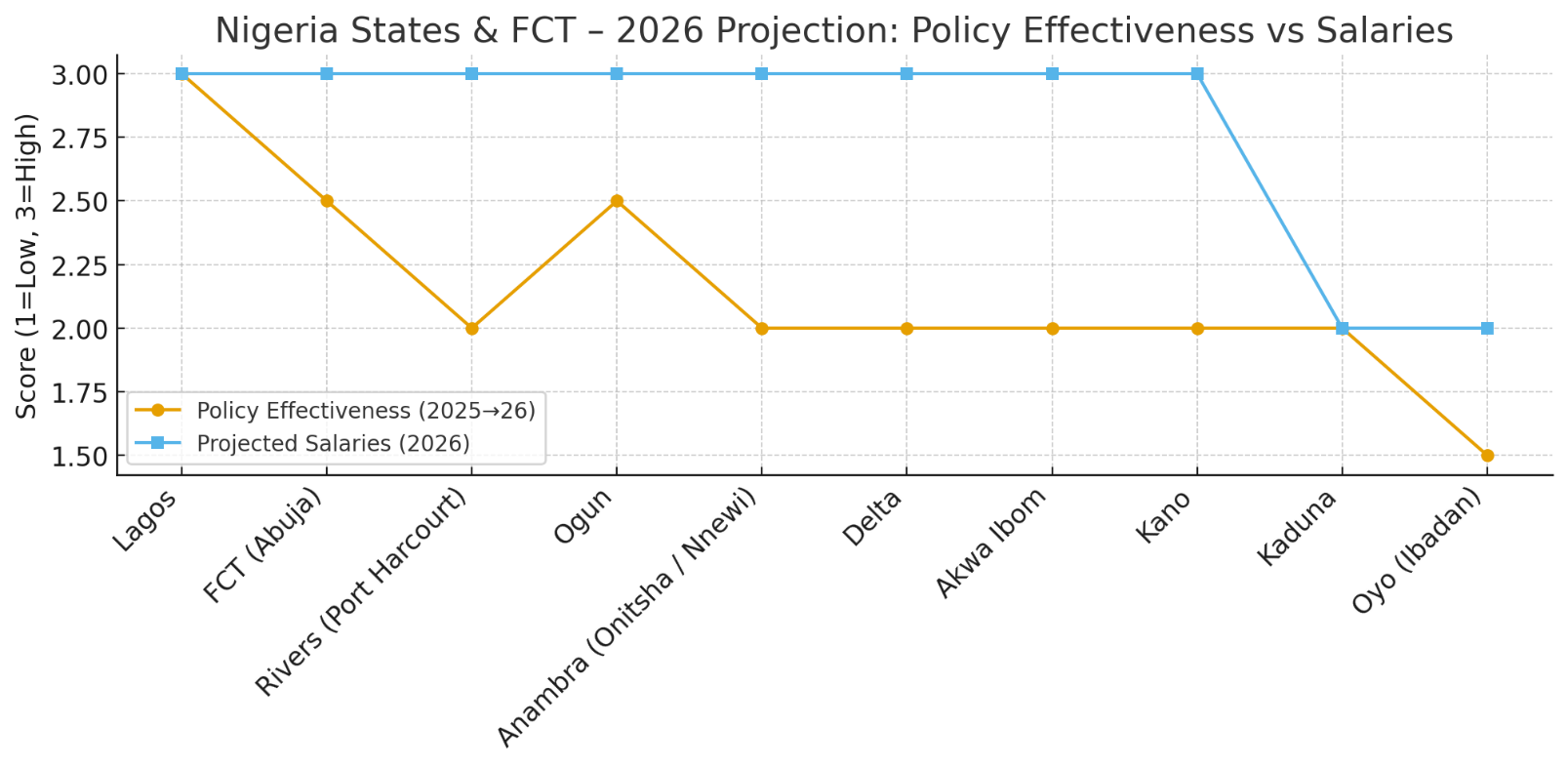
Nigeria’s labour market is shifting quickly as states implement industrial policies, attract private investment and reposition for a post-subsidy economy. From the examination of gross state product, sectoral hiring, and the credibility of government initiatives between January 1 and September 8, 2025, Infoprations identifies 10 states Nigerians and other nationals could migrate to for better opportunities and career advancement in 2026. Our analyst notes that professionals weighing relocation need a clear view of which states combine real earning power, sector diversity, and policy follow-through.
Understanding the 2025 Signals
Three indicators define the opportunity landscape: employer density, policy implementation, and sector wage potential. Lagos posted the country’s strongest technology and finance signals in 2025 with record venture activity and a steady flow of product, fintech, and creative industry roles. Abuja maintained steady recruitment in public service, NGOs, and consulting, while oil-producing regions recorded renewed upstream and service contracts following federal security interventions in the Niger Delta. Manufacturing corridors in Ogun, Anambra, and Kano benefited from state-level industrial incentives and a revival of garment and agro-processing clusters.
Policy intent alone does not guarantee jobs. Analysts focused on concrete developments such as new factory openings, export-zone licensing, or funded infrastructure projects. These signs, alongside wage benchmarks and cost-of-living data, offer the clearest clues to 2026 conditions.
States Leading on Salaries and Sector Depth
Lagos remains the undisputed economic capital. Its fintech, logistics, and media ecosystems reward skilled labour with the country’s highest private-sector wages. Hiring remains brisk due to continuous inflows of capital and talent. Professionals in engineering, software, and business development find abundant roles despite premium housing and heavy commuting.
The Federal Capital Territory, anchored by Abuja, provides stable middle to senior-level income streams through ministries, multilateral agencies, and development projects. Consultants and policy specialists see consistent contract renewals. Though salaries are less explosive than Lagos, the relative predictability and access to decision-makers make Abuja attractive to professionals in governance and NGO operations.
Oil hubs continue to deliver exceptional wages for technical experts. Rivers State, particularly Port Harcourt, benefits from renewed government attention to pipeline security and investment in service facilities. Delta and Akwa Ibom share similar advantages, pairing upstream activity with new downstream and energy transition projects. These states carry sector-specific risk, yet the remuneration for geologists, engineers, and project managers often surpasses national averages by a large margin.
Rising Industrial and Commercial Frontiers
Manufacturing growth is shifting the conversation beyond the coast. Ogun’s industrial parks, supported by tax incentives and its logistical proximity to Lagos, create fertile ground for plant managers, supply chain officers, and quality control professionals. Mid-level salaries are improving as foreign and local firms scale operations. Anambra, with its legacy in trading and light industry, is accelerating market modernization and attracting logistics and SME investment. Business owners and experienced supervisors will see wider opportunity here than in previous cycles.
Northern industrial centers are also staging a comeback. Kano launched a garment industry expansion targeting tens of thousands of new roles, signalling serious intent to rebuild its once-dominant textile base. While starting wages remain moderate, the breadth of hiring opens pathways for supervisory staff and operational leads. Kaduna complements this with agro-processing and defense-linked manufacturing, appealing to professionals comfortable with steady but incremental progression. Both states offer lower living costs and room for entrepreneurship.
Oyo, particularly Ibadan, leverages its large educational base to expand service, healthcare, and light manufacturing sectors. Growth here is slower in absolute terms but attractive to those prioritising affordable housing and a strong academic environment. Steady hiring in education and public health, coupled with private SME expansion, produces moderate wages with sustainable career ladders.
Planning for a Competitive 2026
Migration decisions should be anchored in sector fit. A fintech analyst or cloud engineer thrives in Lagos due to network effects and salary competition. A development economist or policy adviser positions strongly in Abuja. Petroleum engineers weigh Port Harcourt, Delta, or Akwa Ibom where projects sustain lucrative pay packages. Industrial engineers and factory supervisors should examine Ogun, Anambra, or Kano for advancement without the Lagos cost burden.
Cost of living, security, and lifestyle considerations remain important. Lagos offers income premiums but also steep rents and congestion. Niger Delta cities provide elite compensation yet carry environmental and security risks. Interior states trade lower pay ceilings for calmer living and affordable housing. Verifying claims from state investment agencies, reviewing company announcements, and networking with industry insiders will prevent unrealistic expectations.
Professionals targeting 2026 should also invest in upskilling. Certifications in project management, data analytics, or sector-specific software can turn a relocation into a genuine promotion. Connecting with alumni networks, attending state-sponsored career fairs, and aligning with chambers of commerce increases visibility in emerging hubs.
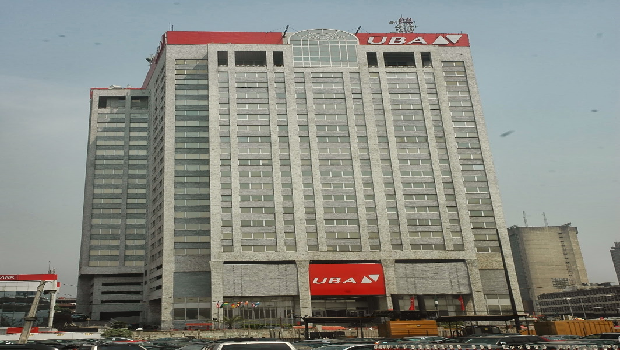
United Bank for Africa (UBA) Plc has extended the application period for its ongoing rights issue, shifting the deadline from Friday, 5th September 2025, to 19th September 2025.
The disclosure, published on the Nigerian Exchange (NGX) and signed by Group Company Secretary Bili Odum, confirmed that the Securities and Exchange Commission (SEC) had approved the revised timeline.
In a note explaining the adjustment, UBA said the extension is aimed at giving shareholders “additional time to fully exercise their rights and participate in the Rights Issue.”
A Key Step in Meeting CBN’s Recapitalization Mandate
UBA’s fundraising effort is directly tied to the Central Bank of Nigeria’s (CBN) recapitalization directive, which requires commercial banks with international authorization to increase their capital base to N500 billion.
The bank’s ongoing offer covers 3,156,869,665 ordinary shares of 50 kobo each, priced at N50 per share, and is expected to raise over N157 billion. The structure of the issue allows shareholders to take up one new share for every thirteen ordinary shares held as of the qualification date of 16th July 2025.
Backstory: UBA’s Rights Issue History
This is not UBA’s first major capital-raising exercise. In November 2024, the bank launched a N239 billion rights issue priced at N35 per share. Investor appetite proved strong, with subscriptions reaching N251 billion. After adhering to the offer terms, the bank accepted N240 billion, boosting its capital base to N355.2 billion.
That earlier success provides confidence that the current extension to 19th September could drive further shareholder participation and put UBA firmly on track to meet — or even surpass — the recapitalization threshold.
The extension comes against the backdrop of strong financial results. In the first quarter of 2025, UBA posted a pre-tax profit of N204.27 billion, marking a 30.65% increase year-on-year.
Net profit also surged 33.15%, hitting N189.84 billion compared to N142.58 billion in Q1 2024.
A breakdown of its income drivers shows:
Interest income rose 36.09% to N599.83 billion.
Loans and advances generated N260.56 billion (+31%), contributing 43.44% of the total.
Investment securities earned N291.86 billion (+44.96%), making up 48.66%.
Income from cash balances climbed 17% to N47.42 billion, representing 7.9%.
Non-interest income also showed resilience, with strong performance in transaction-based revenues:
Some analysts believe that UBA’s decision to extend the application window is not just procedural but strategic. With Nigerian banks racing against time to meet the CBN’s capital requirements, maximizing shareholder participation is crucial to avoid reliance on expensive alternatives.
The pricing at N50 per share signals management’s confidence in the bank’s valuation, especially given that the previous rights issue in 2024 was priced at N35 per share and still oversubscribed.
If fully subscribed, the combined effect of the 2024 and 2025 rights issues will significantly lift UBA’s capital buffer, positioning it competitively against peers like Zenith Bank, Access Holdings, and GTCO, who are also actively raising fresh equity.
How Zenith and Access played the recapitalization game
Two of UBA’s peers moved earlier and by slightly different routes.
• Access Holdings / Access Bank ran a large rights programme that closed successfully and was cleared by regulators, raising roughly ?351 billion via the issuance of 17.77 billion shares at about ?19.75 per share — a transaction that lifted its capital well above the CBN minimum and made Access one of the first to cross the line under the new rules.
• Zenith Bank combined a rights issue with a public offer (a hybrid approach) and reported raising about ?350.4 billion under that programme. The hybrid structure allowed Zenith to tap both existing shareholders and new public investors in a single exercise.
What the choices tell you
Three practical differences stand out:
Timing and market appetite. Access and Zenith moved earlier and posted large raises that exceeded the CBN threshold, freeing them from near-term recapitalization pressure. UBA is following with a second tranche; it is leaning on seasoned investor appetite and a history of oversubscription to reach the target.
Structure and pricing. Access priced low per share but issued many shares, producing a large absolute rise. Zenith used a rights + public offer mix to widen distribution. UBA’s ?50 price point is higher than those earlier offers, signaling management’s confidence in valuation after solid quarterly results and prior shareholder support.
Balance-sheet and funding mix. Banks that closed early (Access, Zenith) now have the regulatory headroom to pursue growth or M&A without the immediate distraction of further equity raises. UBA’s staggered approach — a prior rights round in 2024 followed by the current tranche — spreads dilution and gives management an option to absorb capital in stages rather than all at once.
The logo for Goldman Sachs is seen on the trading floor at the New York Stock Exchange (NYSE) in New York City, New York, U.S., November 17, 2021. REUTERS/Andrew Kelly/Files
A sharp surge in artificial intelligence spending by America’s largest technology companies has propelled U.S. equities to fresh records. Still, Goldman Sachs analysts caution that a dramatic pullback in investment could wipe out much of those gains.
In a research note released this week, strategists led by Ryan Hammond highlighted how capital expenditures from hyperscalers such as Microsoft, Amazon, Alphabet, Meta, and Oracle have fueled revenue growth across the AI supply chain — from semiconductor giants like Nvidia to cloud infrastructure and hardware providers.
Record Spending, Record Valuations
Goldman estimates that hyperscaler capital spending has already reached $368 billion in 2025, surpassing earlier forecasts. These outlays, primarily for data centers, GPUs, and cloud capacity, have translated directly into real revenues for chipmakers and service providers, powering the boom in AI-linked stocks.
The five largest companies in the S&P 500 — Nvidia, Microsoft, Apple, Alphabet, and Amazon — currently trade at a price-to-earnings multiple of 28, lofty by historical standards but still well below the peaks of 40 in 2021 and 50 during the 2000 dot-com bubble. Goldman stresses that, unlike past speculative manias, today’s valuations are supported by tangible revenue growth.
The Risk of a Spending Slowdown
Even so, analysts warn that the market is vulnerable to a sudden shift. Should hyperscaler investment revert to 2022 levels, AI hardware and services providers could lose out on 30 percent of the projected $1 trillion in S&P 500 sales growth expected in 2026. In such an “extreme scenario,” Goldman’s model suggests the S&P 500’s overall multiple could fall by 15 to 20 percent.
“The durability of this rally is tied directly to capex momentum,” Hammond and his team wrote, noting that investor enthusiasm is highly dependent on hyperscalers maintaining their aggressive pace of investment.
Echoes of Past Tech Booms — But With a Difference
Goldman stops short of labeling the current rally a bubble. Unlike the dot-com era, the revenues generated by AI demand are immediate and measurable. Nvidia, for example, has booked record-breaking quarterly sales from data center chips, while cloud providers have reported accelerating customer adoption of AI services.
The historical parallel, however, is instructive. In the early 2000s, telecom carriers poured hundreds of billions of dollars into network buildouts, only to abruptly cut spending when revenues failed to match projections — a collapse that left equipment suppliers with excess capacity and stock prices in freefall. Similarly, the cloud-computing boom of the 2010s saw an arms race in data center investment, though in that case, demand ultimately caught up and reshaped the enterprise software industry.
Today’s AI spending wave shares elements of both: a massive upfront infrastructure buildout with uncertain long-term demand curves, but also faster near-term monetization than earlier cycles.
Momentum Still Upward — For Now
Despite concerns about sustainability, the rally continues. AI-related stocks rose 32 percent in 2024 and have added another 17 percent so far in 2025. Analysts broadly expect spending growth to slow toward the end of 2025 or into 2026, but leading tech firms have consistently revised guidance higher, suggesting the inflection point may be further away than feared.
Currently, Wall Street remains split. Bulls argue that AI is a transformative technology still in the early innings, while skeptics warn that markets are pricing in perfection. Goldman’s message to investors lands somewhere in between: the upside is real, but so are the risks.