DD
MM
YYYY

PAGES

DD
MM
YYYY

spot_img

PAGES

Home Blog Page 5701

Six Months of Presidential Etiquette in the Oval Office, and the Return of Multilateralism

0

It’s been six months since Joe Biden became the president of the United States, ushering in politeness that has erased the abusive words, name calling and unpresidential utterances that characterized day-to-day activities of Trump’s four years as president.

‘Pocohantas,’ ‘sleepy Joe,’ ‘crazy Bernie,’ ‘crooked Hilary,’ ‘wild Bill,’ ‘mini Mike,’ ‘Lightweight Senator Kirsten Gillibrand’ etc. were the sort of names echoing through the Oval Window as they were puffed out by Trump.

A lot has changed since January, as the etiquette befitting the presidency returns to Washington following the swearing in of Biden. In the first G7 meeting since Trump left office, leaders of the group didn’t hide their excitement seeing Biden representing the political ideals that America is known of, which Trump, by his uncouth utterances and actions, had misrepresented in the past four years.

British Prime Minister Boris Johnson described Biden as “breathe of fresh air,” echoing the sentiment of world leaders who watched helplessly as Trump trampled on the fundamentals of multilateralism they had worked so hard to build.

“The president and the prime minister set out a global vision in a new Atlantic Charter to deepen cooperation in democracy and human rights, defense and security, science and innovation, and economic prosperity, with renewed joint efforts to tackle the challenges posed by climate change, biodiversity loss, and emerging health threats,” a joint statement by Biden and Johnson said after the G7 meeting, marking the restoration of multilateralism.

Trump’s impoliteness, which went beyond calling his political opponents and whoever disagrees with him names, to maligning other countries, thrived under his “America first” mantra. A nationalistic idea that was backed by millions of Americans at the cost of multilateralism.

The United States leads the world on many fronts including combating climate change and emerging health threats. The defining moments of its leadership came following the outbreak of COVID-19, a pandemic of Chinese origin, which has claimed nearly four million lives globally, including over 602,000 Americans. But Trump was the president, and as he had done in other multilateral issues, he took to blame, name calling and making excuses, failing to uphold the leadership legacy the US has set in times of global crisis.

It is “China virus” it is China’s fault,” Trump had said. He had alleged that COVID-19 was created in a Chinese lab, pressuring the World Health Organization (WHO) to preach along. The UN’s health arm didn’t push the unsubstantiated claim, and it became another victim of Trump’s nationalism.

In his four years as president, Trump pulled the US from many multilateral organizations. The WHO, which he severed ties with at the peak of the global health crisis was considered the most arbitrary among them. Trump’s decision meant the WHO would no longer receive yearly $400 – $500 million from the US government to carry out its operations, and that also means that low income countries, some of which he had described as s**hole countries, would be denied medical aids when it is most needed. But to Trump, the WHO was just another name to be delisted for the “America first” movement.

By his third year in office, Trump had pulled or threatened to pull the US out of most of the multilateral organizations. Below are some of them.

  • Trans-Pacific Partnership
    NAFTA
    Group of Seven (G7)
    UN Human Rights Council
    UN Educational Scientific and Cultural Organization (UNESCO)
    Iran nuclear deal
    World Trade Organization (WTO)
    World Health Organization (WHO)
    Paris Climate Accord

With the US leadership missing in these organizations, its allies were left reeling on the hope of a US president they can reckon with. The hope came true on January 20, when Biden became the 46th president of the United States, and its allies didn’t hide their joy.

“Once again after four long years, Europe has a friend in the White House,” European Union Commission President Ursula von der Leyen told lawmakers then at the EU Parliament in Brussels. “This new dawn in America is the moment we’ve been waiting for so long. Europe is ready for a new start with our oldest and most trusted partner.”

“From climate change to health, from digitalization to democracy, these are global challenges that need renewed and global cooperation, and the European Union and the United States must lead from the front and bring an alliance of like-minded powers with us,” von der Leyen said.

Biden’s first line of action was geared toward restoring the tradition of American leadership and reversing to great extent, the chaotic and saucy leadership introduced by Trump. In his first week in the Oval Office, there was a colossal reversal of Trump’s arbitrary executive orders, including those on WHO and climate change.

“There is simply far more scope for political agreement with President Biden. That is clear just looking at the executive orders he signed yesterday (Jan 21.). We will once again work together in the WHO, on the Paris climate accord. And on issues of migration, we will likely have a more similar view,” German Chancellor Angela Merkel said on the eve of Biden’s inauguration.

While there is still a huge task to undo all the chaos orchestrated and spurred by Trump’s style of leadership, sighs of relief are echoing, not just in the United States, but also around the world, for the “breath of fresh air.” For the United States, it is the return of presidential etiquette among other things; for the rest of the world, it is the return of multilateralism spearheaded by American leadership.

Tekedia Mini-MBA Opens Registration for Edition 6 (Sept 13 – Dec 6, 2021) [REGISTER]

0

Good People, I am thrilled to announce that registration has started for the 6th edition of Tekedia Mini-MBA. The edition will run from Sept 13 to Dec 6, 2021. The focus remains Innovation, Growth and Business Execution, biased with digital operation overlay. Yes, at the end, our co-learners will master the techniques for building category-king companies across industrial sectors.

We have accomplished many things in this mission, and I am very confident that this edition will continue to advance our market systems by equipping innovators and project champions with capabilities to accelerate the wealth of nations.

Program remains online with thrice optional live Zoom sessions. We record all sessions and the cost remains $140 (or N50,000 naira) per person. Discounts are available for group registration.

More so, Tekedia Institute through a partnership with Amazon will make it possible for our members to get technical skills, at no additional cost, if they desire. I just finished speaking with Amazon and we are very excited.

Click and join the best school – and by doing so, learn from the best! Alternatively, you can simply check below, pick the program of interest and pay right here.

10X Growth & Disruption Matrix

0

“That was an amazing session, combining Design Thinking, Lean Startup and Agile Methodology in one loop – very well delivered”, she sent as a feedback after our Faculty finished his class. Yes, our Tekedia Live yesterday was indeed a moment, as we challenged members to move from the old industrial way of building products to the new way of building and running businesses.

Sure, we do not need to discard everything from the old, but we can overlay the modern, to bring better efficiency on the utilization of factors of production. The goal is massive growth, a reward for excellently fixing frictions in markets.

Tomorrow (Thursday) at 7pm WAT, the CEO of Avorit CEO will anchor on a topic titled  “10X Growth & Disruption Matrix”. Simply, you will master how to drive business growth in the age of exponential disruption.

Tekedia Institute – learn from the best. Go here and join the next edition

Swedish Court Upholds Huawei Ban

0

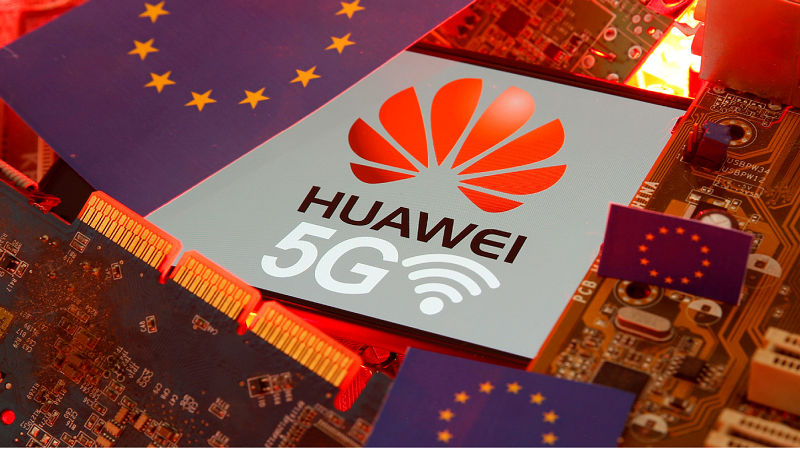
A Swedish court on Tuesday upheld a ban against Huawei selling 5G equipment in the country, dashing the Chinese company’s hopes of staging a comeback in Europe and increasing the chances of potential retaliation by China against rival Ericsson. Reuters has the report.

In October, Swedish telecom regulator PTS unexpectedly banned Huawei supplying 5G equipment to Swedish mobile firms due to security concerns raised by Sweden’s security service SAPO, a decision the Chinese company challenged in the court.

“Sweden’s security is of heavy importance and the administrative court has taken into account that only the Security Police and the armed forces together have an overall picture regarding the security situation and the threat to Sweden,” the court said in a statement.

Huawei said it was considering its options.

“It’s not unexpected based on the fact that the court is also leading their conclusions on basically the assumptions being made by SAPO,” Kenneth Fredriksen, Huawei’s Executive Vice President, Central East Europe and Nordic Region, told Reuters.

“We will continue to fight for our right to be in the (Swedish) market.”

European governments have been tightening controls on Chinese companies building 5G networks following diplomatic pressure from Washington, which alleges Huawei equipment could be used by Beijing for spying. Huawei has repeatedly denied being a national security risk.

Romania was the latest country that in effect barred China and Huawei from taking part in the development of its 5G telecommunication networks in the country. read more

Huawei’s troubles have not only helped companies like Nokia and Ericsson to grab market share in Europe, Samsung Electronics made its entry into the continent by signing British telecoms group Vodafone as a customer for supplying 5G network equipment. read more

China’s embassy in Sweden could not immediately be reached for a comment. But Beijing had previously reacted angrily to Huawei being called a security threat.

It had asked Sweden to “immediately correct the mistake” of banning Huawei and issued a veiled warning this month that it might take retaliatory action against Ericsson.

An Ericsson spokesman said the PTS decision, now affirmed by the court, “may adversely impact the economic interests of Sweden and Swedish industry, including those of Ericsson.”

Ericsson, which gets roughly 10% of its revenue from China, has voiced concerns about banning Huawei and flagged risks of losing market share in China.

The Chinese government has not responded to the decision, but there may retaliatory consequence. Earlier this month, China’s top legislative body passed an anti-sanctions law, providing legal backing for sweeping retaliation against any individuals, their families and organizations responsible for imposing foreign sanctions against the country. The new law signals China’s readiness to protect the operations of its tech companies among other interests abroad, applying retaliatory sanctions when necessary.

The Silent Causes of Food Inflation in Nigeria

1

Has it occurred to anyone that the prices of food items are going up in the market even though there is no scarcity? A lot of reasons have been given and theories formulated concerning the inflation that hit Nigeria. The restrictions on importation of some goods, increase in PMS pump price, devaluation of Naira, dollar “scarcity”, and dependence of many Nigerians on imported products have been blamed for the present Nigerian condition. Concerning the continuous increase in the price of food items, there were speculations that insurgency, ban on importation of some stable food items, poor weather condition (of last year), and the pandemic were the reasons we were given for paying a lot of money for foods cultivated and produced in the country. Well, even though these factors are guilty of causing inflation in Nigeria, are they the only causes?

When my Economics teacher was explaining inflation to us back then in secondary school, she said that inflation is when too much money chases too few goods. In other words, there is a lot of money in circulation but, because there are insufficient goods, prices go up. Hence, inflation happens only when goods are not there to satisfy human needs. This was the ideology I have about inflation. Each time I think of it, I think of scarcity; I visualise inflation as a phenomenon that occurs when people could not find what they needed even though they can afford it. In other words, inflation should not happen when there is abundance.

Well, I hope my Economics teacher has changed her description of inflation to accommodate the type we are experiencing in Nigeria today. We actually have a unique type of inflation, where there are plenty of goods and too little money but the price of things is moving up with alacrity.

People may describe what we are having in Nigeria today as “Cost-Push Inflation”, where, as we were told, the rise in the price of essential commodities pushes up the prices of other commodities, both the essential and the non-essential ones. If we adopt this definition, it then means that what is happening in our country today is a chain reaction of some price hikes or scarcities. But then, what is that thing that we are reacting to? Initially, the PMS pump price was blamed. But when that couldn’t hold water, the blame shifted to the dollar-naira exchange rates. From there, people began to blame food import restrictions and so many others. But these fact remains that all these factors have not really explained why the prices of locally cultivated food items continue to rise in the market despite their abundant availability.

One key area people have not really considered as a possible cause of the hike in the prices of food items is the transaction that happens from the time the farmer sold his produce to the time it reached the final consumer. That little space between the farmer and the consumer is the major point of the hike in price. The actors that filled that gap are the ones that can explain why there is food inflation in Nigeria. The actors in this space are no other than the middlemen, transport companies, and executives of various market unions.

The influence of these people on food prices explains the sudden unexplainable increase in the prices of food items. Middlemen have access to local farmers, whom they buy from at very cheap rates. When they want to move their wares to the market, they pay the haulage company handsomely for their services. When they reach the market men and women, the middlemen assume the power of the gods and fix prices as they wish. This would not have been possible if there were many other middlemen that sell particular farm produce to traders in a market. But because these middlemen belong to a cartel, they reduce competition and control prices.

The executives of the different unions in the market contribute their own quota towards causing inflation by deciding the prices goods will be sold. These executives do nothing to battle the middlemen’s control over prices and availability of commodities but rather decide to increase the prices of goods sold by their members. This is why the price of a particular commodity is the same all over the market. The implication of this is that the prices of goods continue to go up with no one to checkmate those causing the hike.

So, what should we do to discourage this artificial food inflation? The answer resides with the experts. But one day, the middlemen will be bypassed, transportations will become cheaper, and all will be well.