DD
MM
YYYY

PAGES

DD
MM
YYYY

spot_img

PAGES

Home Blog Page 5720

As Drivers Rise Against Uber, Bolt in Nigeria

1

Poor Uber and Bolt. The news that the Professional E-Hailing Drivers and Private Owners Association (PEDPA) in Lagos has decided to adopt two indigenous ecosystems should remind them that its drivers are reading what their counterparts in London and San Francisco are doing: “these indigenous App companies would work with the templates and provide drivers with a good welfare package for riders’ satisfaction. This will enable the union to protect the collective interests of the drivers as decisions can now be jointly taken and approved before it is binding on both parties.” Simply, if you treat Londoners fine and you come to Lagos, and do nothing amazing, you may experience a little shock.

Shonuga said that both drivers and riders had to deal with the shortcomings in the e-hailing industry without any mutual written agreement between the owners of the cars and the foreign app companies.

He said, “As against the 20 per cent commission by the team giant App companies, Active Ride is charging 15 per cent commission on each trip. And out of the 15 per cent, five per cent is dropped into the driver’s cooperative wallet and can be accessed for a quick fix.

“This means that with the 10 per cent commission taken by Active Ride, drivers can now earn more and even save. They can now have a good maintenance routine which in turn translate to better customer service delivery.’’

Yet, these drivers will realize one thing soon: running a ride-hailing business is not really about apps. The marginal cost of this business is offline. So, installing new apps without the support system may not change much. Uber is shipping money to buy new cars in Nigeria, and hand them over to drivers. If you leave the ride-hailing pioneer, and those cars come along, new drivers will emerge. Now, at the end, the winner will be the platform chosen by the riders.

With all respect here, riding Uber is a commoditized job. If Uber offers hire purchase and a path to car ownership, some bank tellers will resign and join in Lagos. So, these drivers should not think that everything ends on uninstalling and installing new apps. They have to look at the whole playbook and make sure they know where they are getting to.

The reason why London and San Francisco drivers were successful in their requests was due to one thing: their governments led the charge against Uber. In Nigeria, a blue bird is distracting the government now, and these drivers may not get what they expect. Nonetheless, I wish them good luck as they push for their rights. The use of indigenous companies makes it even amazing.

Thank You Amazon for the Support

0

I am very happy to announce that Tekedia Institute Mini-MBA and Tekedia CollegeBoost members will soon have access to world-class technical courses at no additional cost, courtesy of Amazon. These courses will cover IoT, cloud computing, cybersecurity, digital technology, ecommerce, AI, etc. By starting the edition 5 this week, we have stabilized the first phase of our playbook.

The next phase is helping managers become technical visionaries because every business is now a technology business. That translation has to be organic and done in ways that non-technical people will understand tech, because to drive productivity and competitiveness, technology is very critical.

Tekedia through Amazon continues to support innovators with up to $25,000 AWS credit; we invest via Tekedia Capital. I think we are the only affiliated-training institution in Africa that can give that amount! We have seeded innovators in our ecosystem and most have gone to raise $$millions. Just this week, one raised $700k; that journey began at Tekedia Institute. And if all goes well, something bigger is coming next month. #believeInAfrica #believeInNigeria

Tekedia Live Begins This Saturday at 7pm WAT – Innovation for Growth

0

Once again, welcome Tekedia Mini-MBA edition 5. The academic festival moves deeper  with Tekedia Live this Saturday at 7pm WAT. What is innovation? How do we create a new basis of competition? How do we build orthogonal paths in markets? How do we become category-kings? What is your NEP playbook? Zoom link in the Board 

JUSUN Calls Off Strike, Opening Opportunity for Courts to Address Nigeria’s Twitter Ban.

0

The Judiciary Staff Union of Nigeria, JUSUN, has suspended its strike action that has paralyzed judicial activities across the federation for over two months.

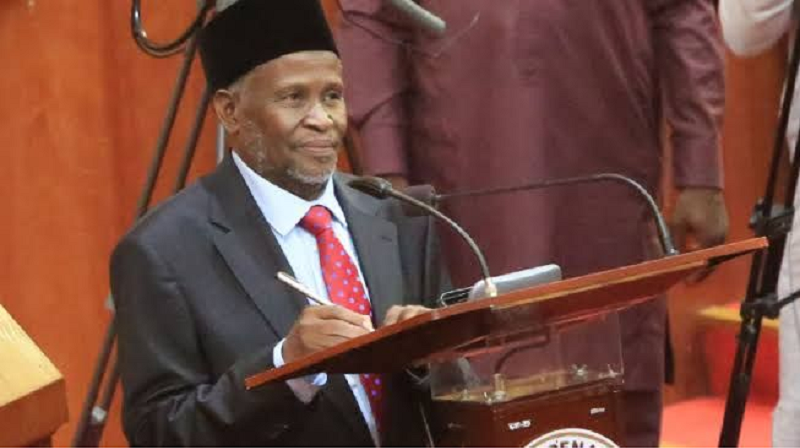
The strike was called off after a meeting between JUSUN executives and the National Judicial Council (NJC) led by the Chief Justice of Nigeria (CJN), Justice Ibrahim Muhammad.

JUSUN embarked on strike on April 6, ordering its members across the federation to shut all courts in the country to press home its demand for implementation of financial autonomy for the judiciary.

Ever since then, court activities have been paralyzed even as cases requiring judicial attention increased.

President Muhammadu Buhari had on May 22, 2020, signed into law, an Executive Order that granted financial autonomy to the legislature and the judiciary across the 36 states of the federation.

Although the order mandated the Accountant-General of the Federation to deduct from source, any amount due to state legislatures and judiciaries from the monthly allocation to each state, for states that refuse to comply with the Executive Order, many governors have refused to implement the order in their various states, denying JUSUN the financial autonomy they seek.

Now, the suspension of the strike which comes at the heels of Nigerian government’s ban on Twitter, opens opportunity for the courts to entertain the case.

Socio-Economic Rights and Accountability Project, SERAP, and 176 concerned Nigerians had on Tuesday, filed a lawsuit against President Muhammadu Buhari-led -administration over what it called, “the unlawful suspension of Twitter in Nigeria, criminalization of Nigerians and other people using Twitter.

The suit was filed at ECOWAS because of the JUSUN strike. Counsel to the group, Femi Falana, SAN, said the matter needs to be urgently treated to stop the Nigerian government from threatening media houses and Nigerians for using Twitter.

“If this application is not urgently granted, the Federal Government will continue to arbitrarily suspend Twitter and threaten to impose criminal and other sanctions on Nigerians, telecommunication companies, media houses, broadcast stations and other people using Twitter in Nigeria, the perpetual order sought in this suit might be rendered nugatory,” he said.

The Nigerian government had on Friday, announced the indefinite suspension of Twitter, after the microblogging app removed a civil war-referenced tweet by president Muhammadu Buhari, which violated its policy as it was considered genocidal.

With the courts on strike, it’s difficult for right activists to challenge the Twitter suspension which violates the constitution of Nigerians to freedom of expression.

For about 40 million Nigerian Twitter users, many of whom make a living on Twitter, JUSUN’s strike suspension beckons hope that the court will grant their prayer, which has been backed by the international community, and lift the suspension.

Cryptocurrency Market on the Path to Recovery As El Salvador Approves Bitcoin As Legal Tender

0
Bitcoin is soaring

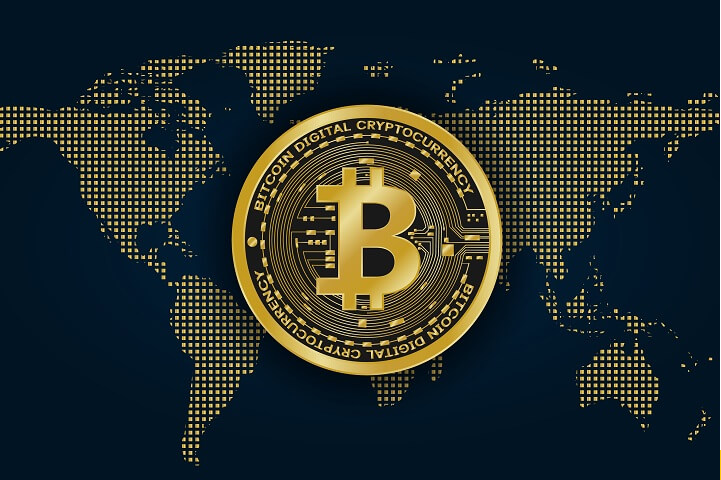
El Salvador on Wednesday, became the first nation to approve bitcoin as a legal tender, shooting the embattled cryptocurrency up more than 10% from its two-week low.

El Salvador’s president, Nayib Bukele had proposed the bill last week amidst the country’s inflation crisis. Congress passed the “Bitcoin Law” with 62 votes, 19 opposed and three abstentions, according to a tweet sent by Bukele. The new law thus makes cryptocurrency a legal means to pay in the small Central American country.

Bitcoin picked up at the news, trading above $36, 000. Ether recorded nearly 8% increase, trading above $2,500, while XRP, Cardano and Dogecoin recorded 9.84%, 11.86% and 6.37% growth respectively as of press time. Last week Tuesday, bitcoin was as low as $31,000, its lowest level since May 23, according to data from CoinDesk. The decline of the world leading cryptocurrency, which plunged further following Elon Musk announcement that Tesla will quit accepting bitcoin, was compounded by China’s clampdown on miners and financial institutions dealing on cryptocurrencies.

Investors seemed deterred by the development, as upsurge in selloff indicates. In May, the cryptocurrency was hit with a massive selloff during which its market capitalization dropped below $1 trillion. $141 million was pulled from bitcoin products by institutional investors in the week ended June 7, according to digital asset investing firm Coinshares. Trading volume in bitcoin digital asset investment products also slumped, by 62% compared with last month.

El Salvador’s approval of bitcoin as a legal tender has become the only credence the cryptocurrency has received in weeks, putting it in the mood of recovery.

As part of efforts to boost bitcoin acceptance in the country, Bukele said in Twitter Space conversation that the country is designing a new law that would grant permanent residency to any individual who invests three BTC into El Salvador’s economy.

He also announced plans to help businesses to cope with the new law. The bill that was just passed will mandate all businesses to accept bitcoin for goods or services, but the government will act as a backstop for entities that aren’t willing to take on the risk of a volatile cryptocurrency, the president said.

“If there’s an ice cream parlor, he doesn’t really want to take the risk, he has to accept bitcoin because it’s a mandated currency, but he doesn’t want to take the risk of convertibility, so he wants dollars deposited in his banking account, when he sells the ice cream, he can ask the government to exchange his bitcoin to dollars,” Bukele said. “Of course, he can do that in the markets also, but he can ask the government to do it immediately.”

The Development Bank’s trust fund would sell some of the bitcoin it receives for dollars to replenish the fund.

Government officials from El Salvador will meet with the International Monetary Fund in the coming days to discuss the plan.

Bukele also indicated that the government may promote bitcoin mining. El Salvador had already been hoping to draw businesses with excess geothermal energy, and while the government isn’t specifically looking to the bitcoin mining industry to fill that need, it is one such sector that could benefit, he said.

He sees the move as a way of encouraging foreign investment in El Salvador, saying at the time that if just 1% of the world’s Bitcoin were to be invested in the country, “that would increase our GDP by 25%.”

El Salvador is a low-income country that relies on remittances from nationals abroad. It is hoped that the adoption of the blockchain currency will ease and reduce the costs of those transfers. The country uses United States dollars as its official currency.

The rollout would be handled by the mobile payments app Strike, which recently debuted in El Salvador.

Bukele said that the majority in the country do not have traditional bank accounts, and that the new law will enable people to create online digital wallets with just a smartphone.

The adoption puts El Salvador on the spotlight as many other countries will look up to its success to determine whether to approve bitcoin as a legal tender or not.

However, concern of volatility remains. A significant drop in the price of bitcoin will mean most holders losing value for their money, and that will discourage wider acceptance.