DD
MM
YYYY

PAGES

DD
MM
YYYY

spot_img

PAGES

Home Blog Page 575

Congratulations Tekedia Mini-MBA Graduands – You’re #Ready2Lead

0

Co-learners, Congratulations for completing Tekedia Mini-MBA today! You’ve unlocked something huge in the knowledge world. You’ve built pillars of knowledge, systems that liberate the mind and transform the way you interact with the world. With your Mini-MBA completed, you’re not just credentialed—you’re designed for leadership. As we celebrate, do the following:

  • Collect your certificate. Follow the steps on Classboard to claim your credential.

  • Win the future. This isn’t a motto—it’s your roadmap. You are now #Ready2Lead the world of business and commerce.

  • Thank you for co-learning with us. Your choice to learn alongside Tekedia reflects a commitment to excellence—and it’s one we don’t take lightly. Add your certificate to your LinkedIn profile (see how here)

We’re Tekedia Institute. Our product isn’t just education, it’s Knowledge in motion. Move with it. Lead with it. Congratulations—go win the future!

It’s Tekedia Mini-MBA Graduation Day – Executing A Winning AI Product Strategy in Africa

Shiba Inu (SHIB) vs. Little Pepe (LILPEPE): Analyzing Their Millionaire-Maker Potential in 2025

0

In a market filled with many options, meme coins continue to be the favorite among many, with Shiba Inu (SHIB) and Little Pepe (LILPEPE) standing out. Both tokens are regarded as possible millionaire-makers, although their ways are very different.

Massive supply and big burns have seen Shiba Inu establish its presence in the market, and Little Pepe has followed a guided presale process with managed supply and inherent utility. Right now, stage twelve of the LILPEPE presale costs $0.0021, with more than 24.17 million raised and 15.13 billion tokens sold. Little Pepe is an impressive choice over the huge burn that is used in Shiba Inu.

Presale Growth and Token Progression

Little Pepe began its presale on June 10 at $0.001 per token. Prices continued to record new levels stage by stage, reaching $0.0021 in the current ongoing presale turn. At this stage 12: 15,132,081,007 tokens have been purchased out of 15.75 billion allocated till this stage, reflecting 96.08% completion. The thirteenth stage will raise the price to $0.0022 as the early movers embrace a new gaining narrative. This trend has enabled investors to join at different levels whilst maintaining growth.

In comparison, Shiba Inu does not have a similar success story that Little Pepe is experiencing throughout the current presale but instead uses trading mechanisms and community-based burns. SHIB has retained its liquidity; however, its token system stands in stark contrast to the stage system LILPEPE follows, fulfilling guarantees of a bigger road to the next millionaires’ batch.

Supply Structure: SHIB vs. LILPEPE

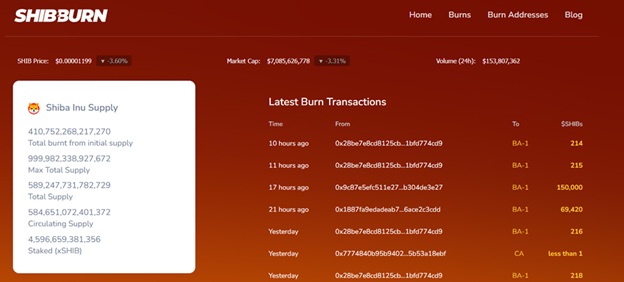
The supply shows very distinct differences between the two meme coins. Shiba Inu was issued with a total supply of 999,982,338,927,672. According to SHIBBURN, 410,752,268,270 tokens have been taken out of circulation forever. Following this decrease, the amount supplied is 589,247,731,782,729, with 584,651,072,401,372 tokens in the market. Even with regular burns, this huge supply still puts the sustainability of prices in the long term.

Source: SHIBBURN

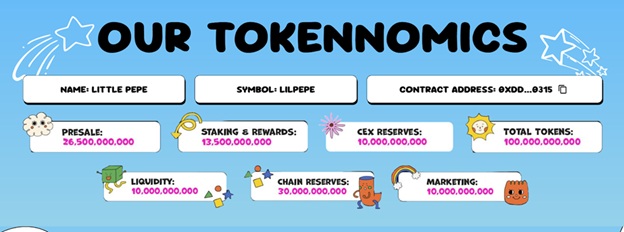
Little Pepe, on the contrary, has an unchanged total supply of 100 billion tokens. The 26.5 billion, 30 billion, and 13.5 billion are allocated to tokenomics as presale, chain reserve, and staking rewards.

Source: Little Pepe

Another 10 billion is allocated to marketing and 10% to liquidity and centralized exchange allocations each. This form of structured model is transparent and imposes scarcity and is more consistent with supply-limited assets commonly associated with long-term appreciation.

Features and Ecosystem Development

Little Pepe has stressed infrastructure in addition to supply control. Being an Ethereum-compatible Layer 2 blockchain, it provides faster, cheaper, and more secure transactions. Zero tax on trading, sniper bot protection, staking and meme launchpad are integrated into the network. DAO voting will provide governance, and the future will include NFTs and cross-chain interoperability. The ecosystem has also been audited by CertiK, which adds credibility to the technical construction of the ecosystem.

While well-known, Shiba Inu has yet to execute any ecosystem transition of similar structural measures. Its token burn mechanism to manage supply stands in contrast to LILPEPE’s intrinsic scarcity and presale roadmap. Little Pepe also has a $777,000 giveaway running during the presale to boost the community value. Ten winners each will receive $77,000 worth of tokens, and entry is $100 minimum.

Shiba Inu and Little Pepe bring to the table contrasting paths to wealth creation in 2025. SHIB continues its burn strategy, and LILPEPE moves forward with a capped supply, structured presale, and blockchain utility. With a fundraising total exceeding $24 million and an all-time high of stage thirteen at $0.0022, Little Pepe showcases the potential of supply-driven projects that Shiba Inu’s current circulating volume does not possess. This makes it a powerful Layer 2 meme coin with millionaire-making potential.


For More Details About Little PEPE, Visit The Below Link:

Website: https://littlepepe.com

EU Slams Google With $3.5B Fine in Ad-tech Antitrust Case, Trump Vows Retaliation With Tariffs

0
The US is after Google also

The European Union (EU) has slammed tech giant Google with a fine of 2.95 billion euros ($3.5 billion), over anti-competitive practices in its adtech business.

The commission noted that Google favoured its online display technology product, which helped its advertising exchange (AdX) role in the adtech supply industry. This allowed the company to charge high fees for the services at the detriment of its competitors and other online publishers.

The EU further ordered the U.S. tech giant to end its “self-preferencing practices” and stop “conflicts of interest” along the advertising technology supply chain. It mandated that the company submit compliance plans within 60 days and provide an additional 30 days for implementation details.  

“Digital markets exist to serve people and must be grounded in trust and fairness. And when markets fail, public institutions must act to prevent dominant players from abusing their power,” the commission said. 

This is the fourth time the E.U. has sanctioned Google with a multibillion-euro fine in an antitrust case, in a wider battle with regulators that dates back to 2017. These actions stem from investigations into Google’s alleged abuse of its market dominance in violation of EU competition laws.

This fine comes from Alphabet, Google’s parent company, which successfully avoided a breakup in a landmark antitrust case brought by the U.S. Department of Justice (DOJ), marking a significant moment in the ongoing scrutiny of Big Tech’s market dominance. The case, United States et al. v. Google LLC, filed in October 2020, accused Google of illegally monopolizing the search engine and search advertising markets

Google’s search engine handles nearly 90% of web searches globally, processing an estimated 8.5 billion queries daily. This dominance according to the filing, was allegedly used to stifle competition and innovation by limiting rivals’ access to key distribution channels. The DOJ argued that Google’s practices prevented competitors from gaining traction, reduced consumer choice, and harmed innovation in the search market.

Following the ruling, the DOJ proposed aggressive remedies during a remedies trial in April-May 2025, aiming to dismantle Google’s dominance and prevent similar monopolistic behavior in emerging fields like artificial intelligence (AI). The proposed remedies included forcing Google to sell its Chrome browser, which handles nearly 40% of U.S. search volume and provides valuable user data for targeted advertising.

The DOJ’s proposals were described as “radical” and aimed at fundamentally reshaping Google’s business model to foster competition. Google, led by CEO Sundar Pichai, argued that these measures were excessive, potentially harming consumers, innovation, and U.S. technological leadership. Pichai called the data-sharing proposal a “de facto divestiture” of Google’s core intellectual property.

On September 2, 2025, Judge Mehta issued a 223-page ruling that rejected the DOJ’s most severe proposals while imposing significant but less drastic remedies. Google was not required to divest Chrome or Android, a decision seen as a major win for Alphabet. Mehta argued that a breakup would cause “substantial downstream harms” to distribution partners like Apple and consumers.

At a recent White House dinner with tech executives, President Donald Trump congratulated Google CEO Sundar Pichai and co-founder Sergey Brin following Alphabet’s favorable antitrust ruling on Tuesday.

“Well you had a very good day yesterday,” Trump said, calling on Pichai at the Thursday evening dinner.

I’m glad it’s over,” Pichai responded to Trump, causing an eruption of laughter from the other table guests. “It’s a long process,” Pichai said. “Appreciate that your administration had a constructive dialogue, and we were able to get it to some resolution.” 

Alphabet this week added $230 billion to its market cap after avoiding a breakup in a landmark antitrust case brought by the U.S. Department of Justice in 2020.

Trump Threatens to Retaliate EU’s $3.45bn Google antitrust fine with tariffs

The latest $3.45bn fine slammed on Google by the E.U. has spurred U.S President Donald Trump’s response.

In his reaction, President Trump termed the fine as  “unfair” and “discriminatory”. He also vowed to personally take the matter up with the EU. Trump, who has hit Europe with trade tariffs, will likely retaliate with the same measures. 

“We cannot let this happen to brilliant and unprecedented American Ingenuity and, if it does, I will be forced to start a Section 301 proceeding to nullify the unfair penalties being charged to these Taxpaying American Companies,” Trump wrote on his Truth Social post. 

Analysts suggest Trump’s tariff threats were partly motivated by a desire to protect U.S tech giants, which he described as brilliant and unprecedented American ingenuity.

Looking Ahead

Google argues that the decision by the EU was wrong and that its services are not anticompetitive. The search engine giant has vowed to appeal the EU antitrust commission’s verdict. 

BlockDAG’s $0.0013 Entry Stands Out as VeChain (VET) Market Analysis & Pi Coin Price Reveal Diverging Crypto Market Paths

0

In today’s fast-shifting digital economy, the search for the top crypto projects has narrowed to a few names shaping entirely different narratives. VeChain (VET) market analysis shows a blockchain tied to enterprise adoption, with Walmart China and luxury brands testing its supply-chain solutions. Pi Coin price hovers near $0.34, under technical pressure as September unfolds, making this month critical for a breakout above resistance or a risky retreat.

Then comes BlockDAG. Starting at just $0.001 in Stage 1, and currently at $0.0013, its hybrid DAG plus Proof-of-Work model combines what Kaspa, Solana, and Ethereum proved separately. With $400 million raised, 3 million miners, and 312,000 holders, BlockDAG is quietly positioning itself as the standout of the three.

Why VeChain Could 10x by 2030

VeChain (VET) isn’t just another crypto project; it’s built for enterprise. Its blockchain enables businesses to track goods, verify sustainability, and fight counterfeiting with real systems already in place. Think Walmart China scanning produce, luxury brands verifying authenticity, and accountants backing ESG claims with certified data.

Reaching $1 by 2030 would value VeChain at nearly $87?billion. That’s a leap, but not one based on hype. It hinges on real corporate adoption driving massive use of the network. The tech backs it too: VeChain’s efficient, validator-based system supports the transparency and stability businesses actually need.

So if large companies begin operating on VeChain at scale, demand could explode. That makes it one of those rare cryptos where fundamental business use, not speculation, is the growth engine.

Can Pi Coin Bounce Back in September?

Pi Coin is hanging close to $0.34 as September kicks off, under pressure after a recent slide from its $0.38 high. Chart watchers say a sustained move above $0.38–0.40 could spark a strong rally toward $0.42 or more. But failing to hold the $0.32–0.33 range risks another dip. This range makes September a potential make-or-break month for Pi’s price.

Despite murky short-term momentum, the project’s ongoing upgrades and potential exchange listings offer catalysts worth watching. If adoption grows, Pi Coin could quietly climb higher later. That said, thin liquidity and a crowded altcoin market make this a cautious buy rather than a sure thing. For long-term believers, September may represent one of the last low-entry windows before conditions change.

BlockDAG at $0.0013: The Next Big Crypto Fusion

Kaspa showed the world that Directed Acyclic Graphs (DAGs) can work in real-time. Solana proved that high throughput draws developers in large numbers. Ethereum proved that ecosystems win the long game. Now BlockDAG is taking pieces of all three and merging them into something bigger. By combining Kaspa’s DAG foundation with Solana’s performance and Ethereum’s EVM compatibility, BlockDAG is positioning itself as a technology built for scale, adoption, and endurance.

The numbers back it up. Starting at just $0.001 in Stage 1, BlockDAG has already created massive wealth for its earliest buyers. Today, with the Deployment Event price fixed at $0.0013, the upside to $1 reflects an eye-widening 76,815% ROI potential. That is not theory, it is math. Add to this a base of 3 million X1 mobile miners, 312,000 holders, and whales buying in with multi-million allocations, and the story becomes clear.

For investors wondering where the next Ethereum-style growth curve could emerge, BlockDAG makes a compelling case. Quietly, it has raised nearly $400M without leaning on hype cycles, showing demand is already there. The window at $0.0013 will not last. Those who wait for listings will likely see a very different entry point.

BlockDAG Stands Tall Among Top Crypto Projects

The contrast between these three projects is striking. VeChain (VET) market analysis underlines its enterprise value but its growth hinges on sustained corporate adoption, not market-driven speculation. Pi Coin price reflects volatility more than conviction, with thin liquidity making each movement magnified. Both coins have niches, yet BlockDAG offers something broader.

With roots in Stage 1 pricing at $0.001 and a current Deployment Event price of $0.0013, it holds a clear runway to a projected $1, giving it an unmatched 76,815% ROI window. Its blend of Kaspa’s DAG validation, Solana’s throughput, and Ethereum’s ecosystem strength is already backed by real traction: 3 million miners, whales pooling millions, and $400M raised. For investors seeking the best of the top crypto projects, BlockDAG defines the category.


Presale: https://purchase.blockdag.network

Website: https://blockdag.network

Telegram: https://t.me/blockDAGnetworkOfficial

Discord: https://discord.gg/Q7BxghMVyu

The Disconnect Between Incarceration and Public Curiosity in Africa

0

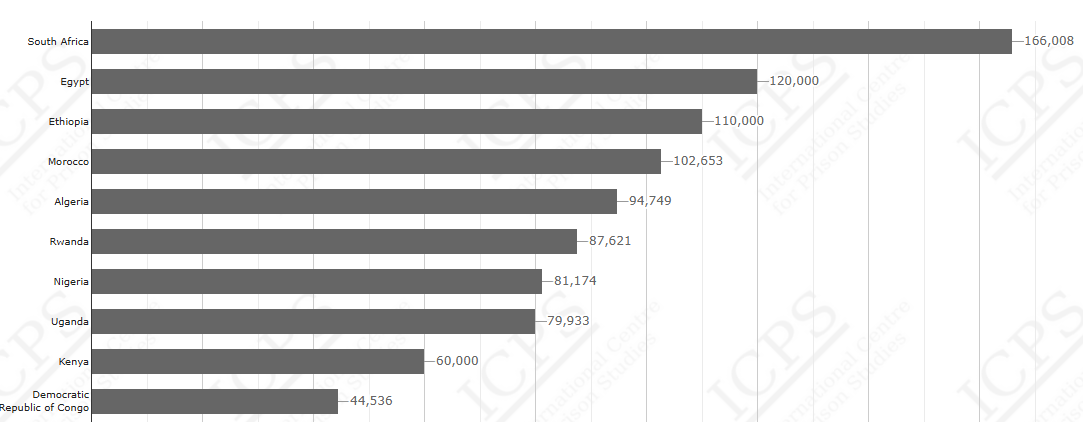
Across Africa, the way people think and talk about crime and justice is changing. Not just in government offices or courtrooms, but online, where search engines have become a window into public concern. Analysis of top 10 African countries with the highest number of people in prison by Infoprations indicates that the number of people in prison doesn’t always match how much people are searching for information about crime or prisons.

Take South Africa, for example. It has the highest prison population on the list, with over 166,000 people behind bars. But Nigeria, with less than half that number, shows the most online interest in both crime and prisons. That tells us something important: people’s curiosity and concern about justice aren’t just shaped by how many people are locked up. They’re shaped by what’s happening in society, what’s being reported in the news, and how free people feel to ask questions.

This gap between prison numbers and public interest challenges the idea that bigger problems always get more attention. In reality, attention is driven by awareness—and awareness is often driven by access, freedom, and a desire for change.

What the Numbers Are Really Saying

When we compare the data, a few patterns stand out. Countries with more people in prison don’t always have more people searching about prisons or crime. In fact, some countries with smaller prison populations, like Nigeria and Morocco, have much higher search interest than expected. That means people in those places are actively thinking about justice, even if the prison system isn’t the largest.

Exhibit 1: African countries with the highest number of people in prison

Source: World Prison Brief, 2025

On the other hand, countries like Rwanda and the Democratic Republic of Congo have relatively high prison populations but very low search interest. That could be due to limited internet access, fewer news stories about justice, or cultural factors that make people less likely to search for these topics.

One thing is clear: when people search for information about crime, they often also search about prisons. These two topics go hand in hand. It shows that people aren’t just curious about what’s happening on the streets, they’re also thinking about what happens afterward, in the justice system.

Why This Matters for Leaders and Citizens

Search behavior might seem like a small thing, but it reflects what people care about, what they worry about, and what they want to understand. In countries where search interest is high, it’s a sign that people are engaged. They’re asking questions, seeking answers, and trying to make sense of the world around them.

That’s an opportunity. Governments, journalists, and civil society groups should pay attention to where curiosity is growing. These are the places where public education can make a difference, where reform efforts might gain support, and where transparency can build trust.

In places where search interest is low, it’s worth asking why. Is it because people don’t care or because they don’t feel safe asking? Is it because they lack access to information, or because the topic feels too distant from their daily lives? These questions matter, especially for those working to make justice systems more fair and responsive.

Turning Curiosity Into Change

The data shows that people are thinking about crime and justice. They’re searching, reading, and trying to understand. That’s not just a trend, it’s a signal. It means the public is ready to be part of the conversation. Leaders should respond by making justice systems more open and easier to understand. That includes sharing data, explaining policies, and listening to public concerns. It also means investing in digital access and civic education, so more people can join the conversation.

Researchers and journalists have a role too. They can turn numbers into stories, highlight what’s working and what’s not, and give voice to those who are often left out. When curiosity meets good information, change becomes possible.