DD
MM
YYYY

PAGES

DD
MM
YYYY

spot_img

PAGES

Home Blog Page 5777

Velocity Mhagic Prize Public Presentation This Month

0

Good People, the Mhagic team has informed us that it would be doing the public presentation of the $60,000 grand prize cheque for winning the Velocity Mhagic season 1 to Tekedia Institute later this month. The event will happen in Lagos. The scholarships will also follow for students; all information will be in Tekedia Hub – hub.tekedia.com.

Again, Tekedia thanks all our members for supporting the school for this prize. All our winning is donated to fund scholarships for students to attend Tekedia Mini-MBA, Tekedia Advanced Diploma programs, Tekedia Certificates, Tekedia CollegeBoost, etc.

The Lessons from 1970s – And What Nigeria Needs To Do Now

0

How do you get Northeast Nigeria back on the path of growth? How do you overcome the paralysis which is affecting that region?  Despite Nigeria budgeting and spending about N10.02tn over six years on security ($25 billion using the average exchange rate over the period), according to BudgIT data, we have continued to scale insecurity.

So, what can the nation do as a nation? I personally think the insecurity has no military solution: to win this internal war, a heavy dose of economic war has to be fought. Sure, there are religious components but even those could be adjusted economically.

I have been studying how Southeast Nigeria came out of the ruins of war to the position it is now. There was a plan and every village formed a development union to stimulate models to advance education, healthcare services, etc.  Nigeria needs to examine what happened in Southeast Nigeria during that journey.

That “onye aghala nwanne ya” [do not leave your brethren behind] goes beyond business. What happened was that communities pooled resources to build schools and people came together to build shops, buy equipment, etc, and by following that playbook, they advanced faster.

It is based on this that I continue to say that it is wasteful to give 100,000 women each $100 and expect that money to advance their economic status over time. However, if you use that money, you can provide better community-systems which could improve their lives indirectly. For instance, you can use that money to provide solar-powered 24/7 electricity to help market women extend their perishable goods. For each of those women, that electricity will help them over time than each getting $100.

Nigeria had a framework which worked; I am hoping we revisit it now that we are looking for pathways for growth in the nation.

Facebook Relaunches WhatsApp Pay in Brazil

0

Nearly a year after Facebook’s WhatsApp Pay was suspended by the central bank in Brazil, the social media platform has relaunched the WhatsApp payment services, Chief Executive Mark Zuckerberg said on Tuesday.

In June last year, Facebook started its chat-to-pay system in Brazil, as part of Zuckerberg’s effort to get into the payment market. But it was abruptly cut off one week after launch by the central bank.

The regulator said it was taking the decision to “preserve an adequate competitive environment” in the mobile payments space and to ensure “functioning of a payment system that’s interchangeable, fast, secure, transparent, open and cheap.”

Banks in the nation had asked Mastercard and Visa, which are among the payments partners for WhatsApp in Brazil, to suspend money transfer on the WhatsApp app, because it was seen as a potential threat to the traditional financial system.

Facebook shifted attention to India where it has been working with the government to set up the WhatsApp Pay.

Brazil is the second country where the messaging service launched money transfers. In India, WhatsApp’s biggest market with 400 million users, it got approval to start financial services in November.

The payment feature was designed in partnership with the National Payments Corporation of India (NPCI) using the Unified Payment Interface (UPI), an India-first, real-time payment system that enables transactions with over 160 supported banks, according to a statement from WhatsApp.

The instant message app explained that it is necessary to have a bank account and debit card in India to use the WhatsApp Pay feature. Although more details about the launch are yet to be given, it seems Facebook is using the Indian playbook in Brazil.

By using debit or prepaid cards numbers, WhatsApp’s 120 million users in Brazil are able to send each other up to 5,000 reais per month through the messaging service free of charge. Initially, the system will not allow each transaction to surpass 1,000 reais or more than 20 transfers per day.

The roll out of the new feature will be phased, Chief Operating Officer Matthew Idema said in an interview. Starting today, a limited and undisclosed number of users will get a payment tool in their app. With that, they will be allowed to invite new users.

Reuters reported that in addition to reviewing the proposed payments network, the central bank also requested the technology giant be labeled as financial services company in Brazil, prompting Facebook to create a new unit called Facebook Pagamentos do Brasil, which is now regulated by the central bank.

But the central bank has not yet greenlit payments with merchants, which is expected to be a paid service, adding a new line of revenue for WhatsApp. Last year, card payments in Brazil totaled 2 trillion reais ($368.12 billion), up 8.2% from 2019.

Idema said talks with the central bank are still ongoing and Facebook expects the launch of merchant payments to occur this year, declining to comment on whether it will be a paid service.

“For WhatsApp launching payments is interesting because it increases the app usage,” the COO said.

WhatsApp started its payment service in partnership with card networks Visa Inc and Mastercard and payments processor Cielo SA. It will operate with cards issued by Banco do Brasil SA, Banco Inter, Banco Bradesco SA, Itau Unibanco Holding SA, fintech Nubank, MercadoLibre’s MercadoPago and Sicredi.

A combination of India and Brazil WhatsApp users will mean a huge market for Facebook, whose attempt in the past to develop Libra, a single global digital currency, was quashed by the U.S. government.

Let’s Co-Learn The Mechanics of Business

0

We are business educators. We try to turn business into physics, finding the constants and the components of natural philosophy therein.  Go through the great debate by Thales, Heraclitus and Pythagoras, and the redesign just before the end of the 18th century when everything was studied under natural philosophy, and think deeper, you could identify a unifier of all knowledge. Yes, LOGIC is the foundation, and logic is philosophy. But what is logic? Pythagoras postulated “numbers”.

The numbers of nations are the business of nations. The numbers in markets are the opportunities in markets. You call them data – that raw material of mathematics, the beautiful science of numbers.

Like a little boy helping my grandmother sell her yams in Oriendu Market Ovim, Abia state, I understood the physics in her business: all yams must be sold before 2pm as merchants from big cities always close around 2pm, to have time for their journey back home.

If you miss that timeframe, you could be forced to  take your produce home unsold. But you dare not, because that was your school fees!

Every business has its physics. At Tekedia Mini-MBA, we explain the mechanics in markets. Join me and other faculty members by registering for the 5th edition of Tekedia Mini-MBA (June 7 – Sept 1, 2021). Register here.

Tekedia Mini-MBA is an innovation management 12-week program, optimized for business execution and growth, with digital operational overlay. It runs 100% online. The theme is Innovation, Growth & Digital Execution – Techniques for Building Category-King Companies. All contents are self-paced and recorded which means participants do not have to be at any scheduled time to learn.

Seplat as the Poster Child of Local Content in Nigeria

0

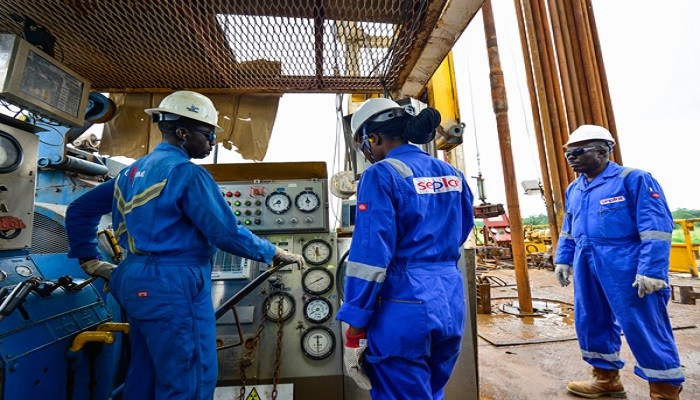
Seplat Petroleum Development Company is a leading indigenous oil and gas company in Nigeria, at the vanguard of the revolution taking place in the country’s oil and gas industry. In just few years of its existence, the company has demonstrated leadership, excellence, capabilities, as well as expertise in its operations, all thanks to local content law.

As a result of its operational excellence, the company has been able to ramp up production in some of the assets it inherited by over 600 percent. Seplat is the poster child of the local content law in the Nigeria’s oil and gas industry, and year-on-year, continues to demonstrate this. 

Nigeria’s oil and gas industry before now was totally under the control of International Oil Companies (IOCs) and expatriates who ran the industry in their favour at the expense of Nigeria. Out of billions of dollars annual industry spend, only about 5 percent was retained in-country. The oil and gas industry contributed less than 8 percent to the country’s Gross Domestic Product (GDP). This made Nigeria a nominal oil producer as the country did not have firm control of its oil economy. However, in 2010, following the enactment of the Nigerian Oil and Gas Content Development (NOGICD) act, the country’s trajectory shifted to the positive path.

In the last 11 years since the enactment of the NOGICD act, more Nigerians are now actively involved in the industry, unlike in the past when they were passive participants in the scheme of things.  We now have more local oil and gas services companies than foreign ones operating in the country; out of the about $20 billion annual industry spend, $9 billion is retained in-country; and local content has risen to over 30 percent. But of all the numerous benefits NOGICD act has brought to the country, the emergence of Seplat Petroleum Development Company and other indigenous oil and gas companies, is the Cinderella of all.

When some of the IOCs divested some of their assets to these indigenous oil and gas companies, there was palpable fear among some stakeholders that it was going to be mission impossible. The notion then was that these companies did not have the technical know-how, the expertise and the financial resources to man the divested assets.  All that has been demystified by Seplat who today has become a key player in the industry.

At the time of acquisition, the company’s gross operated liquids production at Oil Mining Leases (OMLs) 4, 38 and 41 were 14,000 bopd. But the company, through the implementation of a focused re-development work programme and drilling campaign grew this to a peak rate of over 84,000 bopd, representing a six-fold increase and significantly ahead of the peak rate achieved by the previous operator of approximately 56,000 bopd in 1996.

The company, which is listed on both the Nigerian Stock Exchange (NSE) and the London Stock Exchange (LSE), also accounts for about 30 percent of gas used by power generating companies in Nigeria.

Despite the disruptions caused by Covid-19 pandemic, Seplat recorded a rise in revenue by 16.8 per cent to $152.4 million with increased operational efficiencies and further reduction in costs in its unaudited results for the three months ended March 31, 2021.

The Company also reported a Profit Before Tax (PBT) of $28 million  for the period,  from a loss position of $95.7 million in the same period of 2020 (3M 2020), whilst adopting a quarterly dividend policy of US2.5 cents per share in Q1 starting immediately.

Seplat maintained a strong cash position of $236.3 million in Q1 2021, with an EBITDA position of $77.8 million, delivering oil and gas production volumes of 48,239 boepd, within its guidance range.

With the Gbetiokun field at OML40 now back in production, the company is currently achieving average daily volumes of nearly 54 kboepd so far in April and plans to add additional oil and gas wells this year.

In February, seven primarily Nigeria banks agreed to provide $260 million of debt financing for the ANOH Gas Processing Company (AGPC). AGPC is an incorporated joint venture owned 50:50 by Seplat and the Nigerian Gas Company (NGA), a wholly-owned subsidiary of Nigerian National Petroleum Corporation (NNPC).

The Chief Executive Officer of the company, Roger Brown, while commenting on the Seplat’s Q1 results said: “Our flagship ANOH gas project is proceeding as planned and was fully funded in February when our joint venture company, AGPC successfully raised $260 million of debt financing. In addition, the success of our $650 million Eurobond issuance in March demonstrates investor confidence in our prudent financial management and the exciting future ahead for the Company and its stakeholders.”

Brown’s comment is a testament of what Seplat has become — a rising star who started from the cradle to reach an unimaginable height in just a little over a decade. The success of Seplat is a reflection of the ingenuity of Nigerians, their expertise, their work ethics and excellence.

Seplat success riding on the back of the NOGICD act, shows how the decisions of those in government can create opportunities for their citizens by proving enabling business environment with the right laws and policies. Seplat is evidence of local content in action and what Nigerians can do when given opportunity and support.