DD
MM
YYYY

PAGES

DD
MM
YYYY

spot_img

PAGES

Home Blog Page 5782

Program for Final Week of Tekedia Mini-MBA Edition 4

0

We are in the final week of Tekedia Mini-MBA edition 4 after 12 solid weeks. It has been a wonderful journey with all co-learners and faculty. Here are the programs for this final week.

Lectures on Growth and Taxation are already in the Board. Four Faculty members are leading the session:

  • Managerial Accounting, Business Decision Making and Growth – Idris Ayinde, ACA, CFA, KPMG UK
  • Tax Management for SMEs – Banji Adelaja ACA, Managing Consultant, Aradol Consulting
  • Tax Treaties and Their Benefits – Emmanuel Eze, Manager, Federal Inland Revenue Service (FIRS)
  • Regional Case: Tax Law and Compliance in Lagos State  – Abimbola Abdur-Rahman Lekki, Lagos Internal Revenue Service.

On Thursday, we move to Execution and Closure, and I will lead the sessions.

  • Driving Profitable Growth, Marginal Cost, Scaling – Prof. Ndubuisi Ekekwe
  • Stimulating New Markets Through Innovation and Perception Demand – Prof Ndubuisi Ekekwe

Tekedia Live this week is scheduled thus:

  • Tue, May 4 | 7pm – 8pm WAT | Winning in Markets – Ndubuisi Ekekwe
  • Thur, May 6 | 7pm – 8pm WAT  | The Call to Business Execution – Ndubuisi Ekekwe
  • Sat, May 8 | 7pm – 8.30pm WAT | It’s Graduation Day  –  Ndubuisi Ekekwe

Zoom links in the Board.

On Saturday, after the closure, certificates will become available. Thank you for joining us for this academic festival. The registration for the next edition is here.

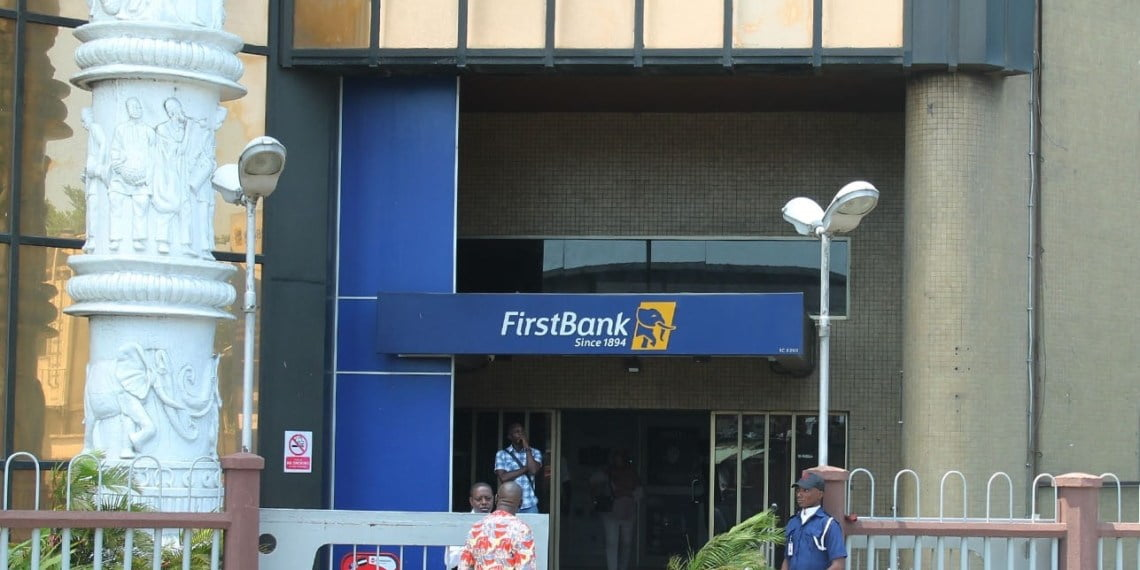
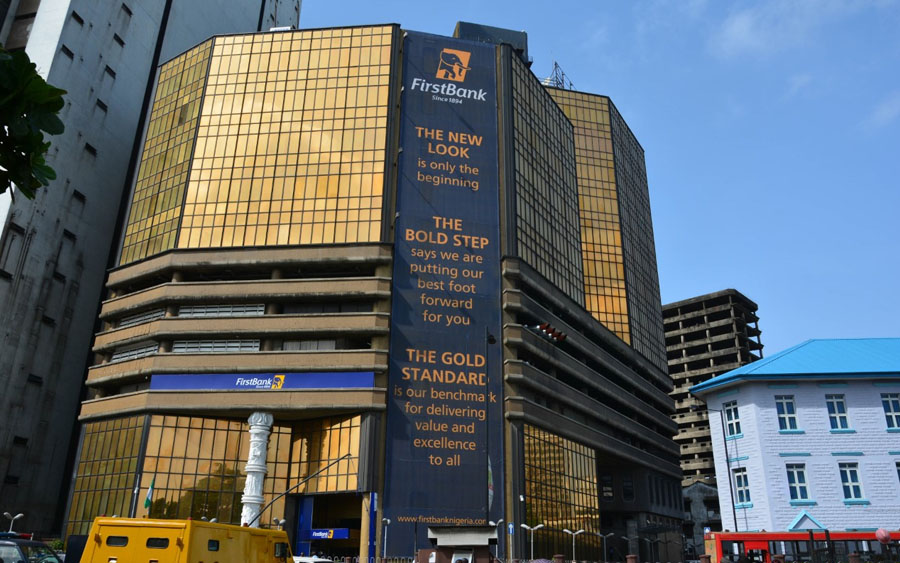
The Magic of First Bank – N565 Billion Impairment in 4 Years, N250 Billion Market Cap

1

This is becoming what no one had in mind. Yes, after reading the statement from Honeywell Group, you will pity Nigeria on this First Bank redesign. If the company is servicing its loans as agreed, why then is the high voltage searchlight?: “We have serviced all our credit facilities in line with the terms agreed with First Bank and at no point have any of these facilities been non-performing.”

Yet, if you read the full statement, you will understand what is wrong with Nigeria. Privileges everywhere!

Yes, I want to know, according to Nairametrics, how First Bank Holdings (FBH) recorded a total loan impairment of over N565 billion between 2016 and 2020. Note that number because the market cap of FBH is below N250 billion. Yet, in four years, it has that level of impairment.

The CBN believes the bank may have collapsed were it not for its regulatory forbearance, a financial term for softening some of the strict rules that banks must comply with if they are to avoid being taken over by the CBN. Emefiele in his briefing to the media revealed that the CBN had granted “regulatory forbearances to enable the bank work out its non-performing loans through provision for write off of at least N150b from its earning for four consecutive years.” According to data from Nairalytics, FBNH had recorded a total loan impairment of over N565 billion between 2016 and 2020. About N376.4 billion, more than half the total loans impaired, were provided for in 2016 and 2017 alone.

Another major reason why the CBN moved swiftly to sack the board and reinstate Adeduntan was its inability to control Oba Otudeko and since he did not accede to the demand of Emefiele there was no way he could be allowed to keep running the bank without a check like Adeduntan. According to Emefiele, he cannot allow a Shareholder who will not subject himself to regulatory control and authority to remain a director of the bank.

Magic? Yes, big boys are smiling while the minority shareholders continue to pray and fast for the moments to come. Who can save Nigeria from sinking? Yes, when you remember that most people hold the shares of FBH, and before the Central Bank of Nigeria in most parts of Nigeria, there was First Bank. FBN cleared cheques for other banks, serving as the banks’ bank. If First Bank does well, most families especially in South West Nigeria would have improved lives.

 Simply, if those impairments are not there, the Group could be worth at least twice its current value as investors would push it up. But here, we are circling on technicalities instead of regulators hitting bad people harder to send lessons.

The First Bank Saga Gets Messier As Honeywell Issues a Statement Denying Any Wrongdoing

The First Bank Saga Gets Messier As Honeywell Issues a Statement Denying Any Wrongdoing

4

The events of last week involving First Bank Nigeria Plc (FBN) escalated quickly to expose underlying issues that resulted in the sack of the bank’s MD/CEO, Dr. Adesola Adeduntan.

Behind the glittering look of the bank, the battle of supremacy was unfolding to uncover insider loan and other malpractices. A report by Nairametrics revealed that the plot to oust Adeduntan was led by factions in First Bank Holdings (FBNH) led by Dr. Oba Otudeko and the former Chairman of the First Bank Ibukun Awosika.

According to the report, it started when the bank received a letter of reprimand from the Central Bank of Nigeria (CBN), over its failure to divest its interest in Honeywell Flour Mills “despite several regulatory reminders” by the Apex bank.

The CBN thus mandated First Bank to ensure within 48 hours that Honeywell repays its obligation. The loans are traceable to Otudeko, and the apex bank had threatened to “take appropriate regulatory measures against the insider borrower and the bank” if the regulatory directives are not met.

“For years, the CBN has used Adeduntan as a check against attempts by directors of First Bank to secure insider loans, a major source of conflict between the CBN and Oba Otudeko,” the report said.

Thus, the premature removal of Adeduntan as the MD/CEO is seen as an attempt by Otudeko and Awosika and their faction to ensure the CBN’s regulatory letter is not implemented, as Adeduntan is seen as the Apex bank’s watchdog in First Bank.

In the press briefing where he discussed the sack of Awosika and Otudeko, CBN governor Godwin Emefiele said the Apex bank had granted “regulatory forbearances to enable First bank to work out its non-performing loans through provision for write off of at least N150b from its earning for four consecutive years.”

Otudeko is said to be one of the beneficiaries of these insider loans who needs to be tamed before First Bank goes under administration.

“Oba Otudeko who was the major target of this fiasco is believed to have obtained billions of unpaid loans in First Bank and had to be controlled by the CBN through Adeduntan,” the report said.

Emefiele also pointed out that in his media briefing that the inside loanees failed to comply with restructuring terms of their credit facilities, putting First Bank in a bad financial state.

“The insiders who took loans in the bank, with controlling influence on the board of directors, failed to adhere to the terms for the restructuring of their credit facilities which contributed to the poor financial state of the bank. The CBN’s recent target examination as at December 31, 2020 revealed that insider loans were materially non-compliant with restructure terms (e.g. non perfection of lien on shares/collateral arrangements) for over 3 years despite several regulatory reminders. The bank has not also divested its non-permissible holdings in non-financial entities in line with regulatory directives,” Emefiele said.

The Honeywell’s side of the story.

In light of the unfolding events, Honeywell has issued a statement to clarify its position in the saga. In a statement entitled: “Relationship Between Honeywell Group and First Bank of Nigeria,” the company said it has serviced all credit facilities in line with agreed terms with First Bank, and no point have any of these facilities been non-performing.

“Like most companies, Honeywell Group utilizes its own equity and borrows from banks and other financial institutions to carry out its operations. Partnering with local and and international financiers, we have a strong track record of mutually beneficial successes with our partners, based on honoring obligations and delivering returns to all stakeholders.

“Since 1972, Honeywell Group and First Bank of Nigeria (First Bank or the Bank) have had a professional business relationship which preceded the Group’s investment in First Bank over a decade later. Honeywell Group’s relationship with First Bank has always been professional, at arm’s length and in accordance with all regulatory and industry practices and norms. The credit facilities which we have accessed from First Bank and indeed other banks, were granted after due negotiations, with necessary documentation and line with regulatory policies and industry standards.

“We have serviced all our credit facilities in line with the terms agreed with First Bank and at no point have any of these facilities been non-performing.

“In 2015, First Bank under the directive of the Central Bank of Nigeria, drew our attention to a 2004 circular (BSD/9/2004), which requires that insider related facilities must not exceed 10% of paid-up share capital. Based on this directive we subsequently entered negotiations with the Bank to agree on appropriate repayment structure and the final negotiated position was duly approved by the CBN. It is important to note that from the inception of the facilities and to-date, the facilities have been performing.

“In accordance with agreed terms, our facilities are adequately secured with First Bank, with collaterals in place at over 170% of Forced Sales Value and 230% at Open Market Value.

“In addition to the above, First Bank, on the directive of CBN, requested additional security in the form of FBN Holdings Plc shares held by the Chairman of Honeywell Group, Dr. Oba Otudeko citing a 2001 circular. This was duly provided through an authorization to place a lien on the shares.

“Honeywell Group has continued to meet all its obligations on its facilities with the Bank according to agreed terms and has reduced its exposure by nearly 30% in 2.5 years. The facilities were charged at market rates and the Bank continues to earn significant interest therefrom.”

With this statement, it is believed that Otudeko has questions to answer as it appears he is using FBNH shares to collateralize loan from FBN. Data from Nairalytics said FBNH had recorded a total loan impairment of over N565 billion between 2016 and 2020.

Thank You For Donating To Tekedia Mini-MBA Scholarship Fund

0

Good People, join me to THANK Nnaemeka Anyanwu, MBA, PMP who just made a donation to Tekedia Mini-MBA General Scholarship Fund. Through his generosity, more young people will experience our world-class business education. Thank you Nnaemeka for funding the future!

To learn more about Tekedia Institute, click here.


Intel to Invest $600m to Expand Chip, Mobileye R&D in Israel

0
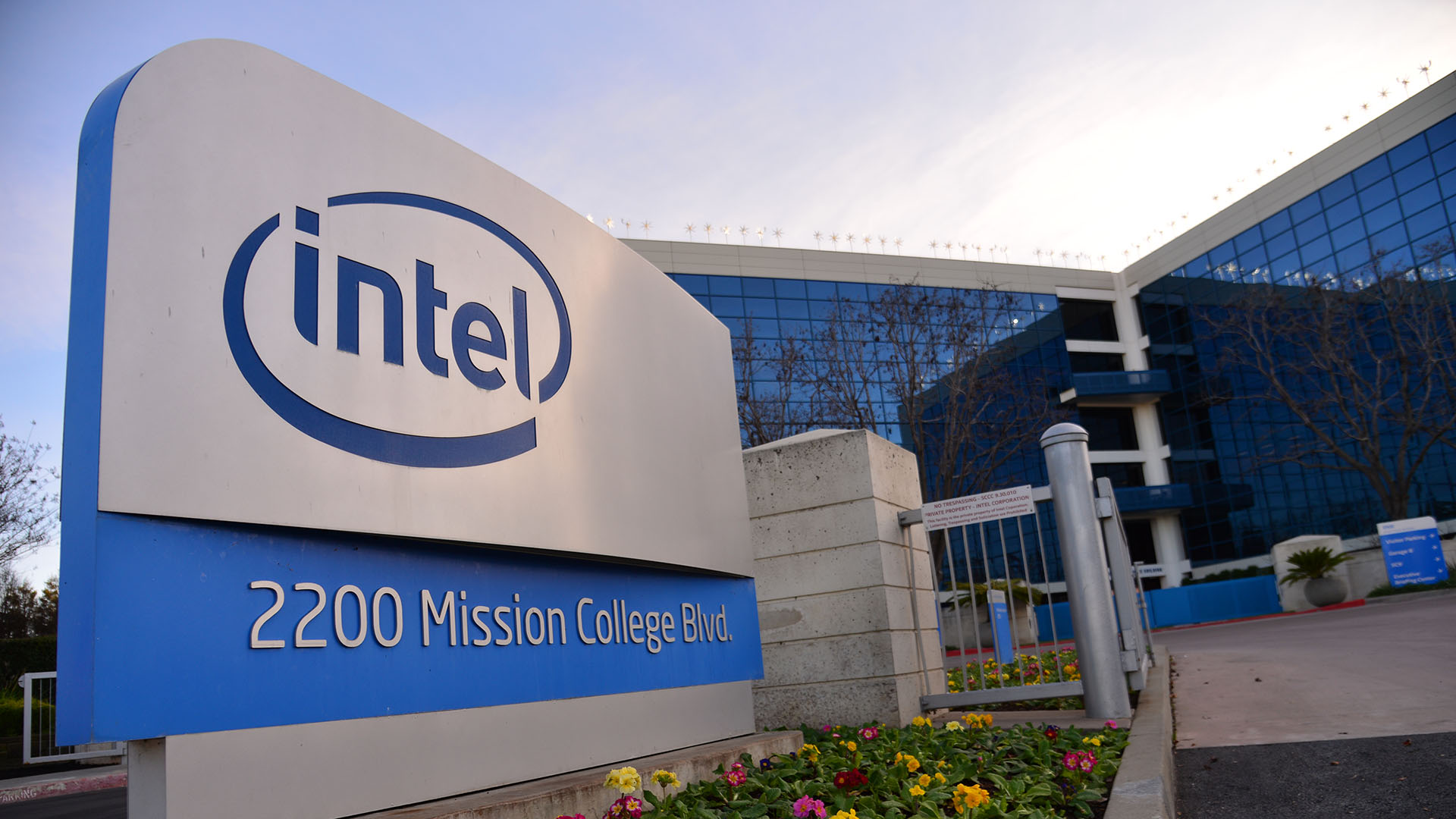
The Robert Noyce Building in Santa Clara, California, is the world headquarters for Intel Corporation. This photo is from Jan. 23, 2019. (Credit: Walden Kirsch/Intel Corporation)

Intel Corp said on Sunday it will invest another $600 million in Israel to expand its research and development (R&D) and confirmed it was spending $10 billion on a new chip plant, Reuters has the story.

The announcement was made during a one-day visit to Israel by Intel Chief Executive Pat Gelsinger as part of a European tour that included Germany and Belgium last week.

Intel is investing $400 million to turn its Mobileye unit headquartered in Jerusalem into an R&D campus for developing self-driving car technologies.

Another $200 million will be invested in building an R&D center, called IDC12, in the northern port city of Haifa next to its current development center.

Intel said the “mega chip design” facility will have a capacity of 6,000 employees.

It is part of Intel’s newly appointed CEO, Gelsinger’s plan to get the chipmaker back to a leading position in the semiconductor industry.

Gelsinger, on his first European tour since taking charge of the company in February, in a statement issued on Sunday predicted “a vibrant future for Intel and Israel for decades to come”.

In recent years, Intel has bought three Israeli tech companies – Mobileye in 2017 for more than $15 billion, artificial intelligence chipmaker Habana in 2019 for $2 billion and Moovit a year ago for $1 billion.

During his brief visit, Gelsinger met with Intel and Mobileye management and Israeli Prime Minister Benjamin Netanyahu.

Israel’s Finance Ministry in early 2019 said Intel would get a $1 billion grant to build an $11 billion chip plant, although at the time Intel would not confirm the amount.

On Sunday, Intel said investment would be $10 billion and the first phase of construction has begun.

Its current Fab 28 plant at the company’s Kiryat Gat site produces 10 nanometre (nm) chips.

Intel has not disclosed whether the new plant will produce smaller chips, which can increase efficiency, but in March it said it was building two 7 nm chip plants in Arizona for some $20 billion.

Intel Israel’s exports grew to a record $8 billion in 2020 from $6.6 billion in 2019, accounting for 14% of total high-tech exports and 2% of Israel’s GDP.

Intel is the largest employer of Israel’s high tech industry with nearly 14,000 workers.

The company has been battling to stay afloat amidst declining revenue and competition from rivals in the semiconductor industry. Intel reported significant loss in the last three months following a drop in data center revenue and a steep decline in gross profit margin.

Intel said its gross margin, the percentage of revenue remaining after deducting the cost of production, was 55.2%, down more than five percentage points from the same period in 2020.