DD
MM
YYYY

PAGES

DD
MM
YYYY

spot_img

PAGES

Home Blog Page 5785

The Video Of Chinese Teachers Driving Expensive Cars

0

This video by a West African in China has been shared everywhere. Yes, Chinese teachers drive BMW, Mercedes Benz and other expensive cars. That is true. But he missed a critical point in that video: nearly 99% of those teachers did not pay cash (I mean pay at once) for those cars.

In the US, you can walk into any Volkswagen dealership, give them your social security number (like National Identity Number) and they run your credit, and within an hour, you can drive out with most models. It is called Sign & Drive which means you do not even need to pay anything: Volkswagen will allow you to pay over 7 years!

Teachers in Ghana do not have that choice: they have to pay at once. Sure, this is not to say that teachers in Ghana or anywhere in Africa are well compensated. My point is this: if you allow most teachers in my village school alma mater – Ovim Community School, Abia State – to pay over 7 years for at least second hand cars, they have a chance. Today, that is not possible as they must pay 100% on delivery.

So, context matters. Ghana and indeed Africa need a credit system to advance the wealth of the citizens.  That is why we need fintechs to innovate on the credit system in Africa.

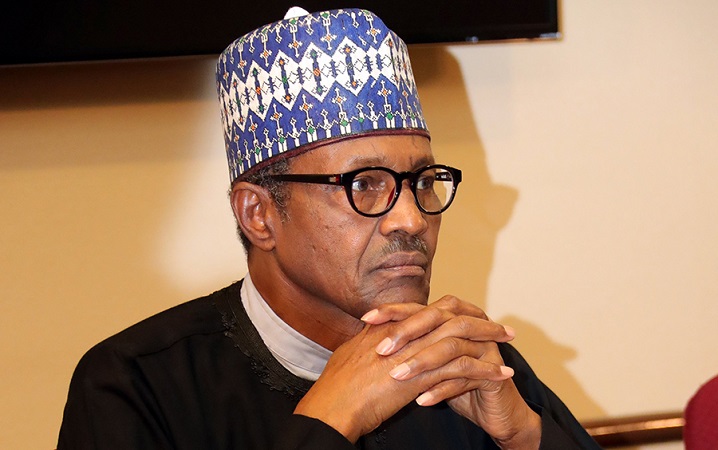
President Buhari’s Aides Should Stop Bullying Critics With “Contracts” Accusations

1

First, I do not pursue government contracts. So, I can easily write to Buhari aides and ministers. What they are doing now is not in any way decent and honourable. Yes, the whole nexus that anyone who criticizes the President’s failure of leadership, must be doing so because he asked for a contract, and was turned down.

A few days ago, the junior minister of Labour and Employment shared details of business solicitations which a musician made to him, to join Buhari campaign. That the musician is criticizing the government now, and asking it to do better for the people, MUST not be diminished because he sought for business in the Buhari campaign. 

That a reverend who supported Buhari, and later asked for business opportunities (sure,  that may not be morally right for a priest) and was turned down, does not mean he cannot voice his opinions on the state of the nation. Making him an angry Reverend who is only shouting because he could not get a contract, instead of focusing on his points, diminishes the government.

Nigerians should not buy the current argument from the Presidency: critics criticize because the government did not give them business! If we do, no one can challenge the government because everyone has the right to ask for business opportunities in the nation. If a bank CEO asks for opportunities to install an ATM in Aso Rock, and the government refuses, and the CEO goes to comment on the state of the nation, the government must not diminish that statement because he asked for a legal business opportunity which was turned down.

Asking for legal contracts cannot be criminalized and MUST not disqualify people for making their points on our national, state and local leaderships. We must resist that argument from politicians. Even a government contractor can criticize a government.

Ejike Mbaka, who supported Mr Buhari in his first and second term elections, recently called for Mr Buhari’s impeachment.

In its reaction on Friday, the presidency said Mr Mbaka recently “asked for contracts as compensation for his support.

“An outsider distilling the avalanche of verbiage, will be surprised that after supporting the President two times to win the Presidency, Father Mbaka has made a complete U-Turn, preposterously asking President Buhari to resign or be impeached,” Presidential spokesperson Garba Shehu said.

“Here is the point of departure: Father Mbaka asked for a meeting and to the shock of Presidential Aides, he came accompanied by three contractors. The President graciously allowed them in, and to everyone’s surprise, Father Mbaka asked for contracts as compensation for his support.

“Anyone familiar with President Buhari knows that he doesn’t break the laid down rules in dealing with contracts or any other government business for that matter. He requested the appropriate authorities to deal with the matter in accordance with laid down rules.

“Inside the Villa, discretion prevailed, that if those pictures and requests were made public, the followers will turn against the religious leader. None of it was released. Now, this is what is eating Father Mbaka.”

Buhari to “end the assault on the nation and will do all that it takes”, NSA writes

0

President  Buhari has stated that his government will fix the security paralysis. His National Security Adviser  dropped this statement following the meeting.


STATEMENT BY THE NATIONAL SECURITY ADVISER AFTER TODAY’S NATIONAL SECURITY COUNCIL MEETING

Concerned about the persisting security challenges in parts of the country, Mr President summoned a crucial meeting of the National Security Council today as he continues to frontally confront the situation in
the country.

At today’s meeting, the President made it abundantly clear that while the insurgents, bandits and criminals are still at it, he has no doubt that the Nigerian Security agencies and all of us as a nation will certainly overcome all the current security problems and defeat the forces of evil marauding about in different parts of the country.

While the criminals continue to test the will of the Nigerian government, the President and the Council which adjourned today’s critical meeting until Tuesday morning to receive further briefings from the Security Chiefs, are set and determined to decisively end the assault on the nation and will do all that it takes.

Mr President is very prepared to take profound measures in the wider interest of the people and the Nigerian nation. There shall be no relenting until peace and security is significantly restored in our communities.

The U.S. May Redesign the Gig Economy

0

The US Labor Secretary Marty Walsh said Wednesday that gig workers in the United States should be considered employees, a status that will offer them protection and other work benefits.

The gig work model has been a subject of controversy that spans across the US, Europe and recently Africa. Walsh’s statement signals a potential shift in the status quo that may deliver a win for the United States’ organized labor movement.

“We are looking at it but in a lot of cases gig workers should be classified as employees… in some cases they are treated respectfully and in some cases they are not and I think it has to be consistent across the board,” Walsh told Reuters in an interview.

“These companies are making profits and revenue and I’m not (going to) begrudge anyone for that because that’s what we are about in America. But we also want to make sure that success trickles down to the worker,” he said.

The ride-hailing business was built on the gig economy, a business model which allows workers flexibility but denies them work benefits such as health plans and paid leave. However, the gig business model has been as controversial as it has been successful.

Uber, the founding ridesharing company and its contemporaries, has been in and out of courts with drivers, labor unions and governments in the US and Europe over the classification of their workers as independent contractors, but for the first time, the US federal government is taking more than usual interest in the matter.

The International Labor Organization said as many as 55 million people in the United States were gig workers – or 34% of the workforce – in 2017, and the total was projected to rise to 43% in 2020, which shows a boom in the business model.
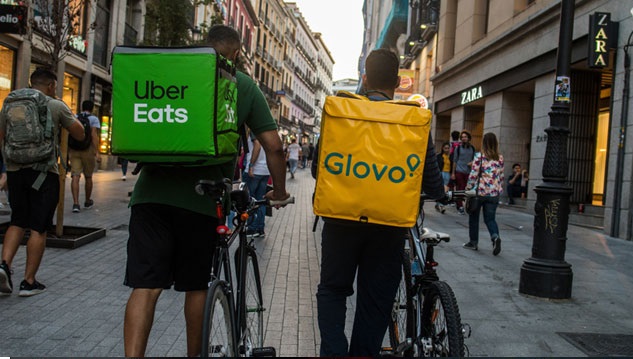
Biden’s administration is poised to make changes in the US labor laws, introducing new rules and shifting existing ones on many fronts. With that, Walsh’s work at the Department of Labor is expected to have a major impact on U.S. workplace laws and regulations, including vigorous enforcement of occupational safety and health rules, overtime payments and proper administration of employee benefit plans.

Reuters reported that Walsh’s views on the issue could usher in new rulings from the department, which sets legal guidelines for how employers treat workers.

On Tuesday, Biden signed an executive order that requires federal contractors to pay a $15-an-hour minimum wage, a much needed raise from the $10.95 per hour and the $7.65 per hour tipped minimum wage. The decision signals the administration’s determination to improve workers welfare including those in the private sector.

The Labor Department’s Wage and Hour Division had set the ball rolling before Walsh’s appointment, with a proposal to rescind a rule adopted in January that would have made it easier to classify workers as independent contractors.

Reuter quoted Walsh as saying that the Department will have conversations with companies that employ gig labor in the coming months to make sure workers have access to consistent wages, sick time, health care and “all of the things that an average employee in America can access.”

The move is similar to many others made in the past by state governments. Last year, the state of California introduced the AB-5 law which declassified Uber and Lyft drivers as independent contractors. But the prop. 22, which gave people the opportunity to choose what they want through the ballot, saved the gig economy in California, as people voted to keep the controversial business model.

Uber, Lyft, and food delivery companies such Doordash, Postmates and Grubhub, have maintained that the workers prefer the flexibility which their self-employed status accords them, because “it allows them to work when, where and how they want” in clear contrast with traditional jobs.

A Doordash spokeswoman said “dashers have overwhelmingly told us that they value the flexibility to earn when and how they choose. We’re committed to protecting their independence while providing greater security and benefits.”

An Uber spokesman said the United States should be advancing policies to improve independent work and not eliminating it, because the overwhelming majority of app-based workers want to stay independent.

But against this backdrop lies a concern that was duly exposed as the pandemic hit home. Gig workers were left with no insurance or employment benefits that traditional workers derived from their work status. Walsh said such situations heap a burden on the federal government.

“If the federal government didn’t cover the gig economy workers, those workers would not only have lost their job, but they wouldn’t have had any unemployment benefits to keep their family moving forward. We’d have a lot more difficult situations all across the country,” he said.

It is not clear if Biden’s administration is all for it, but Walsh’s statement means that the threat before the gig economy is far from over.

In February, the Supreme Court in London ruled in favor of Uber drivers seeking recognition as employees. In March, the Spanish government announced legislation that classifies food delivery riders as employees of the digital platforms they work for. With these examples and the unending talks about gig workers’ welfare in the US, the gig economy is likely going to be axed soon.

EU Commission Finds Apple Guilty of Anti-Competitive Practice

0

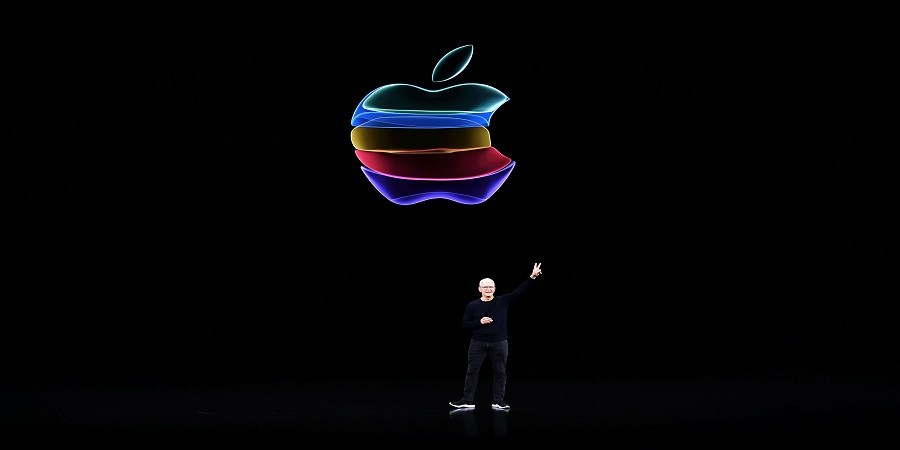
Apple has once again been caught up in the web of European Union antitrust watchdog. The European Union Commission said Friday that Apple is abusing its dominant position in the distribution of music streaming apps through its App Store.

The iPhonemaker came under the radar of the European regulatory authorities last year following the complaint made by Spotify, a music streaming platform, about Apple’s license agreements in 2019.

The agreements, which apply to most apps in the Apple Store, mean that app developers have to pay a 30% commission on all subscription fees that come through the App Store. The EU Commission said Friday it considers the “mandatory use of Apple’s own in-app purchase mechanism imposed on music streaming app developers to distribute their apps via Apple’s App Store,” monopolistic.

“Our preliminary finding is that Apple exercises considerable market power in the distribution of music streaming apps to owners of Apple devices. On that market, Apple has a monopoly,” Margrethe Vestager, the head of competition policy in the EU, said in a press conference.

Apple owns Apple Music, a direct competitor to Spotify and other music streaming apps on Apple Store. The Commission said imposing 30% commission on rival streaming apps in its Apps Store, Apple is trying to stifle competition.

“The European Commission has informed Apple of its preliminary view that it distorted competition in the music streaming market as it abused its dominant position for the distribution of music streaming apps through its App Store,” it summarized in a “statement of objections” sent to Apple.

An Apple leader

Apple’s 30% commission on in-app purchases and other policies have been criticized by other players in the tech space. Last August, Facebook had teamed up with Microsoft and others to question Apple’s game policies, as it has affected many other game apps launched on the Apple store. Apple kicked video game Fortnite out of its store, following Epic’s, the game’s creator’s added feature, that allows players to buy virtual currency using their own credit cards, which denies Apple the opportunity to take its 30% cut.

In September, developers formed a group called the Coalition for App Fairness in a bid to force Apple to change some of its policies and remove the 30% commission. Bowing to the mounting pressure, Apple announced in November it’s cutting the commission it takes on App Store in-app purchases, from 30% to 15% from January 1. But that applies only to apps making less than $1 million yearly.

The conclusion of EU Commission’s inquiry lends credence to the growing anticompetition agitation against Apple. As a standing procedure in an antitrust investigation, Apple is required to file a statement of objection, and Cupertino has responded, saying the EU’s case was the “opposite of fair competition.”

“Spotify has become the largest music subscription service in the world, and we’re proud of the role we played in that,” Apple said a statement. “Once again, they want all the benefits of the App Store but don’t think they should have to pay anything for that.”

The investigation is yet to be concluded, but Spotify welcomes the news of EU Commission’s decision on Friday.

“The European Commission’s Statement of Objections is a critical step toward holding Apple accountable for its anticompetitive behavior, ensuring meaningful choice for all consumers and a level playing field for app developers,” Spotify’s chief legal officer Horacio Gutierrez said in a statement.

Apple is increasingly being confronted by legal and antitrust tussles in Europe, following its 2016 notorious 13 billion euros ($15.7 billion) unpaid taxes legal battle with the Irish government, that is still in court.

Last month, the UK’s Competition and Markets Authority (CMA) launched an antitrust inquiry into Apple, due to many complaints coming from developers about the iPhone maker’s App Store.

The European authorities are stepping up their regulatory activities, and most of the US big tech companies are getting caught in their web. Late last year, the Commission introduced two new pieces of legislation that will affect how Big Tech operates. The region has long had concerns about how powerful some companies have become, and how this is a problem for smaller firms looking to compete in the European market.

The legislation is still being discussed by European lawmakers. But if passed, it will mean handing fine to companies up to 10% of their worldwide annual turnover.

Apple has over 1.8 million apps in Apple Store, and Vestager believes its influence in global tech industry should not be taken for granted.

“Apple not only controls the only access to apps on Apple devices, it also offers a music streaming service, Apple Music, that competes with other apps available in the Apple App Store, such as Spotify or Deezer,” Vestager said.