DD
MM
YYYY

PAGES

DD
MM
YYYY

spot_img

PAGES

Home Blog Page 5786

The U.S. May Redesign the Gig Economy

0

The US Labor Secretary Marty Walsh said Wednesday that gig workers in the United States should be considered employees, a status that will offer them protection and other work benefits.

The gig work model has been a subject of controversy that spans across the US, Europe and recently Africa. Walsh’s statement signals a potential shift in the status quo that may deliver a win for the United States’ organized labor movement.

“We are looking at it but in a lot of cases gig workers should be classified as employees… in some cases they are treated respectfully and in some cases they are not and I think it has to be consistent across the board,” Walsh told Reuters in an interview.

“These companies are making profits and revenue and I’m not (going to) begrudge anyone for that because that’s what we are about in America. But we also want to make sure that success trickles down to the worker,” he said.

The ride-hailing business was built on the gig economy, a business model which allows workers flexibility but denies them work benefits such as health plans and paid leave. However, the gig business model has been as controversial as it has been successful.

Uber, the founding ridesharing company and its contemporaries, has been in and out of courts with drivers, labor unions and governments in the US and Europe over the classification of their workers as independent contractors, but for the first time, the US federal government is taking more than usual interest in the matter.

The International Labor Organization said as many as 55 million people in the United States were gig workers – or 34% of the workforce – in 2017, and the total was projected to rise to 43% in 2020, which shows a boom in the business model.

Biden’s administration is poised to make changes in the US labor laws, introducing new rules and shifting existing ones on many fronts. With that, Walsh’s work at the Department of Labor is expected to have a major impact on U.S. workplace laws and regulations, including vigorous enforcement of occupational safety and health rules, overtime payments and proper administration of employee benefit plans.

Reuters reported that Walsh’s views on the issue could usher in new rulings from the department, which sets legal guidelines for how employers treat workers.

On Tuesday, Biden signed an executive order that requires federal contractors to pay a $15-an-hour minimum wage, a much needed raise from the $10.95 per hour and the $7.65 per hour tipped minimum wage. The decision signals the administration’s determination to improve workers welfare including those in the private sector.

The Labor Department’s Wage and Hour Division had set the ball rolling before Walsh’s appointment, with a proposal to rescind a rule adopted in January that would have made it easier to classify workers as independent contractors.

Reuter quoted Walsh as saying that the Department will have conversations with companies that employ gig labor in the coming months to make sure workers have access to consistent wages, sick time, health care and “all of the things that an average employee in America can access.”

The move is similar to many others made in the past by state governments. Last year, the state of California introduced the AB-5 law which declassified Uber and Lyft drivers as independent contractors. But the prop. 22, which gave people the opportunity to choose what they want through the ballot, saved the gig economy in California, as people voted to keep the controversial business model.

Uber, Lyft, and food delivery companies such Doordash, Postmates and Grubhub, have maintained that the workers prefer the flexibility which their self-employed status accords them, because “it allows them to work when, where and how they want” in clear contrast with traditional jobs.

A Doordash spokeswoman said “dashers have overwhelmingly told us that they value the flexibility to earn when and how they choose. We’re committed to protecting their independence while providing greater security and benefits.”

An Uber spokesman said the United States should be advancing policies to improve independent work and not eliminating it, because the overwhelming majority of app-based workers want to stay independent.

But against this backdrop lies a concern that was duly exposed as the pandemic hit home. Gig workers were left with no insurance or employment benefits that traditional workers derived from their work status. Walsh said such situations heap a burden on the federal government.

“If the federal government didn’t cover the gig economy workers, those workers would not only have lost their job, but they wouldn’t have had any unemployment benefits to keep their family moving forward. We’d have a lot more difficult situations all across the country,” he said.

It is not clear if Biden’s administration is all for it, but Walsh’s statement means that the threat before the gig economy is far from over.

In February, the Supreme Court in London ruled in favor of Uber drivers seeking recognition as employees. In March, the Spanish government announced legislation that classifies food delivery riders as employees of the digital platforms they work for. With these examples and the unending talks about gig workers’ welfare in the US, the gig economy is likely going to be axed soon.


EU Commission Finds Apple Guilty of Anti-Competitive Practice

0

Apple has once again been caught up in the web of European Union antitrust watchdog. The European Union Commission said Friday that Apple is abusing its dominant position in the distribution of music streaming apps through its App Store.

The iPhonemaker came under the radar of the European regulatory authorities last year following the complaint made by Spotify, a music streaming platform, about Apple’s license agreements in 2019.

The agreements, which apply to most apps in the Apple Store, mean that app developers have to pay a 30% commission on all subscription fees that come through the App Store. The EU Commission said Friday it considers the “mandatory use of Apple’s own in-app purchase mechanism imposed on music streaming app developers to distribute their apps via Apple’s App Store,” monopolistic.

“Our preliminary finding is that Apple exercises considerable market power in the distribution of music streaming apps to owners of Apple devices. On that market, Apple has a monopoly,” Margrethe Vestager, the head of competition policy in the EU, said in a press conference.

Apple owns Apple Music, a direct competitor to Spotify and other music streaming apps on Apple Store. The Commission said imposing 30% commission on rival streaming apps in its Apps Store, Apple is trying to stifle competition.

“The European Commission has informed Apple of its preliminary view that it distorted competition in the music streaming market as it abused its dominant position for the distribution of music streaming apps through its App Store,” it summarized in a “statement of objections” sent to Apple.

An Apple leader

Apple’s 30% commission on in-app purchases and other policies have been criticized by other players in the tech space. Last August, Facebook had teamed up with Microsoft and others to question Apple’s game policies, as it has affected many other game apps launched on the Apple store. Apple kicked video game Fortnite out of its store, following Epic’s, the game’s creator’s added feature, that allows players to buy virtual currency using their own credit cards, which denies Apple the opportunity to take its 30% cut.

In September, developers formed a group called the Coalition for App Fairness in a bid to force Apple to change some of its policies and remove the 30% commission. Bowing to the mounting pressure, Apple announced in November it’s cutting the commission it takes on App Store in-app purchases, from 30% to 15% from January 1. But that applies only to apps making less than $1 million yearly.

The conclusion of EU Commission’s inquiry lends credence to the growing anticompetition agitation against Apple. As a standing procedure in an antitrust investigation, Apple is required to file a statement of objection, and Cupertino has responded, saying the EU’s case was the “opposite of fair competition.”

“Spotify has become the largest music subscription service in the world, and we’re proud of the role we played in that,” Apple said a statement. “Once again, they want all the benefits of the App Store but don’t think they should have to pay anything for that.”

The investigation is yet to be concluded, but Spotify welcomes the news of EU Commission’s decision on Friday.

“The European Commission’s Statement of Objections is a critical step toward holding Apple accountable for its anticompetitive behavior, ensuring meaningful choice for all consumers and a level playing field for app developers,” Spotify’s chief legal officer Horacio Gutierrez said in a statement.

Apple is increasingly being confronted by legal and antitrust tussles in Europe, following its 2016 notorious 13 billion euros ($15.7 billion) unpaid taxes legal battle with the Irish government, that is still in court.

Last month, the UK’s Competition and Markets Authority (CMA) launched an antitrust inquiry into Apple, due to many complaints coming from developers about the iPhone maker’s App Store.

The European authorities are stepping up their regulatory activities, and most of the US big tech companies are getting caught in their web. Late last year, the Commission introduced two new pieces of legislation that will affect how Big Tech operates. The region has long had concerns about how powerful some companies have become, and how this is a problem for smaller firms looking to compete in the European market.

The legislation is still being discussed by European lawmakers. But if passed, it will mean handing fine to companies up to 10% of their worldwide annual turnover.

Apple has over 1.8 million apps in Apple Store, and Vestager believes its influence in global tech industry should not be taken for granted.

“Apple not only controls the only access to apps on Apple devices, it also offers a music streaming service, Apple Music, that competes with other apps available in the Apple App Store, such as Spotify or Deezer,” Vestager said.

Kusnap X-Rays Nigeria’s Ecommerce Growth, Unveils Features Update

0

It is important to note that Kusnap Africa Limited (with registration number RC:1505040) came into the limelight in May 2020 following the desire to ease the trading difficulties that were being experienced at the time due to Covid-19. Since then, Kusnap has established itself as one of the credible and top e-commerce platforms that entrepreneurs rely on in running businesses in the digital space in Nigeria.

Therefore, the acute penetration of Kusnap over the last few months has brought with it endless opportunities that many entrepreneurs seize as advantages to propagate and expand their businesses. Without a doubt, running a business in the digital space has become more exciting, especially in our ever-growing technology world. The pandemic has driven technology advancement, which has resulted in a ripple effect that has changed the whole landscape of business and trading, leading to a new normal.

Interestingly, the digital space in Nigeria has seen tremendous growth in the last decade. It is not surprising because many people get exposed daily to the boundless opportunities available to online businesses. Currently, Nigeria is among the top countries with an effective internet economy in Africa and one of the big players on the global stage. Nigeria is the 6th populous nation in the world after Brazil, with a sufficiently young population, which is doubtlessly the reason for the exponential growth seen in the Nigerian digital sphere.

With improving technological development, standard infrastructure for ideal internet connectivity, and good network coverage, there has been a rapid rise in internet penetration up to about 60 percent (according to Statista). Additionally, the rate of ownership of mobile devices in Nigeria is up to 50 percent, allowing more access to the internet through mobile devices than desktops. All these statistics contribute to the growth of the Nigerian landscape and make it a huge potential market for many e-commerce businesses to thrive. This is an indication that Nigeria is moving towards a cashless economy, which is understandable as diverse digital payments and electronic banking are being executed through phases. Also, numerous emerging digital financial service platforms have helped the proliferation and growth of e-commerce in Nigeria.

Considering the opportunities established about the Nigerian e-commerce industry, Kusnap comes in to lift traditional businesses, retail traders, and prepare them to tap into the market and prospects provided by e-commerce. Kusnap is a social enterprise that pays less attention to profit-making but prioritizes the well-being of the Nigeria business ecosystem and entrepreneurs. Its activities are 100% online and designed to allow entrepreneurs to grow their businesses by giving their businesses more reach and exposure to a bigger target market. It is also the fastest-growing online marketplace in Nigeria, where people source goods and services for purchase.

Through Kusnap, entrepreneurs can set up their virtual shops to allow customers across Nigeria to patronize their products/services. Selling products and services through Kusnap is easier and faster than a shop in-situ. Features of the platform enable products to reach an expanded target market segment, improve sales, and boost business growth within a short period. With the high population of Nigeria, there is a huge market and excellent opportunities so lucrative to ensure that businesses on the platform not only thrive but also grow to their best.

There are many intrinsic and indispensable features on Kusnap that help entrepreneurs to grow their businesses. Each of these features makes doing business online fascinating and engaging for both the buyers and the sellers. The features also give buyers and sellers a real-feel of a physical shopping experience but with the exception that they are buying from the comfort of their homes.

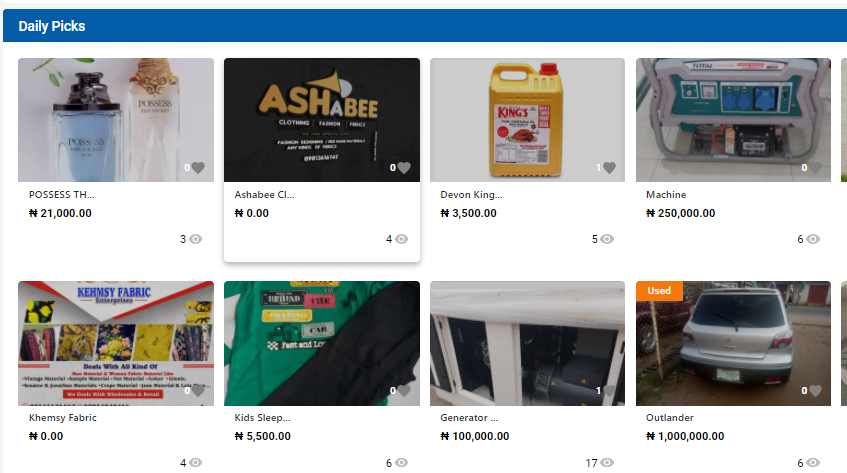
Features such as clear and spotless product images give buyers an idea of the physical features of the product in terms of size, shape, and other important characteristics of the item on display. The product description on Kusnap is remarkably simple as it gives detailed information to buyers beyond the physical features on display. It could be in the form of volume, weight, concentration, use, and so on. Kusnap also incorporates product reviews, which gives customers who have purchased particular products/services a chance to share their experiences in using such products or services. It also tells buyers more about what to expect when potential buyers use such products. Of significant importance is the star ratings that show how satisfied consumers are with a particular product.

The ratings range from 1-5, with 1 star indicating a less than impressive experience, while 5 represents an excellent experience. Another powerful tool that enhances interaction on the Kusnap platform is the chat feature. It allows potential buyers to chat with the sellers about the other aspects of products/services not listed on the description page. Or to negotiate prices and where to pick up the items. Should any customers experience challenges, the support feature helps to sort out any issues that the users on the platform might experience. This feature definitely adds a lot of spice to the shopping experience while also guaranteeing rapid customer conversion.

Sample products at Kusnap

Kusnap has a team of high-level innovators, skilled technical staff, and creative professionals who are committed to providing all businesses the chance to utilize the many opportunities that digital technology offers businesses. As a result, businesses on the Kusnap platform are second to none. It gives a competitive edge over many other similar products/services that are either offline or on other platforms.

In the last few months of operation in Nigeria, users have provided countless positive reviews about the boundless advantages and benefits they enjoy while serving their businesses through Kusnap. This has resulted in a large influx of entrepreneurs (including buyers and sellers) into the platform, making Kusnap the fastest-growing e-commerce platform in Nigeria, a credit to the quality of service and delivery offer to all parties involved in business transactions on Kusnap.

Bringing your business to the online space through Kusnap is one of the best moves you can make for your business today. Your business on Kusnap guarantees you benefits that you would most likely not enjoy through the traditional means of running a business. Through Kusnap, your business is assured of more exposure to your target market, faster buying process, store and product listing creation, cost reduction, affordable advertising and marketing, flexibility for customers, No reach limitations, product and price comparison, faster response to buyer/market demands, several payment options, and many others. These advantages help many businesses to grow exponentially in a shorter time, which we believe is what entrepreneurs desire.

Other improvements on the Kusnap platform are a re-designed user interface and the GROUP function. The re-designed interface allows for ultra-fast loading of pages to ease surfing through the platform. It makes buying experience more exciting for buyers and entrepreneurs who own businesses. Increased customer engagement and retention are also enjoyed through this update. The GROUP feature embedded into the system is also enhanced, which allows customers to carry out transactions while on the platform. Sellers can create any type of group of business interest, add items to it, and display it on the e-commerce website so that each item appears where shoppers are most likely to find it.

Buyers and sellers on the platform can now set alerts notifications for when a particular product is available. It is great news to many buyers whose favorite products run out of stock, as they will easily be notified when such products are restocked and available. For ease of shopping, you can also easily view your recently viewed items. It comes in handy, especially in a scenario where you find yourself on another unfamiliar page. You can easily tap on the recently viewed items and return to products you wish to purchase.

Finally, entrepreneurs have the option to select multiple images at a time during product upload. It gives potential buyers more insight into the products you sell and other details that may seem interesting to buyers. The ability to upload more selective images of your products offers additional credibility to the quality of products you have put up for sale. Also, a text editor has been integrated for an enhanced product description. This additionally provides greater details of the products or services your business intends to offer buyers. Another interesting feature is editing product photos right there on www.kusnap.com as well as styling it the way you want. This is giving more to customers than they want.

In conclusion, opportunities in Nigeria’s e-commerce industry are briefly explained, and the update looks great as it is a win-win situation for both buyers and sellers on www.kusnap.com, as it all makes the shopping experience easier, comfortable, and faster. It helps both entrepreneurs and consumers get what they all want – top-quality service and delivery. Are you an entrepreneur intending to take your business digital? Or you are a consumer interested in getting products and services through e-commerce platforms? Join Kusnap today and enjoy a never-ending experience of top-notch e-commerce like never experienced before.


For more information about the Kusnap brand, visit https://www.kusnap.com/; and for the Kusnap Entrepreneurial Institute, visit https://blog.kusnap.com/.

Follow Kusnap on Facebook, Instagram, Twitter, and LinkedIn.

Snap-to-sell, click-to-buy!

Five Phases for Building Great Companies – Tekedia Live, May 1 @7pm WAT

0

We are in the execution phase (yes, doing phase) of Tekedia Mini-MBA as we conclude the edition next week. I will lead today’s Tekedia Live and the topic is amazing – Five Phases for Building Great Companies. How do we make the companies we work for better?

How do we understand how we can create leverageable factors that compound to deliver alpha in markets? These questions and more would be examined within the constructs of market systems.

Join us as follows:

Sat, May 1 | 7pm – 8.30pm WAT | Five Phases for Building Great Companies, General Topic –  Ndubuisi Ekekwe

Zoom Link in the Board.

Register for the next edition of Tekedia Mini-MBA.

American Tech Roars – Apple Makes Nigeria Budget in 3 Months As Profit!

1

Facebook Q1 2021 revenue increased nearly 50% to $26.2 billion, while 5G phone demand and services doubled Apple’s profit to $26.3 billion, with record $89.6 billion revenue. As that happens, Amazon came with a bigger pot. Yes, the e-commerce giant posted $108.52 billion in revenue, or a 44% increase from last year in its first quarter earnings. Google will save more than $1 billion via WFH. From south to north, east to west, there is a great grand party for American tech.

Just imagine: Apple makes what Nigeria will spend as an annual budget (after all the borrowing and considering that execution is never 100%) in 3 months. Do not feel bad for Nigeria but be concerned that we have defaulted to this state of  underperformance.

Yet, there is tomorrow. A moment of great leadership remains a promise.

If you read what Nigeria did  before,  you will see greatness. Yes, if we have continued with the excellence of the early 1960s, we would be hosting our own Apple today. John Nwodo, the leader of Ohaneze, the Igbo pan-cultural group, was an SUG President of University of Ibadan in the heart of Yoruba nation.  A former mayor of Enugu was a man from northern Nigeria who defeated all his Igbo opponents in the heart of Igbo land.

Sometime back, I heard the story of Mallam Umaru Altine, a Hausa man who became the first Mayor of Enugu Municipal Council in 1956.

The story of Malam Umaru itself tells stories — the story of the country we had, the story peace, the story courage, name it.

Fascinated by Mallam Umaru’s story, my good friend, Mohammed Shehu, sent me some details he got about him earlier today.

Mallam Umaru, who hailed from the old Sokoto province, was elected Mayor of Enugu two times! He was at one time Secretary-General of the Zikist Movement and was identified with the NCNC, a Twitter handle, @historicalnigeria, posted.

According to the handle, during election, NCNC decided to nominate Mallam Umaru at the Coal Camp, where he lived. He accepted the nomination, contested and won the election.

People pursued excellence (no tribal coating) until OIL CAME, and then, we folded! Can we rise again as a people?