DD
MM
YYYY

PAGES

DD
MM
YYYY

spot_img

PAGES

Home Blog Page 579

Paul Atkins Shift From SEC Enforcement to Clear Regulatory Frameworks Is Helping U.S. Crypto Adoption

0

SEC Chairman Paul Atkins has consistently emphasized that establishing a clear regulatory framework for cryptocurrencies is a top priority.

Speaking at various events, including the Crypto Task Force Roundtable on Tokenization in May 2025 and the America First Policy Institute in July 2025, Atkins outlined his vision to modernize securities rules to accommodate blockchain technology and digital assets. His initiative, dubbed “Project Crypto,” aims to provide clear guidelines for the issuance, custody, and trading of crypto assets, aligning with President Trump’s goal of making the U.S. the “crypto capital of the planet.”

Atkins has advocated for moving away from regulation-by-enforcement, favoring notice-and-comment rulemaking to set “fit-for-purpose” standards that foster innovation while protecting investors from fraud.

Key focuses include clarifying which crypto assets are securities, modernizing custody rules, and enabling “super-apps” that allow trading of both securities and non-securities under a single license.

Clear rules would reduce uncertainty, encouraging institutional investors, banks, and financial firms to engage with crypto assets. Defined guidelines on which assets are securities, custody requirements, and trading rules would lower compliance risks, making it easier for institutions to integrate crypto into their portfolios or services.

A structured framework would protect retail investors from fraud, scams, and market manipulation, which have plagued the crypto space. Clear standards for disclosures, custody, and trading would increase trust and participation.

Atkins’ focus on moving away from enforcement-driven regulation to transparent rulemaking could prevent arbitrary penalties, fostering a fairer environment. By modernizing securities laws to accommodate blockchain technology, as Atkins proposes with initiatives like “Project Crypto,” startups and developers could innovate without fear of regulatory overreach.

This includes tokenization of assets (e.g., real estate, art) and the development of “super-apps” for seamless trading of securities and non-securities. A supportive regulatory environment could position the U.S. as a global leader in crypto innovation, aligning with the stated goal of becoming the “crypto capital of the planet.”

A clear U.S. framework could attract crypto businesses currently operating in jurisdictions with lighter regulations (e.g., Singapore, Dubai). This would boost domestic investment, job creation, and tax revenue. Conversely, lack of clarity could drive firms offshore, as seen with some exchanges and startups relocating due to past SEC enforcement actions.

Defined custody and trading rules would enable more secure and efficient markets, reducing risks like exchange collapses. This could increase liquidity as more participants, including traditional financial firms, enter the market. Clear classification of crypto assets would reduce legal disputes and market confusion, stabilizing prices and trading volumes.

A framework addressing stablecoins and decentralized finance (DeFi) could legitimize these sectors, enabling integration with traditional finance. For instance, clear rules on stablecoin issuance and reserves could make them viable for payments and settlements.

A framework that clearly distinguishes between securities and non-securities (e.g., using updated Howey Test interpretations) would help issuers and exchanges comply with regulations. This reduces legal risks and costs for projects, encouraging more token launches and listings.

Modernized custody rules, as Atkins suggests, would allow crypto custodians to operate under clear standards, reducing the cost and complexity of compliance. This would enable more firms to offer secure storage solutions.

Transparent disclosure requirements would ensure investors have access to critical information about crypto projects, reducing the risk of scams and pump-and-dump schemes. A regulated environment would attract risk-averse investors, increasing capital inflows and market participation.

Support for Tokenization and Real-World Assets

Atkins’ focus on tokenization could unlock the potential of blockchain to represent real-world assets (e.g., real estate, equities) on-chain. Clear rules would enable secure, compliant token issuance, expanding use cases and market size.

Moving from regulation-by-enforcement to notice-and-comment rulemaking, as Atkins advocates, would provide businesses with predictable guidelines. This reduces the risk of sudden SEC actions, which have historically caused market disruptions (e.g., lawsuits against Ripple, Coinbase).

Clear rules for DeFi protocols and stablecoins would enable developers to build compliant platforms, integrating crypto with traditional finance. This could accelerate the adoption of crypto for payments, remittances, and cross-border transactions.

Overly strict regulations could stifle innovation, while overly lax rules might fail to protect investors. Atkins’ approach will need to strike a delicate balance. Implementing a comprehensive framework requires coordination with Congress, other agencies (e.g., CFTC), and industry stakeholders. Political gridlock could delay progress.

A clear regulatory framework, as prioritized by SEC Chairman Paul Atkins, would boost the crypto industry by fostering institutional adoption, enhancing investor protection, and encouraging innovation. By clarifying asset classifications, modernizing custody and trading rules, and supporting tokenization, the SEC could position the U.S. as a global crypto hub.

This would drive market growth, increase liquidity, and attract talent and capital, while ensuring investor safety and market stability. However, the success of these efforts depends on balanced rulemaking and effective coordination with stakeholders.


MoonBull Takes Center Stage as the Best New Coin Launch in 2025 – 9 Trending Cryptos Every Investor Should Watch

0

Are investors prepared to capitalize on the next surge of meme coin momentum in 2025? With market dynamics evolving at record speed, selecting the right cryptocurrency can significantly influence portfolio growth. Once dismissed as playful experiments, meme coins are now emerging as powerful assets that deliver substantial returns for those who enter early with a strategy. The timing of entry may ultimately decide whether investors secure transformative gains or watch opportunities pass by.

The rise of Ethereum-based meme coins, combined with the viral strength of internet-driven tokens, is reshaping the market of digital assets. Enhanced by features such as exclusive staking rewards and limited-access presales, today’s market favors proactive participants. Projects like MoonBull, Dogecoin, Shiba Inu, Pepe, Bonk, Dogwifhat, Floki, Brett, and Popcat are attracting global attention with their unique combination of cultural influence and financial potential.

1.  MoonBull ($MOBU)

The MoonBull Whitelist is officially live, offering a unique chance for early investors to secure their place in one of the most anticipated new coin launches in 2025. With the cryptocurrency market experiencing explosive growth, MoonBull presents an opportunity to get in at the lowest price possible before the wider public. This first-come, first-served offer is a rare chance for meme coin enthusiasts and degen traders to gain access to exclusive rewards, private insights, and staking benefits, only available for those who join the whitelist.

By securing a spot on the MoonBull Whitelist, investors will unlock a wealth of benefits. Not only will they have early access to MoonBull ($MOBU), but they will also gain exclusive staking rewards, bonus token allocations, and hints about upcoming roadmap reveals. These benefits are specifically designed to maximize returns and position early supporters for success in the presale, which is set to be one of the most exciting new coin launches in 2025.

As the presale for MoonBull ($MOBU) rapidly approaches, it’s essential to act fast, as only a limited number of whitelist spots are available. Once these spots are filled, the chance to join at the lowest price will be gone in an instant. Don’t miss this opportunity to be part of the next big meme coin sensation in 2025.

By joining the MoonBull Whitelist, members gain exclusive, early access to this new coin launch in 2025, ensuring they get in before the public release. Whitelist members will also receive private notifications about the presale’s exact timing and date, enabling them to secure their position ahead of the crowd. This will offer a significant advantage, especially considering that the MoonBull ($MOBU) token is expected to see massive gains once it officially launches. The benefits of being a part of the whitelist include not only securing a lower entry price but also accessing special staking rewards and bonus token allocations that will only be available to the earliest supporters.

How to Get on the Whitelist

To secure a spot for this exclusive whitelist, follow these simple steps:

  • Submit your email through the secure whitelist form
  • Be one of the first to register, as there are limited spots available
  • Receive a private notification with the exact launch time of Stage One before anyone else

MoonBull ($MOBU) is a promising Ethereum meme coin designed for those who thrive on big risks and big rewards. This coin is built to reward early supporters with elite staking rewards and secret token drops, making it an excellent opportunity for investors looking to ride the wave of viral meme culture while benefiting from Ethereum’s unmatched security.

2.  Dogecoin ($DOGE)

Dogecoin remains an iconic meme coin with unmatched brand recognition and a loyal community. With increasing utility in online tipping, merchant adoption, and new blockchain integrations, DOGE has maintained relevance despite market fluctuations. While traditional investors may view it as a novelty, its sustained social media presence and community-driven growth make it a contender for speculative portfolios.

Why did this coin make it to this list? Dogecoin’s proven viral momentum and widespread recognition offer stability and long-term community engagement, making it an essential inclusion for meme coin investors.

3.  Shiba Inu ($SHIB)

Shiba Inu has evolved from a playful token into a multi-utility ecosystem. The introduction of ShibaSwap, staking rewards, and NFT integrations reinforces SHIB’s credibility beyond simple hype. Its strong community and consistent tokenomics enhancements make it attractive for both short-term gains and strategic holding.

Why did this coin make it to this list? Shiba Inu demonstrates consistent ecosystem development and community engagement, ensuring it remains a leading meme coin option for the new coin launch in 2025.

4.  Pepe ($PEPE)

Pepe has emerged as a viral internet meme token with significant speculative upside. Driven by social media trends, meme virality, and a dedicated community, Pepe’s short-term price action is often explosive. Strategic investors who monitor online buzz can capitalize on its sudden spikes in interest and value.

Why did this coin make it to this list? Pepe captures social media virality and speculative appeal, offering potential rapid growth for early-stage investors in 2025.

5.  Bonk ($BONK)

Bonk is designed to reward active community members and early supporters through interactive tokenomics. Its focus on decentralized distribution and engagement-driven incentives appeals to investors looking for active participation and viral growth opportunities.

Why did this coin make it to this list? Bonk’s community-first approach and reward mechanics make it a high-potential meme coin for those aiming to benefit from early-stage involvement in 2025.

6.  Dogwifhat ($WIF)

Dogwifhat leverages humor, NFT utility, and community engagement to drive interest. Its creative marketing and limited token supply amplify excitement among early adopters, encouraging both short-term trades and long-term community loyalty.

Why did this coin make it to this list? Dogwifhat’s blend of viral humor, NFTs, and community rewards positions it as an appealing option for new coin launch investors in 2025.

7.  Floki ($FLOKI)

Floki offers a structured ecosystem with NFTs, staking rewards, and partnerships, bridging meme coin appeal with functional use cases. Its marketing campaigns consistently generate global attention, creating frequent entry points for investors seeking viral momentum.

Why did this coin make it to this list? Floki balances community-driven hype with ecosystem utility, making it a prominent choice in the 2025 meme coin landscape.

8.  Brett ($BRETT)

Brett combines playful branding with early-stage investor rewards. Limited availability, staking opportunities, and viral community campaigns make it attractive for investors who prioritize early access and potential high returns.

Why did this coin make it to this list? Brett’s strategic design and strong community engagement provide an opportunity for investors seeking growth in 2025 meme coins.

9.  Popcat ($POPCAT)

Popcat leverages viral internet trends and community-focused tokenomics. The project emphasizes fun, engagement, and early adopter benefits, positioning itself for speculative upside during its initial stages.

Why did this coin make it to this list? Popcat’s meme-driven virality and early reward structure make it a standout option for meme coin enthusiasts in 2025.

Conclusion

Based on the latest research, the best new coin launch in 2025 is MoonBull. While other viral coins like Dogecoin, Shiba Inu, Pepe, Bonk, Dogwifhat, Floki, Brett, and Popcat also attract attention for their community strength and viral momentum, MoonBull stands apart with its Ethereum-backed security, elite staking rewards, secret token drops, and exclusive whitelist access. Early participants in the whitelist secure the lowest prices, unlock bonus allocations, and gain private insights into the upcoming roadmap. This first-come, first-served opportunity ensures that only the fastest investors can capitalize on these unique advantages before the public launch.

Other meme coins on this list continue to deliver impressive potential for growth. Dogecoin maintains its established viral reputation, Shiba Inu expands utility with ShibaSwap and NFT integrations, and Pepe leverages social media trends for rapid market movement. Bonk, Dogwifhat, Brett, and Popcat combine community engagement with rewards and viral appeal, while Floki balances ecosystem utility with speculative momentum.

For investors aiming to strategically participate in new coin launches in 2025, understanding tokenomics, staking opportunities, and early presale benefits is key to maximizing potential upside while staying ahead of the market.


For More Information:

Website: https://www.moonbull.io/

Telegram: https://t.me/MoonBullCoin

Twitter: https://x.com/MoonBullX

Frequently Asked Questions for MoonBull Takes Center Stage as the Best New Coin Launch in 2025

What is the best crypto presale to invest in 2025?

MoonBull offers the most compelling presale opportunities with low entry prices, exclusive rewards, and bonus allocations.

Which meme coin will explode in 2025?

Pepe and Floki show high potential for explosive growth due to viral trends and active communities.

Do meme coins have presales?

Yes, MoonBull exemplifies presale opportunities with early access and secret rewards for whitelist members.

How to pick a good meme coin?

Focus on community strength, unique tokenomics, and early-stage presale benefits.

Which meme coin is best to buy now?

MoonBull, with its whitelist access, staking rewards, and roadmap insights, offers the highest strategic advantage.

Glossary of Key Terms

  • Whitelist: A list granting early access or special privileges to select users before a public launch.
  • Meme Coin: Cryptocurrencies that originate from online memes or internet culture.
  • Staking: Locking up crypto assets to earn rewards over time.
  • Ethereum: A decentralized blockchain platform that supports smart contracts.
  • Presale: A token sale phase before public launch, often at lower prices.
  • DeFi: Decentralized Finance, a blockchain-based financial system without intermediaries.
  • Roadmap: A crypto project’s future plans and development timeline.

Alt Text for Publishers

New coin launch in 2025, MoonBull whitelist, Ethereum meme coin, presale rewards, elite staking rewards, secret token drops, Dogecoin, Shiba Inu, Pepe, Bonk, Dogwifhat, Floki, Brett, Popcat, meme coin investment, viral crypto trends.

Congratulations Tekedia Mini-MBA Graduands – You’re #Ready2Lead

0

Co-learners, Congratulations for completing Tekedia Mini-MBA today! You’ve unlocked something huge in the knowledge world. You’ve built pillars of knowledge, systems that liberate the mind and transform the way you interact with the world. With your Mini-MBA completed, you’re not just credentialed—you’re designed for leadership. As we celebrate, do the following:

  • Collect your certificate. Follow the steps on Classboard to claim your credential.

  • Win the future. This isn’t a motto—it’s your roadmap. You are now #Ready2Lead the world of business and commerce.

  • Thank you for co-learning with us. Your choice to learn alongside Tekedia reflects a commitment to excellence—and it’s one we don’t take lightly. Add your certificate to your LinkedIn profile (see how here)

We’re Tekedia Institute. Our product isn’t just education, it’s Knowledge in motion. Move with it. Lead with it. Congratulations—go win the future!

It’s Tekedia Mini-MBA Graduation Day – Executing A Winning AI Product Strategy in Africa

Shiba Inu (SHIB) vs. Little Pepe (LILPEPE): Analyzing Their Millionaire-Maker Potential in 2025

0

In a market filled with many options, meme coins continue to be the favorite among many, with Shiba Inu (SHIB) and Little Pepe (LILPEPE) standing out. Both tokens are regarded as possible millionaire-makers, although their ways are very different.

Massive supply and big burns have seen Shiba Inu establish its presence in the market, and Little Pepe has followed a guided presale process with managed supply and inherent utility. Right now, stage twelve of the LILPEPE presale costs $0.0021, with more than 24.17 million raised and 15.13 billion tokens sold. Little Pepe is an impressive choice over the huge burn that is used in Shiba Inu.

Presale Growth and Token Progression

Little Pepe began its presale on June 10 at $0.001 per token. Prices continued to record new levels stage by stage, reaching $0.0021 in the current ongoing presale turn. At this stage 12: 15,132,081,007 tokens have been purchased out of 15.75 billion allocated till this stage, reflecting 96.08% completion. The thirteenth stage will raise the price to $0.0022 as the early movers embrace a new gaining narrative. This trend has enabled investors to join at different levels whilst maintaining growth.

In comparison, Shiba Inu does not have a similar success story that Little Pepe is experiencing throughout the current presale but instead uses trading mechanisms and community-based burns. SHIB has retained its liquidity; however, its token system stands in stark contrast to the stage system LILPEPE follows, fulfilling guarantees of a bigger road to the next millionaires’ batch.

Supply Structure: SHIB vs. LILPEPE

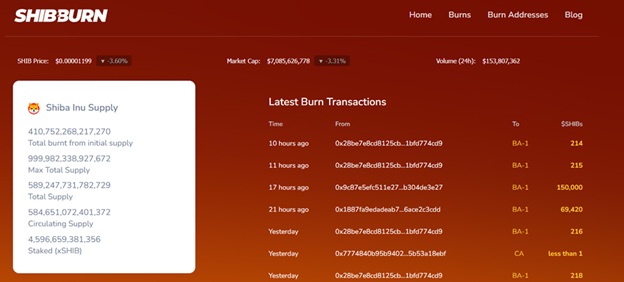
The supply shows very distinct differences between the two meme coins. Shiba Inu was issued with a total supply of 999,982,338,927,672. According to SHIBBURN, 410,752,268,270 tokens have been taken out of circulation forever. Following this decrease, the amount supplied is 589,247,731,782,729, with 584,651,072,401,372 tokens in the market. Even with regular burns, this huge supply still puts the sustainability of prices in the long term.

Source: SHIBBURN

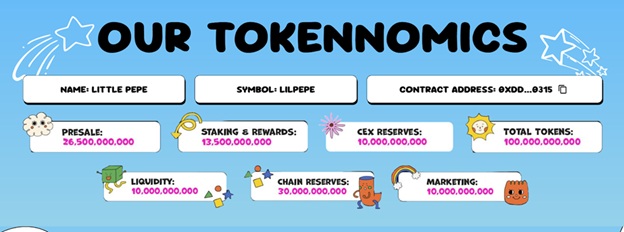
Little Pepe, on the contrary, has an unchanged total supply of 100 billion tokens. The 26.5 billion, 30 billion, and 13.5 billion are allocated to tokenomics as presale, chain reserve, and staking rewards.

Source: Little Pepe

Another 10 billion is allocated to marketing and 10% to liquidity and centralized exchange allocations each. This form of structured model is transparent and imposes scarcity and is more consistent with supply-limited assets commonly associated with long-term appreciation.

Features and Ecosystem Development

Little Pepe has stressed infrastructure in addition to supply control. Being an Ethereum-compatible Layer 2 blockchain, it provides faster, cheaper, and more secure transactions. Zero tax on trading, sniper bot protection, staking and meme launchpad are integrated into the network. DAO voting will provide governance, and the future will include NFTs and cross-chain interoperability. The ecosystem has also been audited by CertiK, which adds credibility to the technical construction of the ecosystem.

While well-known, Shiba Inu has yet to execute any ecosystem transition of similar structural measures. Its token burn mechanism to manage supply stands in contrast to LILPEPE’s intrinsic scarcity and presale roadmap. Little Pepe also has a $777,000 giveaway running during the presale to boost the community value. Ten winners each will receive $77,000 worth of tokens, and entry is $100 minimum.

Shiba Inu and Little Pepe bring to the table contrasting paths to wealth creation in 2025. SHIB continues its burn strategy, and LILPEPE moves forward with a capped supply, structured presale, and blockchain utility. With a fundraising total exceeding $24 million and an all-time high of stage thirteen at $0.0022, Little Pepe showcases the potential of supply-driven projects that Shiba Inu’s current circulating volume does not possess. This makes it a powerful Layer 2 meme coin with millionaire-making potential.


For More Details About Little PEPE, Visit The Below Link:

Website: https://littlepepe.com

EU Slams Google With $3.5B Fine in Ad-tech Antitrust Case, Trump Vows Retaliation With Tariffs

0
The US is after Google also

The European Union (EU) has slammed tech giant Google with a fine of 2.95 billion euros ($3.5 billion), over anti-competitive practices in its adtech business.

The commission noted that Google favoured its online display technology product, which helped its advertising exchange (AdX) role in the adtech supply industry. This allowed the company to charge high fees for the services at the detriment of its competitors and other online publishers.

The EU further ordered the U.S. tech giant to end its “self-preferencing practices” and stop “conflicts of interest” along the advertising technology supply chain. It mandated that the company submit compliance plans within 60 days and provide an additional 30 days for implementation details.  

“Digital markets exist to serve people and must be grounded in trust and fairness. And when markets fail, public institutions must act to prevent dominant players from abusing their power,” the commission said. 

This is the fourth time the E.U. has sanctioned Google with a multibillion-euro fine in an antitrust case, in a wider battle with regulators that dates back to 2017. These actions stem from investigations into Google’s alleged abuse of its market dominance in violation of EU competition laws.

This fine comes from Alphabet, Google’s parent company, which successfully avoided a breakup in a landmark antitrust case brought by the U.S. Department of Justice (DOJ), marking a significant moment in the ongoing scrutiny of Big Tech’s market dominance. The case, United States et al. v. Google LLC, filed in October 2020, accused Google of illegally monopolizing the search engine and search advertising markets

Google’s search engine handles nearly 90% of web searches globally, processing an estimated 8.5 billion queries daily. This dominance according to the filing, was allegedly used to stifle competition and innovation by limiting rivals’ access to key distribution channels. The DOJ argued that Google’s practices prevented competitors from gaining traction, reduced consumer choice, and harmed innovation in the search market.

Following the ruling, the DOJ proposed aggressive remedies during a remedies trial in April-May 2025, aiming to dismantle Google’s dominance and prevent similar monopolistic behavior in emerging fields like artificial intelligence (AI). The proposed remedies included forcing Google to sell its Chrome browser, which handles nearly 40% of U.S. search volume and provides valuable user data for targeted advertising.

The DOJ’s proposals were described as “radical” and aimed at fundamentally reshaping Google’s business model to foster competition. Google, led by CEO Sundar Pichai, argued that these measures were excessive, potentially harming consumers, innovation, and U.S. technological leadership. Pichai called the data-sharing proposal a “de facto divestiture” of Google’s core intellectual property.

On September 2, 2025, Judge Mehta issued a 223-page ruling that rejected the DOJ’s most severe proposals while imposing significant but less drastic remedies. Google was not required to divest Chrome or Android, a decision seen as a major win for Alphabet. Mehta argued that a breakup would cause “substantial downstream harms” to distribution partners like Apple and consumers.

At a recent White House dinner with tech executives, President Donald Trump congratulated Google CEO Sundar Pichai and co-founder Sergey Brin following Alphabet’s favorable antitrust ruling on Tuesday.

“Well you had a very good day yesterday,” Trump said, calling on Pichai at the Thursday evening dinner.

I’m glad it’s over,” Pichai responded to Trump, causing an eruption of laughter from the other table guests. “It’s a long process,” Pichai said. “Appreciate that your administration had a constructive dialogue, and we were able to get it to some resolution.” 

Alphabet this week added $230 billion to its market cap after avoiding a breakup in a landmark antitrust case brought by the U.S. Department of Justice in 2020.

Trump Threatens to Retaliate EU’s $3.45bn Google antitrust fine with tariffs

The latest $3.45bn fine slammed on Google by the E.U. has spurred U.S President Donald Trump’s response.

In his reaction, President Trump termed the fine as  “unfair” and “discriminatory”. He also vowed to personally take the matter up with the EU. Trump, who has hit Europe with trade tariffs, will likely retaliate with the same measures. 

“We cannot let this happen to brilliant and unprecedented American Ingenuity and, if it does, I will be forced to start a Section 301 proceeding to nullify the unfair penalties being charged to these Taxpaying American Companies,” Trump wrote on his Truth Social post. 

Analysts suggest Trump’s tariff threats were partly motivated by a desire to protect U.S tech giants, which he described as brilliant and unprecedented American ingenuity.

Looking Ahead

Google argues that the decision by the EU was wrong and that its services are not anticompetitive. The search engine giant has vowed to appeal the EU antitrust commission’s verdict.