It is big money – N8.3 trillion. And extra N5 trillion, you have the Nigerian budget fully funded. That is what the commercial banks were debited by the Central Bank of Nigeria (CBN) on the apex bank’s Cash Reserve Ratio (CRR) policy. Yes, in 2020,CBN warehoused a staggering N8.3 trillion from banks, kicking the party up by 58% year-on-year,according to Nairametrics: “banks that fall below the CBN’s loan to deposit ratio requirement of 65% have the full weight of the CRR imposed on them.”
CRR is a tool which central banks use to control supply of money and manage inflation. Essentially, you use it to morph how much of their customers’ deposits are available to the reach of the banks. In other words, even though customers have deposited the funds, the apex bank does not make it available for banks to trade or invest with it.
In Nigeria, the apex bank sets a loan to deposit ratio (LDR) which banks have to meet. The LDR defines how much loans are made by banks to its customers as a ratio of their total deposits. When the LDR number falls below the apex bank’s threshold, it debits the bank from the pool of its customer deposits to calibrate, and puts it within the threshold.
But interestingly, there is something happening here. The apex bank has been accused to be morphing this fund, and then using it to augment revenue shortfalls for the federal budget. As the Ways and Means financial invention becomes more popular, watch these debits to rise. Of course, provided that the apex bank will provide the funds when the banks need them, for their customers, the economic structural impacts would be minimal.
The LDR threshold to stimulate lending is a great policy; hope it does not get blown by Nigeria’s search for funds! Simply, I am hoping that CBN is focused on its monetary policy and not using LDR/CRR to magically make funds available to the federal government to fund the budgets. Following that windy path would be extremely risky if suddenly those funds could not be returned for their original owners – the customers!
This table explains the breakdowns.
CRR Debits deducted from commercial bank deposits in 2020. Source: Nairalytics Research.
Tekedia Institute has made it up to the 11th week of Mhagic Velocity, a talent competition with a reward of N25 million naira ($60,000). Hundreds of people and groups began this competition, and today only few are remaining. Mhagic Velocity is a 13-week in-app show. It features videos or pictorial upload of talents & skills, tasks, and weekly the most promising progress. Our talent: we make learning uncommon so that everyone understands!
Why Tekedia Institute Is Competing
Tekedia Institute wants to win the N25 million to offer full scholarships to Tekedia Mini-MBA for 430 African students. Tekedia Institute offers an innovation management 12-week program, optimized for business execution and growth, with digital operational overlay. It runs 100% online. The theme is Innovation, Growth & Digital Execution – Techniques for Building Category-King Companies. All contents are self-paced, recorded and archived which means participants do not have to be at any scheduled time to consume contents.
How To Support Tekedia To Win
Go here and register a free account, and then login – https://mhagic.com/login
Go here – https://mhagic.com/profile/tekedia . Do the following:
(1) Vote; 10 Naira for one vote or $1 for 30 votes
(2) Watch the top 3 videos (only those count for the week)
(3) follow Tekedia
If you prefer mobile app; download Mhagic app, and find Tekedia by searching on the app Home with @tekedia
NB: If for any reason you find paying with the options hard, make a payment via any of the options here –https://tekedia.com/pay and put in description and your Mhagic registered username. Once we receive, we will ask the Mhagic team to credit that username to enable you to vote.
How do you create a new basis of competition? How do you discover an orthogonal path, totally different from all the trajectories of your competitors? How do you move from building on speed to building on velocity, where that elemental direction associated with velocity is the pulse of market perception? The empires of the future must NOT just serve the needs and the expectations of customers, but most importantly, serve their perceptions of the future. It goes beyond volume. It goes beyond balance sheets. It goes beyond assets quality. It is about building Organic Profitability.
Organic Profitability is a profitability system where products and services earn income throughout their lifespans. Generally, software solutions on subscriptions have an element of that. But most hardware solutions struggle. Once you pay for that radio, no extra money goes to the maker.
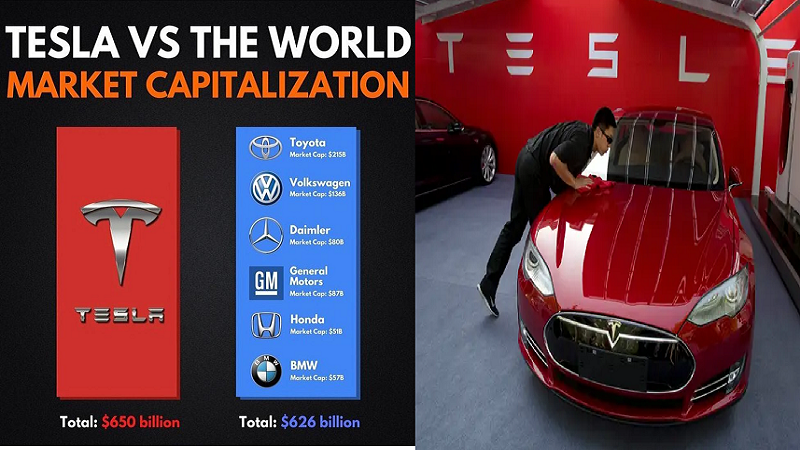
But one guy and his pals invented a new way of making hardware earn organically. Yes, Tesla is the world’s largest automobile company, not because it makes the most cars; it makes about 500k when Toyota ships close to 11 million yearly. But each of those 500k cars Tesla has made will likely earn income until they are decommissioned from roads. Yes, you buy Tesla, you have to pay some subscriptions for software, and when you sell that car, the new owner has to re-license the software.
Also, besides the software, those cars keep earning as Tesla resells the emission credits it has gotten on them. The biggest innovation in Tesla is not the cars and batteries but a business model that delivers compounding leverageable factors, creating a virtuous circle of accelerating returns. Because of that, Tesla is bigger than the world of cars!
The most profitable unit in Tesla is selling emission credits, not cars. But for the emission credits business to thrive, Tesla has to make cars to earn those credits. Because it makes electric vehicles, it earns credits for not polluting the world. Then, it resells those credits to other car companies which make fossil-fueled cars to stay in compliance.
It is always a special week. Yes, this week at Tekedia Mini-MBA focuses on “Leadership, Human Capital & Project Management”. At the end of everything, it comes down to LEADERSHIP and human capital. Combining and recombining factors of production can only happen when leaders lead strategically, tactically and operationally at different nexus of production with quality.
We have the best in these domains including my undergraduate classmate Dr. Chisom Ezeocha of Shell and other eminent Faculty of Tekedia Institute.
-Leadership, Knowledge Management – Prof. Ayodeji Oyebola, Saint Mary’s University of Minnesota
-Human Resources Management – Adora Ikwuemesi, Director Kendor Consulting
-Leading and Managing Teams, Stakeholder Management with NICER Model – Dr. Chisom Ezeocha, Project Delivery Manager, Shell
This year Ramadan fasting will start across the world in the next few hours. This is a month in which 1.9 billion Muslims, 24.7% of the world population are expected to increase in spiritual activities in addition to fasting from dawn to night. At least, the increase in spiritual activities is expected to be more in countries with the largest Muslim populations.
In 2020, some of the voluntary and compulsory spiritual activities were suspended due to the COVID-19 spread. Where the activities were held, Muslims adopted strategies that aligned with the global measures for the containment of the virus spread. As this year’s fasting period closes, governments and health officials in countries where the cases of the virus are still occurring are working out modalities for reducing the spread. Our analyst reports that measures employed in 2020 are being reintroduced. For instance, the Morroccoan government has suggested the introduction of curfew in areas considered hot spots.
Apart from observing special prayers during the day and night, Muslims are mandated to also participate in activities that increase social inclusion, interpersonal relationship and kingship in respective of age, gender and race or nationality. In line with this our analyst examines the African giving market in relation to the Muslims population in select countries from 30 countries studied by Care Aid Foundation between 2010 and 2020. The foundation looks at three aspects of giving behaviour; helped a stranger, donated money to a charity and volunteered time to an organisation.
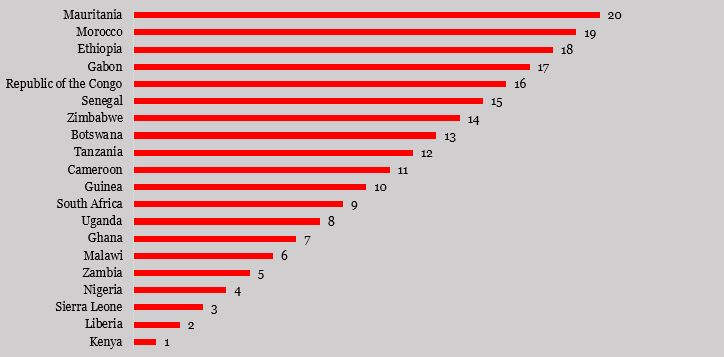
Further examination of the overall rank and scores for each behaviour by our analyst indicates 36.3% connection between citizens’ donation to charity organisations and helping strangers among 20 of the 30 countries [see Exhibit 1] in 10 years. Analysis also reveals that donating and volunteering time for participation in activities of organisations that help people resonate by 48.2%. Over 63%, which is the largest and significant connection, was found for volunteering and helping strangers, indicating that people are more likely to help strangers while volunteering their time for social causes than when they wanted to donate. In other words, a strong difference exists between donating and volunteering time in the 20 countries.
Muslims in the Context of African Giving Market
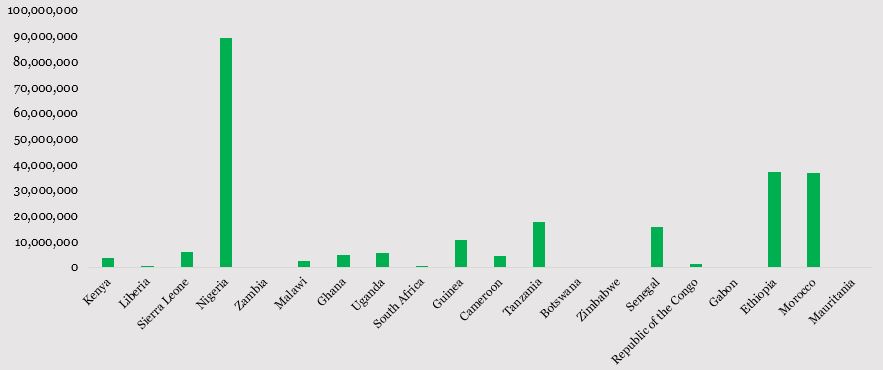
Though CAF sampled the views of people irrespective of their religious practice across the world, our analyst exrapolates the data to set the Muslim Giving Market into proper perspectives along with the Muslim population of the countries [see Exhibit 2]. Analysis shows 27.6% connection of Muslim population with the donating behaviour while negative connections were found for the population and helping strangers [-11%] and volunteering time [-2.2%].
According to our analyst, these results suggest that Muslims in the countries are more likely to donate to organisations, which would be organising various programmes such as lecturers and meal production and distribution for the people during the month than assisting strangers and volunteering their time for special causes at Mosques and other places, where people are expected to congregate.
If we are to follow the general data released by the CAF, Muslims in Kenya and Tanzania are likely to donate more than those in the remaining 18 countries we studied. It is also possible to have Muslims in Kenya and Liberia, helping strangers and volunteering their time during the month. Meanwhile, our check reveals that as of April 11, 2021, interest in help is huge among the people in Ghana, Nigeria, Zimbabwe, Uganda, Zambia, Kenya and South Africa.
Existing statistics for 2020 indicates that the population of Muslims in the top 20 African giving countries is 238,720,776. According to our aggregate analysis, 9.8% are expected to donate to charity organisations, helping strangers and volunteer during the month. We also found that 31% of the population would donate while 9.8% and 6.2% are likely not to help strangers and volunteer their time for certain activities during the month. Disaggregate analysis shows that 7.6% would donate, 1.2% would help strangers, all are likely not to volunteer during the month.
Exhibit 1: Top 20 African Giving Countries in Last 10 Years
Source: World Giving Index 2010-2020; Infoprations Analysis, 2021
Exhibit 2: Muslim Population of Top 20 African Giving Countries
Enhancing Value Co-Creation and Capturing of the of Giving Market
From the insights and perspectives given, it is clear that Islamic scholars and organisations need to work collectively towards improved value creation and capturing in the market. Scholars, who will be delivering lectures during the months, need to stress the concept of giving and its benefits on earth and hereafter. Muslims need to be equipped with the sustainable value they will capture while donating, helping strangers and assisting organisations in uplifting the poor and the needy during and after the month.
Scholars need to remind Muslims the essence of self-discipline, self-control, sacrifice, and empathy for those who are less fortunate. This will go in a long way of increasing the actions of generosity, compulsory and voluntary charities. Charity organisations should look into appropriation of an integrated communication method for the communication of the value and benefits such as “Who is he that will loan to Allah a beautiful loan which Allah will double unto his credit and multiply it many times?”(Quran 2:245) of giving to the Ummah.