When the National Bureau of Statistics (NBS) recently released the “2019 Poverty and Inequality in Nigeria” report, which highlights that 40 percent of the total population, or almost 83 million people, live below the country’s poverty line of 137,430 nairas ($381.75) per year, so many people who were undeniably pro-Nigerians took to the media to claim it was all lies. How can it be such lies, when President Buhari’s administration is fighting poverty and empowering everyone with all sorts of empowerment. I was watching from afar, as a spectator than I was. Oh yes, far away, I was smiling because I knew that sooner than later the harsh reality will descend on the folks who claimed the statistics were a Hoax.
What was more baffling, is the fact that despite the World Bank coordinating the study many still did not believe that Nigerians are living below the poverty level. Probably, because the Pro-Nigerian folks could eat two square meals per day and load mobile data on their outdated device, they never realized that they themselves were subjected to poverty.
The NBS report is based on data from the latest round of the Nigerian Living Standards Survey, conducted in 2018-2019 with support from the World Bank’s Poverty Global Practice and technical assistance from the LSMS program.
The Nigerian Living Standards Survey (NLSS) is the official survey that is the basis for measuring poverty and living standards in the country and is used to estimate a wide range of socio-economic indicators including benchmarking of the Sustainable Development Goals. Between September of 2018 and October of 2019, the National Bureau of Statistics conducted the latest round of the NLSS, a decade after the previous one.
The World Bank provided technical support to the NBS throughout the entire survey implementation, introducing several methodological improvements that led to the availability of reliable data for the poverty estimates.
All Hell Broke Loose
It didn’t take too long for the reality to happen and it did happen, even though it was a test of wars that would soon come to the baking and the telecommunications sector of the economy. What war am I referring to? Lol, the BankTelcos War. The great war experimentation would usher in a new phase of decorum in the system of banking in Nigeria, the same way banks are scared of cryptocurrency. This war lasted just for a few days before it was called off.
So what really happened in this demo war?
After MTN, the West African nation’s biggest telecom services provider, reduced a commission charged on airtime purchases through banking channels by almost half to 2.5%, Nigerian banks early on Good Friday of April 2021 barred the Johannesburg-based firm from using their USSD platform to conduct business as both sides scuffled over airtime sales fees. The three-day-long feud started after MTN, which has the biggest share of Nigeria’s telecoms market, reduced the rate it pays banks for each transaction from 4.5 percent to 2.5 percent.
The lenders removed the telecom giant from their platforms, disallowing MTN users from accessing their bank accounts to recharge their phones. As subscribers expressed their frustration, MTN advised them to seek alternative ways of recharging. On Saturday, the firm announced alternative channels for its airtime sales, including a host of fintech platforms led by Flutterwave.
Service resumed later on Sunday afternoon after MTN agreed to revert to “status quo” at the request of the Minister of Communications, the Nigerian Communications Commission, and the Central Bank of Nigeria while a permanent solution is being worked out.
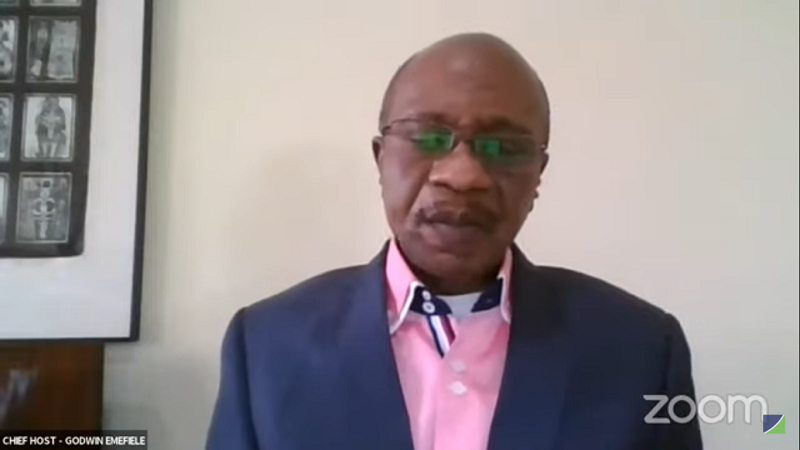
“Nigerian banks are not indebted to MTN Nigeria and other phone companies for using telecommunication platforms to provide payment services” this was opined by Herbert Wigwe, the CEO of Access Bank. It sounds funny when you read it in your inner woke voice. As Bloomberg reports; The action against MTN was an escalation of an ongoing dispute between lenders and telcos in Africa’s largest economy over fees chargeable on services carried out on each others’ platforms.
Telecom operators through their umbrella union, the Association of Licensed Telecommunications Operators of Nigeria, threatened last month to disconnect banks from providing payment services on telco platforms until they paid a 42 billion naira ($103 million) debt allegedly due to its members from end-user billing.
The telecom companies are asking the banks to remit money to them even for transactions that did not take place, Wigwe said. “It is true that they continue to provide this service but this service has nothing to do with the banks,” he said.
Access Bank’s transaction value on telco platforms more than doubled to 1.9 Trillion Naira in 2020 from 891 billion Naira a year earlier, according to an emailed presentation. The volume of transactions rose 80% to 590 million as more customers adopted the technology for payments.
The Importance of USSD contrary to the Lies of Citizen Sufficiency
As Borgen Magazine report; Nigeria, a third-world country in Africa, is known as the poverty capital of the world. The nation just exceeded India with the largest rate of people living in extreme poverty. In Nigeria, about 86.9 million people live in severe poverty, which is about 50% of its entire population. While the nation is smaller both geographically and in terms of population, it is failing at lowering the rates of poverty. This is partly due to the mismanagement of the oil business and the presence of corruption. Along with this, the nation is going through a “population boom,” which will make managing poverty rates more difficult. One of the U.N.’s Sustainable Development Goals is to end extreme poverty by 2050. However, Nigeria’s poverty rates are currently going in the wrong direction.
But despite the whole world knowing about our poverty status, Pro-Nigerians keep denying it. Here comes the fact question: If we are truly rich, why did the Banks to MTN affect over a million people? Why are banks reporting their financial strength from the use and adoption of USSD services? Why do people in rural villages not have nor make use of banking apps to power their day-to-day activities? Why is there the emergence of POS in rural areas?
There are more questions, but we must not let the hype financial reporting done by the banks enable us to lose our guard. There is the sound fact that Nigeria in the next 10 years cannot do without the use of USSD and other mobile messaging platforms for banking. Even OTPs are sent by phone, and do you expect a trader in Ariaria or Ijebode to leave his small business and head to the bank to acquire a hardware device token to enable them to do transactions? Not likely.
This demo war by the banks against the Telcos proved a vital point, which is Nigerians are living in poverty. The majority of Nigerians felt the impact. Despite the lies peddled by the media that Nigerians are doing well and living in affluence, Nigerians couldn’t do with the USSD and SMS services. There are still people in Nigeria who don’t have an email address and who won’t have an email till they expire from the earth’s surface.
Another point to examine is the fact that Nigerian banks are outliving their purpose. Oh yes, if a bank’s aim is to sell data and airtime, it gets to you that the banks are not innovating and they are dying off, thus they need MTN to survive because MTN controls the huge market segment of telecommunications in Nigeria.
How many Nigerians can afford to buy hardware tokens and how many can rely on baking without the use of USSD? You know the answer.
Starts Will Dominate Forever
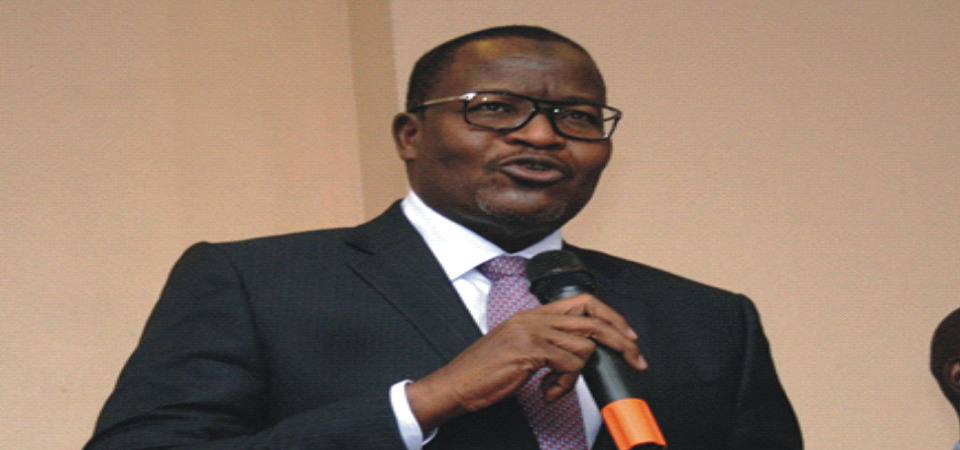
During this demo war, when MTN announced that they’d be switching to alternative channels for customers to buy airtime, it was when the big boys stepped in – and in 2021 fashion – on Twitter. Dr. Isa Ali Pantami, the Minister of Comms and Digital Economy says he’s going to have it fixed.
What alternative channels were available for MTN customers?
Flutterwave, Kuda, Carbon, and the rest of the gang were among the alternative channels available for MTN customers
What does this tell you?
MTN has about 77 million subscribers – 45% of the total telco market in Nigeria. Imagine how bad it’d have been if people everywhere couldn’t recharge and connect with loved ones over the four-day weekend. It would have been a tragic development.
It is worth mentioning that the startups that stood up to the rescue – Flutterwave, Kuda, Carbon, and the rest of the gang are forced to be reckoned with it. Further proving that fintech startups and companies will dominate the economy in years to come. I know what you are thinking, you are thinking will the fintech startups and companies survive with all the embargo?
Despite me stating that these are dark times in Nigeria, I believe it will not last forever (**stays from a safe distance***).
Conclusion: Wahala Be Like Bicycle
On a serious note, the reality that MTN and other Telcos will and can survive without the banks is a sad reality for the banking ecosystem in Nigeria. I’ll spell it out, the banks will lose because they also use MTN to power their services. Now, that’s what we call “double wahala”.
MTN is the largest telecommunication operator in the country, with about 77 million subscribers, making up about 45% of the total telecommunication market share in Nigeria. This recent feud with Nigerian banks left millions of MTN subscribers stranded and frustrated as they are unable to recharge airtime through USSD and bank apps amid the Easter celebrations.
Even though the banks cowardly have lifted their ban on MTN subscribers, and they can now recharge via USSD. The swords have been sheathed, but for how long? First of all, you (if you’re an MTN user) can now recharge your line via any of your preferred means. Beyond that, there’s the debate over the long-term importance of USSD, but from the outlook of events, its importance to the populace can’t be overestimated.
I stand to opine that if the SEC and CBN can frustrate the efforts of youngsters in the startup ecosystem by hastily implementing laws to clamp down on startups, then the NCC and other agencies can find a workable ground for banks and telcos.
One thing is clear from the Demo Wars – banks are in shock, and if I were to be them, I should be.