DD
MM
YYYY

PAGES

DD
MM
YYYY

spot_img

PAGES

Home Blog Page 5824

Time for Corporate Nigeria To Speak On The State of the Nation

1

I think it is time for Corporate Nigeria to make a comment on the state of the nation. I understand that many of us need things from the government and would not like to be misquoted. But it comes a time when a nation is under severe stress for the leaders of the private sector to speak out. In Georgia in America, sports teams and corporate America have made it clear: politicians, we are disappointed with your new voting laws. Can the bank CEOs, cement bosses, oil & gas leaders, etc tell the government to get itself in order?

Doctors on strike. Judges on strike. Polytechnics on strike. University joining. One police station off per week. This is a failing state.

Can Corporate Nigeria develop a “Contract with Nigeria” where it could articulate to hire and employ 2 million youth over two years with clear demands on what it needs from the government? We can do it by reallocating factors of production in a measurable way to bring hope to young people. It’s time – Nigeria is waiting for Corporate Nigeria as Abuja and state capitals have failed.

Recent Funding Raised by African Startups

1

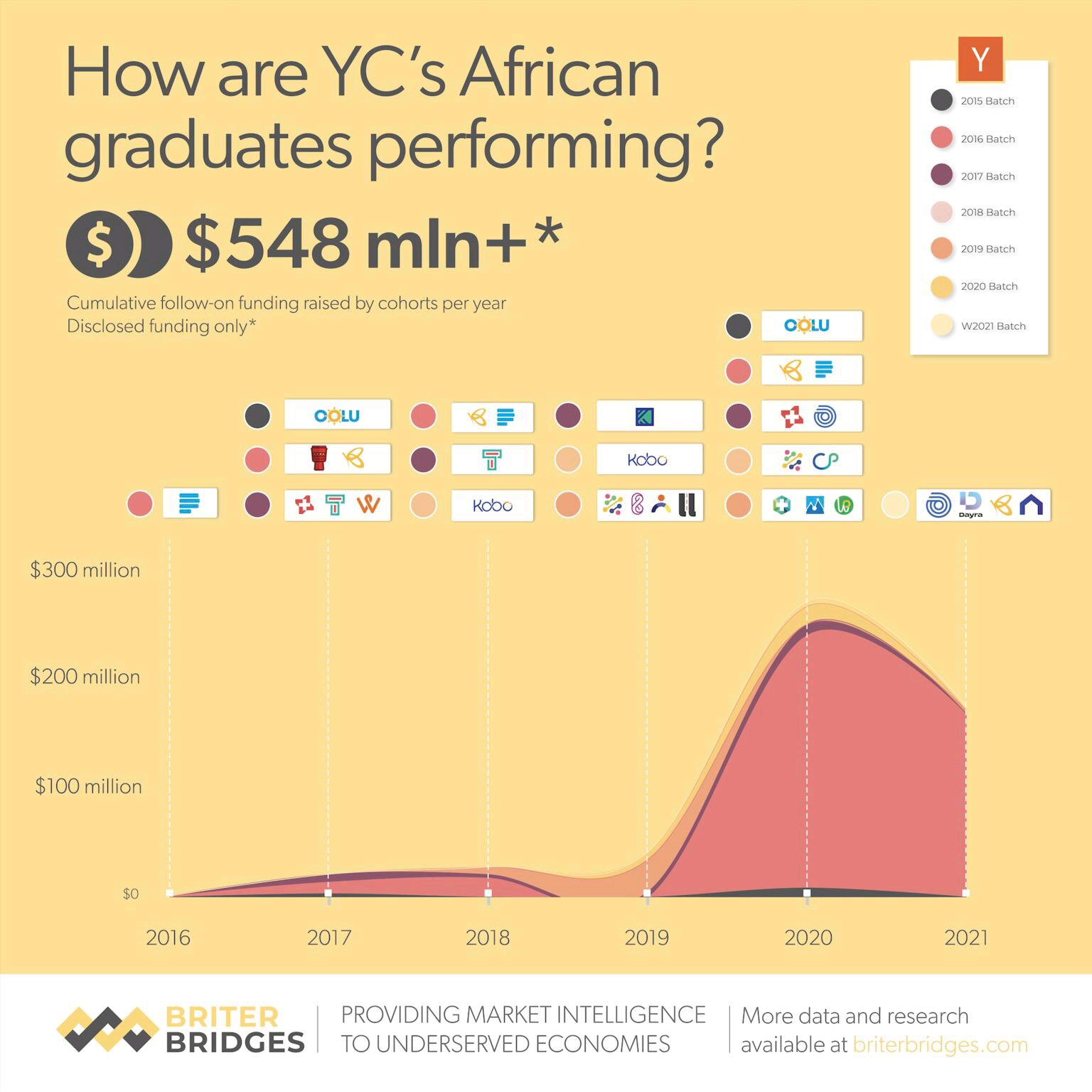
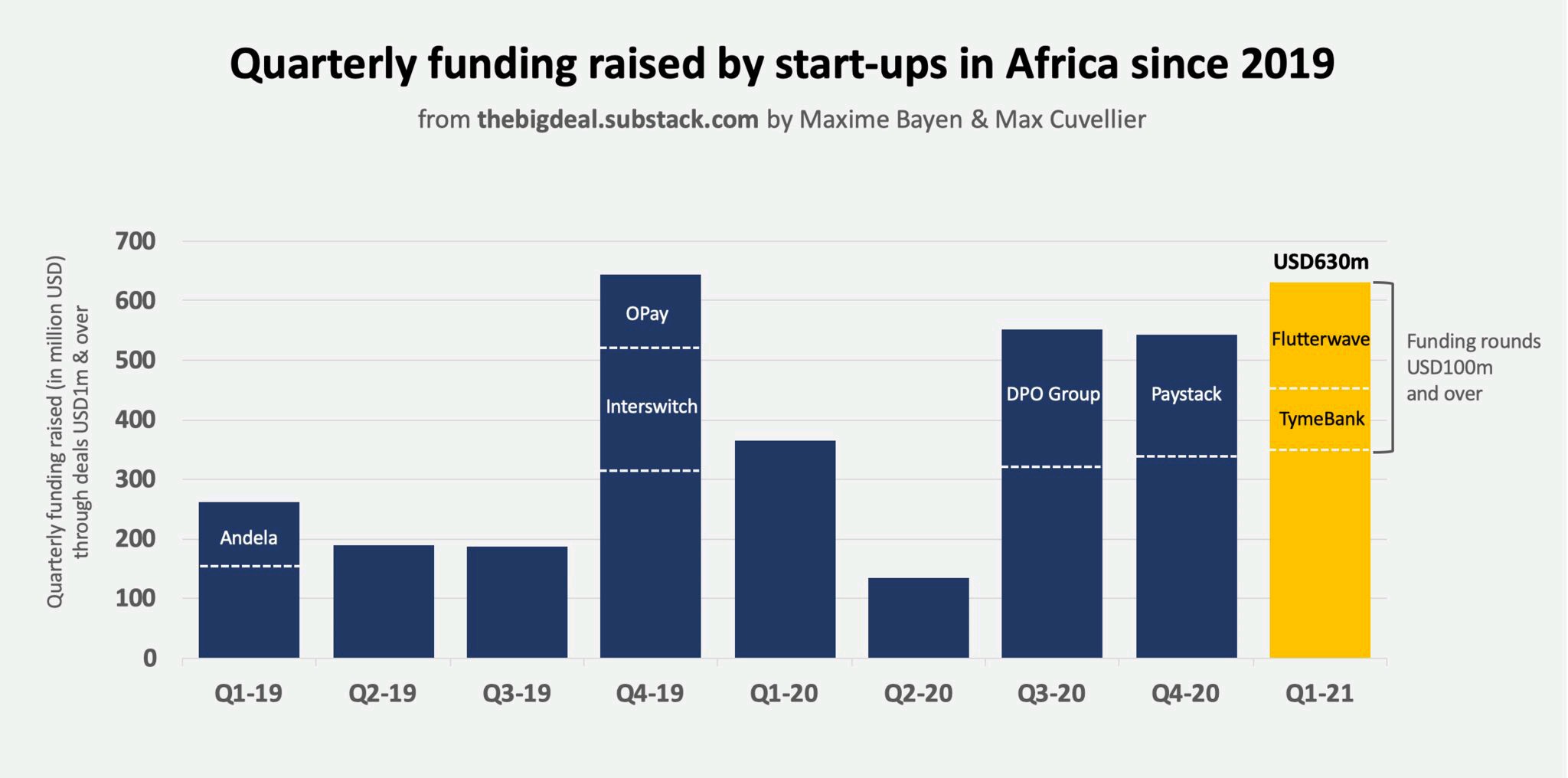
Looking at the fundraise from African startups, you may struggle to see a clear trajectory. It goes up and down, though towards the end of 2020 and early 2021, a muted trajectory emerged. . Yet, while everyone likes to write on fundraise, the most catalytic thing is not funding, but unleashing human capital in ecosystems. Andela might not have raised tons of money recently, but Andela’s impact is HUGE. 

How? When it released those young people, they moved into markets and started doing amazing things in companies.  And the big one: Y Combinator is not extremely outperforming when you look at the data. Sure, it has got Paystack and Flutterwave, but there are other hot startups in Africa which are doing amazingly great which did not pass through it. Its batting average looks like others. So, do not make it look like YC is the only path.

Meanwhile, I am still waiting for a paper from an Economics professor in Africa who can pick the data, and quantitatively explain how these startups have improved human welfare and broad standard of living. (PhD Econs students, a good thesis topic.) That is the real deal, besides piping dollars from America into Africa.

Attend  Remote Work Administration Session Lab Today at 7pm WAT

0

Something new is in the labour market: remote work manager,  remote work administrator,  director of remote work, etc. Yes, companies are opening and hiring positions to coordinate the amalgam of professionals who are now working remotely, arising out of the massive dislocation from Covid-19.

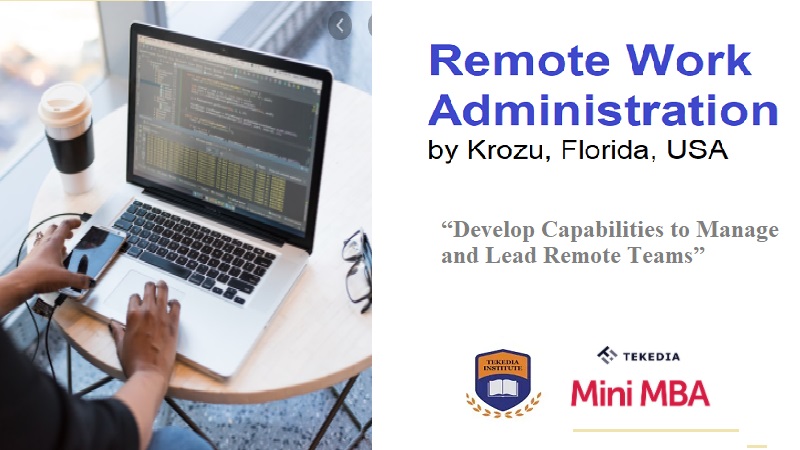
As a modern school, Tekedia Mini-MBA has introduced a special session on Remote Work Administration to show our learners what this is all about. To do that, we are bringing a global leader on remote work: Krozu.

  • Thur, April 8 | 7-8pm WAT |  Remote Work Administration [Special Lab] – Krozu USA

 Among others, Krozu has an industry-leading technology designed for remote work. It is a full-level Work from home (WFH) ecosystem, supporting firms from anywhere at any time!

Krozu offers real-time synchronization of all your projects and tasks within your business regardless where each of your employees work from. Teams and the entire business gains real-time updates and notifications with collaborative tools giving them the ability to be even more productive than before. Even when employees are away from the office, projects continue to get executed, organized and completed with clear visibility in real-time.

Our vision is that this training will unlock opportunities for people to understand the mechanics of managing remote teams, unbounded and unconstrained by geography.

It is free for all Tekedia Mini-MBA members. This is part of our execution phase where we experience transformations in markets and possibly help us to go and change things at work! Zoom link in the Board.


Signal Tests Crypto Payment Feature Using Mobilecoin

0

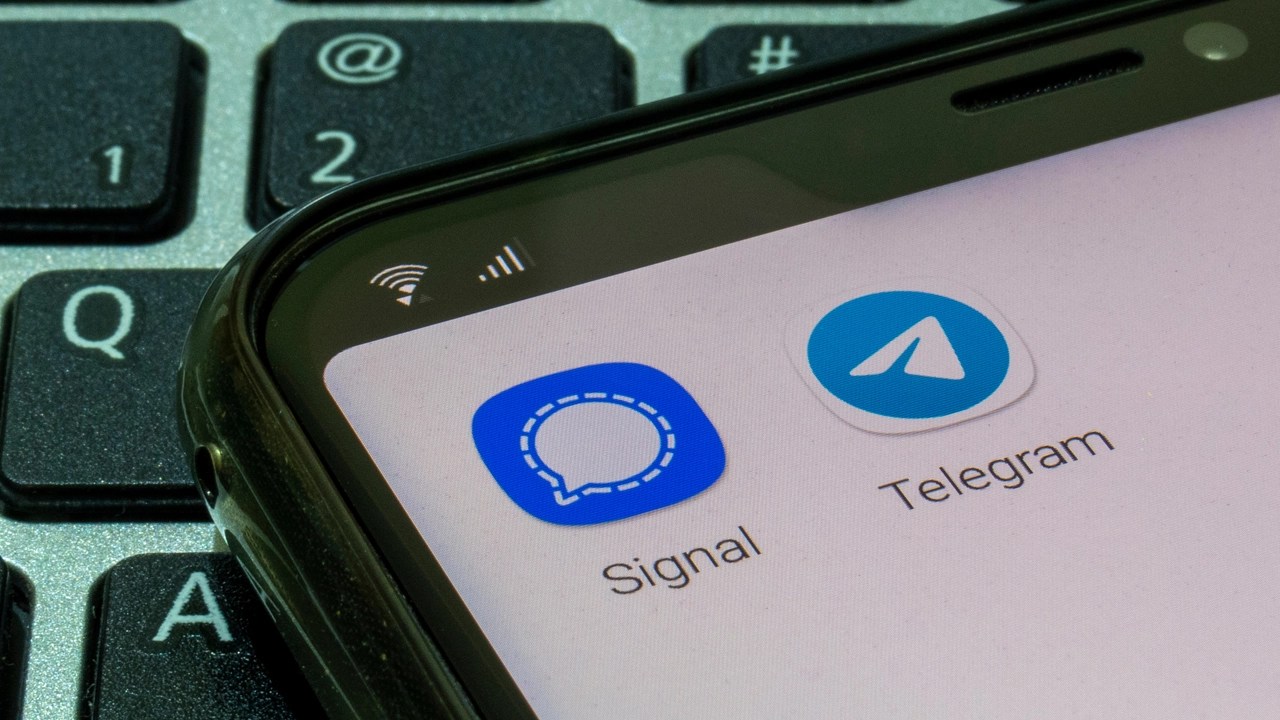
Signal, the encrypted messaging app is making an addition to its messaging business. The app announced Signal Payment on Tuesday, a new beta feature that will allow users to send and receive privacy focused payments as easily as sending or receiving a message. The beta feature for now, is for those in the United Kingdom.

Signal, which rose to stardom early in the year following WhatsApp’s attempt to force its users to share personal information with Facebook, said the new feature will be powered by blockchain technology.

“We want payments in Signal to be fast, private, and work well on mobile devices. The first payments protocol we’ve added support for is a privacy focused payments network called MobileCoin, which has its own currency, MOB,” the company said.

Founded by security researcher Moxie Marlinspike and roboticist Stuart Anderson in 2014, the San Francisco-based app has operated as a non-profit, relying on donations to function. Thus, the introduction of the payment system is a surprising copying of its rival, WhatsApp’s profit-driven business model.

The Facebook-owned messaging app is dominating the instant message business with its over 1.5 billion users. Mid-last year, it moved to cash in on the huge numbers through WhatsApp Pay, a spinoff of Facebook Pay, which provides a secure and consistent way to make payment across all Facebook-owned apps.

WhatsApp Pay is an in-chat payment feature that allows users to make transactions via WhatsApp to their contact list. It is UPI-based payments service that allows you to both send and receive money. It was developed by the National Payments Corporation of India (NPCI).

Facebook is developing a huge market that it believes will make it easier for more people to embrace WhatsApp Pay, following the integration of all its units.

But unlike WhatsApp Pay which is fiat-based, Signal’s choice of cryptocurrency may be the technique it needs to capture huge market shares.

Signal Payments makes it easy to link a MobileCoin wallet to Signal so you can start sending funds to friends and family, receive funds from them, keep track of your balance, and review your transaction history with a simple interface, the company said.

With its reputation of giving total control of data management to its users, Signal has an enticing edge over WhatsApp Pay, whose parent company has been enmeshed in a series of private data scandals, including the recent breach of 500 million users’ private information.

“As always, our goal is to keep your data in your hands rather than ours; MobileCoin’s design means Signal does not have access to your balance, full transaction history, or funds. You can also transfer your funds at any time if you want to switch to another app or service,” Signal said.

The company said UK is a starting point, the Signal Payment may be converted to/from MOB on FTX and other exchanges soon, and the beta will be expanded to other countries as it receives feedback.

Signal’s user-base increased to over 20 million early this year due to its end-to-end encryption, as people sought a safe alternative to WhatsApp data privacy controversy.

End-to-end encryption crypto trading may be just another reason for more people to jump onto Signal. MobileCoin just snagged a little over $11 million in funding last month following rumors that this integration was about to happen.

Signal will only need to onboard popular cryptocurrencies like bitcoin and ether. As more countries announce stiffer rules for crypto trading, it may serve as a more secure Peer-to-Peer (P2P) platform for traders seeking refuge from governments’ harassment.

Uber and MasterCard Extend Partnership to Boost Digital Payment Inclusion in MEA

0

Uber is expanding its long-term partnership with Mastercard with a new strategic initiative focusing on digital payments and advancing financial inclusions which will be facilitated by Mastercard across the Middle East and Africa (MEA).

This comes at the heels of the fintech boom in the regions that is shaping new payment methods, forcing companies to adapt.

As a regional first, the partnership with Mastercard will enable Uber to drive digitization across their business operations, leveraging Mastercard’s single infrastructure to meet all types of payments needs across Uber Rides, Uber Eats, Uber Pass, and Uber for Business.

“Mastercard continues to partner with digital players across the value chain to build a more connected world. Enabling secure, immediate movement of money for individuals in the gig economy workers and customers is especially vital as we support economic recovery efforts. Through our growing partnership, we are enabling the company’s long-term business growth as a result of improved operational efficiencies, driving greater financial inclusion and innovation across the region, and ultimately boosting the growth of digital economy in MEA,” said Amnah Ajmal, Executive Vice President Market Development, Mastercard, MEA.

The partnership is aimed to boost cashless payments, drive digital payment acceptance, reward loyalty, while supporting Uber’s continued social impact collaboration.

Through the partnership, both companies can bridge the financial inclusion gap through a broad range of efforts. The alliance builds on the existing work between the 2 organizations. The work undertaken with Uber plays a critical role in advancing Mastercard’s commitment to financial inclusion and the company’s pledge to bring a total of 1 bn people, 50 mn MSMBs, and 25 mn women entrepreneurs into the digital economy by 2025.

The Economy 2021 report released by Mastercard notes that the economic impact of COVID-19 has introduced permanent changes in digital consumer spending habits, growth of online banking, fintech disruption and opportunities to boost financial inclusion.

Through the partnership, both companies can bridge the financial inclusion gap through a broad range of efforts.

Last year, Uber in South Africa launched a product called Uber Pass, which will now be available across most cities in MEA, with Mastercard becoming a key distribution partner to help drive adoption.

Tino Waked, Regional General Manager, Middle East & Africa, Uber, says: “This is the largest partnership for us across MEA, and we are proud to be working together to bring key financial solutions to driver-partners across MEA. Driver’s well-being is a top priority and putting opportunities they want within reach is important to us.”

This new partnership builds on existing work between the two organizations. In a joint initiative last year, Mastercard committed 120,000 free trips and meals to those supporting communities across the Middle East and Africa, which was facilitated through Uber. This strategic partnership between Mastercard and Uber spans across the region and through key partnerships, supported cities, hospitals, front line workers and marginalized communities with free rides and meals.

While vaccines are a reality, communities are still in need of various support. Mastercard and Uber remain committed to helping people around the world navigate these challenging times and stand ready to support cities whether it be logistics or free rides.

The work undertaken with Uber plays a key role in advancing Mastercard’s worldwide commitment to financial inclusion and the company’s pledge to bring a total of 1 billion people, 50 million micro and small businesses, and 25 million women entrepreneurs into the digital economy by 2025.

MasterCard has been leveraging on partnership to increase its market share globally, tapping on every firm with access to a huge payment market. However, this move underscores the flurry by payment giants to lead the competition in Africa.

In February, MasterCard announced a new partnership with South African telecom giant, MTN. The partnership is to be facilitated through a MasterCard virtual payment solution linked to MTN MoMo (Mobile Money) wallets, to help consumers and merchants engage with brands and businesses abroad through digital commerce, extending their reach to an international marketplace and unlocking a host of opportunities.

Last week, MasterCard got involved with Airtel Mobile Commerce with an investment worth $100 million that will give the payment firm a minority stake in Airtel Mobile Commerce.