DD
MM
YYYY

PAGES

DD
MM
YYYY

spot_img

PAGES

Home Blog Page 5828

Misrepresentation of Culture in Some of the African Traditional Wedding Lists

0

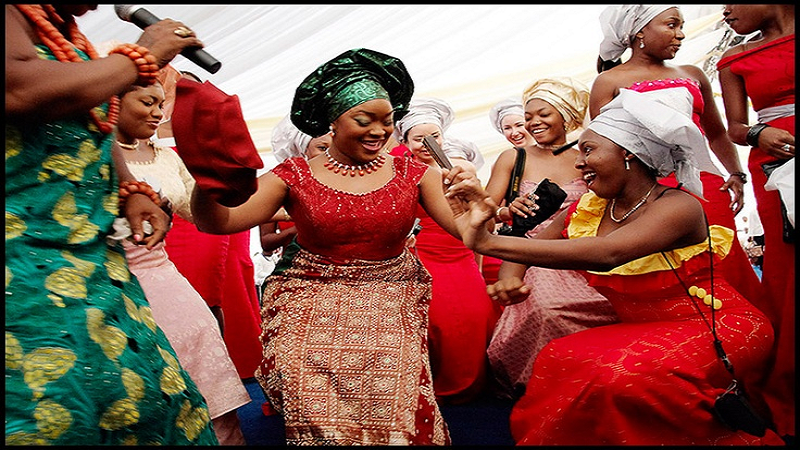
Recently, a Twitter user shared the list of things to provide for the traditional marriage rites of his cousin. This three-page list contained items that will be given to the bride’s father, her immediate family, the extended family, the youths, daughters born to the family (separate items), and then all the women in the extended family. In this list, there are items for these mentioned persons during the “knocking on the door”, “second stage of dowry payment”, and the “traditional marriage”, proper. Excluding dowry, which must be paid in cash after negotiation, and some gift items for the bride’s father (native dresses, trousers, shoes, etc.), the estimated amount for the items on the list was N557, 600. Note that this does not include entertainment for guests and preparation of the venue for the ceremony. 

These items are just what a young man has to provide for the bride’s father and her extended family before his marriage intentions are considered. If you consider how much this young man will spend for this marriage ceremony, you will have no other choice but to wonder if a traditional wedding has been turned into an extortion avenue.

The above wedding list is just one out of the majority we see every day. There are some you will see and shout. Some give the impression that the brides’ parents do not want their daughters to marry the grooms in question. Some lists look as if, after the items were provided, the brides’ families will open a retail business with the items as their first stock. Of course, people don’t question the essence of the contents of these lists because they (the lists) are insured by the word “culture” and the clause “marriage is not for children”. As a result, people are compelled to do what they do not wish for.

But, one may need to ask, “Are these lists a true representation of ‘culture’ and ‘test for manliness’?”

Marriage is sacred in African cultures. It is never seen as a trivial matter. Further, it involves the collaboration of family members from both sides because the union is seen as the union of two families. This is why, in Africa, a bride and groom are not allowed to meet and marry without the consent of their parents. In addition, the bride’s father is not allowed to give out his daughter in marriage without the consent of his kinsmen, just the way the groom’s father will not be entertained by the bride’s family if he does not show up with his kinsmen. 

This can explain why the list includes extended family members (both the males and the females): if none of them are “lobbied” and settled, the bride will not be given out. But that is where culture ends. The contents of the list has nothing to do with culture (at least, to a large extent). They were added and removed by kinsmen for reasons bothering around greed and test of the groom’s “manliness”.

Before a man is allowed to marry his wife, the bride’s family does background checks on him. This is where they scrutinize his behaviours and that of his family (including that of his ancestors). If he wasn’t found wanting, his ability to “handle” a woman will also be tested. Since a woman is not meant to provide for the family, the groom’s ability to take care of his wife and children is put to test. Different cultures have different ways of testing this. However, it is beginning to appear that the current way of doing this is by checking how far his bank account could be stretched. 

The way the size of a man’s farm, compound, plantations, and animal’s coops were checked in those days is just the way his wealth is checked today. This can only explain why many African communities continue to include items in the lists for traditional wedding rites.

The truth is that the reason behind providing gift items for kinsmen during traditional marriage ceremonies has been defeated. Those items are no longer provided to test the groom’s ability to support his family but have turned into means of making money and obtaining materials from the groom. 

Apart from that, people take loans to marry, so a man’s ability to fulfil the list does not guarantee his wealth. But from the look of things, this aspect of culture will soon phase out because families are beginning to conduct traditional marriages in the cities (instead of returning to the village) to avoid troubles with the kinsmen list.

The Nigeria’s PAT Naira Billionaires

1

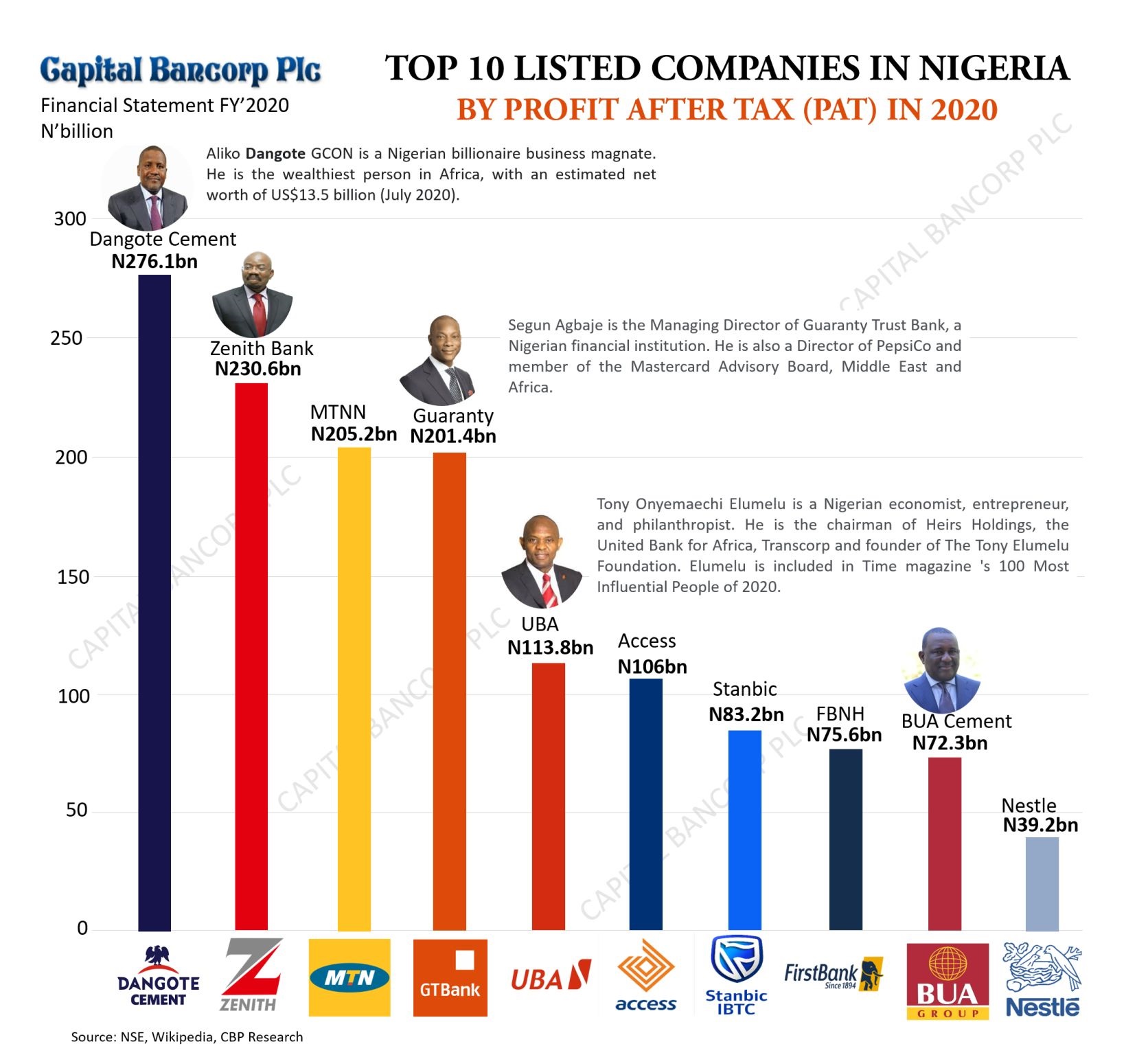
Harvard University’s annual budget is about 3x the total education budget of Nigeria, from primary to university level. That is not news. What is news is that Aliko Dangote will pocket more profits from his empire than the budget of my state of Abia state.  Dangote Cement returned profit after tax (PAT) of N276 billion while Abia state will still need loans to fund its N131.8 billion 2021 budget. 

Sure, Aliko is not the only shareholder in Dangote Cement. But hold on, add the other pieces in his empire, and he could be going home with more cash than Abia. And remember that Abia is not a small state; it spends more than Kogi, Yobe and a few others.

Now, who has more power to get things done? You can see the power of markets and why entrepreneurial capitalism should be supported because nations can only rise when entrepreneurs do. The money Elumelu, Ovia, Dangote, Rabiu, and few others will take home should tell you where the emerging powers are: you may not believe this, only markets will liberate Nigeria, and the earlier everyone gets to that conversation, the better.

The New IGP Usman Alkali Baba – And Calling for a New Playbook

0

Let me wish the new Inspector General of Police good luck. Usman Alkali Baba needs to do better than his predecessor who was more occupied in court on how he could rule till 2024 than how he could maintain law and order in Nigeria. What happened in Owerri (Imo state), over the weekend, was one of the lowest points in Nigeria since 1970. 

They took down the prisons, took down the Force Headquarters, and for 2-3 hours, commanded the city. And to explain that Nigeria is fading, the men began at the Government House, announcing their presence, and sang to the execution points. The Police were largely nonexistent!

In Ovim while we are in Abia state with Umuahia as the capital, Owerri remains our de facto capital because Owerri remains special to Ovim. Our sons were governors in the state. So, whenever Owerri has an issue, it is always painful because up till today, Ovim people retire to Owerri, from Lagos, New York and London, not Umuahia.

As I wish Baba good luck, I wish Mr. President a faster return to his nation. The Supreme Court is largely shut down due to the striking judiciary. The doctors are on strike and today, university lecturers are planning to re-restart. FCT is down on strike. And from north to south, state workers are unpaid!

I have said it before: if Mr. President comes out and says, “Fellow Nigerians, I need  help in a more practical way, many Nigerians will rise”. Sam Mbakwe did that and Imolites responded.

We need a new playbook in the nation. A new IGP is a welcome development but it changes nothing if you cannot inspire the citizens to believe!

The Fintechnolization of Clubhouse

1

Last month, I spoke in a Silicon Valley-based VC fund. They have brought me to drive home the message of fintechnolization. I have postulated that all digital platforms have one thing in common: they will mature to offer financial services to ecosystem players and participants. So, irrespective of whatever Tencent, Alibaba, Google, Facebook, and anyone do, at the end, they will become a quasi-fintech company.

Today, we are reading that Clubhouse is joining that construct very fast: the ‘one-year-old social audio app reportedly valued at $1 billion, will now allow users to send money to their favorite creators — or speakers — on the platform. In a blog post, the startup announced the new monetization feature, Clubhouse Payments, as the “the first of many features that allow creators to get paid directly on Clubhouse.”’ Simply, fintechnolization is working at Clubhouse and they want to use that to deepen the ecosystem.

Today, we’re thrilled to begin rolling out Payments—our first monetization feature for creators on Clubhouse. All users will be able to send payments today, and we’ll be rolling out the ability to receive payments in waves, starting with a small test group today. Our hope is to collect feedback, fine-tune the feature, and roll it out to everyone soon.

If you are building a digital ecosystem, thinking within the construct of fintechnolization is strategic because sooner rather than later, you will be forced to make that call. This connects to the one oasis strategy and how empires of the future are those with demand, not just supply.

This video – from Tekedia Live – explains the construct.