DD
MM
YYYY

PAGES

DD
MM
YYYY

spot_img

PAGES

Home Blog Page 5838

Different Forms of Domestic Violence

0

Domestic violence (DV) and its accompanying problems have become crucial discussion topics for a long now. Thanks to feminists, the dangers of the act are discovered and it is, hence, being rejected by many societies now. Before, DV was not frowned at, especially when women are the victims. It was believed that women cause whatever leads to violence against them and so should enjoy the show. It was also believed that men have the right to discipline their wives. However, the world today no longer accepts DV and has, therefore, criminalized every form of violence meted out on spouses, irrespective of the offender’s and victim’s gender.

Since DV is no longer seen as a norm, people have started calling out and condemning those that engage in it. Victims have also begun to come out to seek justice for wrongs done to them. Once they present the physical injuries caused by their spouses, the public supports them and chastises their offenders. However, not all DV victims can seek justice because not all injuries are physical. This is to say that there are many forms of DV, most of which offenders have resorted to because they are hard to prove.

Forms of Domestic Violence

  1. Physical Abuse: This is the type most people know about. It comes in the form of physically abusing the victims. This can come in the form of slapping, kicking, pulling or twisting the arms and hairs, shaking, shoving, and hitting. This type is easy to detect because it causes sudden pains which makes victims cry out and alert neighbours. It is also easier to detect physical abuse because of traces of abuse left on the body of the victim.
  2. Financial Abuse: Perpetrators of this form of abuse deny their spouses the right to financial freedom. They make their victims financially dependent on them because that is the easiest way to control and hurt them. These offenders are those that deny their spouses money for feeding and providing for other family essentials when they want to “discipline” them. They also frustrate their spouses’ efforts to run businesses or maintain their jobs.
  3. Psychological Abuse: The offenders here manipulate their victims’ mental well-being. They instil fear into them even without physically abusing them. Here is where you find offenders that intimidate and threaten their spouses into submission. They make them afraid to object to decisions that are unfavourable to them or even to demand for those that favour them. The painful thing here is that people passing through this may be unable to speak out because they are afraid of what will happen to them afterwards. Besides, they know people won’t believe them because they have no physical injuries to show for it.
  4. Emotional Abuse: Offenders here derive joy in seeing their spouses unhappy. They manipulate their emotions to make them cry all the time. They may do this through making them feel guilty unnecessarily, denying them things they need, using physical force, or humiliating them in the public.
  5. Sexual Abuse: Many people still don’t believe that sexual abuse happens among married couples. Well, if someone is forced into sexual contact without his or her consent, that is sexual abuse.
  6. Social Abuse: Those that do this prevent their spouses from having any form of social contacts or activities. Offenders here do not allow their spouses to connect and relate with friends and family members. Their victims are not allowed to subscribe to any social media platforms or even own a phone. Some monitor their victims’ activities on social media and use every minute reason to accuse them of misbehaving or being negatively influenced. They want their spouses locked away from the world.
  7. Verbal Abuse: This is another common form of DV even though people are seeing it as a norm. Here, offenders use hurtful words on their victims. They resort to insults, body-shaming, recalling their victims’ past mistakes, reminding them of their weaknesses, and so on. This type of DV attacks victims’ self-confidence.

As can be seen, DV does not only happen when there is a physical attack. Every form of DV is dangerous. None should be preferred and none should be regarded as better than the others. DV, no matter how it is meted out, is evil.

Petrol Subsidy And Perils of A Missing Communicator!

3
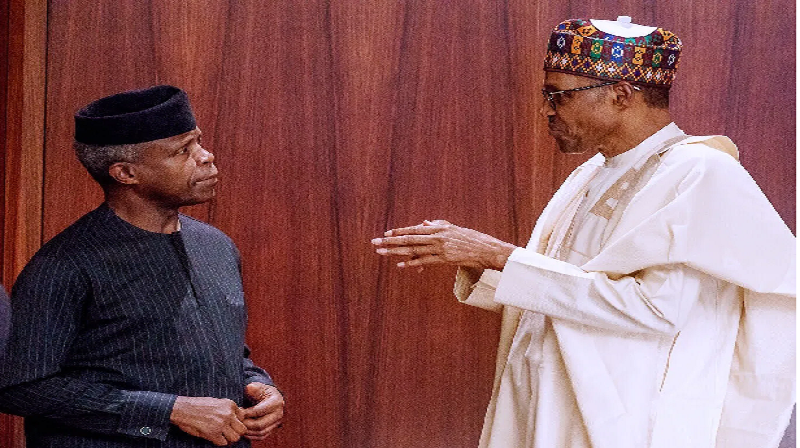
Nigerian president and vice president

One of the biggest leadership challenges facing Nigeria today is the fact that we are yet to have a national leader who can tell Nigerians the way things are. Yes, we truly think that we are “big”, “rich” and “gigantic” when hard data shows that Nigeria is a relatively poor nation with leaders who struggle to communicate vision and reality. 

For years, the federal government has been denying that it was paying a petrol subsidy. But today, we are just learning that through the oil corporation, NNPC, that Nigeria has been paying for fuel subsidies via a new creation called  “under recovery”. Using that financial-nomenclature engineering, the price of petrol has been artificially set and the subsidy has put holes in the pocket of the federal government: “Even with the clear situation, Mr Kyari did not refer to the cost as “subsidy”. He merely said the NNPC pays between N100 and 120 billion a month to keep the pump price at the current levels.”

So, just like that, the government’s crusade that it removed the petrol subsidy was technically not truthful since it stopped paying via the minister of finance but used NNPC to pay via another name. Who is deceiving who since both the finance ministry and NNPC treasury belong to Nigeria?

South Africa budgets $130 billion for about 59 million people while Nigeria spends $35 billion for 200 million. Yet, no one can be bold to communicate  the true state of things in Nigeria. When you cannot explain but prefer to hide your problems, you delay a path to solutions.

The federal government on Thursday admitted paying as much as N120 billion to subsidise the price of petrol monthly.

The Group Managing Director of the Nigerian National Petroleum Corporation, Mele Kyari, said this at the fifth edition of the special ministerial briefings coordinated by the presidential communications team.

He said the cost was covered by the NNPC.

Mr Kyari said while the actual cost of importation and handling charges amounts to N234 per litre, the government is selling at N162 per liter.

He said sooner or later Nigerians would have to pay the actual cost for the commodity.

Even with the clear situation, Mr Kyari did not refer to the cost as “subsidy”. He merely said the NNPC pays between N100 and 120 billion a month to keep the pump price at the current levels.

The figures tally with a PREMIUM TIMES estimates of the amount paid by the government monthly to subsidise petrol.

This newspaper reported last week that as it had become clear the Nigerian government continued to subsidise the price of petrol, the nation may be expending a whopping N102.5 billion monthly to reduce the retail cost of petrol.

The sum is higher than the N70 billion the government budgeted for the provision of Universal Basic Education (UBEC) in the 2021 budget, as well as the N45.19 billion allocated for immunization.

Team Is Sorting Our All The Registrations

0

Good People, I am aware that some members are yet to receive  links to our ebooks, etc, after registration for Tekedia Mini-MBA this morning. We have backlogs but the team is sorting all the payments one by one, and will ensure you get your login very soon. Our apologies but note that our self-registration continues to work on the portal.

For our Corporate Group registrants (thank you),  we understand that some want to speak with me, instead of waiting until June, when the edition begins. That works, just ask my team to schedule the Tekedia Growth Hour.

May I wish everyone a profitable day. Welcome to the best school. Welcome to Tekedia Institutehttps://school.tekedia.com/

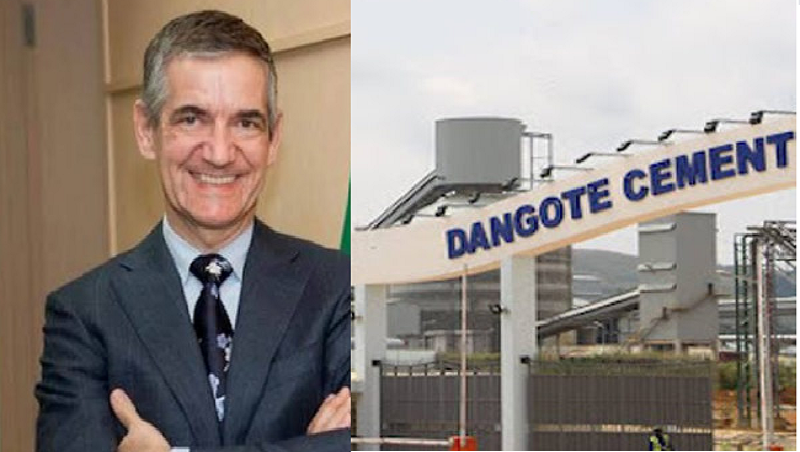
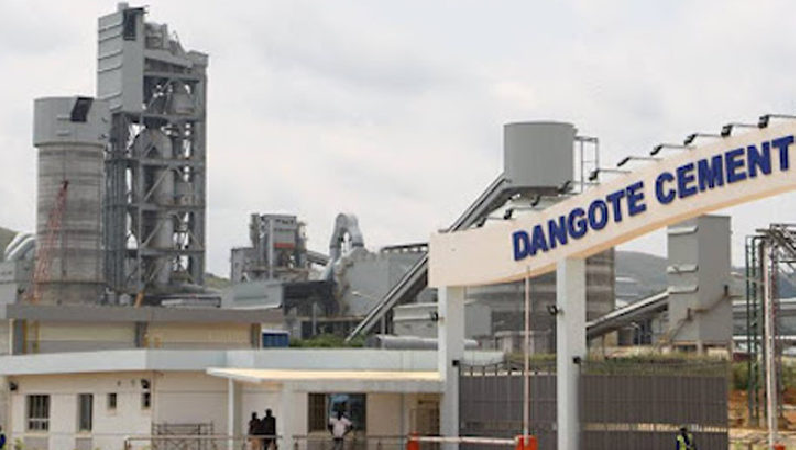
Michel Puchercos Takes Dangote Cement To The Big Party with MTN Nigeria

15

Mr. Cement, Michel Puchercos, CEO of Dangote Cement, has done it – Dangote Cement joins MTN Nigeria as two companies which have broken the N1 trillion revenue mark. This was how I introduced him when he joined Dangote Cement from Lafarge – “Dangote hired Michel Puchercos from Larfarge to keep in-house a man who seems to be the best talent in the cement industry in Nigeria. Michel had performed wonders in Lafarge, transforming the company in many ways, and positioning it to battle Dangote Cement….

“Find ways to build the best team: nothing else matters than having the right person to manage all your factors of production. This man is a real Mr. Cement and he is rocking it in Nigeria. Yes, in the Forum a few months ago, I noted how he grew profits 1,284% in Lafarge while reducing CEO compensation by 10%!”

Today, he has put Dangote Cement in the history books: “Total sales came to N1.034 trillion, N142.525 billion higher than the figure for the year before, the income statement of the cement-maker obtained by Premium Times showed.”

Nigeria’s biggest company Dangote Cement Plc Tuesday reported a 16 per cent surge in revenue for 2020, culminating in its biggest annual sales ever, Premium Times has the report.

Total sales came to N1.034 trillion, N142.525 billion higher than the figure for the year before, the income statement of the cement-maker obtained by Premium Times showed.

It is an astounding run in the face of the pandemic that has plummeted economies, limiting building and construction activities.

The group’s quarterly profit before tax (PBT) during the H1 2020, was N109.11 billion compared to the N42.19 billion reported at the same period the previous year. The quarterly revenue was N284.59 billion compared to the N212.06 billion reported the same period the previous year.

Defying the Pandemic, Dangote Cement Posts N276bn 2020 Profit

Defying the Pandemic, Dangote Cement Posts N276bn 2020 Profit

0

Nigeria’s biggest company Dangote Cement Plc Tuesday reported a 16 per cent surge in revenue for 2020, culminating in its biggest annual sales ever, Premium Times has the report.

Total sales came to N1.034 trillion, N142.525 billion higher than the figure for the year before, the income statement of the cement-maker obtained by Premium Times showed.

It is an astounding run in the face of the pandemic that has plummeted economies, limiting building and construction activities.

The group’s quarterly profit before tax (PBT) during the H1 2020, was N109.11 billion compared to the N42.19 billion reported at the same period the previous year. The quarterly revenue was N284.59 billion compared to the N212.06 billion reported the same period the previous year.

The Nigerian government in the third quarter of last year excluded Dangote Cement from its blockade on exports to other countries through land borders especially to West African neighbors Niger and Togo, thereby helping the group to ramp up sales, Chief Executive Officer Michel Puchercos said on an investor call, according to Bloomberg.

Profit before tax swelled by 49 per cent, rising from N250.479 billion to N373.310 billion.

Profit for the year advanced from N200.521 billion to N276.068 billion, translating to a 37.7 per cent jump. That lifted earnings per share from N11.79 to N16.14.

Earnings were limited by a N188 million provision for impaired assets as well as a surge in income tax expense from N49.958 billion to N97.242 billion, implying a 94.6 percent growth.

Shareholders fund dipped 0.8 per cent from N897.937 billion to N890.970 billion, following Dangote Cement’s buyback of 40.2 million units of its shares in December at the cost of N9.8 billion.

The company’s board on Friday proposed a N16 per share dividend totaling N272.648 billion for shareholders for 2020, the same amount it has paid shareholders every year in the past three years.

“I am delighted to report that Dangote Cement experienced its strongest year in terms of EBITDA and strongest year in terms of volumes. Despite a challenging environment, Group volumes for the year were up per cent and Group EBITDA was up 20.9 per cent,” Mr Puchercos said.

“Looking ahead, we have strengthened our Alternative Fuel initiative which focuses on leveraging the circular economy business model and reducing exposure of our cost base to foreign currencies fluctuations.”

Shares in Dangote Cement closed in Lagos on Tuesday at N220 per unit, trading up by 3.09%.

The growth is also attributed to the ingenuity of Mr. Puchercos, who joined Dangote Cement from rival company Lafarge last year, and has since turned the numbers up for the Nigerian cement giant.

Mr. Puchercos said: “Dangote Cement’s strategy to offer high quality products at competitive prices is meeting customers’ expectations in Nigeria and across the continent, where we continue to deploy excellent marketing initiatives and operational excellence.”