DD
MM
YYYY

PAGES

DD
MM
YYYY

spot_img

PAGES

Home Blog Page 5840

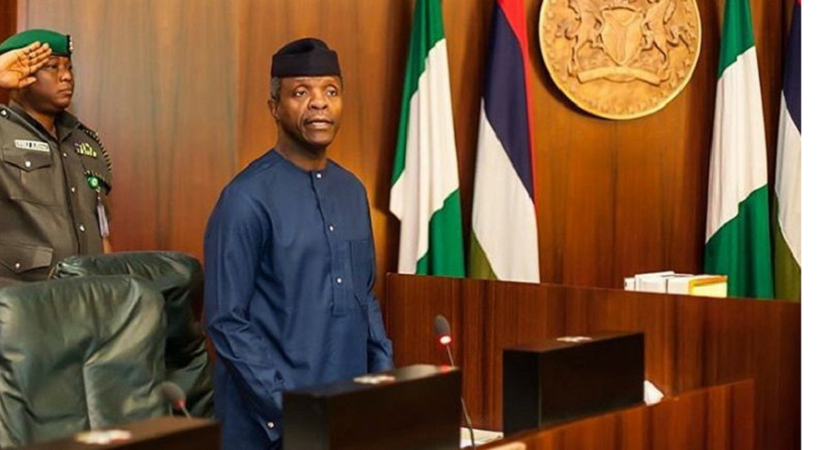
“There is no question at all that Fintech is crucial” – Prof Yemi Osinbajo, Vice President, Nigeria

1

This is a very nice speech by the Vice President of Nigeria, Prof Yemi Osinbajo, and it is actually a strategic one. Largely,  Prof Osinbajo made a compelling case that some of the frictions in Nigeria are solvable since innovators through fintech will have easier ways to be paid. That reasoning is deep, because most times, people see market opportunities but when there is no clarity on how to capture monetary value, they walk out. 

From agriculture to climate change, fintech could become the vista to unlock growth in Nigeria: “So, as we address climate concerns, there are major opportunities for Fintech companies and their creativity is going to be very crucial here.” In a speech in Uganda a few years ago, I called fintech, the “operating system of African commerce”. Yes, your agriculture, trading, logistics, and indeed everything will advance now because fintech is reducing the frictions associated with payment.

What needs to happen now is for that translation to reach local communities and not just the cities. If we do that, some of those talented local dancers, educators, singers, etc would monetize their skills, as people can easily pay them. There is no reason why “nwa ogene” or better “olu ogene” [a person with golden voice] should sing for free when Beyonce is making tons of money with  her own voice.

The press release

Leveraging the innovative capacity of Fintechs, the Buhari administration is accelerating interventions, especially those under its Economic Sustainability Plan (ESP), including programmes on renewable energy, agriculture, improving access to credit and direct cash transfers, among others, according to Vice President Yemi Osinbajo.

Mr Osinbajo stated this Friday at the official launch of the Nigeria Sustainable Development Goals (SDGs) Fintech Hackathon organized by Financial Centre for Sustainability Lagos (FC4S Lagos), Nigeria Climate Innovation Centre (NCIC), Access Bank and AfricaHacks.

According to the Vice President, “this is incredibly powerful for our efforts at resolving the climate crisis; transitioning to cleaner energy but also it introduces a tremendous opportunity for Fintech companies for payments systems.

“Being able to manage that whole process, collect monies in some case, and in many cases, payout to owners. I think that there are tremendous opportunities there. This is something we are starting now. Of course, several companies have already shown some interest.

“So, as we address climate concerns, there are major opportunities for Fintech companies and their creativity is going to be very crucial here.”

Speaking about leveraging innovations by Fintechs to address challenges in agriculture, the vice president said “we need to expand the scope of sustainable farming and farming techniques.”

His words: “This has become crucial because we realise that now with deforestation and all the issues with farmer-herder clashes and all of that, there is a need for us to look more closely at how to be more creative with the farming technique, engage our farmers, educate our farmers, use more extension workers actively. And I found this to be the case especially as we are trying to implement an aspect of our Economic sustainability plan.

“So, we have to first find out where these new farmers work and we have to geo-tag them to their farms. But more importantly, we had to get credit to them one way or the other because many of them are in far-flung areas of the country.

“But not just credit, also information that they would need for choosing the right type of fertilizer, and other farm input. There is no question at all that Fin-Tech is crucial and would even be more crucial especially as we pursue goals of financial inclusion and trying to reach hitherto unreachable parts of the country.”

Continuing, Mr Osinbajo said, “there is no way of addressing the issues of poverty and all the issues around the SDGs if we are not able to reach those that need to be reached with credit.”

In ensuring a smooth transition to clean energy, the vice president said: “it requires somebody who is able to facilitate movement of money quickly and this is the sort of thing we hope Fintech companies would do especially as we expand the scope of the transition to clean energy to LPGs all across the country.”

The vice president enjoined young Nigerians to aspire to achieve their dreams and take advantage of the exciting opportunities that abound in the tech systems.

The Naija SDGs Hackathon aims to facilitate the development of Fintech solutions that have a direct impact on the realization of the SDGs. Top teams will be supported by institutions to scale these solutions to become Fintech success stories in Nigeria.

Guests at the launch event include the Senior Special Assistant to the President of Nigeria on Sustainable Development Goals (SDGs), Adejoke Orelope-Adefulire; the Special Adviser to the Lagos State Governor on Sustainable Development Goals (SDGs), Solape Hammond; the former Special Adviser to the UK Prime Minister on Social Justice, Young People & Opportunities, Nero Ugwhujabo; the CEO of FMDQ Group and Chairman of Financial Centre for Sustainability Lagos (FC4S Lagos), Bola Onadele; Deputy Managing Director of Access Bank, Roosevelt Ogbonna; Chairman/CEO of Nigeria Climate Innovation Centre (NCIC), Peter Bamkole, and Co-Founder, AfricaHacks, Christine Dikongue, among others.

Laolu Akande
Senior Special Assistant to the President on Media & Publicity
Office of the Vice President

Mentoring with US Executives, Tekedia Hub App Launched, Tekedia Mini-MBA Group Benefits

0

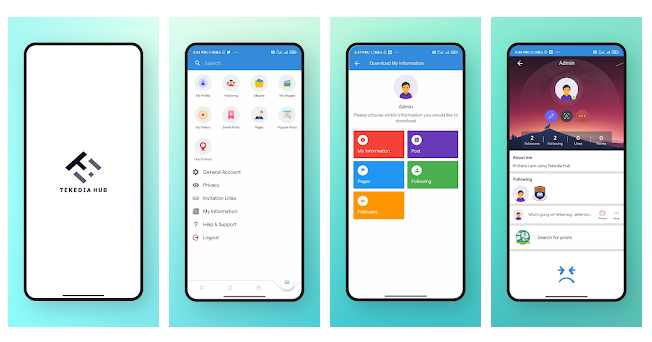
We have now posted Tekedia Hub at Google Play Store. Download the Android app here. The web app remains at hub.tekedia.com.

Tekedia Hub, a “facebook for Innovators”, is an ecosystem to co-share and co-learn on innovation, business systems and growth. It supports innovators and growth champions within Tekedia Institute’s Tekedia Mini-MBA, Tekedia Advanced Diploma, etc. 

Simply, the goal of Tekedia Hub is to reduce the need of sending many emails to Tekedia Institute’s learners and communities. Once in a while, check @admin handle and get updates on programs and events.

Tekedia Hub App

GROUP REGISTRATION BENEFITS

The following are benefits for members registering in group for Tekedia Mini-MBA (June 7 – Sept 1, 2021).

  1. Discounts: Discounts based on number of participants.
  2. Free Advertising: Your business message is published free, at Tekedia.com and our social media channels. We support our members to reach more customers.
  3. Growth Hour: A private Zoom session with your team and Lead Faculty, mainly on how you can grow, using frameworks in our program.
  4. US Mentoring: Enrollment of your CEO, Founder or designated staff (one per company) in a US-based mentoring network where African and African-American executives in leading companies (JP Morgan, State Street, Microsoft, Amazon, Walmart, etc) will mentor you. Tekedia will process your enrollment.

Download Tekedia Hub App At Google Android Play Store

0
Tekedia Hub App

We have now posted Tekedia Hub at Google Play Store. Download the Android app here. The web app remains at hub.tekedia.com.

Tekedia Hub is an ecosystem to co-share and co-learn on innovation, business systems and growth. It supports innovators and growth champions within Tekedia Institute’s Tekedia Mini-MBA, Tekedia Advanced Diploma, etc.

Simply, the goal of Tekedia Hub is to reduce the need of sending many emails to Tekedia Institute’s learners and communities. Once in a while, check @admin handle and get updates on programs and events.

How to use the Hub below…

Auto Industry May Lose $61bn In 2021 As Chip Shortage Hits The Tech World

0
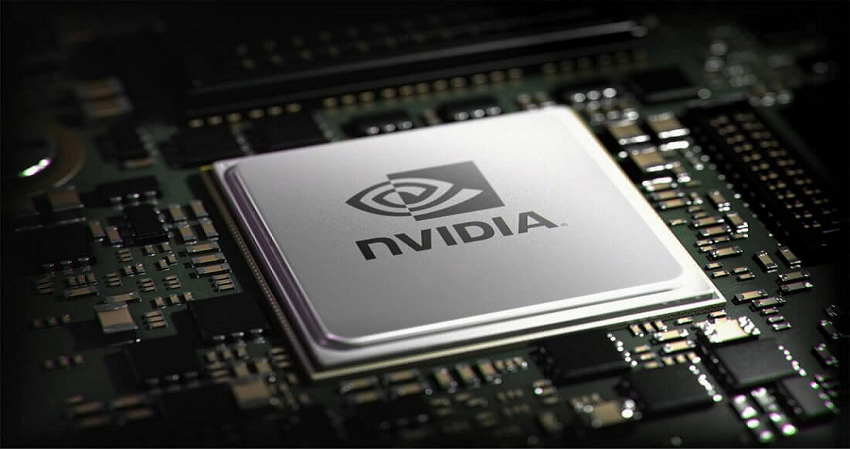
Nvidia chip

As the world of technology grapples with the shortage of semiconductor chips, the auto industry is beginning to bear more of the brunt. The impact is escalating, touching more sectors as the pandemic lingers, automakers are putting out statements indicating that the impact may be worse than thought.

Nio, Tesla’s electric vehicle Chinese rival said on Friday it would halt production for five working days at its Hefei plant, owing to scarcity of chips.

The electric automaker is not alone; the pandemic ushered in an epidemic of chip shortage that the tech industry is  battling to contain.

“The first hints of trouble emerged in the spring of 2020. The world was in the early throes of a mysterious pandemic, which first obliterated demand then super-charged internet and mobile computing when economies regained their footing. That about-face – in a span of months – laid the seeds for potentially the most serious shortage in years of the semiconductors that lie at the heart of everything from smartphones to cars and TVs,” Bloomberg noted in a report.

PC makers were among the first to raise the alarm in the spring of 2020, but watched helplessly as the situation degenerated. Taiwan Semiconductor Manufacturing Co (TSMC) was at the center of the crisis, given its production capacity and effort to expand chip production like last year’s $12 billion factory plan in the United States.

It spent billions in the past to ensure it is at the forefront of semiconductor production technology, and in the face of trade war between the US and China, TSMC’s move was most welcome. Unfortunately, TSMC’s efforts have failed to meet the needs of the tech industry as demand grows daily beyond its supply capabilities.

Huawei, a major chip consumer was cut off from the supply chain through the US ban restricting American companies from selling to the Chinese telecom vendor. There was belief that sidelining Huawei would ameliorate the shortage, but it doesn’t.

Nio, just like several other automakers, has become a victim of the crisis that is escalating to other sectors. Shares of the EV giant which makes the ES8 electric sport-utility vehicles fell more than 7% in the US premarket trading.

Nio, which is the only carmaker challenging Tesla’s dominance in China’s EV market, said in addition to halting production for five days at its Hefei plant, it will cut its first-quarter delivery forecast by as much as 1,000 vehicles.

Other automakers; Ford Motor, Honda Motor, General Motors, Nissan, Volvo and Volkswagen are also among those caught in the crisis. And just like Nio, they have been forced to hold back production amidst increased vehicle demand.

Ford said chip shortage could cut its 2021 profit by up to $2.5 billion, while GM is expecting the crisis to reduce its annual profit by at least $2 billion. Volvo said Tuesday the shortage will have a significant impact on its second quarter earnings, and it would implement stop days across its sites globally beginning in April.

Japanese automaker Nissan, said it has canceled all production at its assembly plants at Smyrna, Tennessee, and Canton, Mississippi, Aguascalientes plant 1 in Mexico, for April 1 and 5.

The chip scarcity is as a result of an increased demand from the electronics industry fueled by pandemic-induced restrictions and the work-from-home new normal which has been accompanied by activities such as streaming and playing video games.

While the electronics industry is badly hit, the auto industry is beginning to count huge losses. Research firm AutoForecast Solution estimates that the shortage has cost the global auto industry 130,000 vehicles in lost production, with the heaviest impact in North America with 74,000 units lost, and Western Europe, with 35,000 lost.

Samsung, the world’s largest smartphone maker, had warned earlier in the month that the shortage will disrupt global smartphone production, and it may skip the launch of the next Galaxy Note smartphone. The South Korean giant has been experiencing a shortage of Qualcomm’s application processors.

Demand for Qualcomm’s chip soared in the past months as Android phone makers woo consumers abandoning Huawei due to US sanctions. Qualcomm has found it hard to meet the surge in demand partly due to a shortage of some subcomponents used in its chips. Cristiano Amon, head of the world’s largest mobile chipmaker, said the shortage has been as a result of relying on just a handful of players in Asia.

Apple, one of the biggest buyers of chips said the sales of some new high-end iPhones were hemmed in by a shortage of components.

The growing tech needs emanating from the new normal is spurring the soaring demand for chips, gulping the smaller volume automakers buy. Bloomberg estimates that the auto industry may lose $61 billion of 2021 sales from chip shortages, as the crisis worsens.

Last month, Yoshihisa Kainuma, CEO of Minebea Mitsumi Inc. said the crisis is likely to escalate to other sectors, including aviation.

“Demand is springing up everywhere at a faster-than-expected pace. Airlines around the world are scrapping old aircraft to slim down their balance sheet. And People’s desire to travel will explode after the pandemic,” he said.

The shortage of chips is expected to instigate a surge in prices of smartphones and vehicles soon, compounding the rising price of goods and services induced by the disruption of the global supply chain.

Access Bank Gets Approval to Acquire Grobank from Nigerian and South African Regulators

1

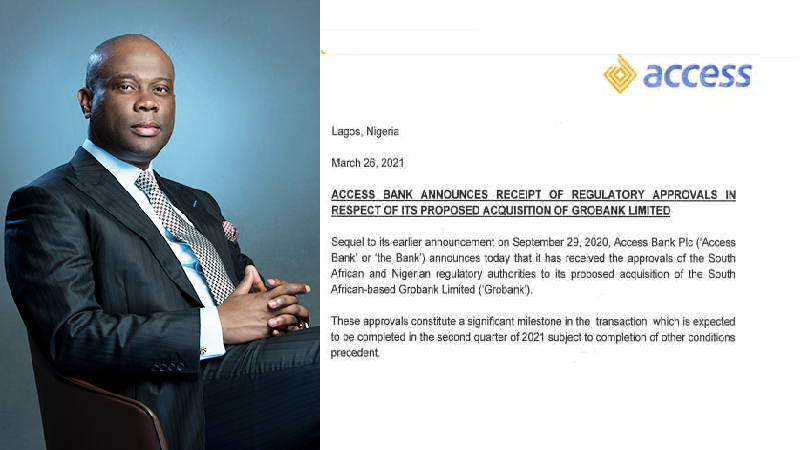
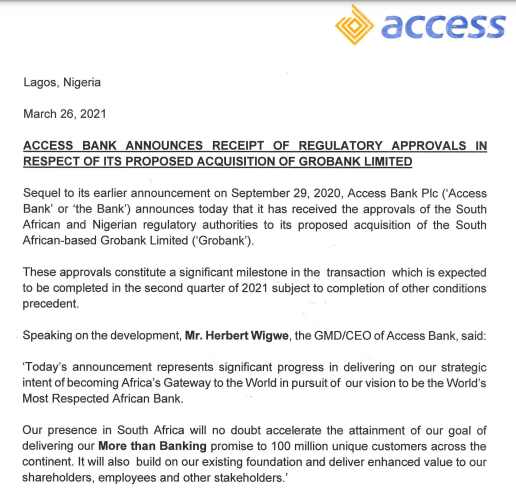
This is a new redesign: South African banks used to comb Nigerian banks’ balance sheets looking for opportunities. But these days, the story is that Nigerian banks are the ones pushing deeper into the continent. The latest one is that Access Bank, Africa’s largest bank by customer base, has received approvals from both Nigerian and South African regulators to acquire Grobank, a South African-operating bank. Press release below.

CEO of Access Bank, Mr. Herbert Wigwe, noted in the statement: “Today’s announcement represents significant progress in delivering on our strategic intent of becoming Africa’s Gateway to the World in pursuit of our vision to be the World’s Most Respected African Bank.”

The quest continues: “more than banking” promise to more than 100 million unique customers.  Yet, it remains to be seen how running a bank in South Africa will make Access Bank better, in this age where banks are becoming technology companies, with the virtuous compounding network effects. Yes, within national boundaries, the opportunities tilt towards the largest banks which enjoy better marginal costs due to scale in the digital era.

Nonetheless, I must add that under AfCTFA, the free trade agreement, banks need national presence to deliver better services to customers. On that note, having operations in Africa’s second largest economy is a slam dunk!