DD
MM
YYYY

PAGES

DD
MM
YYYY

spot_img

PAGES

Home Blog Page 5844

AstraZeneca Suspension is Becoming Political and Africa Shouldn’t Fall for It

0

As the world grapples with the third wave of COVID-19 pandemic, the need for vaccines has never been greater. With a limited quantity of approved vaccines available for over 7 billion world population, the stakes are becoming higher and every approved vaccine counts.

AstraZeneca, one of the only 10 approved vaccines so far was seen as a hope that will fill the wide gap, especially in developing countries. The United States and the United Kingdom have secured large quantities of Pfizer/BioNTech, Moderna and AstraZeneca vaccine doses, but Europe still has a huge deficit.

On the other side of the fight to tame the virus are Russia’s Sputnik V, while China has rolled out Sinopharm for its citizens. Bloomberg vaccine tracker said about 9.60 billion doses have been reserved through more than 130 agreements by many countries.

AstraZeneca however, is the vaccine of interest. The company struck a deal with University of Oxford in April 2020 to develop a cutting-edge vaccine and distribute 3 billion doses to the world in a non-profit gesture during the pandemic.

AstraZeneca/Oxford COVID-19 vaccine is part of the GAVI COVAX AMC WHO’s initiative.

The GAVI COVAX AMC is the innovative financing instrument that will support the participation of 92 low and middle-income economies, giving them access to donor-funded doses of safe and effective COVID-19 vaccines from the first quarter of 2021.

While the program offers hope to developing countries, its aim is to protect at least 20% of each participating population by the end of 2021. More than 1.3 billion of vaccine doses will be made available to the 92 participating economies by the end of the year.

This plan however, is on the verge of being altered. There have been reports of about 40 cases of blood clots resulting in the death of more than eight people who received the AstraZeneca vaccine, giving many countries the alibi to halt the vaccination exercise.

So far, more than 18 countries, including Germany, Italy, France and Spain have suspended the use of the jab. The European Union is seriously considering putting it away.

With the stakes so high, as Europe is currently grappling with the third wave of the pandemic amidst shortage of vaccines, the dilemma to choose between a few deaths that may result from the vaccine-induced blood clots and many more deaths that will come from the virus is ongoing.

On Tuesday, the European Medicines Agency (EMA), the European Union’s medicine regulator, said it has launched an investigation into the reports of AstraZeneca blood clots. But it’s convinced, even though there have been confirmed cases of blood clots among those who received the jab, that “the benefit of using AstraZeneca vaccine outweighs the risks.”

“EMA currently remains of the view that the benefits of the AstraZeneca vaccine in preventing COVID-19, with its associated risk of hospitalization and death, outweigh the risks of side effects,” the Agency said.

Outside Europe, Thailand, Australia and Democratic Republic of Congo followed the steps of European countries by delaying the administration of the AstraZeneca jabs. The suspensions have placed AstraZeneca in a bad light and the negative publicity around the vaccine is threatening to undermine Europe’s chance to beat the pandemic keeping pace with the US.

AstraZeneca shares tumbled about 3% on Thursday following the news that Denmark had joined the suspension ranks.

The growing number of countries suspending and delaying the jabs is now considered political. AstraZeneca is not a vaccine company; it was compelled by moral obligation to delve into vaccine production through a deal with the University of Oxford, and now it’s paying some price for that.

“With the vaccine, I think they got in over their heads. They probably didn’t realize the politics behind it and they are not a vaccine company,” says Andrew Berens, a biopharma analyst at SVB Leerink. “They felt a moral obligation to help the Oxford-UK technology … obviously it turned into a huge political issue and somewhat of a PR blemish on a company with a very good track record.”

AstraZeneca’s popularity is dwindling as more governments make the decision to suspend its vaccine. A poll conducted in Germany on Wednesday showed 54% of Germans believe the government was right to suspend the jabs. In France, a poll on Wednesday showed trust in AstraZeneca dropped to 20% compared with Pfizer/BioNTech’s 52%.

Although like EMA, the World Health Organization (WHO) has stood behind AstraZeneca and more countries, supporting the assertion that the suspension has all been fueled by politics, as governments, not scientific institutions, were making the decision to suspend the vaccine, more countries are moving to reverse their decision to suspend AstraZeneca.

“What is the point to have scientific institutions like the EMA and the WHO if decisions on vaccines are taken on political grounds?” asked Sylvain Giraud, a health directorate official.

Many of the countries who made the decision to suspend AstraZeneca are believed to have done so following the steps of others.

French media have suggested the suspensions by Paris, Rome and Madrid were in concert, with leaders in all three countries deciding in a series of phone calls after Germany’s decision that they had no option but to suspend.

Although the WHO reiterated on Friday that the AstraZeneca batches under question were manufactured in Europe, while its vaccine attached to COVAX were made in India and South Korea, many African countries, who depend solely on COVAX, are contemplating their choice of AstraZeneca, just like Congo.

Nigeria, Africa’s most populous nation received its first batch of AstraZeneca earlier this month, and has been under pressure to suspend it following the steps of other countries. The West African country said there is no reason so far to stop administering the jab.

Apart from the fact that AstraZeneca batches being administered in Europe and Africa are not the same, Nigeria has not recorded any case of blood clot to compel her to suspend the jab.

Unlike Europe which has access to multiple vaccines, Africa’s choices are narrowed due to lack of funds, inadequate infrastructure and hot climate. It will therefore hurt its chances to contain the pandemic if African countries begin to tow the path of Europe just for political correctness.


Should Teachers Have A Dress Code?

1

An opinion article from Punch newspaper of 19 March 2021 caused some sensations on Twitter. In this article, a parent raised her concern about teachers dressing “indecently” to school. She voiced her opinion about an “improperly dressed” teacher in a school she was about to enrol her children. She said that the teacher in question had a “weird haircut dyed with a loud colour, fixed long nails painted with loud colours too.” According to her, this teacher’s appearance has discouraged her from enrolling her children in that school because she (the teacher) will not be a good “role model” to the children.

This article attracted several mixed reactions from Twitter users when Punch shared it on their handle. The essay, titled, “Why Teachers Should Have Dress Code, Says Stakeholders”, drew several commentators, most of whom did not bother reading it before commenting. The commentators focused on teachers’ poor salaries as the reason they should be allowed to dress the way they deemed fit. However, the content of the article is only asking how modestly or moderately teachers should dress.

Discussions on how teachers should dress to work are always coming up at every slightest provocation. Even in staff meetings, teachers are being reminded to “dress properly because their students will emulate them.” Teachers are made to believe that if they dress wrong, their students will dress wrong too. Ironically, teachers have been dressing in a particular way since I’ve known them but students have chosen to avoid their teachers’ mode of dressing. Hence, that fallacy that students emulate their teachers’ dressing style should be dropped because it is not true.

However, as a teacher, there is a need to put your profession into consideration while you dress for work. Unfortunately, they have to consider their clients (the students) as they choose their clothes. This is not because their students will have to learn how to dress decently (or not) from them but because of factors such as minimising students’ distractions, being comfortable, being approachable, and looking well-off.

a. Avoid Distracting Students
A teacher that doesn’t understand that certain outfits can distract students is going to face challenges in her class. This factor is actually where I blame the teacher in the Punch story. Dressing too flashily or shabbily can cause distractions. In the former, the students will spend time discussing and admiring their teacher’s latest outfit but in the latter, they will be snickering at her instead of paying attention to the lesson. This is why it is important to stay moderate.

b. Think Comfort
If a teacher is comfortable, she can do her job well. If she wears what causes her discomfort, she will be antsy and, hence, not give proper attention to her students. She also couldn’t wait to go home and remove the uncomfortable clothes and accessories. This is why it is not advisable for teachers to be in suits when the weather is hot.

c. Look Approachable
One of the reasons teachers have to dress semi-formally, per se, is to look friendly. The more relaxed a teacher’s dressing is, the more approachable she is to her students. In other words, consider clothes that make you look relaxed and friendly while dressing for school.

d. Don’t Look Cheap
It is easy to detect teachers today because of how they look. I understand that their salaries are small but it is as if there is a general agreement that teachers shouldn’t look well-dressed and expensive. Nobody is saying they should break banks to dress up but at least, let them do their best to avoid looking drab.

Now, back to the question posits by this essay, which is “Should teachers have dress code?” Well, the answer is “yes”. But then, there should be no stringent rules on the particular clothes teachers should wear. Rather, the features of their dress code should be projected so they can choose wisely. But then, teachers should bear their students in mind while choosing their outfits so they will ensure that proper teaching and learning are not disturbed by their dressing.

The mission of great firms is in burning fire!

0
As Moses looked unto the burning bush, the Lord got his attention, and sent him on the greatest mission of his life. Three attributes there – boldness to stand a burning bush, awareness and observation to have noticed the fire. To rise in your career, do not run from uncommon challenges; have the capacity to even anticipate and confront them. The missions of great firms are fires!
 

In companies, only undistracted and attentive people are typically called to execute higher missions [Moses was attentive to have seen the burning bush] – think of new market opportunities and shifts in customer preferences. Firms typically put the selected ones through tests with uncommon KPIs and targets to see how they respond [can you stand a burning bush like Moses?]. In business, some firms may ask you to leave your country to go and save a new subsidiary in a very challenging territory.

Some leaders give up while others take the challenge and look up. Usually, in the middle of that challenge, glory comes [Moses would lead Israelites, he has been hired]. In business, the role could be a CEO, MD, etc to transform the business.

LinkedIn Comment on Feed

You need to have the head to think and observe, and then the heart to withstand uncommon challenges; that’s how legends emerge.

You cannot become a legend or hero for doing what everyone out there can do, no, you are not doing anything extraordinary. Even kids can get things done, so you can never be special for doing ordinary things.

When people around you complain about challenges and their inability to get big things done, if you are equally complaining and seeing what they are seeing, then you are ordinary, with no capability. There are lots of ordinary people in the world, to be called for higher goals, you must separate yourself from the base level.

Don’t shout because people are shouting, don’t laugh because people are laughing, don’t wail and complain just because everyone is wailing and complaining; look deeper, think differently, you could see what no one else is seeing. If you are able to move in and take charge, then a new legend has emerged.

Be different, be unconventional, be unpredictable, be you!

Always bring something no one else can bring, then you will be eternal.

The Uncommon Preparation and Leadership: The Lesson of Burning Bush

Nigerians Largest Migration in History Was in 1990, 2020 and the Largest Will Occur in 2030

3

There is no country in the world without migration history. A number of sources consulted by our analyst and experts he spoke to indicate that countries have had their people moving internally and externally in search of greener pastures and due to man-made or natural factors. As developed as Europe is today, information has it that “the largest migration in history was the so-called Great Atlantic Migration from Europe to North America, the first major wave of which began in the 1840s with mass movements from Ireland and Germany.”

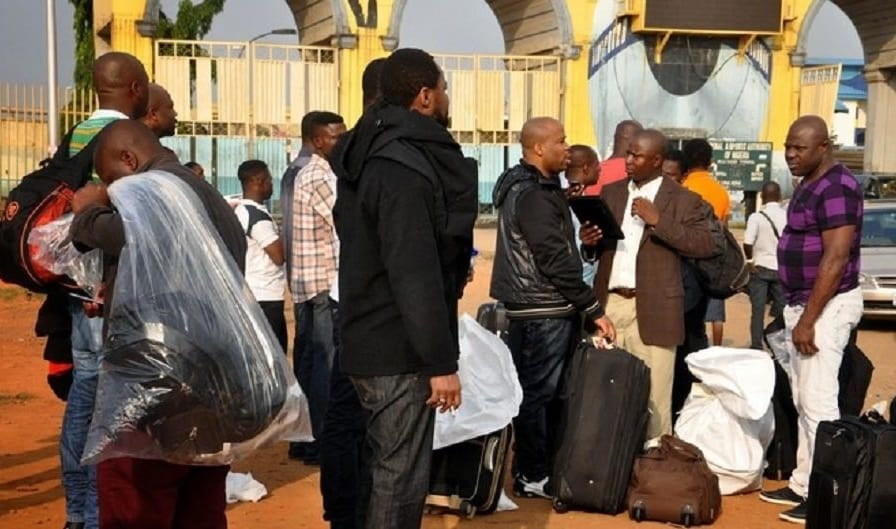
Like countries in the Europe axis and America continent, including Asia, Nigeria has also had a share of migration before independence and still has it after several years of its independence. From media to civil society organisations and individuals, Nigerians are migrating internally and externally due to socioeconomic and political challenges. These challenges have been described as stumbling blocks for the realisation of dreams. In some cases, the media has been found guilty in influencing Nigerians movement to Europe and North America.  

Whereas, in the past, Nigeria is a place every citizen of English and French West Africa countries love to be. Available statistics indicate that between 1931 and 1952, about 250, 000 people moved into the North-Eastern Nigeria from these countries, mainly from Lake Chad to Dakar, Senegal, and from the Sahara to the Gulf of Guinea. While this account occurred to Nigeria, the emerging elites from Nigeria moved to the United Kingdom and other countries in Europe from the 1950s through the 1970s for educational pursuits and in some cases for administrative knowledge acquisition with the intent of returning to the country with valuable skills needed for nation building. 

In our understanding, a number of Nigerians indeed returned and harnessed various opportunities in the private and public sectors. What many public analysts and other nationals see as a good omen for the most populated countries in Africa turned sour when political tensions and economic stagnation in the late 1970s and 1980s increased migration. A significant number of Nigerians who migrated to the US, UK and other countries during these periods decided to stay after acquiring necessary educational qualifications. 

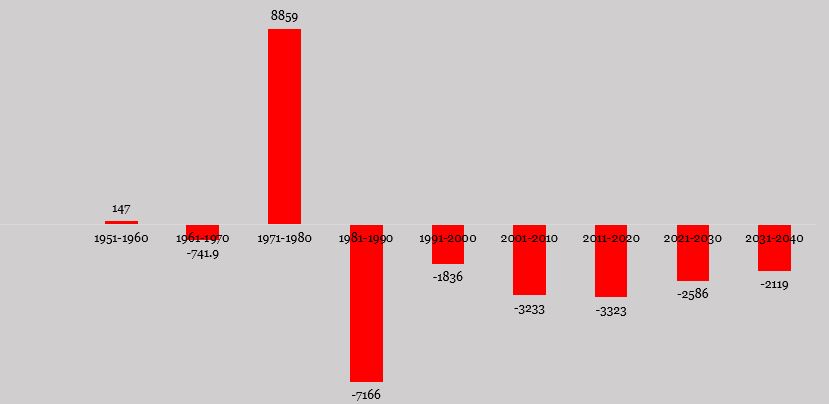
Exhibit 1: Average Per Decade

Source: Macrotrends, 2021; Infoprations Analysis, 2021

According to Afolayan and other colleagues, “By 1978, an estimated 30,000 Nigerian graduates from UK higher institutions were living outside Africa, with 2,000 of them living in the United States. In 1984, the Nigerian population living in the United States had increased to 10,000. 

“In addition to the poor economy, Nigerian-based professionals left because of the austerity measures of the Structural Adjustment Program, which the government agreed to as a condition of a loan from the International Monetary Fund in the mid-1980s. Because the program included devaluing the national currency, wages for professionals became lower and working conditions worsened.

“As desperation in the country continued, many less-educated youth became a significant part of the emigration stream. By the early 2000s, an increasing number of Nigerians had migrated to countries such as Spain, Italy, Ireland, Germany, France, the Netherlands, and Belgium, as well as the Gulf states.

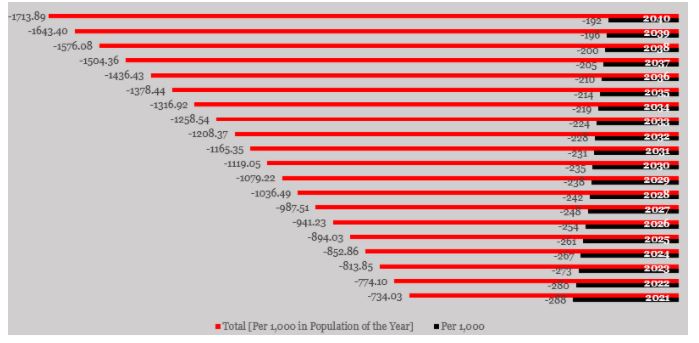
Exhibit 2: Future Migrants

Source: Macrotrends, 2021; Infoprations Analysis, 2021

“More recent migrants to continental European countries are reported to be less skilled on average, and more often work in the formal and, particularly in southern Europe, informal service, trade, and agricultural sectors. However, the United Kingdom and, in particular, the United States (through student and professional migration as well as the green card lottery) generally continue to attract the relatively higher skilled workers. In addition, relatively highly skilled nurses and doctors were recruited from Nigeria to work in Saudi Arabia and other Gulf states.”

What Our Analyses Say

Our analyst examines past and future migration data provided by national and international sources aggregated by Macrotrends.  Between 1951 and 1960, Nigeria had emigration more than migration. Our analysis suggests a similar result for 1961 through 1970. However, a significant difference exists between 1971 and 1980. This is in line with the early description of the country’s migration history during the period. 

Emigration results achieved between 1951 and 1960 were also recorded between 2001 and 2010. It took the country 50 years to achieve what was attained between 1951 and 1960, our analysis reveals. Our analysis further reveals that failure to address push factors would lead to more migration of Nigerians from 2021 to 2030. Between 2021 and 2030, Nigerians would have 9,232 citizens, migrating to the developed countries. From 2031 to 2040, it would be 14,201 citizens. 

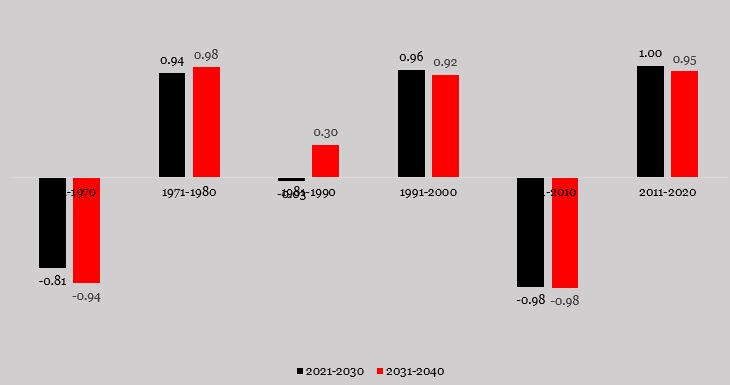
Exhibit 3: Effect of migration rates of the previous decades on the incoming decades

Source: Macrotrends, 2021; Infoprations Analysis, 2021


Tekedia Institute Seeks University Partners To Co-educate Students of the Future

0

Beginning April 1, students in three African universities will hear my voice on their courses on management, business and entrepreneurship. Schools, Tekedia Institute will make customized courseware for your students, and give you access to embed in your school portal.

We educate on practical entrepreneurial capitalism with deep academic rigour. I invite local, national, regional and global universities which want to understand business systems in Africa to partner with our Institute.

We help many institutions. But we do not brag publicly about it. We will customize our courseware and put your school logo with credit only at the end. So, the students will see your school. Everything will happen in your portal via API.

Email our team here