DD
MM
YYYY

PAGES

DD
MM
YYYY

spot_img

PAGES

Home Blog Page 5844

Farmkonnect and Its Intent of Enlivening Computational Agriculture in Africa

0

Out of the seven continents [Africa, Antarctica, Asia, Australia, Europe, North America and South America] in  the world, existing statistics indicates that 60% of arable land is in Africa, with billions in investment potential. For thousands of years, a few percent of this figure was cultivated by smallholder farmers with adoption of crude implements. The use of modern equipment and farming techniques for production and management of food and cash crops, including animal rearing could be linked with the era of colonialism in most African countries. 

During the early post-independence era, many African countries experienced a surge in the use of modern farming methodologies, which led to increase in food production against the slow and low production experienced while using crude implements. Whether using crude implements or modern equipment and indigenous or modern approaches, farmers make a number of decisions regarding what to plant, how to rear animals, how to harvest among others daily. 

In both situations [indigenous and modern], farmers are also faced with proper understanding of weather, soil quality, market conditions and many other unknowns towards making profit or loss. While some countries in other continents have moved to computational agriculture, a good number of African countries are yet to fully embrace the concept. 

In Europe, America and some parts of Asia, advanced technologies are being converged to unlock issues within agricultural production and management. Farmers, agronomists, breeders and scientists are working together utilising tools that help them disentangle and understand the complexity of plants, crops and animals. 

Computational agriculture involves the use of advanced technologies for data curation, mining from the farm fields and outside the fields. A data scientist notes that “some of the challenges farmers face today could be helped with a mix of better data, machine learning, and yet-to-be developed technologies. Computers can crunch vastly more data than humans and are really good at working on complex problems with multiple variables and dependencies.” Indeed, data-driven agriculture can solve the challenge of food security in Africa.  

A Case in Other Continent

As noted earlier, there are tools for effective computational agriculture. In 2020, Mineral was birthed after the completion of a computational agriculture projectMineral focuses on sustainable food production. “The Mineral team saw an opportunity to build new software and hardware tools that can bring together diverse sources of information that until now were simply too complex or overwhelming to be useful. The team started by gathering readily available information on the environmental conditions in the field—for example, information on the soil, the weather, and historical crop data. Mineral’s robotics, sensing and software tools collect and interpret diverse data from the field.”

Farmkonnect and Its FIDAS in the Context of Computational Agriculture

Like what the Mineral team did. A team from Farmkonnect, an agricultural real estate company in Nigeria, has concluded its project on an electronic agricultural extension center. Apart from the use of local people for the project execution, the company also partnered with a company in Holland, which focuses on weather exploration and management towards sustainable crop production. 

“We started the E-centre first of all to protect our investors’ money and by extension to other farmers. We could manage and monitor any farm in Africa using satellite technology. There is another one for irrigation, you don’t need to be on the farm, from the satellite, it can plant and make irrigation plans for a farm. We don’t need to visit the farm, from the E-centre we could do everything. This will be a backup to help farmers on site, we run it 24/7, and we see signals if anything is needed,” Azeez Oluwole, Chief Executive Officer says.

As the centre promises to exchange knowledge and expertise with farmers on the farms and computational agriculturists, our analyst notes that farmers and investors would get the needed value from their investments. 

 

The Trump’s Social Media Platform

0

On Oct 1, 2018, I predicted that the governor of Ebonyi State (Nigeria) would decamp PDP for APC . At that time, he was running for governorship on the PDP ticket. I wrote this: “ Engr David Umahi will win with PDP in 2019 but will decamp to APC shortly.” I also predicted that by 2023, he would be a Vice Presidential candidate under APC. Today, for America, I write that former President Donald Trump will run for re-election in 2024.

The world seemed to have been in silence since he was de-platformed at Twitter, Facebook and other social media firms. And without his handles, he has been unable to command his followers in a coherent way, for any mission. But that is going to change. Yes, Trump is launching his own social media platform in about 3 months: ‘Jason Miller, a long-time adviser and spokesperson for Trump’s 2020 campaign told Howard Kurtz on Fox’s “MediaBuzz” that Trump will be “returning to social media in probably about two or three months.” He added Trump’s return will be with “his own platform” that will attract “tens of millions” of new users and “completely redefine the game.”’

He has a chance as he can quickly build a website, and invest in the infrastructure stacks. He should be smart to know that Amazon, Google, Microsoft and other cloud companies could terminate his account, as Amazon did with Parler, if his playbook does not change. So, expect Trump to build end-to-end core technology stacks in-house. 

Simply, he has the resources to build a conservative tribe on social media. Yet, I am not sure how far the mission will go. I struggle to read Fox News just as I struggle with HuffPost, as you can see extreme biases at the Right and Left, respectively, of their articles. With no core objectivity,  you lose interest. 

A social media built for a tribe will have a ceiling for growth. Of course, for a former President, anything from him could even come to dominate Twitter trending barometer. And that could be the strategy: have a website where people can confirm the message is directly from him, and the virality could happen in other places.

My response to a comment on LinkedIn

Everyone has biases but you focus on the threshold. The fact remains that the greatest technology companies are started/created in blue states which remain the richest states/cities in America. The implication is that people who run these techs are largely democratic-leaning. It is a slam dunk – out of the 50 largest American cities, more than 70% are democratic. And out of the top cities on technology startups per capita, more than 70% are democratic-leaning.

Have you also asked yourself why in the ranking of American universities, blue states host more than 90% of the top ten. These things are not be chance – people make them happen!

And what does that tell you? Those who run techs and media are evidently-biased to the Left.

Building Impactful Gender-Anchored Companies – Zoom At 11am WAT, Tekedia Live

0

This week, we will have three Live sessions at Tekedia Mini-MBA. Ifeoma Uddoh will begin on Tuesday (note the time, 11am WAT) with a session on “Building Impactful Gender-Anchored Companies” as she shares  her mission at Shecluded. On Thursday, Project Management Institute (PMI)-honoured Taiwo Abraham. PMP Abraham will take us to an excursion on Effective Project Management.

On Saturday, Ndubuisi Ekekwe will round up the week with Career Diversification & How To Insure Your Career To Ensure You Keep Rising & Earning More. Links in the Board.

Tue, March 23 | 11am – 12noon WAT | Building Impactful Gender-Anchored Companies – Ifeoma Uddoh, Founder, Shecluded

Thur, March 25 | 7 – 8.00pm WAT | Effective Project Management – Taiwo Abraham, Program Manager, Horizant Canada

Sat, March 27 | 7 – 8.30pm WAT | Career Diversification & Insurance, General Topic – Ndubuisi Ekekwe

Ecommerce in China [ Video]

0

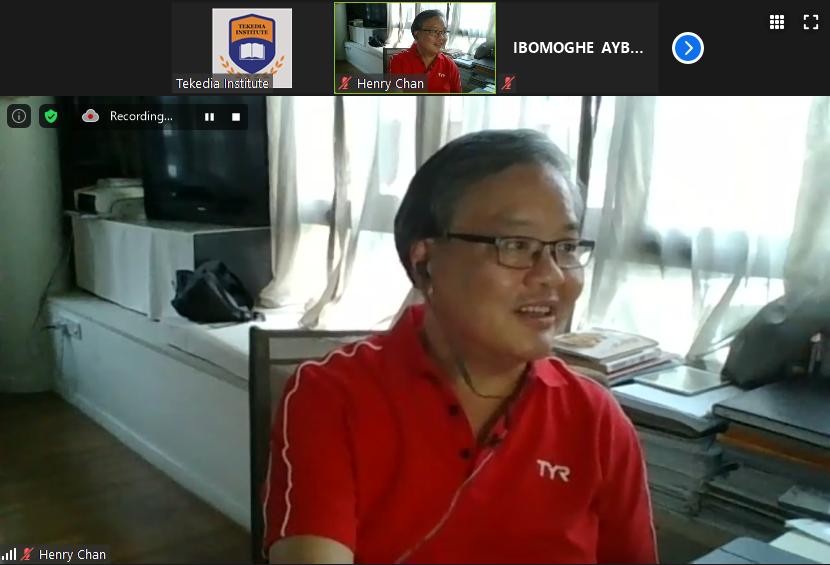
Tekedia Institute brings business thought-leaders to our Tekedia Mini-MBA program. Dr. Henry Chan, our China Business faculty, discusses ecommerce in China, during a recent Tekedia Live. Three times every week, we have Live conversations on business systems, and advance the wealth in firms. Enjoy and join us 

Who Owns the News in Nigeria? The Emergence of Snowball Journalism Practice

0

In the previous analysis, our analyst examined why news should be a product not only an information to the public. In the current piece, the focus is on how Nigerian journalists are practicing snowball journalism. In social science research, snowfall technique is one of the sampling techniques used by researchers. 

However, a critical examination of the news production and publication in the last few years indicates that journalists, especially state and regional correspondents are in the fond of reporting events or happenings they did not witnessed through proxy [getting the information about the events or happenings from colleagues who attended the events or witnessed the happenings]. When this permeates, then who owns the news?

Who Owns These News Stories?

Controversy as security operatives ‘attempt to arrest’ Sunday Igboho by Premium Times and DSS, police ‘attempt to arrest’ Igboho by The Cable are the stories chosen by our analyst for proper understanding of how the Nigerian newspapers are practicing snowball journalism within the context of events or happenstance. 

“PREMIUM TIMES gathered from sources close to Mr Igboho that the acclaimed activist was accosted by security operatives attached to Operation Burst while on his way to Lagos. Mr Igboho did not respond to our correspondent’s calls and text messages seeking full details of what happened. The state’s police spokesperson, Olugbenga Fadeyi, did also not respond to calls and text messages either.” Whereas, The Cable just reported the event and how FFK alleged the arrest.

While giving background to the event, in order to justify the inclusion of Chief Femi Fani-Kayode as its main newsmaker, The Cable notes that “…but some Yoruba leaders, including Fani-Kayode, were against the earlier arrest order. “The IGP, thereafter, directed Ngozi Onadeko, Oyo commissioner of police, to arrest Igboho and transfer him to Abuja, but some Yoruba leaders, including Fani-Kayode, were against the order.”

Immediately after this, the newspaper introduced Chief Fani-Kayode’s tweets as supporting evidence. The failure to bring the voice of other Yoruba leaders, at least one or two into the story, reemphasize watching the news not explaining the chain of events with adequate information earlier noted by our analyst. The two newspapers [Premium Times and The Cable] ended the story the same. Who owns the news?

The Fair Use Rule and Snowball Journalism Practice

Snowball journalism practice is also better appreciated through these headlines about the new chairman of the Economic and Financial Crimes Commission [EFCC]. I’m afraid Malami won’t let Bawa succeed –Sagay  by The Punch,  Malami may compromise Bawa as EFCC chair, says Sagay by The Nation [acknowledged  The Punch],  New EFCC Chair: Malami may not allow Bawa operate independently -Sagay by The Premium Times [acknowledged The Punch] and Malami will not allow Bawa to succeed as EFCC chairman – Sagay  by  ICIR Nigeria [acknowledged The Punch]. 

Clearly, The Nation, The Premium Times and ICIR do not want to miss the message, but their reporters and editors practiced another category of snowball journalism, by extracting what Professor Sagay told The Punch. In our examination of the re-published story, some of these newspapers add new dimensions to the information provided by the newmaker. 

ICIR Nigeria says the new EFCC Boss may not succeed as a result of the influence of the Malami led administration since both are from the same state. The Premium Times reported that the influence of Malami will compromise the activities of Bawa as EFCC boss. The Nation and The Premium Times almost have the same frame  to the story.

When a correspondent of a newspaper reported an event or happenstance he missed by adding new frames or using the frames of the correspondent of the newspaper he copied, can we say the fair use rule has been followed judiciously? Before we say yes to this question, we should not forget that there are a lot of misconceptions about what is allowable practice under fair dealing in Nigeria.  Therefore, fair dealing or use remains controversial in the Nigerian Copyright Law

Misinformation and Disinformation Will Snowball

From the analysis, it is obvious journalists and publishers do not want to have seconds or minutes and hours without publishing a news story. However, practicing snowfall journalism, according to our analyst, is an enabler of fake news creation and distribution.  Apart from this, it negates the principle of truth and fairness expected from a professional journalist and a reputable media organisation.