DD
MM
YYYY

PAGES

DD
MM
YYYY

spot_img

PAGES

Home Blog Page 5852

Nigeria’s Dominant Four – And Why Google Nigeria, Facebook Nigeria, Microsoft Nigeria Must Emulate Nestle, Unilever, etc and List in Nigeria

1

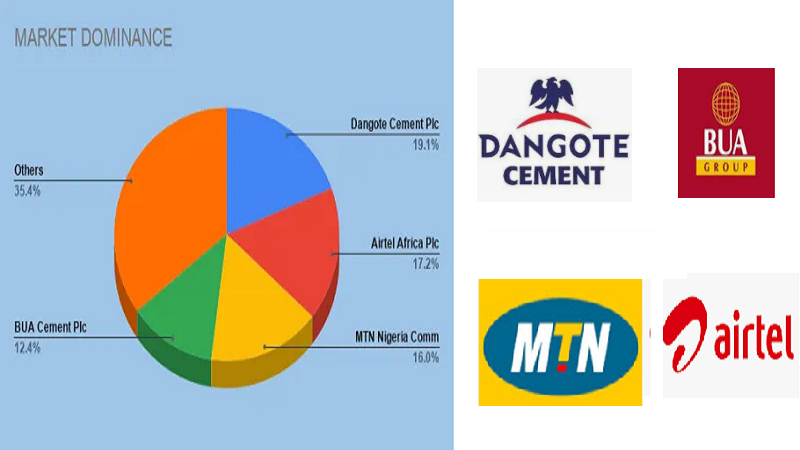
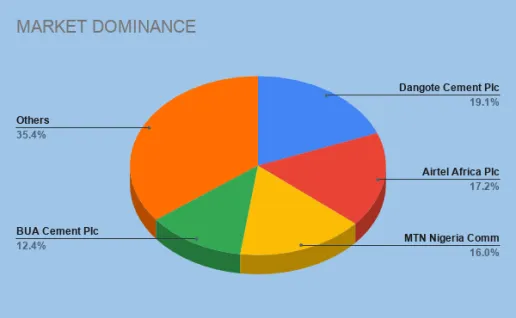
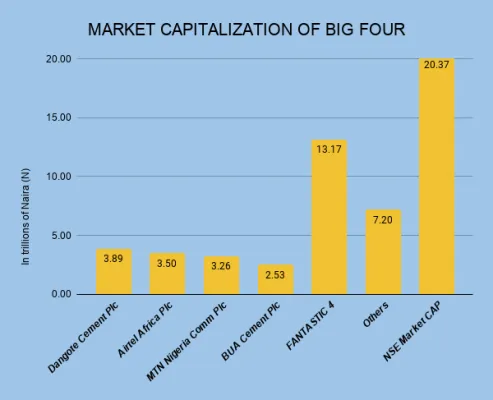
The total equity market value of all companies traded on the Nigerian Stock Exchange is about $50 billion (about N20 trillion naira). There are 168 of those firms but four companies account for two-thirds of the value, Nairametrics new data shows. Those firms command 65% of the total cap. Those firms are Dangote Cement, MTN Nigeria, Airtel Africa and BUA Cement. Recently, these four firms have been doing spectacularly well in the exchange, creating the illusion that NSE is rocking it. But in reality, nothing much is happening in most of the other entities.

Now, the big question: in the old great Nigeria, we got Unilever, Coca Cola, Nestle, etc to list on our exchange, is there any possibility that Nigeria can get the Unilevers, Nestles, etc of this era to list? Those new era companies are Google, Microsoft, etc which do business in Nigeria.

It sounds crazy and if it does, it shows how our world has changed  by technology. Indeed, no one expects it to happen, but that does not mean that it is not the right thing to do. The presence of MTNN and Airtel Africa have improved the local bourse – and we need to keep pushing to expand the options by getting these great tech firms to list in Lagos.

Kenya is pushing a legislation that would require global digital and web companies to offer a good percentage of their local subsidiaries to nationals or Kenyan-native companies if they want to operate in Kenya. For example, 30% of Facebook Kenya would have to be owned by Kenyans or Kenyan companies. This makes sense if you believe that the wealth of the future will go through digital and web. My only addition is this: do not make 30% of Facebook Kenya available to the few connected in Kenya, push it to trade in the Kenyan bourse! That way everyone will benefit.

This is the biggest deal in the evolution of the African tech systems since Bill Gates pioneered, through Windows and Intel/IBM chips, personal computing in ways anyone could participate.  Yes, foreign companies planning to do business in the Kenyan ICT sector must be required to surrender 30% shareholding to Kenyans, corporates or individuals. This new ordinance is captured in the National Information Communications and Technology Policy Guidelines 2020, which was published last week, spelling out new regulatory mandates for players in the ICT sector: “It is the policy that only companies with at least 30 per cent substantive Kenyan ownership, either corporate or individual, will be licensed to provide ICT services.”

Here is the deal:  Google Nigeria, Facebook Nigeria, and Microsoft Nigeria must emulate Nestle, Unilever, etc and list in Nigeria. They are the industrial (yes, knowledge) powers of the 21st century and Nigeria needs them available for all. Just as we got the old players to do the needful, Nigeria should  get these companies’ subsidiaries to list locally across key African exchanges. People, it is time!

NSE Data (Nairametrics)

The Upcoming N42 Billion USSD Fight Between NCC And Nigerian Banks

1

Now that the Nigerian Postal Service (NIPOST) has won the fight against the Federal Inland Revenue Service (FIRS) on stamp duty, we can all now move to a new one which is brewing: the USSD fight between banks and the telecom regulator, NCC (Nigerian Communications Commission). For years, NIPOST has maintained that the stamp duty revenue belongs to it while the tax agency claims otherwise.  But the ruling is clear: the Federal Government wants NIPOST to collect the stamp duty.

On the USSD fight, NCC claims that banks owe N42 billion for services which telcos have provided through USSD (Unstructured Supplementary Service Data) which has become a popular way for people to do banking in the nation. The Executive Vice Chairman of NCC, Umar Danbatta, disclosed this indebtedness during the 2021 Bullion Lecture: “It is expected that they (telcos) will recoup their investments in order to continue and to expand the service. About N42bn that is owed the telcos has not been paid by the banks for the provision of this service.”

“The issue of the USSD has become an issue between the telcos and the banks. The telecommunication companies provide the infrastructure which the banks leverage on to provide banking services of all kinds.

“Therefore it is expected that for this service someone should pay. No service is free. The investment in infrastructure that is driving the USSD service is a huge investment that the telcos made.

 “It is expected that they (telcos) will recoup their investments in order to continue and to expand the service. About N42bn that is owed the telcos has not been paid by the banks for the provision of this service.

“The telecommunications companies cannot unilaterally withdraw this service because it will be seen as a subversive act, undermining the digital inclusion strategy of the present government.

“And no government will sit back and watch while services that empower citizens are being tampered with or withdrawn. No government will standby and watch this to happen.

“So in the next couple of days, we are poised to engage the banks and ensure we reach an amicable resolution where the first item on the agenda that will feature is the payment of this N42bn accumulated debts to the telecommunications companies.”

 “They (rural residents) need phones that are affordable and therefore we must direct our resource in a manner that will bring affordable handsets to the rural population.

This is going to be a big fight since any money recouped from this will likely move to the national treasury, not just the telcos.  You may be surprised to see this as a line item in the funding of the 2022 national budget.

That noted, the loser here is the telecommunication industry. They commoditized a very important revenue line. Even in the United States, USSD services are never free: someone pays for them. Yet, no bank covers that cost here. So, at the end of the day, it is a decision for the customer to make: use the web and pay the data metering cost, use USSD and pay the fee, or take a taxi to the bank halls! That a group of smart people allowed banks to build on top of them, free, is simply unbelievable.

Just as Elon Musk is educating Ford, Toyota and other car companies on how to sell cars, using a software model, the telcos need to open a new playbook. Yes, if someone buys your Tesla, some software licenses do not transfer automatically as the new owner is expected to pay for them. Also, even as an owner, you need to be paying for subscription to receive upgrades on your car software. That business model is Tesla’s best innovation!

I see Tesla as the only current “automobile” company in the world that has a clear playbook to make, possibly, more money on software and services than actually on sales of metals packaged as cars

Who wins this fight? I vote for Nigeria, not telcos.

Comment on LinkedIn Feed

Comment: Having understood our business and environment, sometimes I don’t take Musk to seriously.

My Response: You better take Musk seriously because he is pioneering new business model. His one oasis is the car but he captures value via multiple plays like emission credits, software licenses, etc. Musk does not need to sell a lot of cars if the few has has sold can be sending him monthly income. In other words, Toyota can sell 2m one-off forever. But Musk can sell 100k and those 100k will bring revenue forever. He has a better business – and that is why markets are rewarding him.

New Comment: You haven’t explained how the telcos will lose out here? If they are not getting any revenue from the USSD service support to banks and decide to switch it off, its still the same thing…”No Revenue”, they will simply be standing at the same spot. But the banks will lose access to that channel of service delivery as well as the revenue that comes from there, which by the way is quite a lot. GTB for instance charges N20 per service use of 737 to transact, why can’t they share revenue with the operators that facilitates the platform? If the plug is pulled, who loses? GTB that is already making N20 daily times the thousands of transactions everyday or the telco who is providing the service and is not getting any revenue from it? On this one sir, the banks will lose….not the telcos…..Except the operators are forced not to pull the service as part of the regulatory support for a digital economy…..then they won’t have much bargaining power than to find a middle ground….

My Response: “You haven’t explained how the telcos will lose out here? ” – I did actually in the full piece just that space is not enough to explain here. I did note that any money NCC recovers from this may be used to fund Nigeria’s budget since telcos have not put BIG efforts on this. The banks will never lose as they are better on pricing.

This is what banks will do: if telcos begin to change, banks will ask you to sign a document before USSD banking can be activated. That paper gives them the rights to deduct their fees once you use USSD. Banks will NEVER lose provided the service is operational. Telcos will not cut it out; the best it can do is to ask people to pay. That changes nothing for banks.

Union Bank Responds On The Access Bank – Atlas Mara Rumoured Deal Discussion: Ignore the Rumour

3

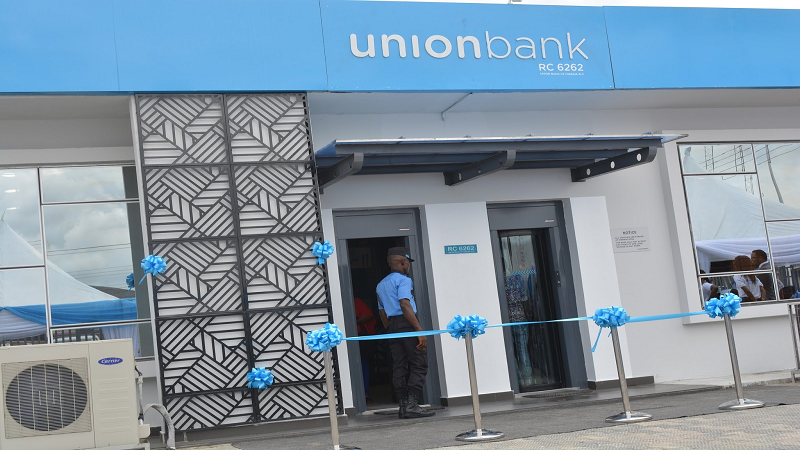
Union Bank Plc has updated me after the piece on a rumoured deal between Access Bank and Atlas Mara, Union Bank’s majority shareholder. The bank has clearly noted that it was all rumour and nothing there. I have posted the full feedback. Please take note accordingly. Yet, I will not delete the piece since the source is still there, and most importantly, I noted that it was all rumour, but quickly moved to the perspectives I wanted to share. I do not break news, I only analyze broken ones!

 I have been riding the horse since my first paycheck when after receiving my first salary in Diamond Bank at Adeola Hopewell Street, Victoria Island Lagos, I ran across the street to open a savings account with Union Bank. Till today,, the bank continues to keep its words. So, the horse lives!

From Union Bank

Thank you for your keen and thoughtful analysis of various topical issues pertaining to the financial sector, and the fresh perspective you bring to these discussions. We have come to regard you as a well-respected voice in our industry and beyond.

Your objective, unbiased stance is the reason we are reaching out to provide some clarity concerning your recent article titled ,‘Besides the Rumours of Access Bank Acquiring Union Bank Nigeria’.

We are aware of recent rumours resulting from an article by a blogger who regurgitated an old, misleading news article which has since been debunked.

Please read our statement to the Nigerian Stock Exchange debunking the rumour ( http://www.nse.com.ng/Financial_NewsDocs/32241_UNION_BANK_OF_NIGERIA_PLC%20RESPONSE_TO_ONLINE_PUBLICATI.pdf ) , and Atlas Mara’s statement addressing this issue here ( https://otp.tools.investis.com/clients/uk/atlas_mara1/rns/regulatory-story.aspx?cid=744&newsid=1446833 )

We are sure you will agree that editorial articles/analyses should be based on facts, not rumours and speculations, and as such we hope that you consider updating your article, based on the factual statements referenced above.

Please do not hesitate to contact me should you have questions or require further clarification.

Thank you very much for your time and attention.

Kind regards,

How Can Nigeria Get Back? Listen to the Vice President’s Message: “regulation not prohibition”

1

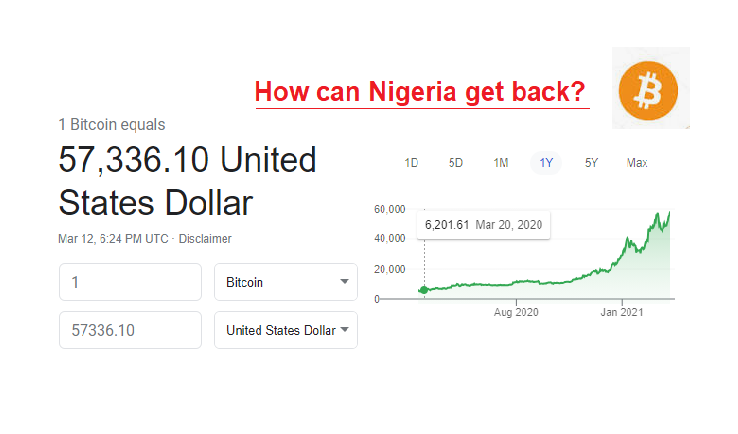
We respect the institutions of our democracy but increasingly, I am hoping to wake up to read that the Central Bank of Nigeria (CBN) has published a regulatory framework on how Nigerian young people will get back into what they were doing as “makers”, “innovators” and “players”, over being “spectators”. Yes, as the Vice President of Nigeria said: regulate the cryptocurrency sector but do not prohibit! Unfortunately, it seems like CBN did not get that memo.

From Nigeria’s Vice President Yemi Osinbajo on how he sees the CBN ban of cryptocurrency and Bitcoin; “I fully appreciate the strong position of the CBN, SEC, and some of the anti-corruption agencies on the possible abuses of cryptocurrencies and their other well-articulated concerns, but I believe that their position should be the subject of further reflection.

“There is a role for regulation here. And it is in the place of both our monetary authorities and SEC to provide a robust regulatory regime that addresses these serious concerns without killing the goose that might lay the golden eggs. So it should be thoughtful and knowledge-based regulation not prohibition.

People, this curve looks parabolic and if you check it carefully, the mathematically variance over weeks is not evidently huge, yet, I concede, on daily moving averages, it is outside an acceptance threshold, and volatile. My point is this, except the scale, the chart shape looks like a typical stock that is doing well in the market! In other words, at monthly moving averages, it is not very volatile [too technical here].

Why am I writing this? A co-founder of an exchange in Lagos sent me a note with “Prof, I am looking for a job”. I asked him why? He responded, “I am scared to try something else – I do not know which bans will come next. So, I just want a job to avoid those risks”.

That is the risk: the season of bans is affecting the psychology of our young people. It is like what is happening in the northern part of our nation where kidnappers are waging wars to ensure kids do not attend schools by putting the fear of kidnapping, thereby achieving via another means what they have wanted to achieve.

Nigeria needs a better engagement as every piece helps. The CBN should get these innovators and provide a path for them to comply and participate in the world of the future. This curve is parabolic, and if you look at the variance, on monthly averages, the volatility looks like a typical growing stock. Allow the young to take risk and ensure that risk does not cause systemic risks to the economy.

As Ant Group Evolves To A Financial Institution, From A Tech Firm, Its CEO Resigns

2

Coupang – the Amazon of South Korea – went public in a traditional IPO and its shares jumped 40%. The revenue of the firm almost doubled to $12 billion last year. The CEO, Bom Kim, is bullish: “we’re just scratching at the surface”. SoftBank made $33 billion off the South Korean e-commerce firm’s debut in New York.

While South Korea’s population may pale in size to that of the U.S. or China, where e-commerce titan Alibaba roosts, Coupang’s focus still remains on its home front, Coupang CEO Bom Kim said in an interview with Fortune on Thursday.

“If you look at the size of the Korea market, the commerce market is just over $540 billion just in the next three years,” Kim said when asked about any expansion outside of South Korea. “It’s a huge opportunity. We believe we were just three to four percent of the commerce market last year, which is such a small percentage. We’re just scratching at the surface.”

 As that happens, another ecommerce conglomerate (Alibaba) is still trying to fix its core double play in Ant Group. Ant Group CEO Simon Hu resigned and has been replaced by chairman Eric Jing.

China’s Ant Group Chief Executive Officer Simon Hu has unexpectedly resigned amid a regulatory-driven overhaul of the financial technology giant’s business, the first top management exit since a scuppered $37 billion initial public offering.

Hu, who was named chief executive of the Alibaba Group Holding affiliate in 2019, will be replaced by company veteran and Executive Chairman Eric Jing, Ant said in a statement on Friday.

Hu’s exit from the company comes as Ant is working on plans to shift to a financial holding company structure following intense regulatory pressure to subject it to rules and capital requirements similar to those for banks.

That pressure abruptly scuttled Ant’s IPO last year, which would have been the world’s biggest

What is happening here is evident: Ant Group will restructure and become to a large extent a financial institution, not a technology company, and if that happens, it loses gains on leverageable factors which will cause its multiples to drop. With that, valuation will follow, going south.

Personally, I do expect many staff of Ant Group to depart as most will not be comfortable running a financial institution which uses technology, over a technology company which offers financial services. But China prefers the former as it fears over-heating the sector with these new species of companies which do not have breaks in their scaling-cars of execution. As Reuters noted, from valuation to compensation, Ant Group will be radically different after this regulatory metamorphosis. 

China is building for e-yuan and Alipay cannot be on the way: ‘China is going around the world, creating a network for E-yuan, the digital version of their currency: “China has taken a step further in its quest to boost yuan through its sovereign digital currency. SCMP reported that Beijing has joined Hong Kong, Thailand and the United Arab Emirates (UAE), along with the Bank of International Settlements (BIS), to explore cross-border payments for digital currencies.”‘

Ant will face regulatory pressures from multiple angles in the next phase of its existence. In addition to this redesign forced on them by the government. The Chinese government will be introducing its digital yuan which might all but eliminate the need for consumers to opt for Alipay or Tencent pay. Will be interesting to watch how these evolve. (a LinkedIn commenter here)

In the light of this redesign, we are making this Tekedia Live session video public. It was recorded this month on Tekedia Mini-MBA Live session on ecommerce in China, anchored by Dr. Henry Chan, from Beijing.