DD
MM
YYYY

PAGES

DD
MM
YYYY

spot_img

PAGES

Home Blog Page 5858

Nigeria’s Central Bank Targets More Diaspora Remittance with New FX Policy

0
Naira USD

The Central Bank of Nigeria (CBN) has announced a new forex policy designed to encourage diaspora remittance through Money Deposit Banks (MNOs) that will fuel dollar liquidity in Nigeria.

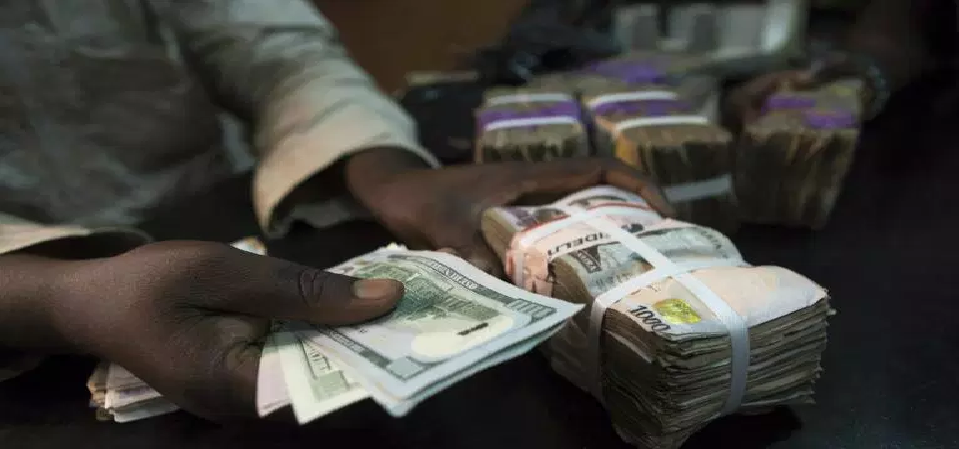
The initiative tagged, ‘Naira 4 Dollar Scheme’ for diaspora remittances, offers recipients of diaspora remittances through CBN’s International Money Transfer Operators (IMTO)s, N5 for every $1 received as remittance inflow.

The scheme takes effect from Monday, March 8, 2021, and ends on Saturday, May 8, 2021.

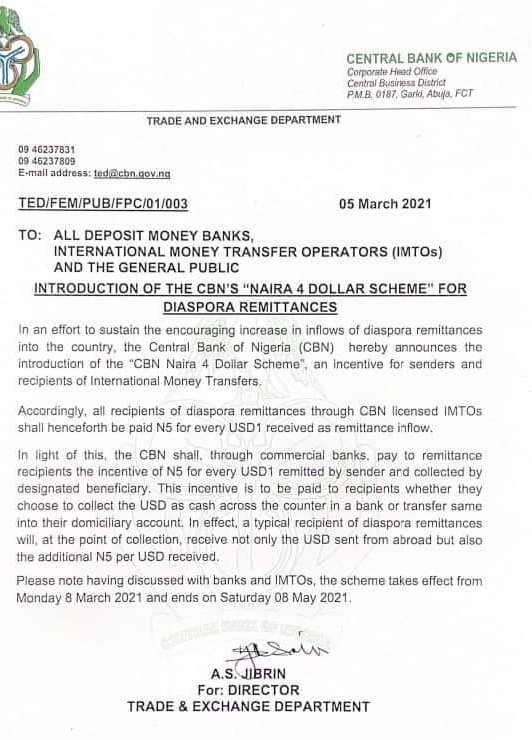
The scheme was disclosed by CBN in a circular which was dated March 5th, 2021, and signed by the Director, Trade and Exchange Department, A.S Jibrin, issued to all DMOs and IMTO. The circular reads in part:

In an effort to sustain the encouraging increase in inflows of diaspora remittances into the country, the Central Bank of Nigeria (CBN) hereby announces the introduction of the “CBN Naira 4 Dollar Scheme”, an incentive for senders and recipients of international Money Transfers.

Accordingly, all recipients of diaspora remittances through CBN licensed IMTOs shall henceforth be paid N5 for every USD1 received as remittance inflow.

In light of this, the CBN shall, through commercial banks, pay to remittance recipients the incentive of N5 for every USD1 remitted by sender and collected by designated beneficiary. This incentive is to be paid to recipients whether they choose to collect the USD as cash across the counter in a bank or transfer same into their domiciliary account.

In effect, a typical recipient of diaspora remittances will, at the point of collection, receive not only the USD sent from abroad but also the additional N5 per USD received. Please note having discussed with banks and IMTOs, the scheme takes effect from Monday 8 March 2021 and ends on Saturday 08 May 2021.”

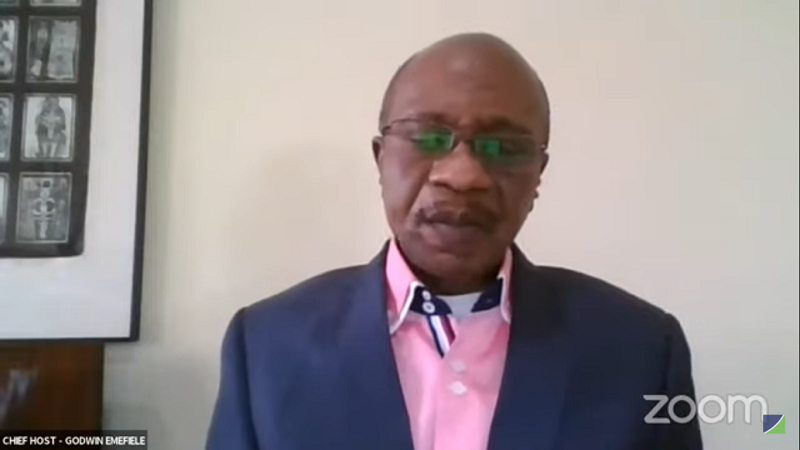
The CBN governor Godwin Emefiele said the move is to encourage Nigerians in diaspora to “increase the volume of global remittances,” “reduce rent-seeking activities” and offer “cheaper” and more “convenient remittance process” to Nigerians in diaspora.

He said the success of the scheme for the designated 60 days will determine whether it will be continued.

Emefiele said these in a webinar hosted by Fidelity Bank on Feb. 6, titled: “The New FX Policy, Implications and Positive Impact on Diaspora Investment,” which was graced by the Vice President Prof. Yemi Osinbajo who was represented by Yewande Sadiku, Prof. Wale Sulaiman, Chairman and CEO RNZ Global, Prof. Ndubuisi Ekekwe of Tekedia Institute among others.

“We believe that this new policy will encourage banks and financial institutions to develop products and investments vehicles geared toward attracting investments from Nigerians in the diaspora,” Emefiele said.

He explained that the newly introduced CBN FX policy is expected to enlarge the scope and skill of foreign exchange inflow into the country with a view to stabilizing the exchange rate, supporting external reserve, and more importantly, helping Nigerians living abroad to invest in their home country.

While the new policy is largely applauded, others believe that Nigeria needs more than that to prosper as a nation.
In his position titled: The New CBN FX Policy: The Path to $2 Trillion GDP, Prof. Ekekwe said Nigeria must transit from inventive nation to innovative nation to grow a GDP that will accommodate its exploding population.

While he applauded the new CBN FX policy, describing it as “catalytic”, Prof. Ekekwe said Nigeria needs more than diaspora remittance, which is pegged at $23 billion, to move to the mountain top.

“Our nation Nigeria has knowledge, from that angle; we have the necessary rudiment for us to move from inventive society to innovative society,” he said. “There is also that entrepreneurial capitalism. Across the nation, we have young people who are risk takers who can take us into that mountain top, if we give them the necessary capabilities and the things they need to make that translation.”

He explained that by exporting her best brains, Nigeria is trading $23 billion diaspora remittance for $2 trillion economic value that she could have captured through the development of innovative ideas of Nigerians living in diaspora.

Prof. Ekekwe said Nigerians in diaspora need to do more than remit money back home through investments since the value of their innovations is being captured by their countries of residence. He urged the government to, among other things; introduce incentives that will attract investment from Nigerians living abroad.

Prof. Ekekwe proffered “Diaspora Growth Nation’s Fund,” a sort of capital that will be designated for innovative investments in Nigeria.
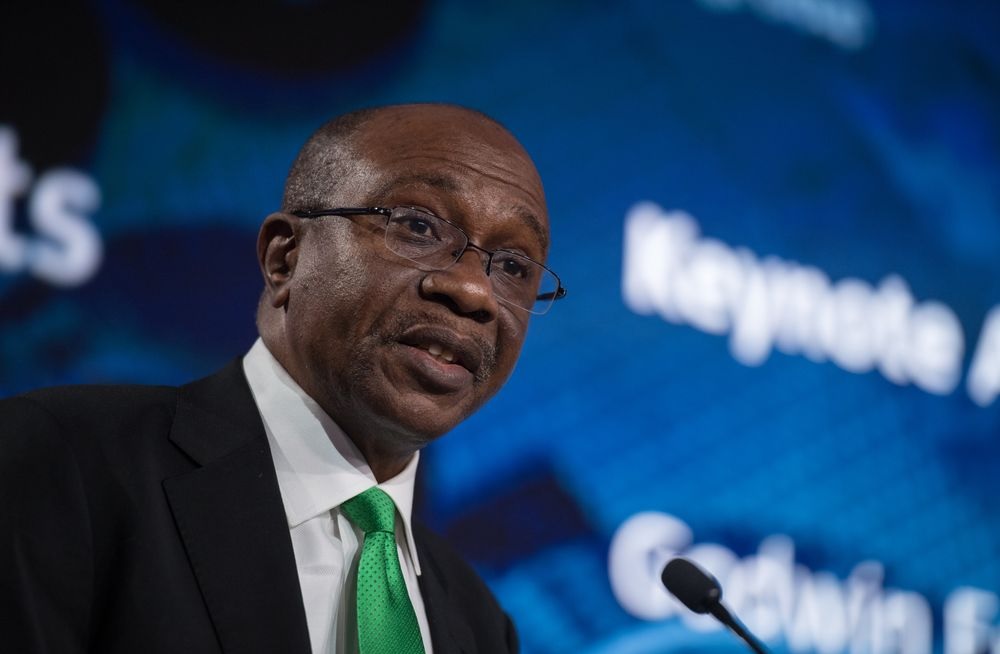
CBN Governor

“If we do not have capital, Nigeria cannot transition from inventive society to innovative society, because capital is very necessary for us to build the necessary things we need as a nation,” he said.

However, critics said the central bank has introduced the new FX policy to discourage Nigerians in diaspora from making remittances through cryptocurrency, which recently, has become the preferred choice of remittance for many Nigerians living abroad due to its cheap and flexible process.

The apex bank had in Feb. 5, directed all regulated financial institutions in Nigeria to halt cryptocurrency transactions, citing its use for money laundering among other reasons.


Implementing Power Law Concept for Startup Growth

1

After completion of my study with Y-Combinator’s startup school in 2019, I have tried and failed severally to figure out how to launch that next big startup that hopefully, will one day turn into a unicorn. This plunged me into further research and despite my young age in the world of startups, funding, VCs, etc., I stumbled on a concept that hopefully if done right, can actually create that next unicorn.

The concept is called a “Power Law”. According to Wikipedia;

A power law is a functional relationship between two quantities where a relative change in one quantity results in a relative change in the other quantity independent of those quantities. In order words, one quantity varies as a power of another. It is also interchangeably called the scaling law.

An example of this formula is when you double the length of a side from 2 – 4 inches, automatically, the area will quadruple from 4 to 16 inches squared. There are a lot of real mathematical formulas at play here but I am no mathematician. So, I won’t dwell on that angle.

It’s a very simple (yet complex) term. It basically hovers around the possibility of moving from zero to one and subsequently, larger in time. It’s a concept that focuses on how very tiny changes can have disproportionate results for your startup. It is more like compounding interest. Understanding this concept will help you determine if your startup will be successful or not and if you should go ahead to seek funding or not. It’s basically the indirect stuff VCs look at before funding your startup.

Team at work

Let’s examine the Pareto Principle (it perfectly describes the power law) which stipulates that for many outcomes, roughly 80% of consequences come from 20% of the causes otherwise called the 80/20 rule. E.g., 20% of Nigerians actually own 80% of companies. In order words, the relationship between inputs and outputs is NEVER balanced. How does this align with startups and VC funding? I’ll explain more below.

Now as we all know, every VC or moneybag as often called by Francis Oguaju, a tech advisor, often invests in startups with potential for early growth spurts so that they can profit as quickly as possible. There will be many startups or companies, but a few will achieve exponential growth more than the others. And these few are the targets of VCs. For your startup to get funded, it means your company is actually playing with the power law howbeit, unknowingly to you. Fortunately, most VCs do not also see the power law at play but they see growth or the potential for growth which is all that matters.

Since the power law is almost invisible to notice or see, so how do you position yourself as a startup to align with it? It’s actually very simple. Read on.

Brands can last for a very long time especially in tech – if nurtured. This isn’t a secret but I’m sure most founders don’t get it. If you can achieve 100 customers (happy customers), you can achieve 500 customers. Achieving N100,000 ARR can transition to N3million the next year and noticing this exponential growth and leveraging (investing) on it can make your startup grow to become a unicorn. What am I blabbing about? Simply, go long. If you start something and it’s working, keep going. Go longer. Power laws don’t manifest in a short-term plan. You feel the impact when you invest a few more years building on what works.

When you get a happy customer, identify what worked, invest more in it, and you’ll start noticing an exponential growth pattern which again, will reveal itself in the long run. In a nutshell, valuation usually compounds vis-a-vis an impressive impact over time. Look at Hubspot for example which IPO’d at a $750million valuation some few years ago and is now valued at $20 billion. When you present this record of disproportionate growth to VCs, guess what? They’ll give themselves a hi5 because they’ve seen a startup worth investing in. This process might take you a few months to achieve or a few years. In fact, let me still break it down.

When you launch your startup, you are bound to start getting customers. One thing worthy of note is to pay attention to customer segmentation. Do not make the mistake of treating all your customers the same way. Make use of the 80:20 Pareto’s rule to improve on your customer acquisition. The first step is to understand that all customers aren’t equal. Work out who the 20% of your customers are, then use the data to find more like-minded customers. If you understand Facebook advertising (lookalike audience marketing) you will understand this concept. Spend the majority of your time on these 20% customers – the category that is responsible for 80% of your revenue. Focus on EVERYTHING about them and you’d be surprised at how you’ll start acquiring more customers like them. What does this mean? Your ARR (Annual Recurring Revenue) might actually jump from N100,000 this year to N3 million next year.

Congratulations, you have achieved exponential growth – you know, the process that increases quantity (revenue) over time. This means you have begun riding on the Power Law and have now positioned your startup to get funding and hopefully, become a unicorn someday. There are many ways to understand and implement the power law for your startup growth. However, I focused more on the multiplicative process – rapid growth where a result can be multiplied by another which equals exponential growth. There are other concepts like preferential attachment, etc.

The Space Life Dream: First Space Hotel Scheduled to Open in 2027

0

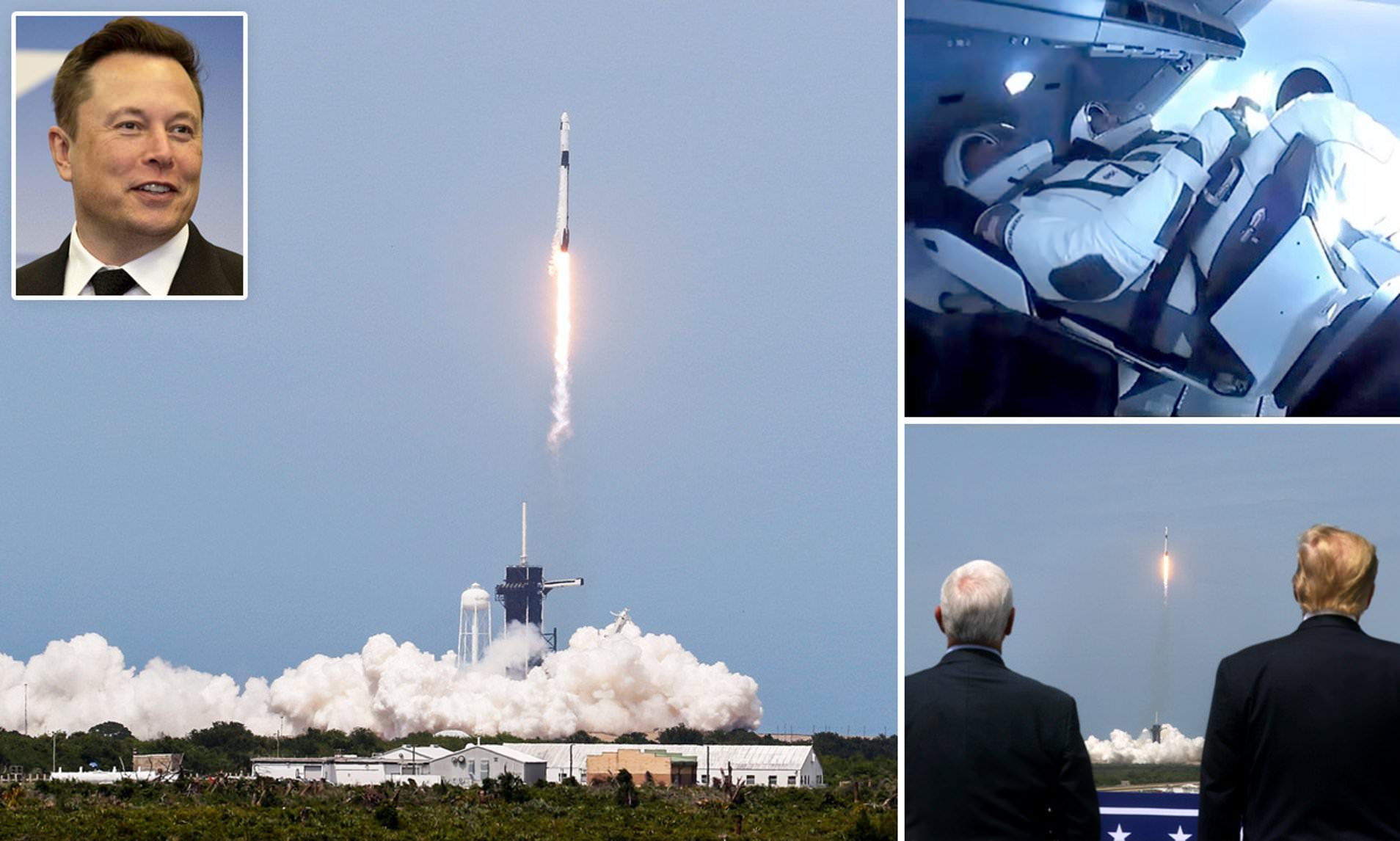
Over the past 10 years, Elon Musk and Jeff Bezos have been working to make their dream to create commercial transport service that will put people in space, come true. The SpaceX idea was conceived to build spaceships that will take tourists beyond the International Space Station to mars.

The two richest men in the world now have a common goal, to put people in space via a commercial transport service.

Musk’s SpaceX has recorded successful commercial trips to space while Bezos is working relentlessly on Blue Origin, a reusable suborbital rocket called Shepard designed for the same purpose.

The SpaceX and Blue Origin programs are igniting the interest of other companies in space tourism.

Back in 2019, Californian company the Gateway Foundation released plans for a cruise ship-style hotel that could one day float above the Earth’s atmosphere.

Then called the Von Braun Station, this futuristic concept — comprising 24 modules connected by elevator shafts that make up a rotating wheel orbiting the Earth — was scheduled to be fully operational by 2027.

Fast forward a couple years and the hotel has a new name — Voyager Station — and it’s set to be built by Orbital Assembly Corporation, a new construction company run by former pilot John Blincow, who also heads up the Gateway Foundation.

In a recent interview with CNN Travel, Blincow explained there had been some Covid-related delays, but construction on the space hotel is expected to begin in 2026, and a sojourn in space could be a reality by 2027.

“We’re trying to make the public realize that this golden age of space travel is just around the corner. It’s coming. It’s coming fast,” said Blincow.

Renderings of what the hotel might look like suggest an interior not dissimilar to a luxury Earth-bound hotel, just with some pretty spectacular out-of-this-world views.

SpaceX show

When the initial designs premiered a couple years ago, Tim Alatorre, senior design architect at Orbital Assembly Corporation told CNN Travel the hotel’s aesthetic was a direct response to the Stanley Kubrick movie “2001: A Space Odyssey” — which he called “almost a blueprint of what not to do.”

“I think the goal of Stanley Kubrick was to highlight the divide between technology and humanity and so, purposefully, he made the stations and the ships very sterile and clean and alien.”

Instead, Alatorre and his team want to bring a slice of earth to space via warm suites and chic bars and restaurants. Guests might be in space, but they can still enjoy regular beds and showers.

That’s not to say the hotel will ignore the novelty of being in space altogether. There are plans to serve traditional “space food” — like freeze dried ice cream — in the hotel’s restaurant.

Plus there will be recreational activities on offer that “highlight the fact that you’re able to do things that you can’t do on Earth,” according to Alatorre.

“Because of the weightlessness and the reduced gravity, you’ll be able to jump higher, be able to lift things, be able to run in ways that you can’t on Earth.”

Alatorre told CNN Travel that the rotating wheel would work to create a simulated gravity.

“The station rotates, pushing the contents of the station out to the perimeter of the station, much in the way that you can spin a bucket of water — the water pushes out into the bucket and stays in place,” he said.

Near the center of the station there’s no artificial gravity, Alatorre explained, but as you move down the outside of the station, the feeling of gravity increases.

Orbital Assembly Corporation

The hotel’s original name was chosen because the concept was inspired by 60-year-old designs from Wernher von Braun, an aerospace engineer who pioneered rocket technology, first in Germany and later in the US.

While living in Germany, von Braun was involved in the Nazi rocket development program, so naming the space hotel after him was a controversial choice.

This was partly why the name’s been changed, Blincow told CNN Travel.

“The station is not really about him. It’s based on his design, and we like his contributions towards science and space,” Blincow said. “But you know, Voyager Station is so much more than that. It is the stuff in the future. And we want a name that doesn’t have those attachments to it.”

Space tourism is becoming an increasingly hot topic, and there are several companies trying to make it happen — from Virgin Galactic to Elon Musk’s SpaceX.

SpaceX’s StarShip system could help get Voyager Station off the ground.

“We cannot call SpaceX our partner, but in the future we look forward to working with them,” Blincow told a recent live event promoting Orbital Assembly, advising viewers to “hang tight.”

For now, the space hotel isn’t advertising a room rate, but expect it to come with a pretty hefty price tag attached.

Virgin Galactic, for example, plans to launch passengers into sub-orbital space at $250,000 per person, per trip.

However the team behind Voyager Station have said they’re hoping to eventually make a stay at the hotel equivalent to “a trip on a cruise or a trip to Disneyland.”

“Starship culture”

While Voyager Station is perhaps the flashiest of Orbital’s designs, it’s actually just one facet of their space ambitions.

The team is also hoping to build research stations, and spark space tourism and commerce opportunities.

“We’re designing the tools and machines right now that can build these structures very quickly,” Blincow told CNN Travel.

The team imagined government or private companies might use modules for training crews “heading to Mars, the Moon and beyond,” as Alatorre outlined at the 2021 live event.

The next stage in getting the Voyager Station off the ground is bringing more investors into the mix, and continuing with tests on the ground.

The eventual goal, as Alatorre put it back in 2019, is “to create a starship culture where people are going to space, and living in space, and working in space and they want to be in space. And we believe that there’s a demand for that.

The CBN Calls Nigerian Diaspora with “Naira 4 Dollar Scheme” – N5 Per $1

6

The Central Bank of Nigeria (CBN) needs US dollars desperately to help cushion the nation’s balance of payment, and fight deterioration of the Naira, and is going to Nigeria’s best export: the diaspora community. Yes, the apex bank has unveiled a really ingenious scheme called “Naira 4 Dollar Scheme”. Largely, if you wire US dollars to Nigeria via the approved IMTO (international money transfer operators) like Western Union, the payout bank will pay your recipient N5 per $I besides the recipient receiving the full amount you wired in US dollars. The CBN Governor mentioned in a Diaspora Series organized by Fidelity Bank Plc.

It is not Christmas or Salah yet but CBN is already loaded to send goodies. Send $1,000, your recipient will receive the $1,000, and extra N5,000, even if the payout is received in cash or domiciliary account. Two things are evident here:

  • CBN wants to use this to change habits, pushing diasporas to use the formal channels to wire money home. You will not get this extra credit if you use the non-approved channels. Here, the channels are you must use the approved IMTOs and the destination would be to deposit money banks (the commercial banks). Those running cryptocurrency accounts will not benefit.
  • CBN needs US dollars and is hoping that this will make the diasporas to open their wallets and wire money home. If it succeeds, it could be another way to stabilize the Naira, just as crude oil sales help internationally.

According to PwC, remittance to Nigeria was about $23 billion. Certainly, the central bank will not budget to carry such in perpetuity. This explains why the bank has put a window on this; it would begin on Monday 8th March 2021 and end on Saturday 8th May 2021. This is short term but if it is extended over a long time, you can call it a “quasi-devaluation” for the masses who are lucky to have families abroad.

In an effort to sustain the encouraging increase in inflows of diaspora remittances into the country, the Central Bank of Nigeria (CBN) hereby announces the introduction of the “CBN Naira 4 Dollar Scheme”, an incentive for senders and recipients of international Money Transfers.

Accordingly, all recipients of diaspora remittances through CBN licensed IMTOs shall henceforth be paid N5 for every USD1 received as remittance inflow.

In light of this, the CBN shall, through commercial banks, pay to remittance recipients the incentive of N5 for every USD1 remitted by sender and collected by designated beneficiary. This incentive is to be paid to recipients whether they choose to collect the USD as cash across the counter in a bank or transfer same into their domiciliary account.

In effect, a typical recipient of diaspora remittances will, at the point of collection, receive not only the USD sent from abroad but also the additional N5 per USD received. Please note having discussed with banks and IMTOs, the scheme takes effect from Monday 8 March 2021 and ends on Saturday 08 May 2021.

Square-Tidal Acquisition and Jay-Z’s Business Ingenuity

0

Square is acquiring Tidal, a music streaming company owned by rapper Shawn Carter, aka Jay-Z. Square, owned by Twitter founder and CEO Jack Dorsey will take a majority ownership stake in Tidal through a new joint venture.

The deal, worth $297 million is believed to be aimed at popularizing blockchain and exploring new ways to get artists paid valuably for the works.

“It comes down to a simple idea: finding new ways for artists to support their work. New ideas are found at the intersections, and we believe there’s a compelling one between music and the economy. Making the economy work for artists is similar to what Square has done for sellers,” Dorsey explained in a statement as to why payment company would acquire a streaming company.

Dorsey said Tidal will learn from the ecosystems of tools for sellers of all sizes and individuals through Cash App, which Square created, to develop new tools for artists. The ecosystem will be based on developing “entirely new listening experiences to bring fans closer together, simple integrations for merch sales, modern collaboration tools, and new complementary revenue streams,” he said.

Jay-Z (Tidal) and Jack (Square)

Experts believe Dorsey will likely adopt the blockchain and cryptocurrency technology that he has become a popular fan of.

“You need the applications to drive the new economy. No one’s going to just go get a cryptocurrency wallet if there’s nothing to buy,” Avivah Litan, a technology analyst at consulting company Gartner said.

The little use of bitcoin for day to day transactions has been a major concern for investors and regulators, who are worried about its volatility. Dorsey’s aim has been to create a decentralized ecosystem where transactions will be solely on blockchain.

Jay-Z bought Tidal in 2015 from Norwegian entrepreneurs for about $56 million, and it has since grown to have presence in more than 56 countries, with the backing of popular artists such as Kanye West, Madonna, Beyonce’, Rihanna and Nicki Minaj among others. The acquisition has put Tidal’s value around $450 million, a stag leap from its 2019’s $150 million value.

The acquisition may become the game changer in the stream industry that upcoming artists who have struggled to generate enough revenue from their music have been praying for. Tidal has distinguished itself from rivals like Spotify and BoomPlay etc., by offering higher sound quality to listeners and a greater share of revenue to artists.

But the question remains whether using blockchain will power Dorsey’s vision to a success. Martha Bennett, an analyst at the consulting firm Forrester, said companies and artists already trying to sell music directly to fans through a blockchain-based system have had limited success.

“When you think purely about breaking into the market, if somebody with the brand name of Jay-Z and Beyonce don’t manage to break the stranglehold of the well-established streaming platforms then who else can,” she said.

The idea of blockchain pleases Dorsey because of its decentralized system which enables people to store data and process transactions without relying on intermediaries who take commissions for their services.

Putting Tidal on blockchain technology will mean little or no charges on the earnings of artists from streams. But it will take more than building the platform to make the idea widely acceptable. Other obstacles such as some governments’ resistant attitude toward blockchain technology will likely stand in the way in some countries like Nigeria, India etc.

Under the deal, Jay-Z will have a seat at the Square board. Forbes said he bought back 33% of Tidal from T-Mobile earlier this week and then sold it together with the third he already owned, pocketing $149 million in cash and stock. His net worth jumped 40% following the two deals he closed in the last two weeks, including his champagne brand Armand de Brignac.

Jay-Z’s fortune climbed $1.4 billion after closing the two deals. He sold half of his shares in the Armand de Brignac brand, shooting the company’s value up to $640 million.

Jay-Z business ingenuity made him the first hip-hop billionaire, breaking the shackles of reckless spending that has characterized the music industry over the years.

In 2005, Jay-Z said “I’m not a businessman, I’m a business, man.” With his many smart investments, including in Uber, salad chain Sweetgreen, insurance startup Ethos and SpaceX, Jay-Z is not only making a difference among his peers, he is also living his prophetic words.