In 2018, the Association of Facilities Management Practitioners of Nigeria (AFMPN) birthed after several years of consultation with the key stakeholders in the industry and government officials at the Federal level. It was on Wednesday 27th June, 2018 at Onikan City Mall that practitioners and key players gathered for the announcement of the association.
Analysing the event, the gathering indicates that the rapid growth of the industry valued at less than $1 billion is no longer far, but near. While introducing the association, Paul Erubami one of the Chief Executive Officers of key players in the industry says: “This association will work with the various stakeholders, affiliate associations, similar bodies, associated international bodies among others to achieve the core purpose. We will liaise with similar professional bodies and academic institutions towards the development of the right skills and knowledge for the industry’s growth.”
Collins OsayamwenPaul Erubami
Some days ago, Mr Collins Osayamwen was elected as the first president of the young association. Mr Paul Erubami became the deputy president while Mrs Olatokunbo Lawal, Mr Olumide Aina and Mr Timothy Adeyemi were elected as Directors of Finance and Administration, Membership and Professional Development, and Marketing Communication & Public Relations respectively.
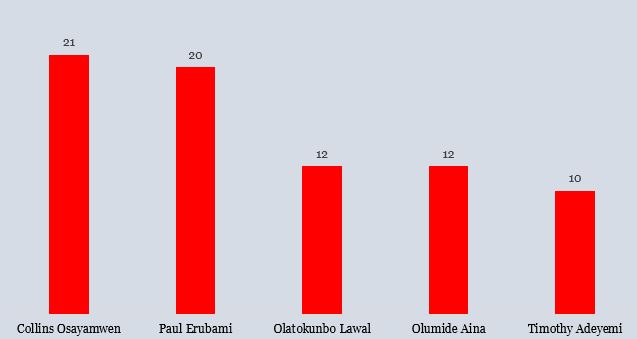
These executive members have varied years of experience from different positions. Analysis of the years of experience indicates that they have 15 years as average, while they have 75 cumulative years of experience. Our analyst notes that this is laudable for an emerging industry that needs radical development with sustainable innovations in the areas of collaboration, knowledge acqusition and development.
Exhibit 1: Years of Experience
Source: Infoprations Analysis, 2021
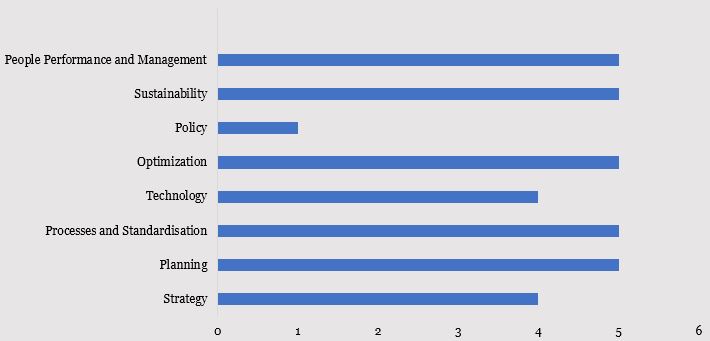
Mapping and analysis of the core features in experiences of the elected members indicate that people performance and management, processes and standardization, planning, sustainability and optimization are likely to be the early core benefits the members and players in the industry would derive from the elected executives.
Available information reveals that Mr Collins Osayamwen have cognate experience in the areas of processes and procedures standardisation. This was gleaned from his fellowship and membership of national and international organisations responsible for institutionalisation of best local and global practices. His strengths, according to our analyst, would be further strengthened with over 20 years of experience in consulting and training across multiple sectors and across many countries in Africa of Mr Paul Erubami,a licensed IFMA instructor on FMP, CFM, SFP and other programmes.
Process and people transformation prowess of Mrs Olatokunbo Lawal, the Chief Executive Officer of Wilco, would be a great addition. Industry and academic teaching experience of Mr Olumide Aina are expected to be added value to the association. With his election, our analyst notes that the association should be able to have a number of strategic partnerships with academic institutions.
The evolution of bitcoin has created a new market in Africa. The biggest economies in the continent, Nigeria and South Africa are at the helm of the boom, which is showing a lot of young people a way out of unemployment.
It is more like a fulfillment of the 2018 United Nations’report, which predicted that Africa could be the next frontier for cryptocurrency due to poor governments’ fiscal policies and regulatory bottlenecks that pose a challenge to economic growth in the continent.
While Nigeria leads the African crypto market, South Africa is trailing with a ground-breaking volume of transactions.
Apart from its 32.5% unemployment rate, South Africa is a country where the majority of the population is unbanked, creating the opportunity for more people to embrace bitcoin not only as a way of transaction, but also as means of employment.
For the past five years, the South African cryptocurrency market has evolved to become one of the leading peer-to-peer marketplaces in the world. South Africa processednearly $100 million in P2P bitcoin exchange in 2020, opening opportunity for further investment in 2021.
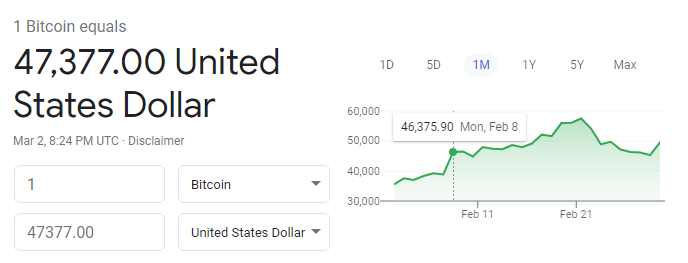
BTC has been volatile recently
The growth has been spurred by many factors, including flexible payment systems, cross border trade, currency fluctuation and fair regulation.
Before now in South Africa, cross-border financial transactions were expensive, rigorous and unreliable, even within the Southern African Development Community (SADC) bloc. Across the continent, the complexity was limiting business transactions and frustrating Small & Medium Enterprises (SMEs) and other markets.
Then there’s currency fluctuation. The South African rand is one of the most volatile major currencies in the world. Since 2014,it has lost 30% of its value as the economy wobbles.
Another factor fueling the surge of bitcoin in South Africa is theAfrican Continental Free Trade Area (AfCFTA), a bloc idea born in 2012 and signed in July 2019 to facilitate intra-African trade. So far, more than 30 countries have ratified their instrument, which means there is anticipation of increased cross-border trade within Africa that will need flexible means of financial transactions.
In addition, seeing where the world is headed with digital payments, the South African Reserve Bank has established a team of players from the financial sector, including stakeholders in the cryptocurrency industry, tasked to develop a regulatory framework for the industry.
These factors have spurred significant growth in the South African bitcoin market, stoking the interest of many who are joining the trend daily.
However, as interest grows in the South African Cryptocurrency market, challenges remain. In January, South African financial sector regulator, the Financial Sector Conduct Authority (FSCA)requested more oversight power to regulate cryptocurrencies in order to be able to prosecute fraudsters in the industry.
FSCA made the request after Mirror Trading International (MTI), a bitcoin trading club, was accused of a $740 million bitcoin scam, conducting operations illegally and lying to investors. The regulator shut MTI down in December due to the enormity of the fraud allegations leveled against it. The club was, among other acts of fraud, accused of falsifying trade statements and did not declare losses after promising customers daily returns of 0.5% for $100 deposit.
It has been the biggest scandal in the South African cryptocurrency market, and set a trajectory that would have scared traders off the market if not that many exchanges have established good reputations that withstood the scandal.
“Mirror Trading International is another example of why the industry must spread the word that algorithmic trading platforms promising unrealistically high returns are nearly always scams,” data firm, Chainalysissaid.
“When cryptocurrency exchanges and other services learn of these scams and receive their cryptocurrency addresses, they should discourage users from sending funds to those addresses or at least warn them that financial losses are highly likely,” it added.
How Bitcoin is minted
Despite these pitfalls, the South African authorities have taken a different approach from their Nigerian counterparts, who inFebruary 5 announced the ban of cryptocurrency exchanges’ operations. The South African regulators are poised on regulating existing exchanges to give credibility to the industry.
But due to the scandal, the exchanges, including peer-to-peer (P2P), a decentralized platform whereby two individuals interact and transact directly with each other, without the need of a middleman to broker the deal, have come under the radar of both regulators and traders.
Against this backdrop, the South African bitcoin market is set for full regulation aimed at curtailing fraud practices. This means that all the exchanges including P2P platforms being used in South Africa will have to undergo credibility verification.
The FSCA has proposed stringent regulations that will mandate crypto startups to obtain a financial services provider (FSP) or cease operations. But there is more to it that has thrown the market into disarray. Under the proposed regulation, taxpayers are required to disclose all crypto-related transactions to South African Revenue Service (SARS), or face a penalty that may involve a two-year jail term.
As a result of this proposed regulation, the South Africa’s daily bitcoin transaction volume plunged 10%, from $258,783 to $235,470 in January; as many traders began to withdraw their investment.
The proposed tax rule will undermine the autonomy of cryptocurrency in South Africa, spooking investors as they wouldn’t want to operate in a market where the government is interfering with transaction autonomy.
Although the South African authorities claim their aim is to sanitize the cryptocurrency market through regulation, the proposal is suggesting that the government wants a share of the bitcoin boom.
SARS had earlier proposed capital gains tax (CGT) on crypto investments that would require traders paying from 7% to 18% tax on profits made, another development crypto traders don’t want to reckon with.
Generally, the growth of the cryptocurrency market both in Nigeria and South Africa appears partially dependent on the regulatory policies of both governments. For this reason, exchanges have been innovating to keep the market flow going through P2P platforms where the authorities have no control.
Local Bitcoin, a Finland-based exchange is among the many stepping up to fill the void that would be created by the South African regulatory proposal if approved.
With a P2P platform that supports hundreds of different payment methods, Local Bitcoin has become one of the most established crypto exchanges in the world; offering escrow-secure P2P services that gives traders a sense of security. It also wades in when there is dispute between traders and provides all parties with deserving resolution.
Although recent happenings have thrown the South African bitcoin market into a state of distrust, resulting in government’s intervention that is currently slowing the market’s growth, credible exchanges are fighting through secure and transparent transactions to protect the market.
Nigeria’s first batch of COVID-19 vaccines will be received on March 2, and Dr. Faisal Shuaib, Executive Director Of the National Primary Health Care Development Agency (NPHCDA), at the weekly media briefing of the COVID-19 Presidential Task Force on Monday 1st March 2021 at Abuja, outlined the order of events that will follow its arrival, including who gets the jabs first.
PROTOCOLS
I am delighted to inform you that the first batch of Oxford/AstraZeneca COVID-19 vaccine, which is about 3,924,000 doses, is expected to arrive in Nigeria tomorrow, Tuesday 2nd March 2021 at 11:10am.
I once again assure Nigerians that all necessary safety and quality control measures have been put in place for the arrival, storage and successful administration of the vaccine in the country. There is going to be a small ceremony chaired by the Chairman of the PTF on COVID-19 to receive the vaccine at the VIP Protocol section, General Aviation Terminal of Nnamdi Azikiwe International Airport, Abuja.
At the end of the ceremonies to mark the arrival of the vaccines. A few vials of the vaccines would be handed over to the NAFDAC team which they will analyze over a period of two days (Wednesday March 3rd and Thursday March 4th)
Further to the clearance by NAFDAC, the PTF, FMOH, NPHCDA and strategic leaders will be at treatment center of the National Hospital on Friday March 5th 2021, where the first vaccination site will be set up to commence the vaccination of the frontline health workers and support staff. These Staff would also be electronically registered in the Covid-19 vaccine database and would receive their COVID-19 vaccination card which has a QR code that can be verified worldwide.
On Monday March 8th 2021, more vaccination sites would have been set up at designated locations such as National Assembly clinic, State House clinic and Federal medical centre, Jabi where strategic leaders such as the SGF, Senate President, Speaker of the House of Representatives, Attorney General of the Federation, Inspector General of Police, the Ministers and Ministers of States, Senators, House of Representatives, traditional leaders and religious leaders would be vaccinated.
After this launch and initial roll-out phase, Vaccine distribution to the States for the phase 1 vaccination process will begin. This phase is the vaccination of all frontline health workers, their supporting staff and strategic leaders. Deployment of vaccines to the States would be based on the assessment of their level of preparedness. Some of the parameters that would be used for the assessment include adequate maintenance of their cold chain storage facilities, adequate preparation for logistic transportation to the ward/ health facility, adequate security in place during transportation and at vaccination sites, completion of training of health workers, efficient social mobilization activities in place, adherence to protocol for vaccine deployment.
Working with CACOVID, plans are on ground for a cargo plane provided by them to transport the vaccines to the States by air. States without a functional airport will have their vaccines transported by road using vans with fitted Cold Cabins, from the nearest airport. The vaccines will be stored at the State Cold Stores, from where they will be transported by road to LGA Cold Stores
Once activities have commenced in the States, there would be strict monitoring by PTF, FMOH, NPHCDA and independent bodies such as EFCC, DSS, ICPC, and Civil Society Organizations. States/health facilities/health workers that are identified as defaulting from the standard protocol and guidelines for this phase of vaccination would be sanctioned.
While this is ongoing, the National team would be ready for the arrival of the next batch of vaccines which would be used for the next phase of vaccination. Phase 2 vaccination process involves vaccination of the elderly from 50 years and above. This has been sub grouped into 2, with the vaccination of 60 and above occurring first followed by 50 – 59years. This will occur across all 36 States and the FCT. Those who are eligible for vaccination that have not registered electronically, would be assisted at the designated health facility and would be vaccinated.
The phase 3 vaccination process involves vaccination of those between 18 – 49years with co-morbidities (such as hypertension, diabetes, lung disease, other heart disease, liver or renal disease, etc). Individuals at ages 50 and above with co-morbidities would already have been Immunized within their age group.
The phase 4 vaccination process would involve vaccination of the rest of the eligible population between the ages 18 – 49years. It is worthy to note that at each phase of vaccination, the level of preparedness of the States are assessed before vaccines are deployed and accountability measures have been put in place to ensure strict compliance to the vaccination process. Pregnant women will be evaluated by their health providers to weigh the benefit versus risk, before a decision is taken to vaccinate them.
Earlier today, the Honourable Minister of Health, Dr Osagie Ehanire launched our indigenous T.E.A.C.H strategy for COVID-19 vaccination and Electronic Management of Immunization Data system. This is to ensure safe and effective vaccination of prioritized and eligible Nigerians against COVID-19. Following the launching, through a unique link available on NPHCDA website, twitter handle, Facebook and Instagram, we have commenced electronic self-registration of health workers. This will enable us to avoid crowding at vaccination posts as the registered health workers will be scheduled and reminded of their vaccination date via sms and email.
We urge all eligible Nigerians aged 18 years and above to be patient as we will eventually vaccinate them. As the vaccines arrive in batches due to limited supply we will inform Nigerians about who and where to receive the vaccine.
A comprehensive and transparent roll-out plan that involves public vaccination of President Muhammadu Buhari and other important dignitaries and stakeholders has been developed. Again, this is to assure Nigerians on the safety of the COVID-19 vaccines that we are bringing into the country.
May I therefore crave your indulgence to continue to support the government in conveying truthful, factual and objective messages to Nigerians in order to dispel rumours around COVID-19 vaccines and government efforts to protect the citizens against the disease.
Business partnership is a business strategy less talked about, most especially for start-ups or emerging businesses. A partnership is a weapon that could help scale a business, or bring a business idea to life–if used appropriately. Almost all successful start-ups started with a partnership between two or more individuals. Apple, Tesla, clothing giants—Adidas and Puma, and arguably the biggest fin-tech company in Nigeria, PayStack started with a partnership. However, the partnership remains underestimated when compared to other business strategies.
A simple definition of partnership by the dictionary says, “It is the state of being a partner or partners”. However, a more formal definition was propounded by many. An example is a definition by Kimball and Kimball, who stated that: “a partnership is a group of men (or women) who have joined capital or services for the prosecution of some enterprise(s)”.
Every year lots of businesses emerge– small businesses or start-ups. Other existing businesses are also expected to grow or scale-up. I believe a key to the success of these businesses depends on their ability to seek and utilize partnerships as a strategy.
In a start-up journey, there are moments and times when a partnership is needed to ensure firm establishment, growth, or acceleration of the business. For example, if a founder lacks or is deficient in a skill necessary for the launch or acceleration of a company or, perhaps, he lacks financial capacity– he might need a co-founder. Existing businesses might also need partnerships to help scale or maintain their status-quo. For example, an existing business might need exclusive access to a new product; it might decide to seek a partnership with another business or start-up to gain such access or rights. However, many business owners or start-up founders are wary of a partnership.
Their concerns are not far-fetched, numerous quarrels and rifts that have occurred among founders in times past would have raised their concerns. Many of such rifts have led to divisions between founders; it has left a bitter taste to mouth (mostly irreparable) and caused chaos within the company. Some have led to a complete breakdown of some once-thriving businesses. Examples of such conflicts in a partnership are the past Allen and Gates relationship battles. Another such conflict was illustrated by Jeff Wald, who revealed that “co-founders issues gave way to contentious legal disputes that caused a particular company to collapse”. These, however, have undermined the importance of partnership and the numerous benefits associated with it.
Advantages of Partnership include:
Collaborative efforts: It enables brainstorming and sharing of ideas. It also eliminates being solely responsible for the failure or eventual success of an emerging company or start-up.
More Start-up/Business capital: Financing a business as an entrepreneur is a daunting task. Partnership enables the availability of more capital at the beginning and different stages of a business. With a partnership, running a business and financing capital-intensive assets will be reduced drastically.
Availability of diverse but complementary skill set and expertise: Imagine a talented marketer and a coder forming a partnership for a venture? Seeking partnership will bring different skills and knowledge together for the development of a business.
Work-life balance: Sharing of responsibilities may lead to a better work-life balance. Sharing of duties and workload could less work burden and reduce job strain.
Psychological support: Setbacks are bound to happen in a business or start-up at any point in time. Frustrations and work issues are also inevitable. Partners could encourage each other and brainstorm on ways to solve such problems.
Still, thinking of how to turn your ideas into a marketable product? Or perhaps scale your products to the next level? Reach out to a suitable partner. A better study and a legal partnership plan/agreement are needed to make the partnership a successful one. A partnership is an underestimated strategy for business growth but, it is an important one.
Zoom has reported a huge revenue increase for its recent fiscal year: “The video communication company documented a $2.65 billion revenue during the recent fiscal year, amounting to a 326 percent increase from the previous fiscal year. In the fourth quarter alone, revenue jumped by 369 percent to $882.5 million.” This is a pure redesign on how people and companies work, and remote-work and remote-everything may not go away.
So companies like Zoom or digital-native companies may have moments ahead. But the most fundamental thing here is that covid-19 has just created a new industrial category which will not easily fade when things return to normal.
As I noted in Harvard Business Review last month, it comes down to capturing value. Yes, despite the amalgam of competitors in this space, Zoom seems to be the main one that has figured out how to make money at scale, even well ahead of the giant called Google. Simply, America has created another dominant player in a new business category for the world! That seems to be their birth rights as the world now zooms.
“We are humbled by our role as a trusted partner and an engine for the modern work-from-anywhere environment. Our ability to rapidly respond and execute drove strong financial results throughout the year,” Eric Yuan, Zoom’s founder and chief executive officer, said in the statement.
Fortune in a newsletter explains what is happening here:
Zoom continues to skyrocket past all expectations nearly a year after the coronavirus pandemic helped its business shoot through the roof. And the company’s optimistic guidance seems to suggest that concerns of future slows may not be so big after all.
The company reported its fourth-quarter earnings on Monday, posting $882.5 million in revenue, up 369% year over year. That, by far, beat analysts’ expectations of $811.7 million in revenue for the quarter.
Zoom also reported that it expects to generate between $900 million and $905 million in revenue for the first quarter, well above analysts’ expectation of $804.78 million. The higher-than-expected guidance sent Zoom’s stock up more than 10% to $452 per share in after-hours trading.
The latest results wrap up a year of outperforming Wall Street’s expectations. Meanwhile, the company has been diversifying its revenue, reporting that its phone service, which allows people to make, receive, and route phone calls via the cloud, now serves more than 1 million users.
Zoom still appears to be the one to beat in video conferencing. On Monday, Zoom was the third top free app on the Google Play store and the sixth top free app on the Apple app store. The app has regularly snagged high rankings on both app stores throughout the year.
But other companies are still trying to give Zoom a run for its money. On Monday, for example, Google announced some new features including a new mobile view and the ability to join a meeting from multiple devices for its video conferencing service Google Meet. Meanwhile, Instagram debuted a live-streaming feature that has a Zoom-like appearance called Live Rooms, 10 months after Facebook’s Messenger rolled out its video conferencing product Messenger Rooms.
While Zoom’s leadership seems to ward off any suggestion of a major slowdown in the near future, you may wonder just how long Zoom’s big boom will last.
Some companies are already warning of possible decelerations as the COVID situation improves. For example, DoorDash, another company whose business was boosted by the pandemic, last week told investors that its food delivery service may slow in the next couple of quarters as more people get vaccinated and opt to eat out.
But Zoom may not experience the same kind of post-pandemic pressure. That’s because many companies have decided to allow their employees to work from home permanently or part-time. And Zoom has had several months to change consumer behavior, increasing people’s familiarity and dependency on its software—habits could well outlive the pandemic.
The issue boils down to this: Will you be Zooming post-pandemic? Because Zoom is betting on it.