DD
MM
YYYY

PAGES

DD
MM
YYYY

spot_img

PAGES

Home Blog Page 5864

How to Organise and Lead Inclusive Fuel Protests in Fragile Settings: A Template from PASGAR’s Researchers and Research Participants in Nigeria

0

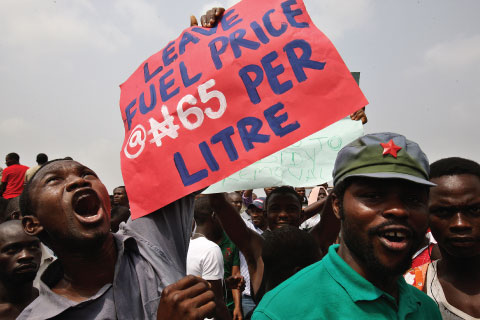
The focus of the study (for Nigeria) led by Professor Ayobami Ojebode, Professor of Development Communication, University of Ibadan, was to find out the reasons labour unions and activists haven’t been able to lead Nigerians successfully towards fuel subsidy protests, and to bring out lessons on how to lead people on a volatile issue like energy protest. Methodologically, the research is a product of fifteen key informant interviews, nine Focus Group Discussions, event catalogues of ten years and popular media depiction of fuel crises in Nigeria.

Our analyst had earlier reported Professor Ojebode and his team from the Partnership for African Social and Governance Research will share their research findings with the public on March 4, 2021.  Sharing the findings of his team’s research to the participants (which comprised members of civil societies, unionists, academics and journalists), Professor Ojebode established that a number of respondents saw fuel subsidy as a social contract between the government and the citizens in as much as the government subsidises fuel. However, the intensity of protests is dependent on issues of trust and distrust in government and protest leaders.

Citing the 2012 fuel protest as an example, Professor Ojebode said, “The 2012 had widespread and sharp bite and presence (of strong protests) because the government had lost the trust of the people: it was enmeshed in corruption allegations of unimaginable proportions, just as the president was perceived as indecisive.”

It was a different case in the 2016’s increment. Nigerians didn’t participate in the protest called by labour as done in 2012 because of their “lack of trust for labour leaders and a feeling of betrayal” having failed Nigerians in the 2012 negotiations they had with the government on their behalf.

When the fuel price was increased in 2020 as a result of fuel subsidy removal announced by the Federal Government, no protest occurred. This time around, “Nigerians had learnt to trust neither the organised labour nor the government” as there was “no fuel to fuel the protest.”

As such, “when Nigerians trust labour leaders and protest organisers and distrust the government, a strong protest could occur; when they trust the president but not the labour leaders and protest organisers, only a lame protest could be expected; when they will trust neither of them, one might expect close to no protest at all.”

What lessons were then learnt on leading Nigerians in energy protest? What are the recommendations? Professor Ojebode highlighted transparent leadership Nigerians can trust, inclusiveness of protest leaders in constituting negotiation team as well as structured leadership where union leaders and CSOs discharge their responsibilities without being coerced.

In their separate comments, the stakeholders (union leaders, journalists, civil societies, academics) present applauded PASGR and Professor Ojebode-led team for a robust research findings and discussions. However, the stakeholders unanimously reiterated that the labour union is failing in its responsibilities because of the perceived corruption of its leaders, genesis of its leadership formation as well as its dependence on government for finances. They therefore encouraged Nigerians to see themselves as stakeholders in the Nigerian polity and see themselves as powerful voices on government policies.

Earlier, Dr Martin Atela of Research and Policy Unit, PASGR; Dr Beatrice Muganda, Acting Executive Director, PASGR and Professor John Gaventa, A4EA Director, Institute of Development Studies, UK had welcomed the participants, given opening remarks and provided PASGR’s baseline studies respectively.

Watch the conversation here
 

An Uncommon Honour From One of Africa’s Great Universities

0

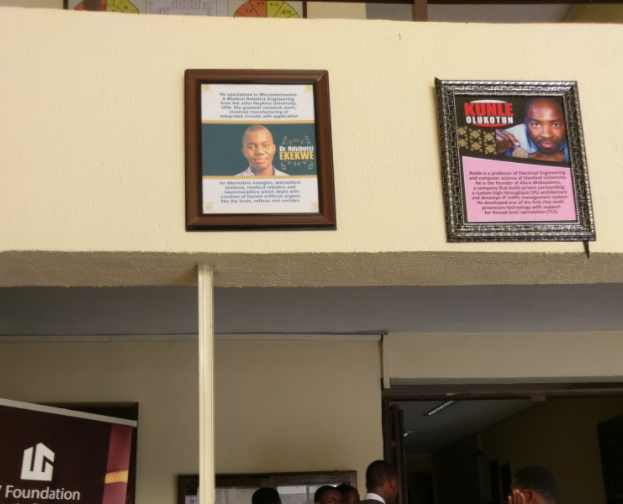
A BIG honour to have your picture on display in a university academic hall especially when you did not attend that school. Always honoured that one of Africa’s leading universities – Covenant University – could be this gracious, to use me, to inspire a generation of young people: “whenever I walk through those doors with you watching, I desire to be like you”. You will be better – keep working and keep improving.


Standard Chartered Bank Nigeria Partners with Vetifly to Serve its Clients

0

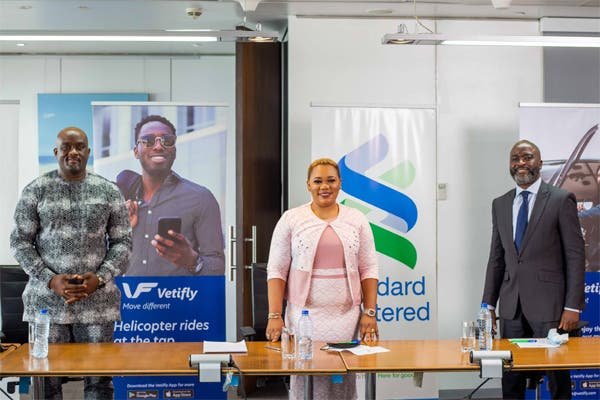
We celebrate here at Vetifly as Standard Chartered Bank Nigeria enters a unique partnership with Vetifly, our on-demand helicopter service. At the moment, Vetifly flies from Victoria Island to Ikeja International airport and vice versa. We are adding more routes across Nigeria and beyond.

According to the global banking giant, this partnership with Vetifly was born out of a need to provide convenience for clients; the Alliances teams working closely with the priority segment of the Bank’s Consumer, Private and Business Banking (CPBB) arm developed this initiative. With a team of seasoned professionals dedicated to providing relevant banking solutions to meet existing and prospective clients’ needs.

Speaking on the Partnership, Chima Ebor, Priority Banking head, said: “At Standard Chartered Bank, we aim to continually improve the lives of our clients by partnering with like-minded organizations such as Vetifly. That’s why we are very excited about this new partnership and the potential benefits to clients.”

One of the current unique offerings to clients under this partnership is that from now till April 30th 2021, when clients register on the Vetifly website – www.vetifly.com, Vetifly will credit the client’s wallet with a special bonus within 72hours as part of the cost for their first trip.

Abiodun Olawale- Cole, Country Manager, Vetifly added ‘for Businessmen and Businesswomen who do not like to waste time in traffic. This service will be the solution for them as Vetifly helps save time as well as travel in style.

Ndubuisi Ekekwe, CBN Governor, VP Nigeria, etc to Speak at Fidelity Bank Series

2
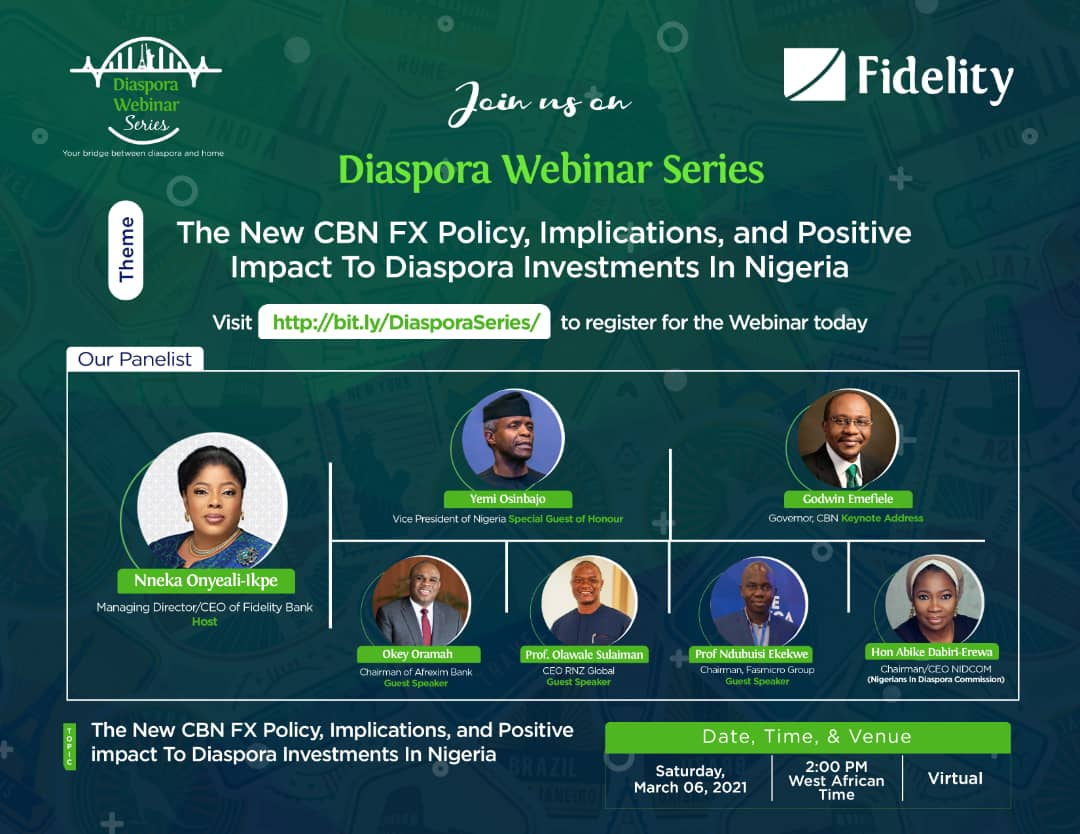
 Tekedia Institute is excited to invite you to join our Lead Faculty, Prof Ndubuisi Ekekwe, at a Fidelity Bank conversation series, as he speaks on investments and banking policies, in Nigeria.
Also speaking are the Governor of Central Bank of Nigeria (Godwin Emefiele), the Vice President of Federal Republic of Nigeria (Prof Yemi Osinbajo), Chairman of Afreximbank (Prof Okey Oramah), Prof Olawale Sulaiman, and Hon Abike Dabiri-Erewa.
Date: Saturday, March 06
Time: 2pm WAT
Register free here– https://campaign.fidelitybank.ng/

Tekedia Partners FinQuest Finance for 0% Interest Education Loan

0

We saw the challenge and realized that a playbook to make it easier for people to attend Tekedia Mini-MBA is very important. Despite awarding hundreds of scholarships, we have thousands on the waiting list. So, a market oriented-approach is necessary. Today, I am happy to announce that Tekedia Institute has signed a partnership with innovative fintech startup, FinQuest Finance, which will make it possible for people to attend Tekedia Mini-MBA, at zero-interest rate loan, with a payment plan of three months. 

Yes, this loan comes at no extra charge, and  it is repayable over 3 months and can be accessed by all; Entrepreneurs, Intrapreneurs, Students, Working Professionals, etc. 

More companies will attend Tekedia Institute this year than any university or training institution in Africa. And more learners will finish from our school than any entity in the continent. We have built a reputation of excellence and are very confident that this partnership will open doors for more members to experience “the best school”.

The next edition of Tekedia Mini-MBA opens in days; we invite you to apply at FinQuest if you would need a loan to attend – www.finquestfinance.com/apply . The fees remain the same; you can check here school.tekedia.com

FinQuest is run by an extremely brilliant team: first class graduate of OAU, Azeezat Adetunji ACA, ACCA Affiliate, and Ridwan Taiwo.