DD
MM
YYYY

PAGES

DD
MM
YYYY

spot_img

PAGES

Home Blog Page 5865

Facebook’s Launch of BARS Indicates It’s Still Intimidated by TikTok

0

Several months after watching painfully as TikTok sweeps the tide of the short video sharing space, Facebook has launched BARS, an app which allows rappers to create and share their raps using professional tools.

It marks a second music video app created by Facebook recently. Late last year, the social media platform publicly launched its collaborative music video app, Collab, as part Facebook’s Internal R&D group, NPE Team, which tests new ideas that could influence Facebook’s next steps on social media projects.

Collab focuses on making music online with others, while BARS helps would-be rappers to create and share their own videos using an online studio.

TechCrunch explained that the app helps users to select from any of the hundreds of professionally created beats, then write their own lyrics and record a video. BARS can also automatically suggest rhymes as you’re writing out lyrics, and offers different audio and visual filters to accompany videos as well as an autotune feature.

Among other exciting features of the BARS is the “challenge mode”, where you can freestyle with auto-suggested word cues with a touch of a game-like element.

The app is designed to serve a fun purpose for those who just want to freestyle with auto-suggested word cues. TechCrunch said the videos can be up to 60 seconds in length and can be saved to your Camera Roll or shared out on other social media platforms.

The significant growth recorded by tech companies offering stream, video and teleconferencing services during the COVID-19 lockdowns was undoubtedly a factor in Facebook’s NPE’s push to create new video apps.

“I know access to high-priced recording studios and production equipment can be limited for aspiring rappers. On top of that, the global pandemic shut down live performances where we often create and share our work,” said a member NPE Team, DJ lyler.

Interest in binge-watching content grew significantly in the midst of the pandemic with 70% of marketers looking up their investment in videos.

Besides huge gains recorded by other tech companies during the lockdown, TikTok’s success so far has become an intimidating challenge to Facebook. With its feature that allows users to create video contents, the short video app has captured a diverse crowd of talents who have become popular delivering creative contents on the app.

Despite the controversies that have trailed the app particularly in the US and India, it has recorded tremendous growth that makes Facebook wary.

As of 2021, TikTok is one of the world’s most loved apps, especially among young people. TikTok has a monthly user record of 100 million in the US, more than 689 million internationally and 6 billion lifetime downloads as of December 2020, according to data from Sensor Tower. TikTok recorded 29% over Facebook’s Instagram 25% as young people’s most preferred social media app in 2020.

Facebook, which has been desperately seeking to grab more market share with video apps has been chasing after every successful video idea.

TechCrunch said BARS resembles TikTok in terms of its user interface. It’s a two-tabbed vertical video interface – in its case, it has “Featured” and “New” feeds instead of TikTok’s “Following” and “For You.” And just like TikTok, it places the engagement buttons on the lower-right corner of the screen with the creator name on the lower-left.
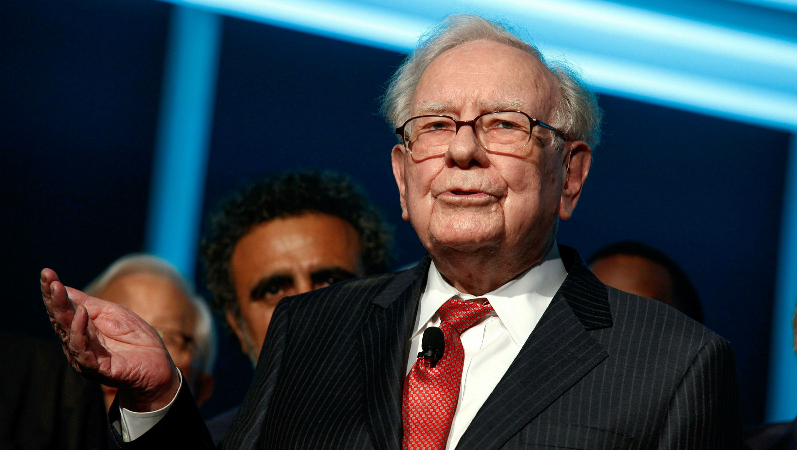

The Warren Buffett’s Ample Diversification For $35.8 billion Fourth Quarter

1

This is the work of a legend: Warren Buffett’s company wrote down $11 billion on its 2016 purchase of Precision Castparts which has been severely wounded due to the paralysis in the aerospace sector [Boeing aircrafts decommissioning due to defects, reduced orders associated with Covid lockdowns] . Yet, the company’s net profit  rose 23% in the fourth quarter, to $35.8 billion. Many people have preached the market-sermons that the pandemic-fueled lockdowns benefited technology companies. Yet, from the Berkshire Hathaway’s data, it is evident that the American magic can work in any sector or domain. There is something evident here: ample diversification of a portfolio.

Warren Buffett’s trains struggled with the covid-19 paralysis but in my estimation, its insurance business made tons of money, since lockdowns practically meant there were limited accidents since people were not on the roads. Yet, despite having those cars parked at homes, people paid premiums which are required by most state laws. So, the premiums were paid but accidents did not happen, meaning that claims were not leaving the treasury of Buffett’s empire. Those reduced claims are part of the huge profits recorded by the firm.

Head, you win. Tail, you win. That is the cornerstone of a balanced portfolio with the $120 billion Apple investment supporting!

Billionaire investor Warren Buffett’s record buyback spree of his own conglomerate’s stock is continuing in 2021, and he’s acknowledging a “big mistake” in his annual letter to investors. Buffett says Berkshire Hathaway bought back about $9 billion of its own shares in the fourth quarter, bringing the total 2020 buyback to almost $25 billion. He also acknowledged an “ugly $11 billion write-down” stemming from the purchase of an aerospace parts company in 2016. Buffett warned that the fixed-income market faces a “bleak future,” but he reassured investors to “never bet against America.”

Of course, Warren Buffett is also well loaded on technology via Apple. “Berkshire’s $120 billion investment in Apple Inc. stock has become so valuable that Buffett places it in the same category as the sprawling railroad business he spent a decade building. He began building a stake in the iPhone maker in 2016, and spent just $31.1 billion acquiring it all. The surge in value since then places it among the company’s top three assets, alongside his insurers and BNSF, the U.S. railroad purchase completed in 2010, according to the annual letter.”

Prof Ndubuisi Ekekwe To Speak in Fidelity Bank Plc Series

0

Good People, join me and Team Fidelity Bank PLC as we discuss Diaspora Investment, Central Bank of Nigeria FX Policy and more. I have invested in about 33 companies in four continents – and the data is clear: Nigerian investments have outperformed.

Let’s have a conversation because when you look at those factors of production, CAPITAL is very critical to unlock the ability to create products and services to fix market frictions. Nigeria needs capital to bring those solutions to institutionalize hope and abundance across communities. And the financial high priest of our economy, CBN, has made calls; the last FX policy, I think, is right on the money! Yes, great calls, great economy, and a greater Nigeria.

Saturday, March 06, 2pm WAT – register free and join us.

The Market-Baptism of Bitcoin As Coinbase Goes Public

1

Coinbase, the United States digital brokerage firm for cryptocurrency has filed to go public. It is happening at the right time with the momentum of the cryptocurrency world. The company noted that its exchange for cryptos like Bitcoin, Ethereum, and more, has 43 investors and commands about $455 billion in trades. It will list in NASDAQ via direct listing and that means the typical investment bankers would not be doing any orchestration. I have noted that technologies will make such investment banking services less needed since information asymmetry, which used to make them the high priests of the market, has been reduced.

A case in point: why pay investment bankers so much to take a company public when web companies can be independently assessed on how they are doing? In the past, investment bankers were evidently key to serve as buffers. But today, from Alexa, from apps downloads, and other secondary data, investors can make sense of the health of a business without the old high priests like GS guiding them. That explains why most of these firms disintermediate Wall Street banks, and go straight to the trading platforms on IPO days.

That the Securities and Exchange Commission (SEC) approved for Coinbase to join the big board does imply that crypto has been market-baptized. You cannot say that it is illegal when NASDAQ allows it to trade under the blessing of the SEC. So, Bitcoin and others are here to stay, irrespective of how any nation feels. People, Nigeria’s central bank cannot wait for approval from the IMF, in ten years, before it sees what U.S. Federal Reserve and future-looking apex banks see: regulate, not prohibit, cryptocurrency. The crypto-economy is here because the $billions are already counted,  not in coins, but in real dollars, as Coinbase begins trading soon.

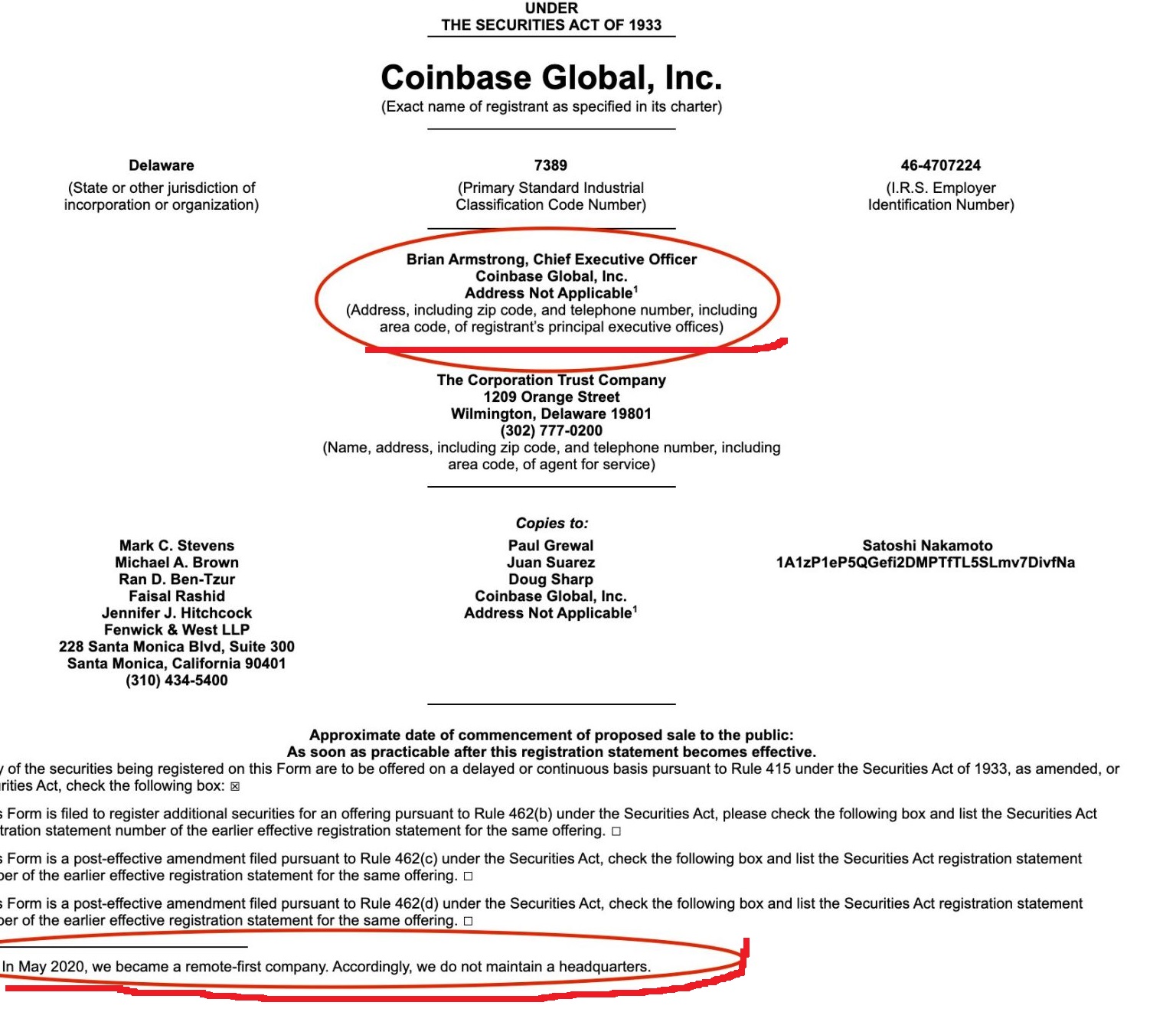
From the filing, I noticed this for the company; No Physical Address for Headquarters. Yes, the company is a remote-first company and has no physical address to list. Yes, it did not list any headquarters address in its filing. This world is changing very fast; commercial real estate investors, now is the time to bring hybrid-designs which can be converted from commercial to residential buildings with ease. 

People, very soon, physical addresses will disappear in business cards for those who still carry those!

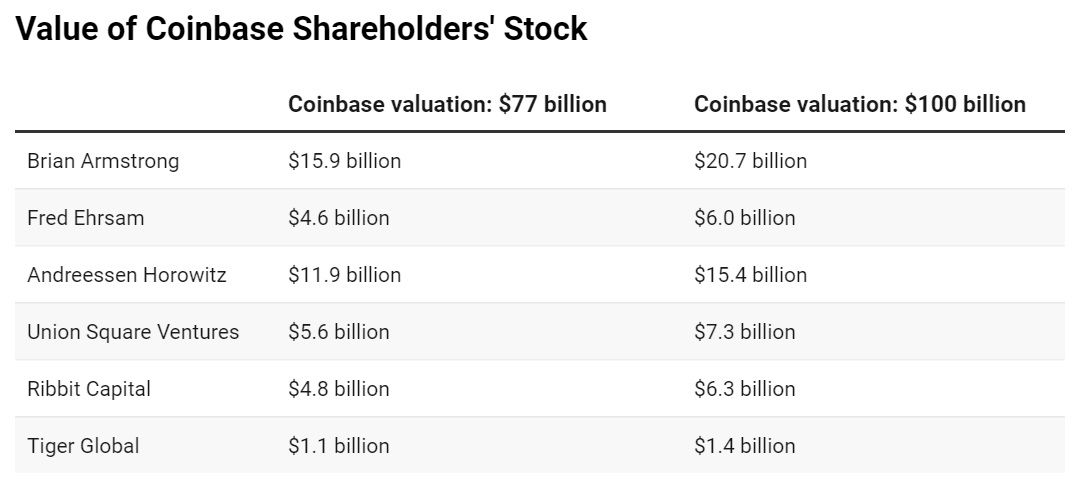
With Coinbase going public in US, many investors have already made $billions before the crypto economy begins.

Coinbase made $322 million profit in a revenue of $1.2 billion in 2020. You can read the summary of the filing here.

The recent Bitcoin bull run helped Coinbase pull in a profit of $322 million on revenues of over $1.2 billion in 2020, putting the cryptocurrency giant in a strong position as it prepares to sell its shares to the public in its upcoming direct listing on the Nasdaq.

The figures, disclosed in an S-1 regulatory filing, give the first detailed look at the financial performance of Coinbase, which launched in 2012 as a user-friendly way for consumers to buy Bitcoin, but which has since added a professional trading platform and a variety of banking-like services for the burgeoning cryptocurrency industry. Coinbase says it has seen $456 billion in lifetime trading volume on its platform.

The company first disclosed its intent to go public in December.

Coinbase’s 2020 profit of $322 million compares to a loss of $30 million in 2019, and its 2020 revenue jumped 140% from the $533 million it earned in 2019.

The jump is not surprising given that Coinbase earns the bulk of its revenue on trading commissions, and that interest in cryptocurrencies surged late last year as the price of Bitcoin rose from around $10,000 in September to over $30,000 by the end of the year. Bitcoin is currently trading around $50,000.

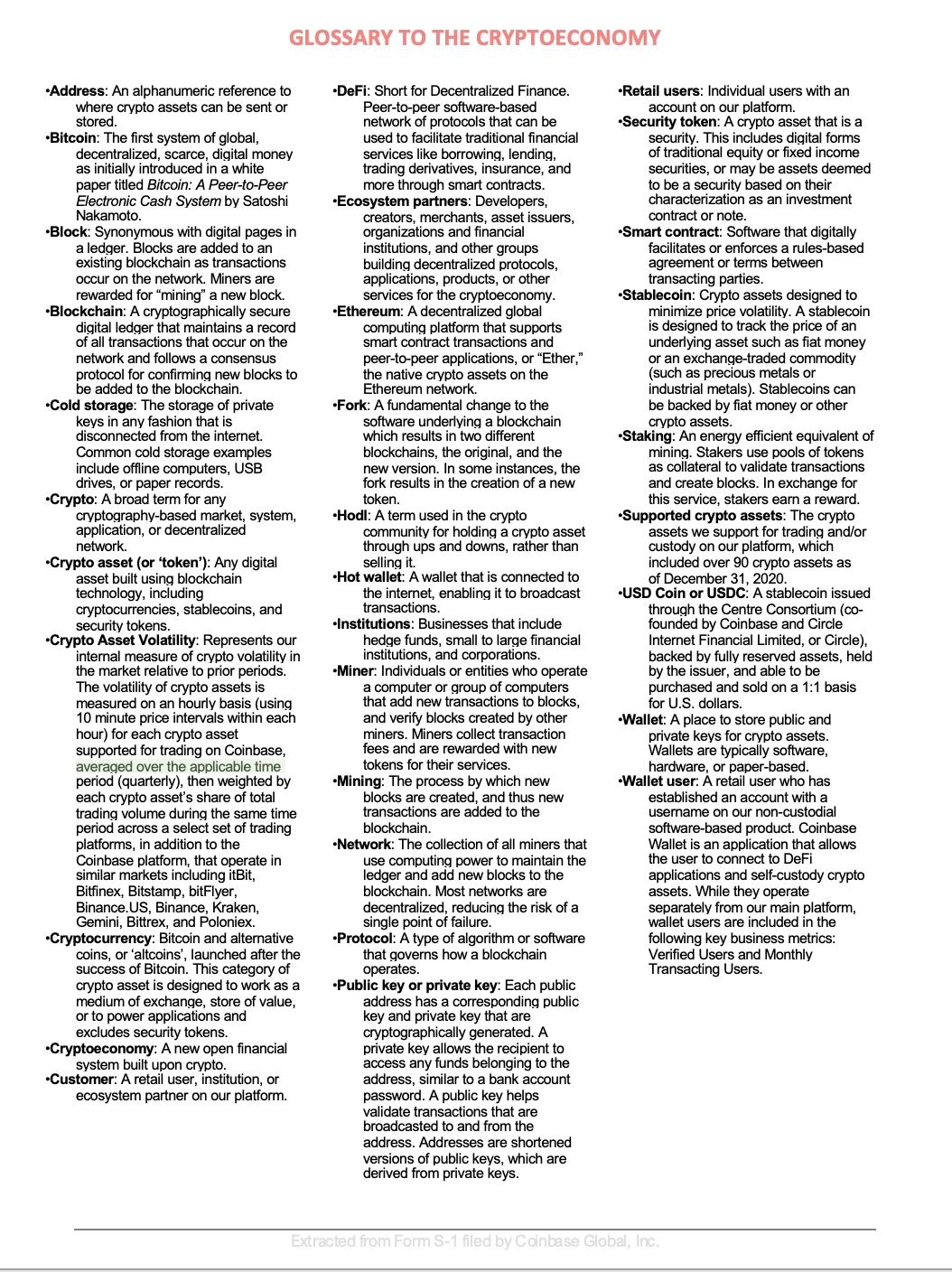
Glossary for the Cryptocurrency Economy

The company explains the risk in this business, from the S-1 filing: “There is no assurance that any supported crypto asset will maintain its value or that there will be meaningful levels of trading activities. In the event that the price of crypto assets or the demand for trading crypto assets decline, our business, operating results, and financial condition would be adversely affected. A majority of our net revenue is from transactions in Bitcoin and ethereum. If demand for these crypto assets declines and is not replaced by new demand for crypto assets, our business, operating results, and financial condition could be adversely affected,”

Create A Fandom Out of Customers [Video]

0

Turn those consumers to customers, and customers to FANs. If you do that, you become a category-king. The moment of fandom arrives when you make the customers become believers. Fans want aspirational journeys, only possible when you create products and services that meet not just needs, not just expectations, but perceptions. Read more here.