DD
MM
YYYY

PAGES

DD
MM
YYYY

spot_img

PAGES

Home Blog Page 5874

How to Verify Information to Avoid Spreading Fake News

0
Notepad Pencil and Computer Laptop keyboard

Ever wondered how the fake news mongers caught you off guard? Have you ever shared news only to be notified shortly after that it is fake? What about passing information that you were later told is incorrect? And being punished for disseminating information to the wrong parties?

All these are what most of us experience that made us thread softly when information comes to our table. Many of us try as much as possible to verify what we hear and read before sharing to avoid embarrassments and retributions. But a lot of people might decide to ignore information because they can’t tell whether it’s fake or not. Ignoring may sound great here except that if it authentic news that needs to be shared, ignoring it may prove disastrous later. Nevertheless, you need to find out how authentic that information is before you even consider disseminating it.
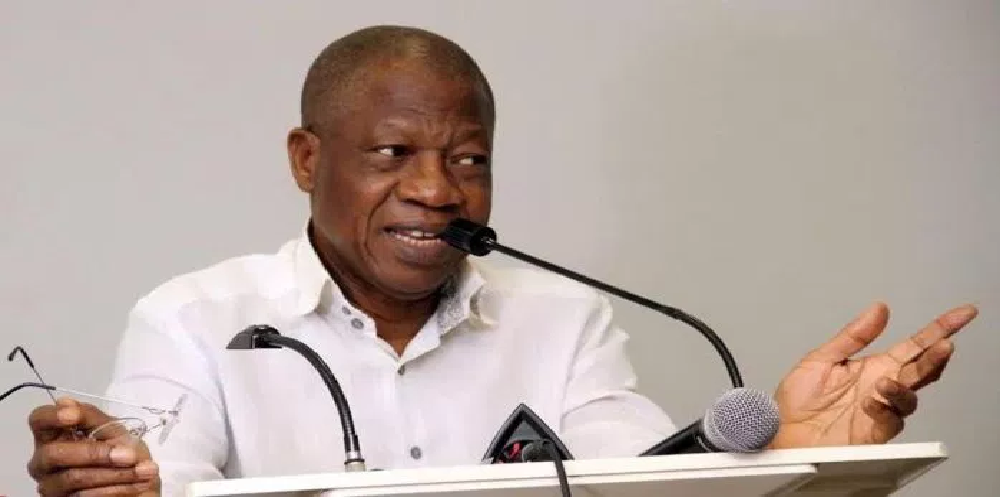
Lai Mohammed, Nigeria’s minister of information

Detecting the authenticity of information requires applying some skills. In academic research, there are several evaluation methods that can be applied to information before it is considered reliable and objective. For instance, the CRAAP (Currency, Relevance, Authority, Accuracy, and Purpose) test helps researchers to avoid picking information from wrong sources. This test can also be adopted for non-academic purposes. Hence, to break it down to layman’s terms, before information is circulated, a person should consider its source, the supporting sources used, its intended audience, the objectivity of the information, date of publication, and expert’s opinions.

  1. The Source: Here, you have to ask yourself where the information came from and the qualification/authority of the source. For instance, it will be out of place for a medical student to drop information on law that challenges the opinion of a SAN. It will equally be out of place for a lawyer to publish a controversial opinion on medical practices that requires expert handling. Hence, consider the source/origin of the information and if you doubt its authority, please, discard it immediately.
  2. Supporting Sources: If the source claims that he is narrating based on a personal experience, well, you might consider sharing the news but citing him all the same. However, if he says he got the information from someone else, please, demand for the identity of the supporting source and verify its authenticity and authority. If he is not ready to disclose it, claiming his source must remain anonymous, please be careful. This is the problem currently disturbing many media organisations.
  3. The Audience: Don’t fly out with information without checking who it is meant for. Sometimes, especially in our places of work, we come across news that is meant for, say, the management and spread it to the wrong persons. This also applies to other aspects of life. Remember that not all information is meant for public consumption. As a result, check who information is meant for before sharing.
  4. Objectivity of the Information: Always ask yourself the reason behind any information you received. Is it there to inform, persuade, incite, insult, mock, and so on? Check if the information is biased or not. One way of doing this is cross-examining the source. If the source is not neutral to the matter under discussion, just understand that the information is not objective. This means he left out some vital details that would have challenged his stand. It is then left for you to dig deeper before lending your voice to the matter, unless you belong to the group in question.
  5. Date of Publication: In research, currency of information is considered before it is used. There is a reason for that. Most old ideologies have been debunked by new discoveries. Some have been modified and many dropped. Likewise, the news that came to your desk and is begging to be shared may be a stale one. Imagine how embarrassing it will be when you share it and were told it happened ten years ago and that the truth has finally surfaced. So, why not verify how current that gossip is before you throw it into the air?
  6. Expert’s Opinion: Most people do not bother seeking opinions of experts before divulging information. If you are not an expert in any field, please, don’t contribute as one. When controversial matters come to you and urge you to spread it, seek an expert’s opinion first before doing so. Believe me, it will save you a lot of “had I know”. Nevertheless, be sure the expert you approached isn’t biased.

Remember that a lot of malicious information about individuals, organisations and societies are out there. Your duty as a person is to ensure you don’t help in their circulation. If you know you won’t like someone spreading false information about you, please, desist from doing same to others.

Cryptocurrency Should be Regulated in Nigeria, not Prohibited – Osinbajo

1

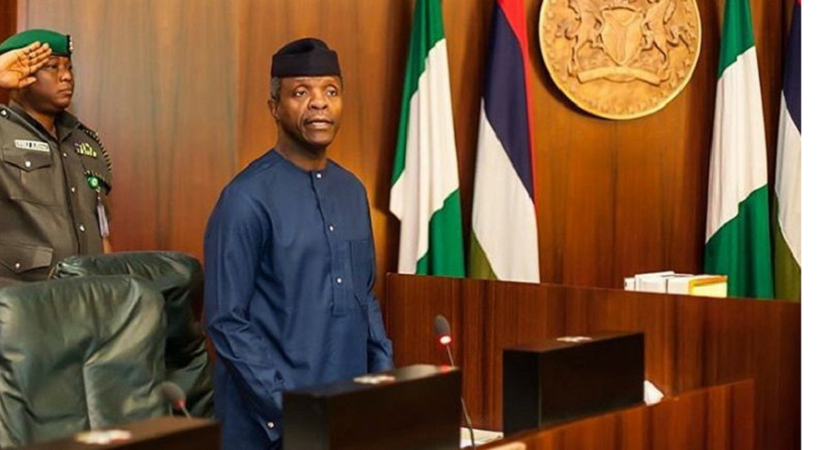
Nigeria’s Vice President Yemi Osinbajo has voiced his concern over Nigeria’s central bank’s approach to the evolution of cryptocurrency in Nigeria. Speaking at the Bankers Committee Vanguard on Friday, Prof. Osinbajo said Nigeria “needs to act with knowledge not fear” in addressing the concerns emanating from blockchain technology.

On Feb. 5, the Central Bank of Nigeria (CBN) announced that cryptocurrency trading in Nigeria has been banned, throwing the country’s booming crypto market into disarray.

The CBN justified the decision citing the use of blockchain ledger to perpetrate money laundering, fund terrorism, and execute other illicit transactions. The Apex bank also pointed to the danger cryptocurrency is posing to Nigeria’s mainstream financial system.

However, CBN’s decision to ban cryptocurrency trading has been greeted with heavy criticisms. Experts have described it as an unprogressive and irrational decision, capable of spooking investors.

Fiyin Osinbajo, the son of the Vice President, said CBN’s decision to ban cryptocurrency will hurt Nigeria’s chances to attract investors and consequently, the country’s rank in the technology world.

Cryptocurrency has $1 trillion market capitalization that every country wants to cut a share from. Other countries who share the same sentiment with Nigeria on cryptocurrency are working to address the fears by developing frameworks to regulate it.

As of December 2020, Nigeria had the second highest volume of cryptocurrency transaction after the United States. The decision of the CBN will not only hurt the booming market, it will also put food off the table of many Nigerians who have found jobs in blockchain technology.

Prof. Osinbajo said cryptocurrency will inevitably disrupt the traditional banking system because it provides a cheaper alternative for cross-border transactions. He thus recommended regulation instead of prohibition, noting that blockchain technology has come to stay, and Nigeria will be left behind if she doesn’t follow up.

Read the full statement:

“On the very topical issue of blockchain technology, digital assets, and cryptocurrencies let me say two things.

“First is that there is no question that blockchain technology generally and cryptocurrencies, in particular, will in the coming years challenge traditional banking, including reserve banking, in ways that we cannot yet imagine so we need to be prepared for that seismic shift and it may come sooner than later. Already, remittance systems are being challenged. Blockchain technology will provide far cheaper options for the kind of fees being paid today for cross-border transfers.

“I am sure you are all aware of the challenge that the traditional SWIFT system is facing from new systems like Ripple, which is based on the blockchain distributed ledger technology with its own crypto tokens. There are, of course, a whole range of digital assets spawned daily from blockchain technology.

“Decentralized finance, using smart contracts to create financial instruments, in place of central financial intermediaries such as banks or brokerages is set to challenge traditional finance. The likes of Nexo finance offer instant loans using cryptocurrency as collateral.

“Some reserve banks are investigating issuing their own digital currencies. Clearly the future of money and finance, especially for traditional banking, must be as exciting as it is frightening. But as we have seen in many other sectors, disruption makes room for efficiency and progress.

“I fully appreciate the strong position of the CBN, SEC, and some of the anti-corruption agencies on the possible abuses of cryptocurrencies and their other well-articulated concerns, but I believe that their position should be the subject of further reflection.

“There is a role for regulation here. And it is in the place of both our monetary authorities and SEC to provide a robust regulatory regime that addresses these serious concerns without killing the goose that might lay the golden eggs. So it should be thoughtful and knowledge-based regulation not prohibition. The point I am making is that some of the exciting developments we see call for prudence and care in adopting them, but we must act with knowledge and not fear,” he said.

Looking For A Microfinance Bank To Buy

0

Good People in Nigeria, we are looking for a Microfinance Bank to buy. We are not really interested in the asset but rather the license. So, a non-operating one, or a struggling one, with a valid license from the Central Bank of Nigeria works. If you know and can help syndicate a deal, we will compensate. Email my team here.

Welcome IBF Markets to Tekedia Mini-MBA

0

Join me to welcome IBF Markets to Tekedia Mini-MBA. IBF Markets is a forex and commodities broker, providing trading services and facilities to both retail and institutional clients. Trade and smile with our quick order delivery, from a trading partner with stable instruments and a solid trading experience.

Over the next few months, we will co-share and co-learn with Olubunmi Odekunle and other team members on the mechanics of market systems. I wish everyone a profitable trading year!

Welcome to Tekedia Institute. Welcome to the best school!

Tekedia Wishes Safe Return of Kidnapped Girls in Zamfara

0

I just woke up to read Nigeria’s one week, one problem, as a nation. I join other citizens and the world to wish the 300 girls (BBC Hausa number) abducted at Government Girls Secondary School, Jangebe, Zamfara State, safe return to their families. May peace reign in the land.

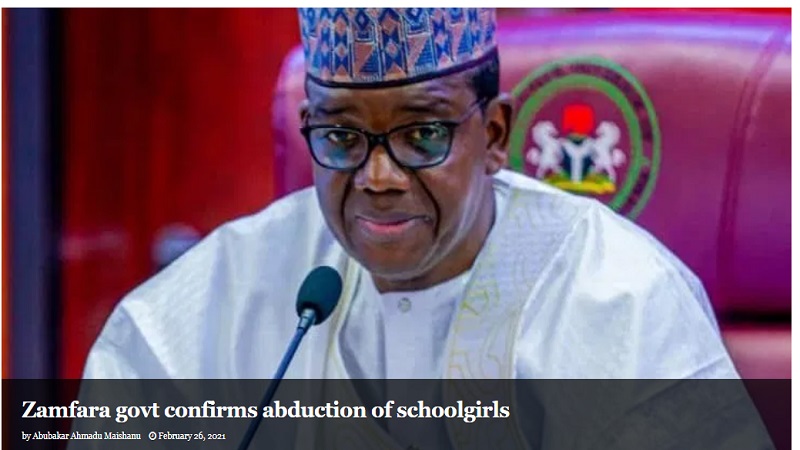
The Zamfara State Government has confirmed the abduction of schoolgirls from a secondary school in the state.

PREMIUM TIMES reported the attack by armed men on the Government Girls Secondary School, Jangebe in Talata Mafara Local Government Area of Zamfara State on Friday morning.

Zailani Bappa, the spokesperson to the Zamfara State Governor, Bello Matawalle, told PREMIUM TIMES Friday morning that the exact number of students kidnapped has not been ascertained.

He said the state government is working with security operatives to ascertain the details of the kidnap and ensure the kidnapped victims are freed.

A teacher in the school had told the BBC Hausa that about 300 female students were kidnapped.