DD
MM
YYYY

PAGES

DD
MM
YYYY

spot_img

PAGES

Home Blog Page 5882

Is Your Intrinsic Value Greater than Your Face Value?

2

Consider the labor market where we have four job seekers, Mr. Dollar, Mr. Euro, Mr. Pounds, and Mr. Naira. They supply their time/service for wages. The wages they earn will enable them to buy consumables for their respective households. Assume everyone is 25 years old and same sex. They all got employed by one firm (the global economy) to do the same job and were provided equal resources.

At the end of the month, to their surprise, each earned differently for the same job description. Mr. Naira, who received the least, protested to the employer thus, “Why should I be paid the poorest wage when we all have the same JD and worked equal hours. I demand an equal wage with Mr. Pounds!”

The employer smiled as he brought out a sheet of paper from his drawer and slides it across the table towards Mr. Naira. “Yes, the four of you were employed under the same terms and conditions, however, the major determinant of your wage is your productivity and you know that. Please read out the daily output for each employee.” Mr. Naira: “Mr. pounds 1.3856kg, Mr. Euro 1.2195kg, Mr. Dollars 1kg, and Mr. Naira 0.0026kg.” The employer added, “1kg equals 1 dollar, therefore there is no limit to what you could earn according to your output. So, Mr. Naira, could you tell me the just wage for all employees?” Mr. Naira with watery eyes read out the respective wages, “Mr. Pound, 41.57 dollars. Mr. Euro, 36.59 dollars. Mr. Dollars, 30 dollars. And Mr. Naira, 0.08 dollars.”
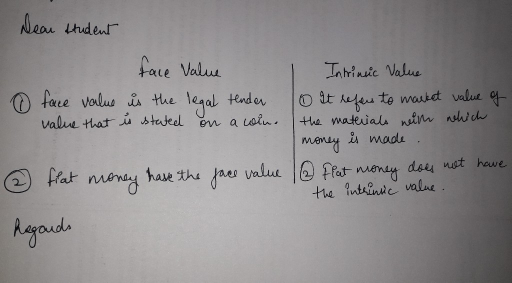
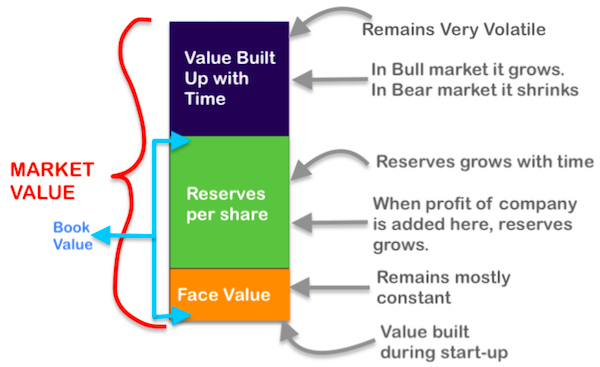
This piece was inspired by a picture I saw on social media where the face values of 100 Pounds Sterling, 100 Euro, 100 Dollar, and 100 Naira were contrasted with their intrinsic value (market value). They all fetched different baskets of goods and services in the market. The Naira could only buy two Gala (a popular snack in Nigeria). This depicts the reality in our individual and national lives. If we consider productivity to be a sole function of time, and time, a function quality education, experience, skills, and training, then we will understand the reason behind the differences in value whether for currencies, national incomes and our individual lives.

So, what value do you command in the marketplace? How are you investing your time? You desire to soar higher, and this is only possible when you acquire greater capacity to produce greater outputs. First you must be mad about your current level and seek a different kind of education, training, skill, and experience. There is a new renaissance called the Tekedia Institute that has been transforming ideas into products, accelerating leadership ascents, imparting businesses to thrive through uncommon business insights. 

So, if you want to innovate, grow and transform, capture emerging opportunities, and digitally evolve your business or job, turn disruption into a competitive advantage, master the concepts of building category-king companies and advance; you must enroll in the Tekedia Mini-MBA 4th Edition ASAP!

“A little learning is a dangerous thing; drink deep or taste not the Pierian spring: there shallow thoughts intoxicates the brain.” – Alexander Pope, 1709

In conclusion, to be the best, to increase your intrinsic value with respect to your face value, you must learn from the best. Join Prof Ndubuisi Ekekwe, as lead anchor, leading other great and accomplished minds around the globe in making history at the Tekedia Institute, USA.

See you at the top!
Tekedia Live Schedule for Week 3

0

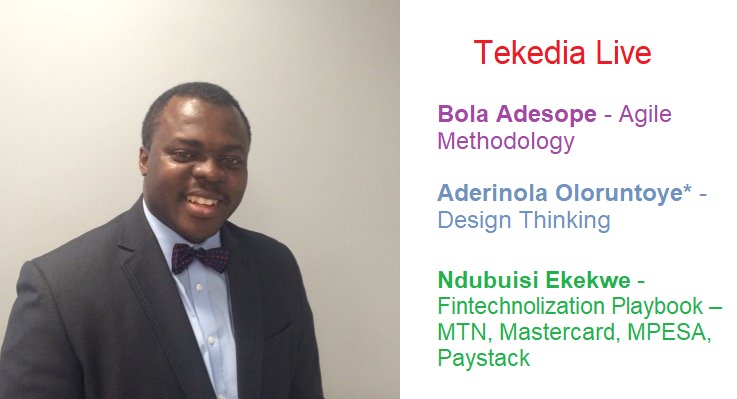
This is the schedule for Tekedia Live (zoom) for the week of Feb 22. The zoom links and everything are in the Board. The three faculty members coming are:

  • Tue, Feb 23 | 12noon – 1pm WAT | Agile Methodology – Bola Adesope, Sonnet Insurance

  • Thur, Feb 25 | 12noon – 1pm WAT | Design Thinking – Aderinola Oloruntoye, Workforce Group*

  • Sat, Feb 27 | 7pm – 8.30pm WAT | General Topic, Fintechnolization Playbook (MTN, Mastercard, MPESA, Paystack) – Ndubuisi Ekekwe

*pictured

Receiving the Ikenga after Delivering FUTO Convocation Lecture

0

The University Orator called it “brilliant”, “excellent”, and a “a great convocation lecture” in the university history. Yet, when I was in FUTO (Federal University of Technology Owerri), as an undergraduate, I listened to a really great one. Prof. Joseph Chike Edozien, the Asagba  of Asaba, came from MIT to deliver a University Lecture.

While in a meeting with the World Bank and FUTO management last week , the news is FUTO has digitized these lectures, and are available in the digital library. So, if you are in FUTO, the speech is there now. But I have the Ikenga – the symbol of strength, excellence and resilience – here in America!

What is Happening to Nigeria’s Bitcoin Market in 2021?

0

Nigeria has witnessed significant growth in the cryptocurrency market in the last few months. According to data from Local Bitcoins, in the time period between December 28,2020 and February 14, 2021, the Nigerian trade volume on local Bitcoins was $15.9 million. In the same period, there were 13.782 new signups from Nigeria, indicating nearly 1,000 new registrations per day.

Against this volume of bitcoin investment, the event of Feb. 5, when the Central Bank of Nigeria (CBN) ordered all regulated financial institutions to close with immediate effect, all accounts related to cryptocurrency, has prompted the question: what is happening to Nigeria’s bitcoin market in 2021?

The order means cryptocurrency exchanges in the country will have to stop converting bitcoin-to-naira and sending it into local traders’ bank accounts. And bank accounts that have been used to facilitate cryptocurrency transactions are to be closed.

With the order, the growing number of exchangers both local and international that have found a market in Nigeria will either shut down completely or find alternative ways to keep the transactions flowing.

Banks in Nigeria have already started closing accounts used for cryptocurrency transactions and the exchangers have halted naira transactions in their platforms. As a result, the Nigerian unified crypto exchange liquidity source has been disrupted, leaving every exchange to source for its own liquidity, thereby creating scarcity.

In the wake of cryptocurrency $1 trillion capitalization, the ban has disrupted the boom in Nigeria’s market, putting food off the table for many who earn a living trading bitcoin, or using blockchain to make international payments. And for Nigeria’s young people who are embracing cryptocurrency investment as a way to escape high rates of unemployment and avoid fraud, it is a huge setback.

Nigeria has a median age of 18.1, and young people make up the larger percentage of its population. With unemployment at 27.1%, young people are taking to internet technology to create self-employment, which includes buying and selling bitcoin. Smartphones, which Nigeria has also become a huge market to, make it possible for people to buy and sell cryptocurrencies at their fingertips.

For others in business, it offers the opportunity to move large volumes of money without paying hefty charges. It costs more than a 5% commission to move $10,000 from Nigeria, whereas, exchange platforms charge little or nothing, and can move far more than Nigerian regulatory laws allow.

The central bank said its decision to ban cryptocurrency is because people could lose their investments, and it is being used to facilitate money laundering and terrorism. It also said that the way bitcoin rise and fall means that people could easily lose their investment, and its inability to regulate it makes the use of cryptocurrencies in Nigeria a direct contravention of existing law. Those were among many reasons given for the ban.

On Thursday Feb. 11, a Nigerian senator, Sani Musa, said during the debate that “bitcoin has made the Nigerian currency useless and valueless.” This means that Nigerian government sees cryptocurrency as a threat to its economy.

The Nigerian Securities and Exchange Commission (SEC), who had in September last year, approved bitcoin as an asset, turned around to support the ban. A statement issued by the regulator on Feb. 13 said the CBN identified certain risks, which if allowed to continue, will “threaten investor protection,” as well as “financial system stability.”

Nigeria has banned crypto from its banking systems

As unfolding events indicate cooperation between the regulated financial institutions and the regulators, it appears that the future of bitcoin, or by extension, cryptocurrency investment in Nigeria is dim. And that means, the means of livelihood of many Nigerian bitcoin traders may be taken away.

But as bitcoin gains mainstream credibility following the increasing number of individuals and businesses accepting and buying it, experts, economists and prominent Nigerians are coming out to make a case for the asset.

Electric vehicle maker Tesla, on Feb. 8 announced it’s invested $1.5 billion in bitcoin as its founder and CEO Elon Musk, who is now the second richest man on earth, has recently been touting the cryptocoin, even using it as his Twitter header.

Fiyin Osinbajo, son of Nigeria’s vice president, said CBN’s decision to ban cryptocurrency will hurt Nigeria’s chances to attract investors and consequently, the country’s rank in the technology world.

However, in the face of the despair in the Nigerian cryptocurrency market, innovative forces are creating new ideas to beat the hurdle as economists join the throng of backlash trailing the ban.

For instance, Local Bitcoins has created a peer-to-peer bitcoin exchange platform, where the regulators have no control, to help traders from around the world to carry out cryptocurrency transactions. Founded in 2012, the Finland-based exchanger has become one of the most established bitcoin marketplaces in the world, with its platform that supports hundreds of different payment methods. It protects traders from social media scams through escrow-secure P2P services.

Peer-to-peer (P2P) bitcoin exchange service is a decentralized platform whereby two individuals interact directly with each other, without the need of a middleman to broker the deal. Instead, the two individuals negotiate their bitcoin selling and buying rate, and deal directly with each other.

Local Bitcoin and other trading platforms are innovating to make it easier for people to invest in bitcoin while the Nigerian fintech space waits on the regulators to rescind the order. The company wades in when there is dispute between traders and provides all parties with deserving resolution.

SEC said it is working with CBN to further analyze and better understand the identified risks to ensure that needed regulatory framework are in place, in case the ban is lifted in the future. But until the order is rescinded, the future of cryptocurrency market in Nigeria hangs solely on P2P.

Side Effects of Eye Service

1

Some call it eye service, some window dressing, and others, grandstanding. Irrespective of the name it bears, eye service is never a desirable behaviour to emulate. Eye service describes the behaviour of a person, who wants observers to have a false positive impression about him. It is usually used to depict behaviours of employees, who only perform their duties when their superiors, supervisors, or bosses are watching them. But, in addition to that, eye service also includes people that pretend to be well-informed and skilled just to impress their bosses.

As implied above, employees that engage in eye service do so for several reasons. One of these reasons is laziness. Another one is mischief. Then, there are those that do it because they don’t want to lose their jobs or receive punishments for their unproductiveness. Finally, there are those that act this way because they want to attract the attention of their bosses, hoping to win favours.

In the case of the first three groups, the concerned employees avoid their bosses because they want to remain invisible. These groups do not want their bosses to remember they exist in the office. All they care about is to receive their financial benefits, especially their salaries, and promotions. Any other incentives, such as assignment of special duties, assignment of company vehicles, and so on, are not their interests. These are the people described as “marking time”, because they don’t do anything that will help them or their employers to grow.

However, unlike the other groups, the last group is made up of employees that always seek the attention of their bosses. These are the ones that provide their bosses with information, ideas, opinions, and knowledge they gathered from colleagues without giving them credits. It is in this group that you find idea thieves and those who pull down their colleagues to climb up. It is from this group that “square pegs in round holes” emerge from.

Nevertheless, there is no form of eye service that is good. This is because the behaviour has detrimental effects on all the actors involved. Eye service affects those that practice it, their colleagues, and their employers. How these happen are discussed below.

  • Its Effect on Affected Employees

Employees that practice eye service may not always know that it affects them negatively. Most of them think they are being smart until they find themselves redundant and almost on the way out. Their avoidance of duties keeps them away from learning their works, thereby causing them to remain stagnant. Those that steal their colleagues’ ideas to win favours put themselves at tight corners when their bosses give them responsibilities based on the impressions they have been creating. By the end of the day, these people lose when others are gaining. Of course, they might climb to the top, but they can’t remain there.

  • Effects on Colleagues

No one wants a pretentious person in his team. This is because, apart from lying to cover up for them, having such a person creates extra work for team members. This puts stress on workers, whose bosses believe they have enough hands to handle assignments. Further, if a pretentious person is promoted (especially if made the supervisor of his team) or rewarded for “excellence”, his colleagues will feel cheated and dissatisfied with their work. This can cause conflicts in the workplace, which will in turn cause many workers to work haphazardly, complain about their works, engage in eye service, or resign.

  • Effects on Employers

One way or the other, employers lose when their workers play eye service. Some of them are deceived into entrusting these people with crucial positions they cannot handle. Because these workers do not perform as they ought to, production becomes low and employers make less profit. Those put in positions they could not manage may end up making mistakes that could cost their organisation a lot. This is why employers should find ways of evaluating their employees before assigning them any duty.

Eye service can be found in all the sectors of the economy. However, it is commonly found in offices, where workers are not well supervised. This bad behaviour has done more harm than good and it affects all the people concerned. This is why employers should not hesitate to punish workers that engage in this type of behaviour so it will serve as a deterrent to others.