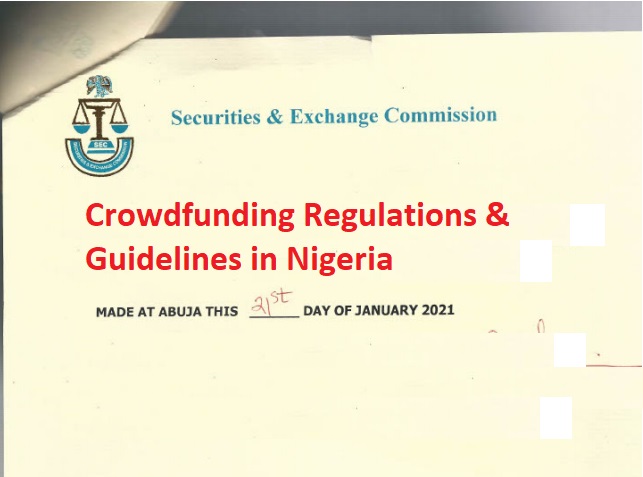
Nigeria’s Securities and Exchange Commission (SEC) has issued updated guidelines and rules governing the operation of Crowdfunding activities in the nation. The 53-page document could be downloaded here. Read the breakdown of the guidelines at Nairametrics:
Key Highlights of the new SEC regulations
SEC introduced Crowd Funding Intermediaries who will facilitate crowdfunding transactions such as offer for sale of securities or instruments through its portal.
This means anyone seeking to raise money through a crowdfunding service will have to go through a Crowd Funding Intermediary (CFI).
Thus, a fundraiser (the initiator of the fund) will need to go through a CFI web portal to raise capital
The new rules also limit the amount retail investors can invest in a crowdfunding transaction to just 10% of their net annual income in a year.
This means individuals cannot invest more than 10% of their net salaries in crowdfunding activities. But this excludes High Networth Individuals who do not have limits.
In the race to win large shares in the growing fintech and e-commerce space in Africa, mobile network providers are taking to partnerships with existing payment companies.
In what seems like a step to expand the MTN MoMo partnership, MasterCard and MTN on Tuesday announced a strategic partnership to enable millions of consumers in 16 countries across Africa to make global e-commerce payments safely and securely.
The partnership is to be facilitated through a MasterCard virtual payment solution linked to MTN MoMo (Mobile Money) wallets, to help consumers and merchants engage with brands and businesses abroad through digital commerce, extending their reach to an international marketplace and unlocking a host of opportunities.
With the growing mobile internet market across Sub-Saharan Africa, the partnership aims to secure a larger share in the mobile payment market. GSMA said by 2025, estimated 300 million more people will be using their devices to access internet services in Africa. In light of this significant growth, mobile financial services have become the dominant form of digital payments, with twice as many mobile money accounts as bank accounts in the region. As a result, consumers increasingly expect to have access to a broader range of digital financial services.
The partnership will also remove the bottlenecks that have mostly restricted consumers and merchants to a local base of online and offline businesses, therefore curtailing customers’ ability to engage in global commerce.
Through this strategic partnership, MTN customers with a Mastercard virtual payment solution linked to their MoMo wallets can make payments to global online merchants through a seamless and secure digital payment experience on websites and mobile applications. The service is available regardless of whether or not the customer has a bank account, the companies said.
They explained that the solution will enable consumers to explore and shop at well-known global e-commerce brands and pay quickly and securely for leisure shopping, travel, accommodation, entertainment, streaming services and more. It will also allow small business owners to purchase from suppliers abroad and pay with the virtual payment solution.
“We are very excited about this partnership with MasterCard, which is another step in realizing our ambition to build Africa’s largest fintech platform, accelerating economic and social development through digital innovation to the benefit of citizens across the continent and beyond,” said MTN Group Chief Digital and Fintech Officer Serigne Dioum.
“This noteworthy partnership is another step to enable our customers to participate in the global economy. We are resolute that accelerated financial inclusion is a potent enabler of socio-economic development that empowers the most vulnerable in society,” he added
Spurred by COVID-19 pandemic, MTN MoMO has recorded significant growth across Africa, especially in Nigeria and South Africa. As AfCFTA kicked off, MTN and MasterCard are looking to fill a payment void in the African continent by facilitating easier mobile-based borderless intra-African financial transactions.
“This significant milestone will enable millions of MTN customers to benefit from global digital commerce and drive digital and financial inclusion across Africa through easy and secure access to financial services,” said Amnah Ajmal, Executive Vice President for Market Development, Mastercard Middle East and Africa.
“At Mastercard, our innovation strategy is based on partnerships and collaboration. This agreement with MTN shows that we can deliver innovative digital solutions that have a far-reaching impact and realize the true potential of inclusive growth across the continent. Partnering with MTN allows us to accelerate our global pledge to connect 1 billion people to the digital economy by 2025, bringing us closer to a world beyond cash,” he added.
MTN and Mastercard first launched the digital payment solution in 2018 for MoMo customers. MTN, the largest mobile network operator, is the ‘Most Admired African Brand’ based on spontaneous consumer responses in Brand Africa 100: Africa’s Best Brands 2020 survey and the most valuable telecoms brand in Africa by Brand Finance Africa.
MTN said it will extend the virtual payment solution offering throughout its Fintech footprint. The expansion of this payment solution will play a significant role in driving the growth of digital inclusion and e-commerce thus increasing MTN MoMo customer inclusion into the global economy.
Initially designed to facilitate the transfer of cash between mobile users, MTN’s MoMo offering is now much broader – including loans, insurance, remittances and payments.
With this strategic partnership, MTN is pushing to exert dominance in the African mobile payment market, where companies like Safaricom’s M-pesa, are already enjoying domineering growth.
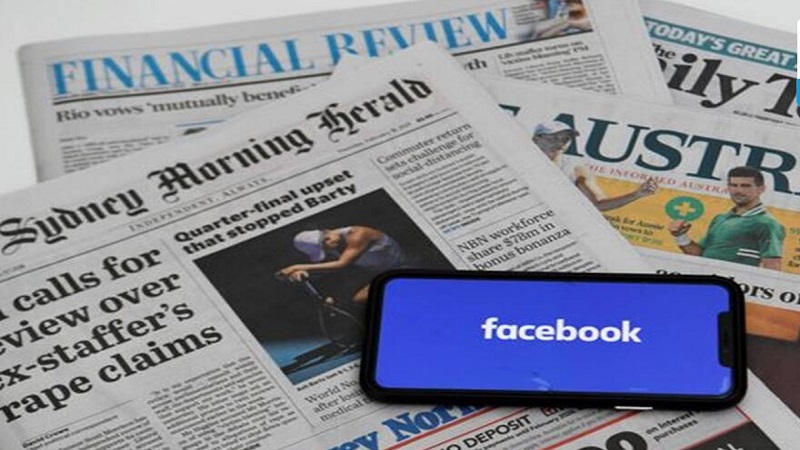
Facebook is keeping its promise to cut off news from its services in Australia. Amidst the ongoing dispute between the social media giant, Google and the Australian government over newly introduced legislation that will mandate payment to news outlets for their contents, the American companies have threatened to withdraw their services from Australia as they failed to reach a consensus with the government.
While Google seeks a way-out through deals with media outlets, Facebook chose to cut ties with anything news in Australia.
“In response to Australia’s proposed new Media Bargaining law, Facebook will restrict publishers and people in Australia from sharing or viewing Australian and international news content,” a statement from the social media platform said.
The new legislation means Facebook and Google will have to bargain with newsrooms either individually or collectively – and to enter arbitration if the parties can’t reach an agreement within three months, according to the Australian Competition and Consumer Commission.
Both Google and Facebook have opposed the code, saying it will have negative impact on how their services are served in Australia. Facebook’s vice president of public policy for Asia, Simon Milner said the company could ultimately block news content in Australia.
In a statement on Wednesday, Facebook said the “proposed law fundamentally misunderstands the relationship between our platform and publishers who use it to share news content,” and it has “left us facing a stark choice.” Attempt to comply with a law that ignores the realities of this relationship, or stop allowing news content on our services in Australia. The Silicon Valley tech said it’s choosing the latter.
On the other hand, Google is choosing to preemptively use its News Show Room to negotiate deals with Australian publishers, including Rupert Murdoch’s News Corp., Australian media conglomerate Nine Entertainment and Seven West Media.
Facebook CEO
Facebook said the value exchange between Facebook and publishers runs in favor of the publishers– which is the reverse of what the legislation would require the arbitrator to assume. For instance, last year, it generated approximately 5.1 billion free referrals to Australian publishers worth an estimated AU$407 million.
“For Facebook, the business gain from news is minimal. News makes up less than 4% of the content people see in their News Feed,” Facebook said.
It means Facebook has much to lose than it has to gain if the proposed legislation, which has been approved by the lower chamber of parliament and would likely be approved by senate, goes into effect.
Just as Google is doing with News Show Room, Facebook has tried for the past three years to launch Facebook News in Australia to calm the situation, but the Australian lawmakers were not ready to yield.
Facebook said the decision means that Australian publishers are restricted from sharing or posting any content on Facebook pages. And for international publishers, they can continue to publish news content on Facebook, but links and posts can’t be viewed or shared by Australian audiences.
The decision also restricts Australian community from viewing or sharing Australian and international news pages, while it prohibits international community from viewing and sharing Australian news content from Australian news pages.
As Australians woke up to the reality of this decision – disappeared news feeds and restricted publishers’ pages, anger and condemnation have erupted.
News publishers, rights activists and even politicians said the decision is disappointing as it is coming amidst conspiracy theories of COVID-19 pandemic when people are using authentic news welfare platforms to get reliable information. Report from Australia says official health pages, emergency safety warnings and welfare networks had all been scrubbed from the site along with news.
“Facebook’s actions to unfriend Australia today, cutting off essential information services on health and emergency services, were as arrogant as they were disappointing,” Australian Prime Minister Scott Morrison wrote on his Facebook page.
Much of the concern centers on the widespread misinformation Facebook’s action will cause. Australia, which has been battling COVID-19 misinformation, will begin a nationwide vaccination in three days, and needs the trusted news platforms to disseminate accurate information.
“Facebook has exponentially increased the opportunity for misinformation, dangerous radicalism and conspiracy theories to abound on its platform,” Lisa Davies, editor of daily The Sydney Morning Herald newspaper tweeted.
A 2020 University of Canberra study found 21% of Australians use social media as their primary news source, that’s 3% increase from last year, while 39% of the population uses Facebook to receive news. The study also said 29% of Australians news video content is consumed on Facebook.
This means the effect of Facebook’s decision cuts across fields, especially those offering humanitarian services, and its impact will go beyond opening doors for fake news.
Thanks Fidelity Bank PLC for discovering this village boy for the big day. Before you hit the airwaves at scale, I just want to tell all diaspora communities here that a big day is coming, to share with the Vice President, central bank governor, and other leaders of our nation, our perspectives on FX, as it relates to supporting visions and missions in our nation. More details later.
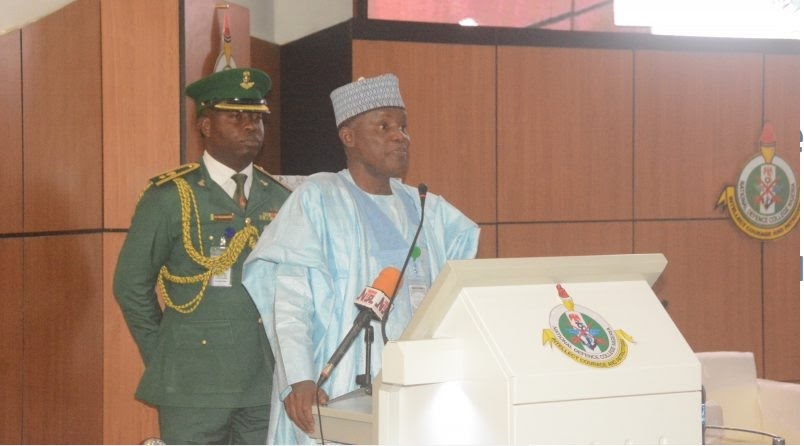
At 8am New York time today, BBC Radio syndicated hourly update dropped a hard one: General Bashir Salihi Magashi (rtd), Nigeria’s Minister of Defence, has told Nigerians to defend themselves against criminal elements in the country. He argued that most times those bad guys come with few rounds of ammunition and must not necessarily scare Nigerians. I checked and just saw the video.
Largely, Nigerians should go and stockpile weapons for self-defense! Then, if that is the case why do we need Police, etc? I am hoping that this statement is a gaffe and not a strategic policy position in the nation. But if that is what they have in mind, Nigeria has a big challenge because it would be a rat race.
Yet, there is wisdom in this statement except that state governments will be funding local hunters now to make sure they have weapons to defend communities. It may be very ugly!
The guy has basically given up on Nigeria’s security apparatus, so instead of selling more lies, he’s telling you that the government is actually incapacitated, when it comes to protecting and keeping you safe. It’s quite revealing, but it’s something we are already aware of, the only difference is that you don’t expect a public servant to say it.
I expect the government to issue series of press releases, claiming mischaracterization, misrepresentation and misunderstanding, which will help mitigate the blowbacks it would receive as a response for making this uninvited confession.
The problem is never about asking people to protect themselves, but with what calibre of weapons and who defines and coordinates rules of engagement? Some things are not as easy as they seem, before we turn the entire land into a jungle.
Maybe we should just declare a national public holiday, then ask all Nigerians to enter the forests, caves and waters, and chase away the criminals and terrorists killing our people.
Nigeria is failing, while Buhari is snoring; and the confidence in the nation state is waning.
Somebody needs to take charge, the only ambiguity now is who?