DD
MM
YYYY

PAGES

DD
MM
YYYY

spot_img

PAGES

Home Blog Page 5888

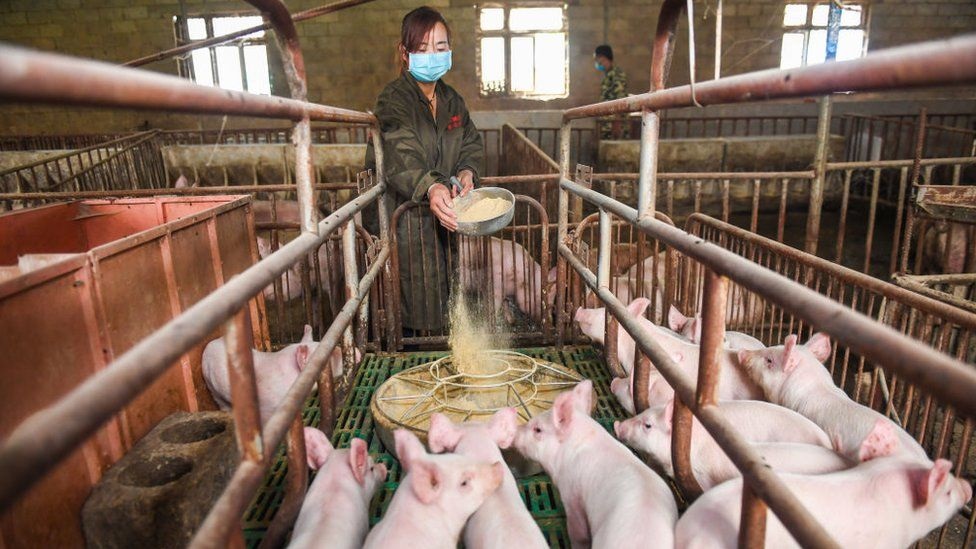
The Huawei’s Big Pivot – Pig Farming As Smartphone Business Crashes

1

The United States hit Huawei with a massive asymmetric attack when it banned the technology powerhouse from accessing its semiconductor technologies. As expected, Huawei fell: “Huawei’s smartphone sales plunged 42% in the last quarter of 2020 as it struggled with a limited supply of microchips due to the sanctions.”  I did note when that happened that Huawei had limited options, since the United States through companies like Cadence and Mentor, control more than 98% of the CAD software used for making high-end integrated circuits. Cut-off anyone, and that firm dies.

So, with no option, Huawei has moved into pig farming and improving  the mining sector with technologies. Certainly, those ones do not require the precision required in modern smartphones. But this game is not over: China is planning to ban the export of rare earth metals to the United States as a retaliation for cutting Huawei out of the global chip supply chain. If that happens, you can indeed make the designs but will struggle with materials to fabricate the chips. Of course, unlike CAD systems, the US has options on the materials which can be sourced from other areas, though at a higher cost.

But everything now depends on President Biden, and how he plays with China and Huawei.

The Chinese telecoms giant was stopped from accessing vital components after the Trump administration labelled it a threat to US national security.

In response to struggling smartphone sales, Huawei is looking at other sources of revenue for its technology.

Along with Artificial Intelligence (AI) tech for pig farmers, Huawei is also working with the coal mining industry.

Former US President Donald Trump claimed Huawei can share customer data with the Chinese government, allegations it has repeatedly denied.

As a result, the world’s largest telecoms equipment maker has been limited to making 4G models as it lacks US government permission to import components for 5G models.

Huawei’s smartphone sales plunged 42% in the last quarter of 2020 as it struggled with a limited supply of microchips due to the sanctions.

Huawei has also been locked out of the development of 5G in a number of countries, including the UK, amid fears over national security.

;…’

He wants to develop technology for coal mines that will lead to “fewer workers, greater safety, and higher efficiency” and enable coal miners to “wear suits and ties” at work.

Trump Signs Huawei’s Biggest Challenge

Nigeria Opens A Massive Yard Sale – Refineries, TCN, etc going

2

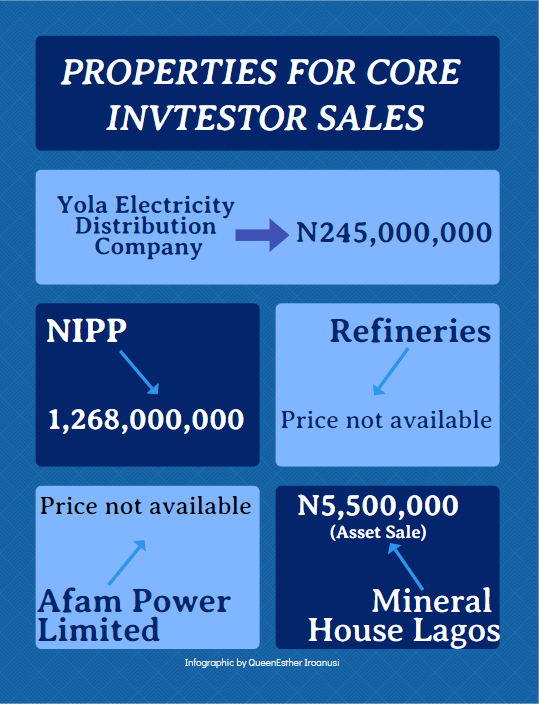
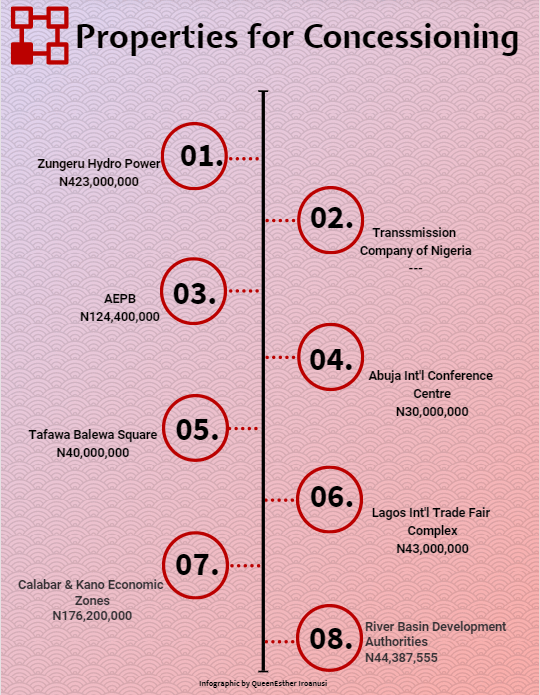
There is a massive yard sale in Nigeria now. Yes, Nigeria plans to sell or concession many properties to raise funds, largely to finance the 2021 budget. These properties are from energy, industries, communication and infrastructural sectors, and are expected to be concessioned or sold between now and Nov 2022, Premium Times reports:  “Top among these properties are the Abuja Environmental Protection Board (AEPB), the Abuja International Conference Centre (ICC), some unnamed refineries, the Transmission Company of Nigeria (TCN), Abuja Water Board, Nigerian Film Corporation, among others.”

As a citizen, I am helping to advertise the yard sale! Pick, pay, and carry-home. Look at the numbers, we invest $100 million,  and we look for buyers at $10 million. What a nation!

People, Nigeria is a poorly run entity and I am not saying this because I have better ideas. I am simply reporting a statement of facts. When the cost of your capital is 60% of your revenue, your future as an entity is not certain. The uncertainty brings a vicious circle where you have to sell everything on the way to service debts, and that triggers more paralyses.

Nigeria can sell everything, collect pension funds, borrow dividend funds, pick dormant bank balances, tax remittance, etc, but the outlook will not change until it reforms its economic architecture. We have no incentives for intra-competition across state lines and we do not reward hard work in the ways we compensate states: “Twenty-six Nigerian states recorded zero foreign investment in the whole of 2020”. People, it is a big yard sale – and everything is discounted. Go ahead.

Twenty-six Nigerian states recorded zero foreign investment in the whole of 2020, figures released by the National Bureau of Statistics show.

The report on capital importation into the country, compiled by the Central Bank of Nigeria, was released on Friday by the NBS.

It captures the total Foreign Direct Investment (FDI), portfolio investment and other types of investments into the country in a year the global economy suffered a terrible battering as a result of the coronavirus pandemic.

The total value of capital inflow for the year fell to $9.7 billion, from $24 billion in 2019, representing a decline of 59.7 per cent. It was the lowest in at least four years.

More foreign capital inflows came through “other investments”, followed by FDI, and Portfolio Investment, the report

debt service ratio

What Does It Take to Complete These Fire Stations in Osun, After Paying 95% of N200m?

0
Governor Oyetola while commissioning one of the Stations in 2019.

In the previous analysis, our analyst reported that the Osun state government awarded a number of infrastructural contracts in 2018 and 2019 with the expectation that they would be completed within three years. Available documents indicate that township roads, healthcare facilities, fire stations among others would be completed this year. According to the documents, a significant number of the projects were initiated by the administration of Ogbeni Rauf Aregbesola. Having been elected in 2018, Alhaji Isiaka Gboyega Oyetola promised to advance the infrastructural development drive of the state.

In this piece, our analyst examines construction of 11 Fire Stations awarded and expected to be completed in 2019, 2020 and 2021.

One of the documents obtained by our analyst indicates that 5 of the stations have been completed, while 6 are in different stages of being completed. Each of the Station costs N20,294,922.17. Analysis reveals that 95% [N213,096,682.78] of N223,244,143.87, total cost of constructing the stations has been paid to the contractors that won the contracts in 2018. Fire station located in Ede was awarded to Dekfam Nigeria Limited.

According to the documents, Ilesa Fire Station was awarded to Davechem Industries Limited, while Abidave Nigeria Limited got opportunity of constructing Ipetu-Jesa Fire Station. Fire Stations in Esa-Oke, Ikire and Iwo were awarded to De-Kingly Nigeria Limited, Focus & Determination Global ventures Limited and Secura Investments Limited respectively.

Further examination of one of the documents reveals that Stations in Ilesa, Ife, Iwo, Ikire and Ipetu-Jesa are at 95% completion status while Esa-Oke Fire Station is at 75% status with payment of N15,221,191.63 to the contractor. Contractors handling Stations in Ilesa, Ife, Iwo, Ikire and Ipetu-Jesa have received N19,280,176.06 each. Based on the document, Stations in Ede, Erin Osun, Ila-Orangun, Ikirun and Ejigbo have been completed with the payment of N20,294,922.17 to each of the contractors. In 2019, Alhaji Isiaka Gboyega Oyetola commissioned some of the completed Stations.

However, reports indicate that the completed Stations have been overgrown with weeds and have also been without personnel. One of the reports says “It could not be ascertained whether the bushy environments of Ilesa, Erin-Osun and Ede stations had anytime been cleared this year [2020].

With the current situations of the Stations, our analyst notes that swift response to possible fire incidents in the cities and towns during the dry season is likely not to be attained. This creates doubt on the vision and mission of the Osun Fire and Emergency Management Services and its intent of building a functional fire and emergency station in each local government area.

Download Crowdfunding Guidelines from Nigeria’s Securities & Exchange Commission (SEC)

0

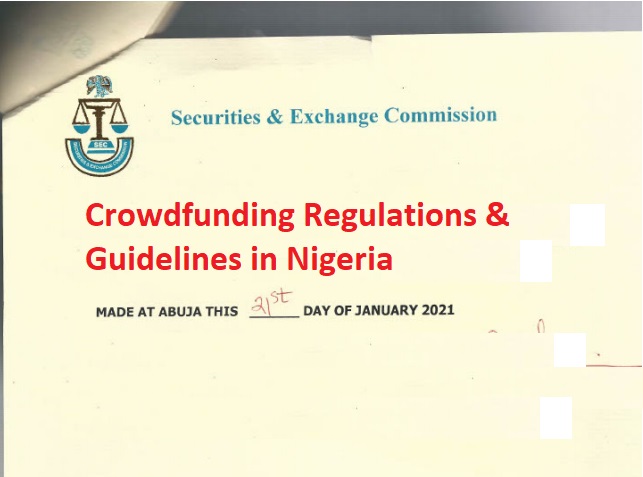
Nigeria’s Securities and Exchange Commission (SEC) has issued updated guidelines and rules governing the operation of Crowdfunding activities in the nation. The 53-page document could be downloaded here.  Read the breakdown of the guidelines at Nairametrics:

Key Highlights of the new SEC regulations

  • SEC introduced Crowd Funding Intermediaries who will facilitate crowdfunding transactions such as offer for sale of securities or instruments through its portal.
  • This means anyone seeking to raise money through a crowdfunding service will have to go through a Crowd Funding Intermediary (CFI).
  • Thus, a fundraiser (the initiator of the fund) will need to go through a CFI web portal to raise capital
  • The new rules also limit the amount retail investors can invest in a crowdfunding transaction to just 10% of their net annual income in a year.
  • This means individuals cannot invest more than 10% of their net salaries in crowdfunding activities. But this excludes High Networth Individuals who do not have limits.


MTN Takes on the African Fintech Space with Strategic Partnership with Mastercard

1

In the race to win large shares in the growing fintech and e-commerce space in Africa, mobile network providers are taking to partnerships with existing payment companies.

In what seems like a step to expand the MTN MoMo partnership, MasterCard and MTN on Tuesday announced a strategic partnership to enable millions of consumers in 16 countries across Africa to make global e-commerce payments safely and securely.

The partnership is to be facilitated through a MasterCard virtual payment solution linked to MTN MoMo (Mobile Money) wallets, to help consumers and merchants engage with brands and businesses abroad through digital commerce, extending their reach to an international marketplace and unlocking a host of opportunities.

With the growing mobile internet market across Sub-Saharan Africa, the partnership aims to secure a larger share in the mobile payment market. GSMA said by 2025, estimated 300 million more people will be using their devices to access internet services in Africa. In light of this significant growth, mobile financial services have become the dominant form of digital payments, with twice as many mobile money accounts as bank accounts in the region. As a result, consumers increasingly expect to have access to a broader range of digital financial services.

The partnership will also remove the bottlenecks that have mostly restricted consumers and merchants to a local base of online and offline businesses, therefore curtailing customers’ ability to engage in global commerce.

Through this strategic partnership, MTN customers with a Mastercard virtual payment solution linked to their MoMo wallets can make payments to global online merchants through a seamless and secure digital payment experience on websites and mobile applications. The service is available regardless of whether or not the customer has a bank account, the companies said.
They explained that the solution will enable consumers to explore and shop at well-known global e-commerce brands and pay quickly and securely for leisure shopping, travel, accommodation, entertainment, streaming services and more. It will also allow small business owners to purchase from suppliers abroad and pay with the virtual payment solution.

“We are very excited about this partnership with MasterCard, which is another step in realizing our ambition to build Africa’s largest fintech platform, accelerating economic and social development through digital innovation to the benefit of citizens across the continent and beyond,” said MTN Group Chief Digital and Fintech Officer Serigne Dioum.

“This noteworthy partnership is another step to enable our customers to participate in the global economy. We are resolute that accelerated financial inclusion is a potent enabler of socio-economic development that empowers the most vulnerable in society,” he added

Spurred by COVID-19 pandemic, MTN MoMO has recorded significant growth across Africa, especially in Nigeria and South Africa. As AfCFTA kicked off, MTN and MasterCard are looking to fill a payment void in the African continent by facilitating easier mobile-based borderless intra-African financial transactions.

“This significant milestone will enable millions of MTN customers to benefit from global digital commerce and drive digital and financial inclusion across Africa through easy and secure access to financial services,” said Amnah Ajmal, Executive Vice President for Market Development, Mastercard Middle East and Africa.

“At Mastercard, our innovation strategy is based on partnerships and collaboration. This agreement with MTN shows that we can deliver innovative digital solutions that have a far-reaching impact and realize the true potential of inclusive growth across the continent. Partnering with MTN allows us to accelerate our global pledge to connect 1 billion people to the digital economy by 2025, bringing us closer to a world beyond cash,” he added.

MTN and Mastercard first launched the digital payment solution in 2018 for MoMo customers. MTN, the largest mobile network operator, is the ‘Most Admired African Brand’ based on spontaneous consumer responses in Brand Africa 100: Africa’s Best Brands 2020 survey and the most valuable telecoms brand in Africa by Brand Finance Africa.

MTN said it will extend the virtual payment solution offering throughout its Fintech footprint. The expansion of this payment solution will play a significant role in driving the growth of digital inclusion and e-commerce thus increasing MTN MoMo customer inclusion into the global economy.

Initially designed to facilitate the transfer of cash between mobile users, MTN’s MoMo offering is now much broader – including loans, insurance, remittances and payments.

With this strategic partnership, MTN is pushing to exert dominance in the African mobile payment market, where companies like Safaricom’s M-pesa, are already enjoying domineering growth.