DD
MM
YYYY

PAGES

DD
MM
YYYY

spot_img

PAGES

Home Blog Page 5893

Mentorship and Networking for Personal and Professional Development: My Reflections on Pius Adesanmi Webinar Series

0

Saturday 16 January, 2021 was a date when the memories of the late Canada-based Nigerian Professor, Pius Adesanmi, was brought back to life. It was not only the memory of his personality alone that was resurrected, but also his ideals, the strivings he was committed to, preached, lived and eventually died for. It was not yet March 10, that horrible date on which Pius flew away from the rest of us, still January 16 captured an attempt by the community of people across Africa he left behind to engrave his memory and concretize his developmental agenda to up the scales of knowledge production, empirical investigations, cutting edge research and nurture a young, vibrant, energetic present and future for the continent.

It was the day a professional development seminar series was held to kick-start a webinar series aimed at continuing the legacy of Professor Pius Adesanmi whose passion for higher education in Africa was arguably unrivalled. Speaking with me earlier, Tope Oriola, an Associate Professor at the University of Alberta, said “the idea was to leverage the African Doctoral Lounge (ADL) platform to organize professional development workshops for members. We also wanted to continue the legacy of Professor Pius Adesanmi whose passion for higher education in Africa was immense. The ADL was Adesanmi’s brainchild as you may be aware.” Oriola further stated that “the Pious Adesanmi Webinar Series (PAWS) emanated from Adesanmi’s vision for the African Doctoral Lounge (ADL) as a centrepiece of scholarly discourses among Africans and Africanists. We opted for an online format due to the restrictions of the pandemic, the geographic spread of our members and the need to adapt to a changing environment.”

Appropriately titled Building Your Academic Community: The Role of Mentors and Networks, the webinar indeed lived up to its billing with its focus on Prof Adesanmi’s passion to help young, early and middle career African academics and researchers find their paths on a continent whose myriads of challenges are capable of cutting dreams short. It is also worthy to note that the webinar came in the middle of a crossfire between Africa-based scholars and their colleagues in Diaspora on how to make tertiary education serve the continent in solving some of her problems through quality and functional education, cutting edge research as well as robust mentorship system that provides a sustainable future for the continent. In my own perspectives, the webinar (and its future editions) is a reflection of how to confront a problem beyond the rhetoric.

The programme, segmented into three sections, had two amazing speakers. The first to come to the stage is the Nigerian Professor of History at the Western Carolina University in the United States, Saheed Aderinto. He spoke directly to the theme of the webinar focusing on The Role of Mentors and Networks in Building Academic Community in Africa. In the opening paragraphs of the now widely-circulated speech, Aderinto paid homage to Prof. Pius Adesanmi who he stated was committed to mentoring up-and-coming scholars using his academic contacts in North America and Africa. He then made suggestions on new and diversified ways of mentoring young scholars as he identified the shortcomings of the traditional academic mentorship tips and prescribed new ones. Aderinto said “my speech will insert suggestions on what should be the role of mentors and academic networks and communities into the structural problems that militate against quality knowledge production in Africa. The common manual for building academic networks prescribes attending seminars and conferences, contacting scholars, and publishing in areas of specialization. But, research has shown that many factors, including but not limited to gender, race, location, funding, and even ethnicity and religion make it difficult for up-and-coming scholars to build their own network all by themselves.” He concluded that “effective networking is also about personality, which varies from individual to individual. We always expect scholars to network, but we rarely reflect on the difficulty they encounter in doing so. Networking, like everything else, is not a level playing field.”
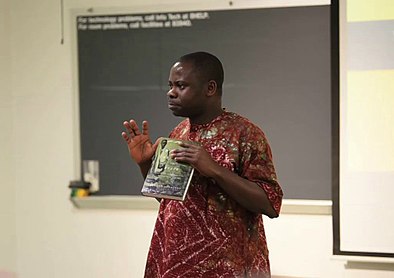
Prof. Saheed Aderinto, Western Carolina University, US

The erudite historian acknowledged the roles of senior scholars in enabling a seamless network and mentorship scheme for young scholars on the continent. He prescribed that “an ideal network must provide a conducive environment for early career scholars to learn from senior scholars without feeling intimidated or entrapped. A space where senior scholars could give back and invest intellectually in budding scholars, without feeling entitled to anything from them. A serious academic community building must correct the imbalance in the distribution of opportunities for professional development. It must work to close achievement gaps between scholars.” Aderinto also charged senior scholars not to “invest in themselves or activities that directly enhance their status alone, but in academic networks that improve the professional development of the larger community.” He sermonized that “institutions are stronger when their ideals go beyond the personal, the individual, self-legacy building.”

In her own presentation titled Building Your Academic Community: the Roles of Networks, Prof. Akosua Adomako Ampofo of the Institute of African Studies, University of Ghana, spoke on the nitty gritty of academic networking. The charming former Director of the IAS of Ghana’s number one university navigated the issues around building academic networks using her own personal experiences.  She advised young scholars in Africa to first identify their own personality and what they intended to draw from different networks before they venture into building one. She highlighted why scholars need networks, the responsibilities of people within any network, where network building happens and how such networks could be sustained.
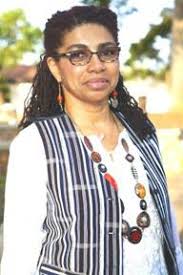
Prof. Akosua Adomako Ampofo, University of Ghana, Ghana

The programme came to an end with a dialogue session between the two speakers and the members of the audience where further questions were provided answers to. For me, kudos should be given to the five-member committee chaired by Dr. Caroline Agboola (University of South Africa) for a webinar well-coordinated and successfully hosted. Other members of the committee included Helen Fontebo-Linonge (University of Buea, Cameroon);Angelita Kithatu-Kiwekete (University of Witwatersrand, South Africa); Johannes Mampane (University of South Africa); Mshai Mwangola (Independent Scholar) and James Yeku (University of Kansas, United States).

As I look forward to more editions in the monthly series, it is my hope that relevant, diversified  issues affecting the academia in Africa would be engaged drawing from the list of established scholars that populate the African Doctoral Lounge and that are spread on and beyond the continent. It is then that the dreams of  late Pius Adesanmi would be sustained and the memories of his struggle to see African academics rise beyond the horizon of the continent and match their contemporaries across the world in lifting the banner of quality knowledge dissemination, knowledge production and knowledge application embossed in gold.
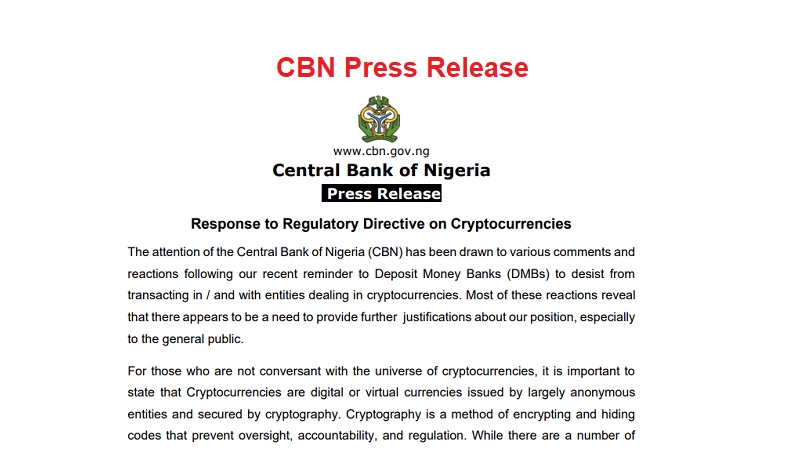

Nigeria’s Central Bank Gives Reasons Why It Banned Bitcoin and Cryptos

6

The Central Bank of Nigeria has provided the reasons why it banned Bitcoin and other cryptos in the nation. Honestly, this is commendable that the apex bank has seen the reason to publish this long thesis. Now, let the debate begin. But no matter what, I commend CBN for this. At least, we can read that all the newspapers got the reasons wrong. Yes, the FBI was not directing Nigeria from Washington DC how to run its shows. 

Of course, I do not expect CBN to acknowledge if that is indeed the case, but the fact it was not included in the reason is something for Nigeria to work on. Cryptos have not been banned in the United States, and there is no way the FBI could have pushed Nigeria to do so. That was the reason I disputed those assertions carried by many print newspapers.

It is also important to note that the CBN’s position on cryptocurrencies is not an outlier as many countries, central banks, international financial institutions, and distinguished investors and economists have also warned against its use. They have all made similar pronouncements based of the significant risks that transacting in cryptocurrencies portend- risk of loss of investments, money laundering, terrorism financing, illicit fund flows and criminal activities. China, Canada, Taiwan, Indonesia, Algeria, Egypt, Morocco, Bolivia, Kyrgyzstan, Ecuador, Saudi Arabia, Jordan, Iran, Bangladesh, Nepal and Cambodia have all placed certain level of restrictions on financial institutions facilitating cryptocurrency transactions.

The full press release below.

 Press Release

Response to Regulatory Directive on Cryptocurrencies

The attention of the Central Bank of Nigeria (CBN) has been drawn to various comments and reactions following our recent reminder to Deposit Money Banks (DMBs) to desist from transacting in / and with entities dealing in cryptocurrencies. Most of these reactions reveal that there appears to be a need to provide further justifications about our position, especially to the general public.

For those who are not conversant with the universe of cryptocurrencies, it is important to state that Cryptocurrencies are digital or virtual currencies issued by largely anonymous entities and secured by cryptography. Cryptography is a method of encrypting and hiding codes that prevent oversight, accountability, and regulation. While there are a number of cryptocurrencies now in circulation, Bitcoin was the first to be introduced in 2009, and now accounts for about 68 percent of all cryptocurrencies.

As regards our recent policy pronouncement, it is important to clarify that the CBN circular of February 5, 2021 did not place any new restrictions on cryptocurrencies, given that all banks in the country had earlier been forbidden, through CBN’s circular dated January 12, 2017, not to use, hold, trade and/or transact in cryptocurrencies . Indeed, this position was reiterated in another CBN Press Release dated February 27, 2018.


It is also important to note that the CBN’s position on cryptocurrencies is not an outlier as many countries, central banks, international financial institutions, and distinguished investors and economists have also warned against its use. They have all made similar pronouncements based of the significant risks that transacting in cryptocurrencies portend- risk of loss of investments, money laundering, terrorism financing, illicit fund flows and criminal activities. China, Canada, Taiwan, Indonesia, Algeria, Egypt, Morocco, Bolivia, Kyrgyzstan, Ecuador, Saudi Arabia, Jordan, Iran, Bangladesh, Nepal and Cambodia have all placed certain level of restrictions on financial institutions facilitating cryptocurrency transactions.


In China, for example, cryptocurrencies are completely banned and all exchanges closed as well. Banks and other financial institutions are not allowed by law to transact or deal with cryptocurrencies. China’s Central Bank, called the Peoples Bank of China (PBoC) has provided several directives ruling out the use of these currencies. The PBOC views cryptocurrencies as illegal because they are not issued by any recognized monetary institution and do not hold any legal status that can make them equivalent to money. Hence banks and all stakeholders are strongly advised against their use as a currency.


Even famed investor Warren Buffett has called cryptocurrencies “rat poison squared,” a “mirage,” and a “gambling device.” Mr. Buffett believes it is a “gambling device” given that they are mostly valuable because the person buying it does so, not as a means of payment; but in the hope they can sell it for even more than what they paid at some point.

During an online forum hosted by the Davos-based World Economic Forum few weeks ago, Andrew Bailey, the Governor of the Bank of England, highlighted the extreme price volatility of cryptocurrencies as one of the biggest flaws and explained that this flaw makes it impossible for them to be used as a lasting means of payment.

“Have we landed on what I would call the design, governance and arrangements for what I might call a lasting digital currency? No, I don’t think we’re there yet, honestly. I don’t think cryptocurrencies as originally formulated are it,” he said.

It is not surprising he would take that position because, Bitcoin, the best-known cryptocurrency, hit a record high of $42,000 per unit on January 8, 2021, and sank as low as

$28,800 about two weeks later. This is far greater volatility than is found with normal currencies.

Let us now turn to some of the justifications for CBN’s recent policy reminder. A perfunctory reflection on the definition of cryptocurrencies can already reveal several problems.

First, in light of the fact that they are issued by unregulated and unlicensed entities, their use in Nigeria goes against the key mandates of the CBN, as enshrined in the CBN Act (2007), as the issuer of legal tender in Nigeria. In effect, the use of cryptocurrencies in Nigeria are a direct contravention of existing law. It is also important to highlight that there is a critical difference between a Central Bank issued Digital Currency and cryptocurrencies. As the names imply, while Central Banks can issue Digital Currencies, cryptocurrencies are issued by unknown and unregulated entities.


Second, the very name and nature of “cryptocurrencies” suggests that its patrons and users value anonymity, obscurity, and concealment. The question that one may need to ask therefore is, why any entity would disguise its transactions if they were legal. It is on the basis of this opacity that cryptocurrencies have become well-suited for conducting many illegal activities including money laundering, terrorism financing, purchase of small arms and light weapons, and tax evasion. Indeed, many banks and investors who place a high value on reputation have been turned off from cryptocurrencies because of the damaging effects of the widespread use of cryptocurrencies for illegal activities. In fact, the role of cryptocurrencies in the purchase of hard and illegal drugs on the darknet website called “Silk Road” is well known. They have also been recent reports that cryptocurrencies have been used to finance terror plots, further damaging its image as a legitimate means of exchange.

More also, repeated and recent evidence now suggests that some cryptocurrencies have become more widely used as speculative assets rather than as means of payment, thus explaining the significant volatility and variability in their prices. Because the total number of Bitcoins that would ever be issued is fixed (only 21 million will ever be created), new issuances are predetermined at a gradually decelerating pace. This limited supply has created a perverse incentive that encourages users to stockpile them in the hope that their prices rise. Unfortunately, with a conglomeration of desperate, disparate, and unregulated actors comes unprecedented price volatility that have threatened many sophisticated financial systems. In fact, the price of ether, one of the largest cryptocurrencies in the world, fell from US$320 to US$0.10 in June 2017. The price of Bitcoins has also suffered similar volatilities.

Given that unlike Fiat Money which accompanied by full faith and comfort of a country or Central Bank, cryptocurrencies do not have any intrinsic value and do not generate returns by themselves. When one buys a stock, say of a conglomerate in the Nigeria Stock Exchange, its price reflects the activity and production of that conglomerate and the value people place on their goods and/or services. This price may rise as the conglomerate produces better goods/services and probably gains greater market share. The reverse would be true if the conglomerate does not innovate to improve the quality of its goods/services. In other words, the price of that stock reflects market fundamentals. In contrast, , cryptocurrencies do not have fundamentals and would never have fundamentals. Investors only buy in the hope that its use and acceptability will rise, thereby pushing up its demand


and price. But since new versions of cryptocurrencies come on stream with new mathematical models, an infinite supply may someday crash the price to zero.

At this juncture, the CBN would like to assert that our actions are not in any way, shape or form inimical to the development of FinTech or a technology-driven payment system. To the contrary, the Nigerian payment system has evolved significantly over the last decade, leapfrogging many of its counterparts in emerging, frontier and advanced economies propelled by reforms driven by the CBN. This is evident from the variety of participants, products, channels, cutting-edge technology in the payments system. It is also validated by the astronomical growth of volume/value of transactions and the fact that Nigeria is an investment destination of choice for international financial technology companies because of CBN’s policies that have created an enabling investment environment in the payments system.

These developments in the payments and settlements space has helped to grow the financial system, improving financial inclusion, the quality and convenience of financial services and has also created millions of direct and indirect jobs for teeming youth population.

The innovations in Nigeria’s payment system were catalyzed by regulatory reforms driven by the CBN which entailed the issuance of a raft of guidelines and regulations on Operations of Electronic Payments Channels in Nigeria; Transaction Switching; Card Issuance and Usage, Licensing of payment service providers; Mobile Money Services, Electronic Payments of Salaries, Pensions, Suppliers and Taxes, Licensing Super Agents in Nigeria; and use of USSD for Financial Services in Nigeria, Super Agents and Agent Banking Operations and Payment Service Banks to mention a few.

The robust regulatory framework put in place by the Bank opened up the payment system to innovation with several new players across in the following licensing categories- Payment Terminal Service Providers (PTSPs), Payment Solution Service Providers (PSSPs), Mobile Money Operators (MMOs), Payment Terminal Application Developers (PTSAs), Switches, Super Agents, Agents and Payment Service Banks (PSBs) This has created both direct and indirect jobs for Nigeria’s youth population.


Several other initiatives are being implemented to further support FinTech development and creation of jobs. These include regulatory sandbox and open banking principles that the Bank recently implemented.

The recent regulatory directive became necessary to protect the financial system and the generality of Nigerians (including the youth population) from the risks inherent in crypto assets transactions, which have escalated in recent times, with dire consequences for the integrity of the financial system and financial stability. Due to the fact that cryptocurrencies are largely speculative, anonymous and untraceable they are increasingly being used for money laundering, terrorism financing and other criminal activities. Small retail and unsophisticated investors also face high probability of loss due to the high volatility of the investments in recent times.

In light of these realities and analyses, the CBN has no comfort in cryptocurrencies at this time and will continue to do all within its regulatory powers to educate Nigerians to desist from its use and protect our financial system from activities of fraudsters and speculators..

Osita Nwanisobi

Ag. Director, Corporate Communications


February 7, 2021

Thank You – Faculty, Donors, Partners, and Our Community

0

We just checked our last data, we exceeded all targets we set for this edition of Tekedia Mini-MBA which begins tomorrow. Our scholarship funds tripped: our fellow citizens at home and diasporas surprised our young Institute. We have never asked any person or entity for funds or even have a donate button anywhere. Yet, people continue to support. I want to THANK everyone who participated.

To our Faculty – extremely amazing people from all domains of life, THANK YOU. Working with mothers who just returned from work, and have to put hours at night to develop our course remains one of the finest moments for me. From these experiences, I can write one thing: Africa can be GREATER if we can have leaders with capacity to  galvanize us towards a shared bigger purpose.

Once again, thanks for the partnerships. We thank Youth Up, WeForGood and all the non-profits that have supported us to screen the scholarship recipients.

Registration continues till tomorrow; begin here to register. Let’s meet in the digital classroom tomorrow.

The Pains Of A Nation And Failure To Fix Root Causes

1

Two things:

1. The Federal Government of Nigeria wants to inform all those smuggling contraband products and storing them in warehouses in Lagos, Kano and Onitsha that you have two weeks to stop your nefarious activities.

2. Our agency (put name) is informing the general public that we know where all the vagabonds making fake products are located; they are advised to stop the illegality.

How many times have you read this in the newspapers? That is our nation – you have power, and you know where those who are committing crimes are located, and yet you have the boldness to waste taxpayers money to buy a newspaper advert to “warn” them. Let me tell you – they have no incentive to serve and do their work. That is why things are not working in Nigeria: people who have power, are begging for power to lead and do their jobs.

That brings me to the lousy excuse that the FBI put heat on Nigeria as cryptos were used to defraud Americans and Europeans. (Sure, I had noted that the central bank possibly had data which pushed it to execute the ban). Yet, is the scamming news? I am 100% confident that the FBI did not ask our central bank to ban crypto, but rather to improve its KYC/AML (know your customer/anti-money laundering). And to a large extent, follow what you have in the books, and make sure banks know their customers, crypto or no crypto.

I promise you that the FBI Director would be surprised that instead of Nigeria fixing the root cause, it decided to ban a sector. Here in America, there are crypto-related crimes but they are working the processes to fix them. In Nigeria, it is to BAN because we are lazy to think and evolve.

Next time, I would like to read “we have banned the importation of guns into Nigeria because Boko Haram is using them” or perhaps “Nigeria has banned the use of Naira because people launder it and use it to defraud”.

Nigeria must learn how to examine root causes of issues over these juvenile reactions if we hope to advance our nation. We shut down borders to prevent smugglers. Now, we shut down a sector we have no control in the global area because people are scamming people. Why not ask the FBI to give you data, and then get police to arrest and prosecute the criminals? The fact is this: the crypto world did not blink because of this ban in Nigeria. Simply, Nigeria has disconnected its young people from a global (possible) opportunity.

We have Sent Logins To All David Onaolapo Scholarship Recipients

0

Good People, if you applied for the David Onaolapo Scholarship at Tekedia Institute before 2.30pm today, you must have received a full scholarship from Tekedia Institute to attend Tekedia Mini-MBA which begins tomorrow. David is sponsoring 30 people who lost their jobs in the last 12 months. But I told our team to admit anyone who had emailed us before 2.30pm WAT (Sunday). My understanding is that everyone who applied must have received a login by now. In total, 45 people emailed and we admitted them all; it was a very short-time window of hours.

?Good People, join me to thank David Onaolapo who is sponsoring 30 people on full scholarships to Tekedia Mini-MBA. For this one, we are focusing on only those who lost their jobs during the last 12 months and are looking at getting back to work. Our hope is that our program will deepen their capabilities and prepare them for new opportunities.?

As it stands now, we cannot admit more. However, we have other scholarships on special needs homes, and rural education, strictly adhering to the instructions from the donors. To the recipients, congratulations.

We do have processes now to provide internships via some projects people bring to us. However, most have been technical in nature. We are refining the process to ensure people can get skills that will position them for jobs. I invite everyone to register at hub.tekedia.com as we share such therein.

Tekedia Institute Receives Scholarship Fund for 30 Professionals