DD
MM
YYYY

PAGES

DD
MM
YYYY

spot_img

PAGES

Home Blog Page 5907

Why Making Cars Makes Sense for Apple’s Future

0

The iPhone has about four more evolutions before it hits what I have called a finite electronic product maturity phase. It is a phase where changes become exceedingly marginal with the implications that customers do not notice much differences from the previous versions of the same products. Whenever that happens, margins fall on the products.

For the iPhone, that will happen before 2026. So, if Apple hopes to sustain its valuation, it needs to find another engine of growth. For all products and services in the world now, Electric Vehicles with autonomous capabilities would make sense for the technology giant to pursue.

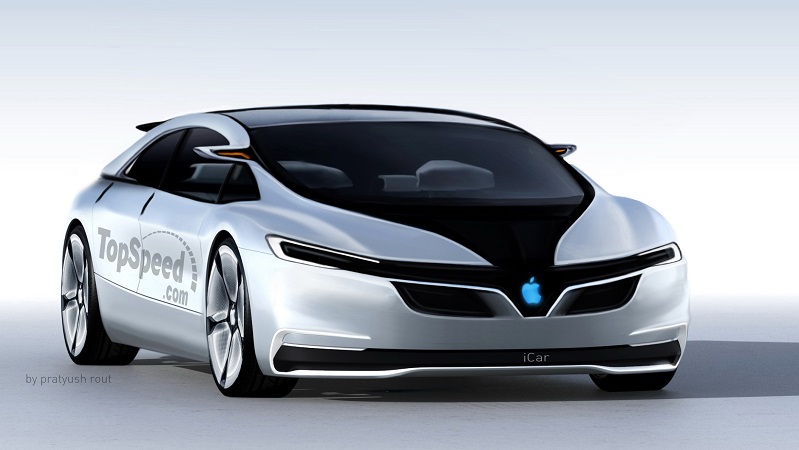
The electric vehicle wars are revving up. Apple is nearing a deal with Hyundai-Kia to produce an autonomous EV in the U.S., CNBC reports, citing anonymous sources. The “Apple Car” could go into production in 2024 and the sources add the tech giant tapped Hyundai because it wishes to collaborate with an “established automaker willing to allow Apple to control the software and hardware that will go into the vehicle.” The announcement comes on the heels of Ford and Google revealing a six-year plan for enhancing Ford’s in-vehicle connectivity.

Apple is not playing in the cloud computing space; Amazon and Microsoft dominate that sector which will become increasingly vital for the future of commerce. The cloud business has a lot of growth ahead of it. But Apple is not there. Looking generally, there is nothing else that can bring a generation-shaping redesign like the one smartphones offered to tech companies, if you remove cloud computing and EV autonomous opportunities.

The astronomical valuation of Tesla is based on this thesis that a shift is about to take place, from fossil-fueled cars, to EV cars with autonomous capabilities, and Tesla is positioned to lead therein. It is that perception that has fueled the surge. If Apple gets into this car, it has a promise. From iPod (Walkman-inspired) to iPhone (Blackberry-inspired) to Apple Watch (pebble-inspired), Apple is not used to starting any category but has a clear record of leading or co-leading once it gets in.

The decision for Apple to pursue an EV future is not a choice: it is the only option because the iPhone cannot carry it forever. Sure, Apple has the iPhone – an exclusive hardware on a proprietary software – but that does not mean it cannot lose margins as the smartphone industry matures. That is why I do think that Apple will pursue an electric car with autonomous capabilities to secure its long-term future. That call will become more evident in the next coming quarters. And as that happens, there would be a signal call to Tesla: be ready.

Expect iCar to be a hit because it will come from Apple with world-class engineering. Tesla space could be secured as there is a clear possibility to have 4 big brands in the EV autonomous space. So, the rise of Apple will not mean the fall of Tesla.


LinkedIn Comment on Feed

Comment: “Looking generally, there is nothing else that can bring a generation-shaping redesign like the one smartphones offered to tech companies, if you remove cloud computing and EV autonomous opportunities.” – Ndubuisi

The quote above could be self-limiting, because we do not really know what another decade holds, even with all our predictions and supposed intelligence. Just one event called Covid-19 and look at what our world has turned into. Have three or four Covid-like high impact events, and everything we hold high today could be upended, with entirely new sectors taking centre stage.

On Apple and sustainability of iPhone, well, there’s more to iPhone than a mere smartphone; as long as Appstore remains exclusive to only Apple users, do not expect iPhone to lose significant power in market valuation, until something better comes around; not just about reaching the finite state in electronics.

If Apple manages to come with good EV products, it will still shake up Tesla, because the richest people are on Apple platform, and once it fuses the car with its Store, alongside iPhone and everything Apple; no other brand comes close.

It’s Apple, the master of storytelling, if it clicks, it must resonate.

My Response: “The quote above could be self-limiting, because we do not really know what another decade holds, even with all our predictions and supposed intelligence” – if we wait to know everything, we cannot write. So, based on all that we know, we make calls knowing that the future has not arrived.

“not just about reaching the finite state in electronics. ” – your laptop has reached a finite state even though you have software in it. Windows from Microsoft has reached a stable state that most things are marginal. Apple will get there when the innovations on the services, powered by software become marginal and incremental. It has really nothing to do with the hardware as if you are looking for designs, iPhone hardware is not the winner. So, the electronic is a composition of hardware+software.

I still think Apple, Tesla and 2 others can co-habit as that market typically has 3-4 big brands. I do not think Apple will win it all because no market has one clear dominant car brand. But we will see.

How To Handle Workplace Fatigue

0

Imagine waking up everyday feeling like you need to go back to sleep. You remembered you have to get ready for work and the first thing that comes to your mind is, “That useless work”. You begin to curse your boss and supervisor for stressing you and start wondering if the work is worth it at all. Your mind begins to make up excuses on why you shouldn’t go to work and how you can survive without that job. You finally sighed as you got up the bed because your bills and responsibilities flashed through your mind and jolted you back to reality. Deep down, you know you need the money but you don’t want to work for it because, honestly, you are tired to your marrow.

When you finally prepared for work, you grudgingly left the house, complaining about everything. You complain about bad roads, traffic jams, hawkers, traffic wardens, and even the early morning cool breeze. You hiss at and ignore friendly neighbours, who sent their greetings your way. You shout at the security man in your office because he took a second longer before opening the gate. You played deaf to customers’ complaints and wondered why they won’t try other places. In fact, you just don’t know why everyone won’t allow you to sleep off your day in the office.

But as the day goes by, you become worried because you noticed despite the adrenaline surges from your incessant anger and complaints you still feel tired and spent. You noticed you’re battling anxiety and depression and, even though you know you need to socialise with colleagues to elate your spirit, you just want to be left alone. You may become alarmed because you are becoming forgetful and you can’t even get yourself to concentrate on anything. Maybe before the end of that day, you will consider handing in your resignation because a motivational speaker just told you it’s the best thing to do. Well, before you do that, check if you are experiencing work-related fatigue.

Causes of Work-Related Fatigue

Work-related fatigue happens to a lot of workers, irrespective of the type of work they do. Initially, it was believed that only the people that exert much physical energy (such as lower carder industrial and manual workers) are easily worn out. But today, it has been discovered that anyone can be fatigued, including those at the managerial level. Both those that do physical and mental works are affected. No one is spared.

Causes of fatigue at the workplace have been linked to medical and/or work-related conditions. Medical conditions that lead to fatigue include cancer, anaemia, concussion, failures and/or diseases of vital organs, and so on. Work-related fatigue can be caused by working for long or irregular hours, doing shifts, personnel cut, the intensity of work demands, inadequate sleep, stress, change of jobs, changes in the work environment (such as the introduction of new directives, machines, or work schedule), and negative experiences at work. Experiencing one or more of these factors can drain a worker of his energy and zeal to work. His performance may decrease and he might begin to make mistakes that could cost the office a lot. Accidents have been linked to workplace fatigue and so are several deaths. This makes it imperative for both the employees and the employers to ensure workplace fatigue never happened in the first place.

How Employers Can Prevent Workplace Fatigue

Considering that fatigued workers perform poorly and can make mistakes that cost the company a lot, employers must prevent it from happening in the first place. This can be achieved through the following:

  1. Allowing several break times per day for workers.
  2. Encouraging workers to socialise amongst themselves.
  3. Ensuring workers take time off for leisure. This is usually done through holidays and leaves.
  4. Providing medical support for workers.
  5. Providing a place for workers on late shift to sleep. That way they won’t be worried about going home late.
  6. Overlooking napping employees and having a session with them later.
  7. Exercising patience with workers.

What Employees Should Do In Case of Workplace Fatigue

  1. Talk to your boss when you think you are fatigued; you never can tell how he can help.
  2. Avoid working overtime; try to stick to your work schedule.
  3. Work with your team; don’t try to be the hero by doing works meant for others.
  4. Take your off days (such as weekends) to relax.
  5. Cut down on the number of side jobs; stick to the ones that require less mental and physical works.
  6. Sleep in a well-ventilated noiseless environment.
  7. Seek medical help if it becomes chronic.

China and Ant Group Reach Agreement to Restructure as a Holding Company

0

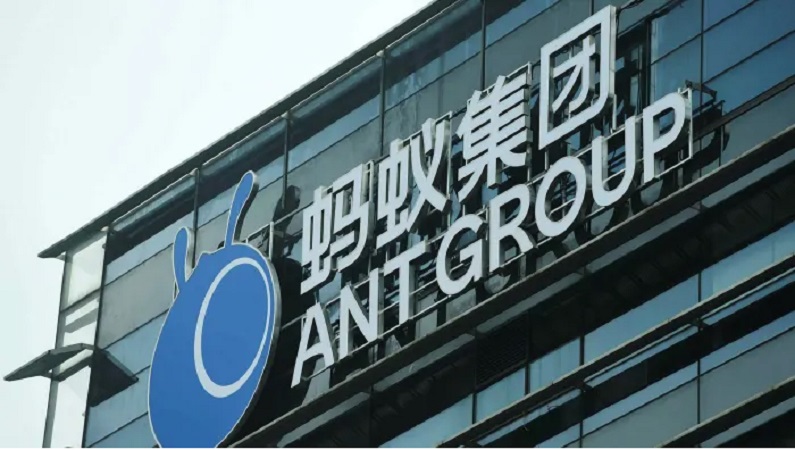
Ant Group Co. and Chinese regulators have agreed on a restructuring plan that will turn Jack Ma’s fintech giant into a financial holding company, making it subject to capital requirements similar to those for banks, Bloomberg reported.

The plan calls for putting all of Ant’s businesses into the holding company, including its technology offerings in areas such as blockchain and food delivery, people familiar with the matter said. One of Ant’s early proposals to regulators had envisioned putting only financial operations into the new structure.

An official announcement on the overhaul could come before the start of China’s Lunar New Year holiday next week, the people said, asking not to be identified discussing private information. Alibaba Group Holding Ltd., which owns about a third of Ant, erased losses in Hong Kong trading on Wednesday after Bloomberg reported the agreement. Alibaba rose 3.5% in New York.

Some market participants had been speculating Ant might be forced to spin off portions of its business, which now looks unlikely, said Shujin Chen, Hong Kong-based head of China financial research at Jefferies Financial Group Inc.

Ant’s restructuring plan marks the first big step in what’s expected to be a lengthy overhaul process, as regulators draw up detailed capital requirements and other guidelines for companies that span multiple financial business lines.

China only introduced its framework for financial holding companies in September and many of the specifics are still being ironed out. While the rules will eventually provide more regulatory clarity for Ant, they’ll almost certainly force the company to slow the torrid pace of expansion that has made it China’s dominant fintech player and one of the world’s most valuable startups.

Ant is still exploring possibilities to revive its initial public offering, which was abruptly halted by regulators in November, one person familiar with the matter said. But given the financial holding company framework is so new, it’s unclear how long it might take for authorities to sign off on a listing.

Francis Chan, a Bloomberg Intelligence analyst in Hong Kong said in December that Ant’s valuation could plunge below $153 billion as a result of the changes it will undergo as a holding company. The company was above $300 billion in November, before its IPO was halted.

As part of the overhaul plans, Ant and at least a dozen banks are paring back their years-long cooperation on consumer lending platforms that fuel the spending of at least 500 million people in China.

Ant declined to comment. The People’s Bank of China, which oversees financial holding companies, didn’t immediately respond to a faxed request for comment by Bloomberg.

Alibaba office

Ant’s restructuring is part of a broader government campaign to increase supervision of the financial and technology sectors. Regulators have in recent months targeted everything from health-care crowdfunding to consumer lending. In January, they proposed measures to curb market concentration in online payments, where Ant and Tencent Holdings Ltd. are the biggest players.

Ant made the move to restructure into a holding company as a way to calm nerves in the faceoff between the company and Chinese authorities. Under the financial holding company structure, Ant’s businesses would likely be subject to more capital restrictions, potentially limiting its ability to lend more and expand at the pace of the last few years.

The agreement means that China has succeeded in its attempt to control the online financial sector. With Ant going holdco to ensure cooperation with the Chinese regulatory authorities, more moves are expected from the government in the near future to curb other sectors of its economy with unauthorized measures of freedom.

The news of a possible solution has softened the faces of wary investors who were caught in the Chinese power play. However, it is not clear what this will mean for Ant’s valuation and IPO. Chan estimates now that the valuation could drop below $108 billion.

Learn Physical Security Risk Management At Tekedia Institute

0

This is one of our new courses in Tekedia Institute. In a time when most regions in the world are under severe physical security paralyses, I do think it makes sense for business leaders and professionals to pause and understand the physical risk elements, and how to manage them.

Yes,  we have the computer risk (cybersecurity). We have the finance one (accounting, auditing, etc). But most times, business schools leave the human ones. We think that is a big miss. If thugs can attack American senators which if not that it was in America, CNN would have reported the meltdown as a “coup”.

In Nigeria today, even the soldiers have dropped their cars, preferring trains between Abuja and Kaduna route. Simply, physical security has assumed a bigger dimension and we need to understand the nexus from experts!

In Week 12 of our program,  Henry Mgbemena, Global Security Adviser of World Vision International, will teach a course on Physical Security Risk Management. When insecurity has been scaled in the land, what are the strategic options and what should you do?

Register here as we start on Monday, Feb 8.