

If you want to join us, beginning Monday (Feb 8), in Tekedia Mini-MBA (Feb 8 – May 3, 2021) with all the benefits early bird registration brings, you need to register today. Our program is online, self-paced and costs $140 or N50,000 naira. We will continue to welcome registrations past today but those will come with no early bird benefits.
This CBN Circular On Cryptocurrency in 2017 Was Nuanced and Reasonable
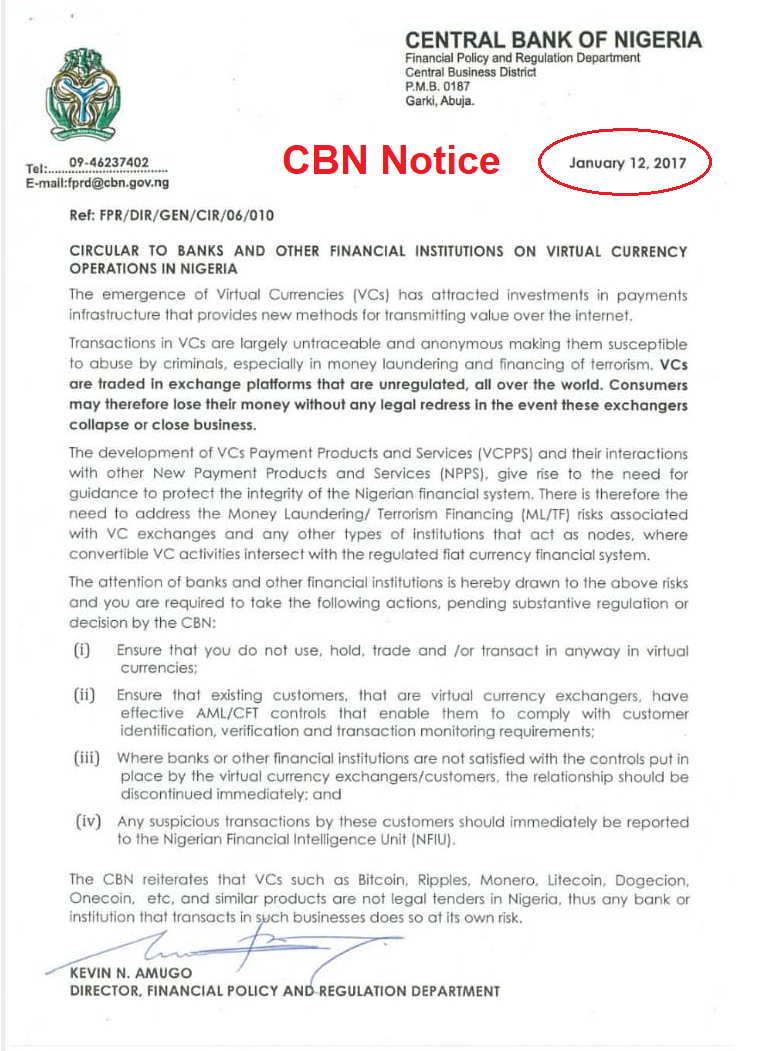
Good People, there used to be a more reasonable and nuanced Central Bank of Nigeria with the playbook to allow new things to happen, even when making sure commercial ordinances are protected. Cryptocurrency which I do not do, but which I believe that no country can stop at this point, promises a vista of something new. Banning it in Nigeria is not a smart strategy. Read this 2017 circular to see how we have evolved in our regulatory rascality. Yet, we do not know what moved the apex bank to make this call. Nonetheless, it would have been good if they said why!
See today’s notice.
Nigeria’s Big Ban On Cryptocurrency and What Startups Are Already Doing
Good People, Bitfxt, our cryptocurrency exchange is moving to Dubai. Our CEO Franklin Peters is already in the UAE to move all operations to Dubai. There is really no issue here since Nigeria could not engage in conversations with its young people before making decisions. If there were things which needed to be fixed, the nation could have done so through consultations. Using fiat statements like we just did will never win more investments.
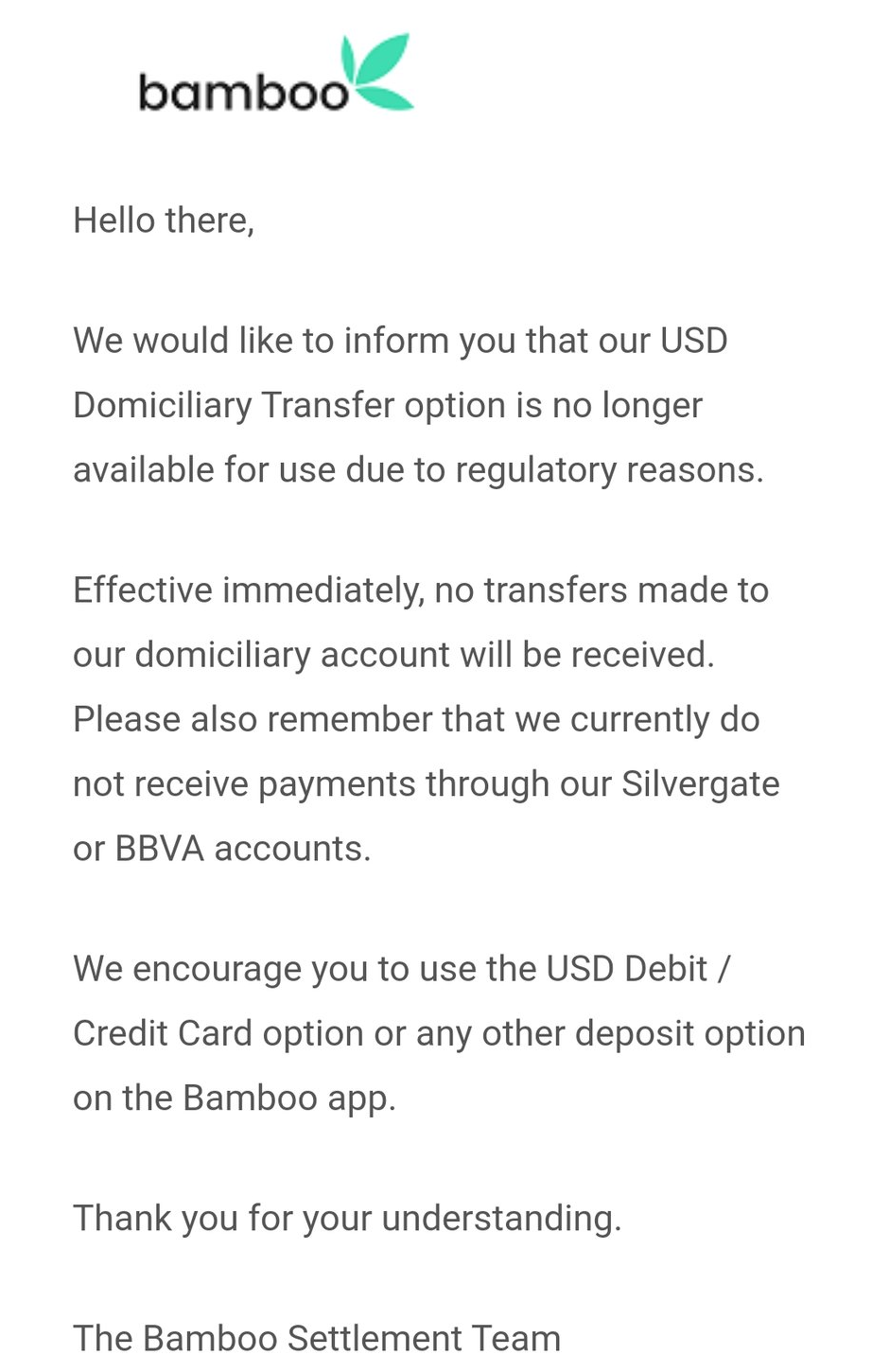
I also share Bamboo’s statement. Samuel Nwite has a detailed piece on this Central Bank of Nigeria (CBN) ban on Tekedia.
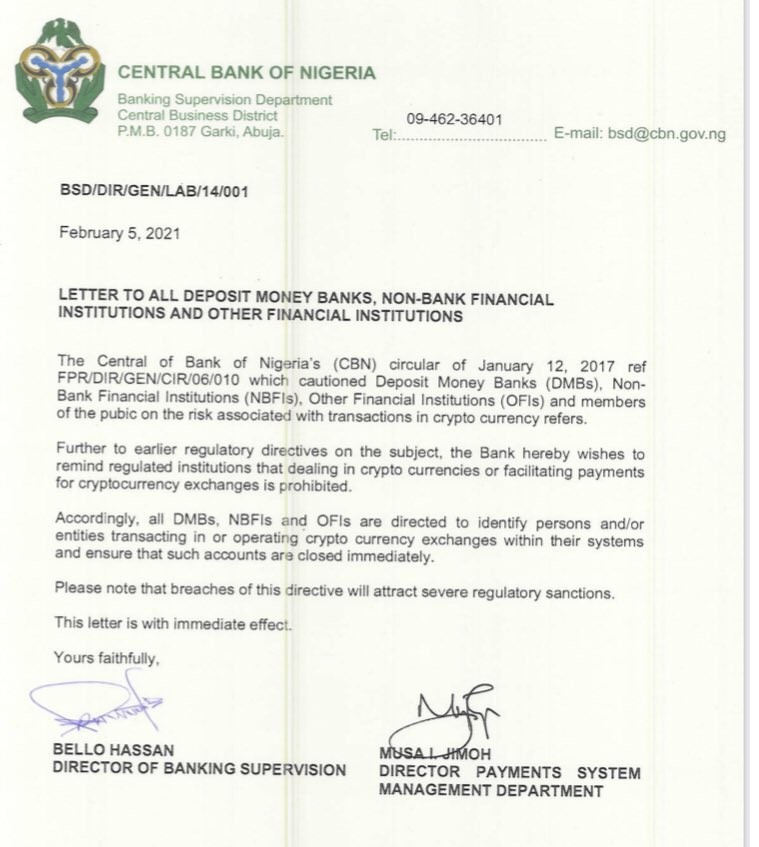
The Central of Bank of Nigeria’s (CBN) circular of January 12, 2017 ref FPR/DIR/GEN/C1R,06/010 which cautioned Deposit Money Banks (DMBs), Non-Bank Financial Institutions (NBFIs), Other Financial Institutions (OFIs) and members of the pubic so the risk associated with transactions In crypto currency refers.
Further to earlier regulatory directives on the subject, the Bank hereby wishes to remind regulated institutions that dealing in crypto currencies or facilitating payments for cryptocurrency exchanges is prohibited. Accordingly, all DMBs.
NBFIs and OFIs are directed to identify persons and/or entities transacting in or operating crypto currency exchanges within tier systems and ensure that such accounts are closed immediately. Please note that breaches of this directive will attract severe regulatory sanctions. This letter is with immediate effect.”
May I also note that our Bitcoin option for Tekedia Institute Mini-MBA payments remains – we just switched off Nigeria for the United States. So, go there and make payments if you have Bitcoin – it would be hard for Nigeria to surprise me.
Nigeria’s Central Bank Bans Cryptocurrency Trading in the Country
Nigeria’s Central Bank Bans Cryptocurrency Trading in the Country
In a surprising move on Friday, the Central Bank of Nigeria ordered all banks in the country to close all accounts conducting crypto related transactions.
A circular which was allegedly shared by the apex bank to all financial institutions in Nigeria made reference to 2017 circular by the CBN, which cautioned all Deposit Money Banks about the risks of crypto currency.
LETTER TO ALL DEPOSIT MONEY BANKS, NON-BANK FINANCIAL INSTITUTIONS AND OTHER FINANCIAL INSTITUTIONS
The Central of Bank of Nigeria’s (CBN) circular of January 12, 2017 ref FPR/DIR/GEN/C1R,06/010 which cautioned Deposit Money Banks (DMBs), Non-Bank Financial Institutions (NBFIs), Other Financial Institutions (OFIs) and members of the pubic so the risk associated with transactions In crypto currency refers.
Further to earlier regulatory directives on the subject, the Bank hereby wishes to remind regulated institutions that dealing in crypto currencies or facilitating payments for cryptocurrency exchanges is prohibited. Accordingly, all DMBs.
NBFIs and OFIs are directed to identify persons and/or entities transacting in or operating crypto currency exchanges within tier systems and ensure that such accounts are closed immediately. Please note that breaches of this directive will attract severe regulatory sanctions. This letter is with immediate effect.”
Since the EndSARS protest, which was funded through cryptocurrency donations to evade government’s clampdown on the protest, the Nigerian government has intensified efforts to curb the use of the digital money in the country. To beat the government’s clampdown during the protest, the innovative young minds switched to bitcoin to receive donations. Bitcoin accounted for nearly $400,000 raised in donations.
Consequently, it appears that the CBN has ordered all commercial banks to close all accounts belonging to crypto exchanges and other businesses transacting in cryptocurrency, in a bid to curtail future events such as the protest that could be funded through cryptocurrency.
The shocking move has been widely condemned and described as draconian and unprogressive.
Nigeria ranks tops among the countries using cryptocurrency. In December, Bitcoin trading platform Paxful analyzed the coins transaction flow for the past five years (2015-2020), to find that Nigeria traded more than $566 million worth of bitcoin during the period. It thus becomes the world’s second largest peer-to-peer (P2P) bitcoin market after the U.S. which traded $3.75 billion in the same period.
Paxful’s analysis noted that Nigeria traded the equivalent of 60,215.7 BTC, a transaction record that puts it ahead of other countries apart from the United States with trade volume of 535,660.3 BTC.
Nigeria’s highest volume of trade was recorded in 2020 during the lockdown when a 30% spike was recorded. Paxful said between January to September, it recorded a 137% increase in new registrations from Nigeria.
The interest of Nigerians in cryptocurrency has recorded unprecedented upsurge recently. In September 2020, the Nigerian Securities and Exchange Commission (SEC) had recognized bitcoin as an asset, which led credence to the involvement of many more Nigerians in the trade and transactions of cryptocurrency.
Paxful’s co-founder and Chief Executive Officer Ray Yussef had attributed the high volume of cryptocurrency transactions in Nigeria to cross-border challenges that the West African country has been facing.
“Africa’s largest economy has problems and restrictions in sending and receiving money from inside and outside its borders,” he said.
Nigeria has strict money laundering laws that bitcoin has helped individuals and businesses to beat. It is believed to be among the reasons the central bank has ordered the financial institutions to close the accounts of those dealing in digital currencies, as there is no other way to stop the growing momentum.
“People want to be able to buy and sell, transact internationally and the more the traditional channels are being restricted the more people trade crypto and mainly bitcoin. And the best thing about it is that it’s almost impossible to stop. If you block the exchange it moves to peer-to-peer platforms that are non-custodial,” said Eleanya Eke, co-founder of BuyCoins Africa last year.
With this move, the Nigerian government, who has been advised to develop a regulatory framework that will guide the use of cryptocurrencies in the country, has taken food off the table of many Nigerians who trade cryptocurrencies for a living, and may have sounded a warning that the most populous Black nation in the world is anti-progress.
On Thursday, the world richest man Elon Musk, in a series of tweets hailed bitcoin as the future, and admitted that he’s “late to the party.”
With Nigeria’s government clamor for foreign direct investments, the move to ban cryptocurrency in the country sends a message many investors don’t want to hear.
The Central Bank of Nigeria ATTACKS Cryptocurrency in Nigeria With This Notice
Nigeria – we are unique. Yes, the Central Bank of Nigeria (CBN) has released a regulatory hammer: all cryptocurrency entities are banned in the Nigerian banking system. So, exchanges, participants, brokers, dealers, crypto-fintechs, etc are banned. Sure, things will get crazier now as these guys will move to the black market as I am sure no CBN rule can stop young people and their cryptocurrencies.
People will be crying in Lagos now as there are many crypto exchanges that would see their accounts CLOSED immediately. Yet, you cannot blame CBN – it has access to data many of us do not have and you need to respect its position on this.
However, I wish it has done it differently, by having a clear roadmap as I have hinted in the past here.