
DD
MM
YYYY

PAGES

DD
MM
YYYY

spot_img

PAGES

Home Blog Page 591

The $87M Daily Volume Spike on Kalshi During the US College Football Kickoff

0

Kalshi, a CFTC-regulated prediction market exchange that allows users to trade event contracts on outcomes like sports results. On Saturday, August 30, 2025 (the eve of the full US college football season kickoff), Kalshi recorded $87 million in trading volume, marking its highest single-day figure since the surge during the 2024 US presidential election.

Sports markets dominated, accounting for nearly $85 million (about 96%) of the total. College football specifically drove $62.6 million (roughly 72%), with three high-profile Week 0 games—Clemson vs. LSU, Florida State vs. Auburn, and Ohio State vs. Texas—responsible for almost half of that sports volume.

This builds on Kalshi’s expanding football offerings. The platform recently self-certified with the CFTC to introduce point spreads, totals (over/unders), and limited touchdown props for both NFL and NCAA games, which went live ahead of the season.

Prior to this, markets were mostly limited to moneylines and futures like national championships. Cumulative volume on college football game outcomes has already reached $152 million year-to-date. During the 2024 presidential election, Kalshi saw massive spikes in political event contracts, peaking at similar or higher daily levels due to real-time trading on outcomes like winner probabilities.

The $87 million football day is the first to match that intensity since then, signaling strong demand for sports as a core product line. For perspective, Kalshi’s overall sports volume hit $2 billion in the first half of 2025 alone, though this metric (total traded value, including buys and sells) differs from traditional sportsbooks’ “handle” (wagered amounts), which would equate to roughly half or less here.

Kalshi’s growth comes amid legal challenges from states like Maryland, Nevada, and New Jersey, which argue these markets resemble illegal sports betting. However, federal courts have largely sided with Kalshi so far, affirming CFTC oversight and allowing operations to continue nationwide (for users 18+).

Partnerships like with Robinhood have boosted accessibility, with football markets now integrated into its app’s Predictions Hub. This surge underscores prediction markets’ rising popularity as an alternative to state-regulated sportsbooks, especially in non-legal betting states (about 40% of the US population).

As the season progresses, expect even higher volumes with full integration of props and more games—Kalshi’s CEO noted “huge consumer demand” for these expansions. If you’re interested in trading on Kalshi, it’s available at kalshi.com, but note the platform’s fees (around 3.5% per trade) and restrictions (e.g., no participation from players, coaches, or affiliates).

The record volume, rivaling presidential election activity, signals strong user interest in event contracts as an alternative to traditional sports betting. This suggests prediction markets are gaining traction, especially in states where sports betting is restricted, tapping into a large untapped market (roughly 40% of the US population).

With college football driving $62.6 million (72% of the day’s volume), sports markets are cementing as Kalshi’s backbone alongside political contracts. The recent addition of point spreads, totals, and props likely fueled this surge, indicating user demand for diverse, granular betting options.

Despite legal pushback from states like Maryland and Nevada claiming Kalshi’s markets mimic illegal gambling, federal court rulings favoring CFTC oversight bolster its legitimacy. This could encourage further expansion but also intensify state-level resistance, potentially shaping future regulation.

Partnerships like Robinhood’s integration and Kalshi’s ability to self-certify new markets (e.g., NFL and NCAA props) point to scalability. Higher volumes may attract more institutional players or retail investors, but fees (3.5% per trade) and restrictions (e.g., barring athletes or affiliates) could limit broader adoption.

The surge reflects a cultural shift toward real-time, data-driven speculation on sports outcomes, potentially rivaling traditional sportsbooks. It also highlights Kalshi’s role in monetizing public sentiment, with implications for how fans engage with sports and how markets predict real-world events.
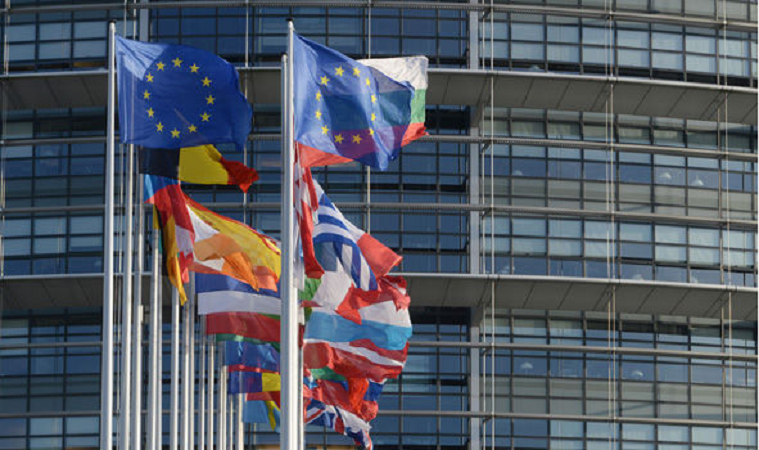

Implications of Swiss-EU Relations Amid US Tariff Pressures

0

On September 2, 2025, during a bilateral meeting in Berlin between Swiss President Katrin Keller-Sutter and German Chancellor Friedrich Merz, the topic of Switzerland potentially joining the European Union (EU) was explicitly addressed.

Merz stated that Swiss entry into the EU is “not on the agenda,” emphasizing instead the need for closer cooperation between Switzerland and the EU to present a united front against the escalating US trade policies under President Donald Trump. This comes in the wake of the US imposing a steep 39% tariff on Swiss imports, which took effect on August 7, 2025, after negotiations failed to yield a more favorable deal for the Alpine nation.

The US tariffs represent one of the most punitive measures in Trump’s global trade reset, targeting Switzerland’s significant trade surplus with the US—estimated at around $38.5 billion in goods for 2024 (though this shrinks to about $22 billion when services are included).

Key Swiss exports affected include pharmaceuticals (temporarily exempt but at risk), watches, machinery, precision instruments, chocolate, and even gold refining, which distorts trade data due to Switzerland’s role as a global refiner rather than producer.

The US justified the 39% rate—far higher than the 15% negotiated by the EU, 10% for the UK, or similar rates for Japan and South Korea—by citing Switzerland’s alleged refusal to make “meaningful concessions” on trade barriers, despite Switzerland’s unilateral elimination of industrial tariffs on US goods in January 2024, allowing over 99% of US imports to enter tariff-free.

Switzerland’s economy, heavily reliant on exports (with the US accounting for about 16-18% of total exports), faces severe repercussions. Analysts estimate a potential GDP hit of 0.6% to 2% depending on whether pharmaceuticals are included, alongside risks to tens of thousands of jobs in sectors like manufacturing and luxury goods.

Swiss officials, including President Keller-Sutter, expressed shock after a failed phone call with Trump and a fruitless trip to Washington, where she met Secretary of State Marco Rubio but not key trade figures. The government has pursued negotiations, offering increased US investments (up to $150 billion) and potential purchases of US liquefied natural gas, but these fell short.

No retaliatory measures, such as canceling a $6 billion F-35 jet deal, have been enacted, with focus instead on relief for affected businesses. Switzerland’s relationship with the EU is already deeply integrated through a web of bilateral agreements covering trade, free movement of people, and participation in the European Economic Area (EEA) for certain sectors, but full membership has long been off-limits due to domestic priorities.

Swiss President Keller-Sutter highlighted during the Berlin meeting that neutrality is “deeply anchored in the Swiss population” and forms a core part of national identity. Joining the EU would require adopting the bloc’s common foreign and security policies, conflicting with Switzerland’s tradition of armed neutrality since 1815.

Any EU accession would likely trigger a national referendum, where polls show support hovering around just 17-20%. Past votes, like the 1992 rejection of EEA membership, underscore public wariness of ceding control over immigration, agriculture, and regulations to Brussels.

Switzerland prefers “cherry-picking” specific deals over wholesale membership, as seen in recent overhauls of EU-Swiss trade pacts approved in late 2024. Chancellor Merz echoed this by advocating for relations “as close as possible” without pushing for accession, noting excellent bilateral ties with Germany, Switzerland’s largest trading partner.

The tariff disparity has amplified calls from some German lawmakers and economists for Switzerland to reconsider its EU stance, arguing it leaves the country vulnerable as a non-member facing higher US duties than the bloc. However, Merz’s comments signal that even amid US pressures, EU leaders are not aggressively pursuing Swiss membership, focusing instead on collaborative responses like joint lobbying against US tariffs on steel and aluminum (still at 50% for the EU).

Keller-Sutter emphasized partnering with “like-minded” European nations to uphold a “rules-based and values-based order,” aligning with Merz’s view that the tariffs provide “all the more reason for us in Europe to move closer together.” While the tariffs have shattered some Swiss complacency about its “splendid isolation,” prompting psychological and economic shocks, they haven’t shifted the EU membership debate meaningfully.

Swiss industry groups like Swissmem and EconomieSuisse warn of long-term damage to competitiveness, especially against EU rivals with lower tariffs, but the government remains committed to bilateral solutions. Ongoing talks with the US could still yield reductions, similar to how other nations negotiated down from initial threats.

Lagos Attracted over $6bn in tech startup funding between 2019 and 2024 — Sanwo-Olu

0

Lagos State pulled in more than $6 billion in direct foreign funding for tech startups between 2019 and 2024, Governor Babajide Sanwo-Olu said on Wednesday, underscoring the city’s growing status as Africa’s digital hub.

Speaking at the GITEX Nigeria 2025 conference in Lagos, Sanwo-Olu highlighted the state’s role as the “heart of Africa’s innovation ecosystem.” He noted that Lagos accounted for more than 70% of Nigeria’s total tech investment inflows during the five-year period, adding that most of the continent’s unicorns trace their roots to the city.

Describing Lagos as Africa’s “innovation nerve center,” Sanwo-Olu pointed to the rise of data centers, submarine cables, and expanded fibre connectivity as critical enablers of its digital growth.

“This is the essence of Lagos. A place where diversity is not just demographic. But an engine of creativity and resilience. This diversity fuels a startup ecosystem that is now among the most vibrant in the world. Between 2019 and 2024, we’ll see over 6 billion in direct foreign tech startup funding,” Sanwo-Olu said.

The governor stressed that Lagos’ success has not been accidental but the result of deliberate government policies and investments in digital infrastructure. He pointed to initiatives such as the design and research fund, which provides startups with seed grants ranging from N50 million to N80 million, helping young entrepreneurs access early-stage capital that is often scarce in African markets.

He also showcased the state’s progress in digital governance, referencing the Lagos Digital Service Platform, which enables citizens to access services across healthcare, transport, and civic registration online.

The governor cited the Cowry Card, designed by young Lagosians, which now serves more than 6.5 million residents across rail, road, ferry, and taxi services. Similarly, the Blue Line rail system, which recently celebrated its second anniversary after transporting over 5 million passengers, has introduced a 50% fare reduction to mark the milestone — a move he said highlights how digital innovation extends beyond startups to improve mobility and quality of life for residents.

Sanwo-Olu added that Lagos’ diversity — where every Nigerian ethnic group is represented — remains the fuel behind its creative and resilient startup scene. He noted that international partners like Cisco, IBM, and MTN, working hand-in-hand with African startups, will be central to co-creating Africa’s digital future.

He reiterated Lagos’ ambition to build a data-driven, inclusive, and innovation-led government, investing in artificial intelligence, STEM education, green energy, and EduTech as strategic pillars to unlock opportunities for the next generation. Events like GITEX Nigeria 2025, he said, not only give young innovators a global platform but also reinforce Lagos’ standing as Africa’s economic and tech powerhouse.

A broader perspective

Sanwo-Olu’s remarks put Lagos firmly in line with Africa’s broader tech investment story. According to data from Partech Africa, funding for African startups peaked at over $5.4 billion in 2022, with Nigeria consistently ranking as the top destination for capital inflows. Within Nigeria, Lagos towers above other states, accounting for the overwhelming majority of deals.

Nairobi remains Africa’s second major tech magnet, with strengths in fintech, agritech and climate tech. Recent market tallies put Kenya’s 2024 fundraising at hundreds of millions (one recent industry snapshot showed Kenya raising about $638m in 2024 vs Nigeria’s $410m), reflecting substantive year-to-year shifts and Nairobi’s growing share in categories such as climate and AgriTech.

South Africa’s Cape Town punches above its weight thanks to universities, research centers and a strong engineering talent base that attracts both local and international investors. The Financial Times and ecosystem reports describe Cape Town’s “cluster effect” — a mix of technical talent, quality of life and specialized venture activity — that draws capital into deep-tech, healthtech and enterprise software. While Cape Town is a major hub in southern Africa, aggregate startup funding totals for South African cities have generally been smaller than Lagos’s headline foreign inflows during the 2019–24 window.

Analysts say the $6 billion milestone further highlights Lagos’ position alongside global emerging-market innovation hubs like Bangalore in India or São Paulo in Brazil, where government-backed infrastructure and demographic diversity have turned cities into magnets for venture capital.

But there are challenges ahead. Despite the funding surge, Nigerian startups still grapple with issues of foreign exchange volatility, regulatory uncertainty, and infrastructural deficits. Many investors argue that while Lagos has proven it can attract capital, ensuring policy stability, reliable power, and improved ease of doing business will determine whether it can sustain its lead.

For now, however, Sanwo-Olu’s Lagos appears to be cementing its place at the center of Africa’s tech transformation — a role he insists is only just beginning to unfold.

Japan Post Bank’s DCJPY Upcoming Launch Signals a Major Step Toward Digitalizing Finance

0

Japan Post Bank plans to launch a digital currency called DCJPY by the end of fiscal 2026 (March 2027), in collaboration with DeCurret DCP, a Tokyo-based fintech firm.

DCJPY will be a yen-backed digital currency, pegged 1:1 to fiat yen, and issued on a permissioned blockchain. It will be linked to depositors’ savings accounts, allowing instant conversion for transactions involving digital securities, NFTs, tokenized real estate, and corporate bonds.

The initiative aims to modernize financial services, reduce settlement costs, and attract younger, tech-savvy customers among the bank’s 120 million account holders, who manage roughly ¥190 trillion ($1.29 trillion) in deposits. Unlike stablecoins, DCJPY is a tokenized deposit covered by deposit insurance, ensuring regulatory compliance and stability.

The bank also envisions local governments using DCJPY for distributing subsidies and benefits, streamlining public fund administration. This move aligns with Japan’s growing adoption of blockchain technology and complements the Bank of Japan’s ongoing digital yen trials, potentially positioning Japan as a leader in regulated digital finance.

Implications of Japan Post Bank’s DCJPY Launch

With Japan Post Bank’s vast network of 120 million account holders and ¥190 trillion in deposits, DCJPY could drive widespread adoption of digital currencies in Japan, a country traditionally reliant on cash. This move may accelerate the shift toward a cashless society, particularly among younger, tech-savvy users.

The yen-backed, insured nature of DCJPY positions it as a stable, low-risk alternative to volatile cryptocurrencies, potentially increasing public trust in digital currencies. DCJPY’s integration with tokenized assets (e.g., securities, NFTs, real estate) and instant conversion to fiat yen will streamline settlements, reducing costs and delays associated with traditional banking systems. This could enhance liquidity in digital asset markets.

Local governments using DCJPY for subsidies could improve efficiency in public fund distribution, reducing administrative overhead and ensuring faster, transparent delivery. As a tokenized deposit covered by deposit insurance, DCJPY aligns with Japan’s regulatory framework, setting a model for other institutions globally.

This could encourage other banks to issue similar digital currencies, balancing innovation with financial stability. It complements the Bank of Japan’s digital yen trials, potentially creating a hybrid ecosystem where private and central bank digital currencies (CBDCs) coexist.

Japan’s early mover advantage in regulated digital currencies could position it as a leader in blockchain-based finance, challenging jurisdictions like the EU or Singapore. This may attract international investment and fintech partnerships. Adoption may face hurdles due to Japan’s aging population, which may resist digital-only financial systems.

Cybersecurity risks, such as hacks or blockchain vulnerabilities, could undermine trust if not addressed robustly. Competition with other digital currencies, including a potential BOJ-issued digital yen, could fragment the market.

How Blockchain is Digitalizing Finance

Blockchain technology is revolutionizing finance by providing a decentralized, secure, and transparent framework for transactions. Blockchain’s immutable, distributed ledger ensures all transactions are recorded transparently, reducing fraud and errors.

In DCJPY’s case, the permissioned blockchain ensures only authorized parties participate, balancing security with efficiency. Smart contracts automate processes like settlements or loan disbursements, eliminating intermediaries and reducing costs (e.g., DCJPY’s instant conversion for tokenized assets).

Blockchain enables tokenization, converting real-world assets (stocks, bonds, real estate) into digital tokens. This allows fractional ownership, increases liquidity, and opens markets to smaller investors. DCJPY’s integration with tokenized securities and NFTs exemplifies this trend.

Tokenized assets can be traded 24/7 on blockchain platforms, unlike traditional markets with limited hours. Blockchain eliminates the need for correspondent banks in cross-border payments, reducing fees and settlement times from days to seconds. While DCJPY is yen-focused, its blockchain infrastructure could support international applications if expanded.

Blockchain underpins CBDCs and private stablecoins, providing a digital alternative to cash. DCJPY, as a tokenized deposit, bridges traditional banking and blockchain, offering stability and regulatory compliance. Unlike volatile cryptocurrencies, yen-backed DCJPY ensures price stability, making it suitable for everyday transactions and institutional use.

Blockchain-based systems can provide financial services to unbanked populations via mobile devices, requiring only internet access. While Japan’s unbanked population is small, DCJPY’s model could inspire similar initiatives in developing economies.

Blockchain’s cryptographic security protects against tampering, while permissioned blockchains (like DCJPY’s) allow controlled access, ensuring compliance with regulations like KYC/AML. Privacy-focused blockchains enable secure data sharing without exposing sensitive information, critical for financial institutions.

Blockchain enables DeFi platforms, offering lending, borrowing, and trading without traditional intermediaries. While DCJPY operates in a regulated environment, its blockchain infrastructure could interface with DeFi ecosystems, expanding use cases.

By bridging traditional banking with blockchain innovation, it could reshape Japan’s financial landscape and influence global trends. Blockchain’s broader impact lies in its ability to decentralize trust, tokenize assets, and streamline transactions, fundamentally transforming how financial systems operate while addressing challenges like regulation and cybersecurity.

The Solana Community Has Approved Alpenglow Upgrade After Governance Votes Passed

0

The Solana community has approved the Alpenglow upgrade, a major overhaul of the blockchain’s consensus mechanism, with overwhelming support.

The governance vote for the proposal, known as SIMD-0326, concluded with 98.27% to 99.6% approval, depending on the source, and a participation rate of 52% to 98.94% of staked tokens. The upgrade, developed by Anza, introduces Votor and Rotor, replacing the existing Proof-of-History (PoH) and TowerBFT systems. It aims to reduce transaction finality from 12.8 seconds to 100-150 milliseconds, a 100x speed improvement, positioning Solana’s performance closer to Web2 infrastructure like Visa and Mastercard.

A direct-voting protocol with off-chain signature aggregation, enabling sub-second block confirmation (single-round finalization with 80% validator stake or two rounds with 60%). A new data dissemination system replacing Turbine, optimizing bandwidth and reducing network latency.

20+20 Resilience Model ensures network operation even with 20% adversarial and 20% offline validators, enhancing security and decentralization. A fixed 1.6 SOL fee per epoch to offset inflation, though it has sparked debate over potential barriers for smaller validators.

The upgrade is expected to enhance Solana’s scalability, making it more attractive for high-frequency applications like DeFi, gaming, and payments. It could also boost SOL’s market performance, with some analysts predicting a price surge to $700, given its recent 8% gain compared to Ethereum’s slight decline.

However, concerns remain about validator diversity, centralization risks, and reliance on a single client (Agave), though the upcoming Firedancer client may address this. No mainnet rollout timeline has been confirmed, but the upgrade’s passage signals strong community confidence in Solana’s future.

Reducing transaction finality from 12.8 seconds to 100-150 milliseconds positions Solana as a high-performance blockchain, rivaling Web2 systems like Visa (1,700 TPS). This could enable seamless scaling for high-frequency applications (DeFi, NFTs, gaming).

The 20+20 model ensures the network remains operational even with 20% adversarial and 20% offline validators, strengthening security and decentralization compared to the current TowerBFT system. Rotor’s data dissemination replaces Turbine, reducing network latency and validator bandwidth demands, potentially lowering operational costs and improving efficiency.

The upgrade’s performance boost could drive demand for SOL, with some analysts projecting a rise to $700 (from ~$180 recently), especially as Solana outperforms competitors like Ethereum in market trends.

The 1.6 SOL Validator Admission Ticket (VAT) per epoch aims to offset inflation but may deter smaller validators, potentially increasing centralization risks. This could raise barriers to entry, impacting validator diversity. Faster, cheaper transactions could attract more developers and projects, increasing SOL’s utility and network activity, which may further bolster its market position.

Sub-second finality strengthens Solana’s case for real-time applications (e.g., decentralized exchanges, gaming platforms), potentially drawing users and developers from slower networks like Ethereum or Polygon.

Reliance on the Agave client and the VAT’s cost could concentrate validator power among wealthier players unless mitigated by initiatives like Firedancer, a second client in development. Enhanced performance may accelerate adoption in sectors like DeFi, payments, and tokenized assets, reinforcing Solana’s position as a leading layer-1 blockchain.

No mainnet rollout date is confirmed, and bugs or delays could undermine confidence. The complexity of replacing PoH and TowerBFT requires rigorous testing. The VAT and potential centralization may spark community debate, requiring careful governance to maintain inclusivity.

While optimism is high, broader crypto market dynamics or unforeseen technical issues could temper SOL’s price gains. Alpenglow positions Solana as a top contender in the blockchain space, but its success hinges on smooth execution and addressing centralization concerns. The upgrade could redefine Solana’s role in Web3, provided the community navigates these challenges effectively.