DD
MM
YYYY

PAGES

DD
MM
YYYY

spot_img

PAGES

Home Blog Page 5910

Nigeria’s Big Ban On Cryptocurrency and What Startups Are Already Doing

8

Good People, Bitfxt, our cryptocurrency exchange is moving to Dubai. Our CEO Franklin Peters is already in the UAE to move all operations to Dubai. There is really no issue here since Nigeria could not engage in conversations with its young people before making decisions. If there were things which needed to be fixed, the nation could have done so through consultations. Using fiat statements like we just did will never win more investments.

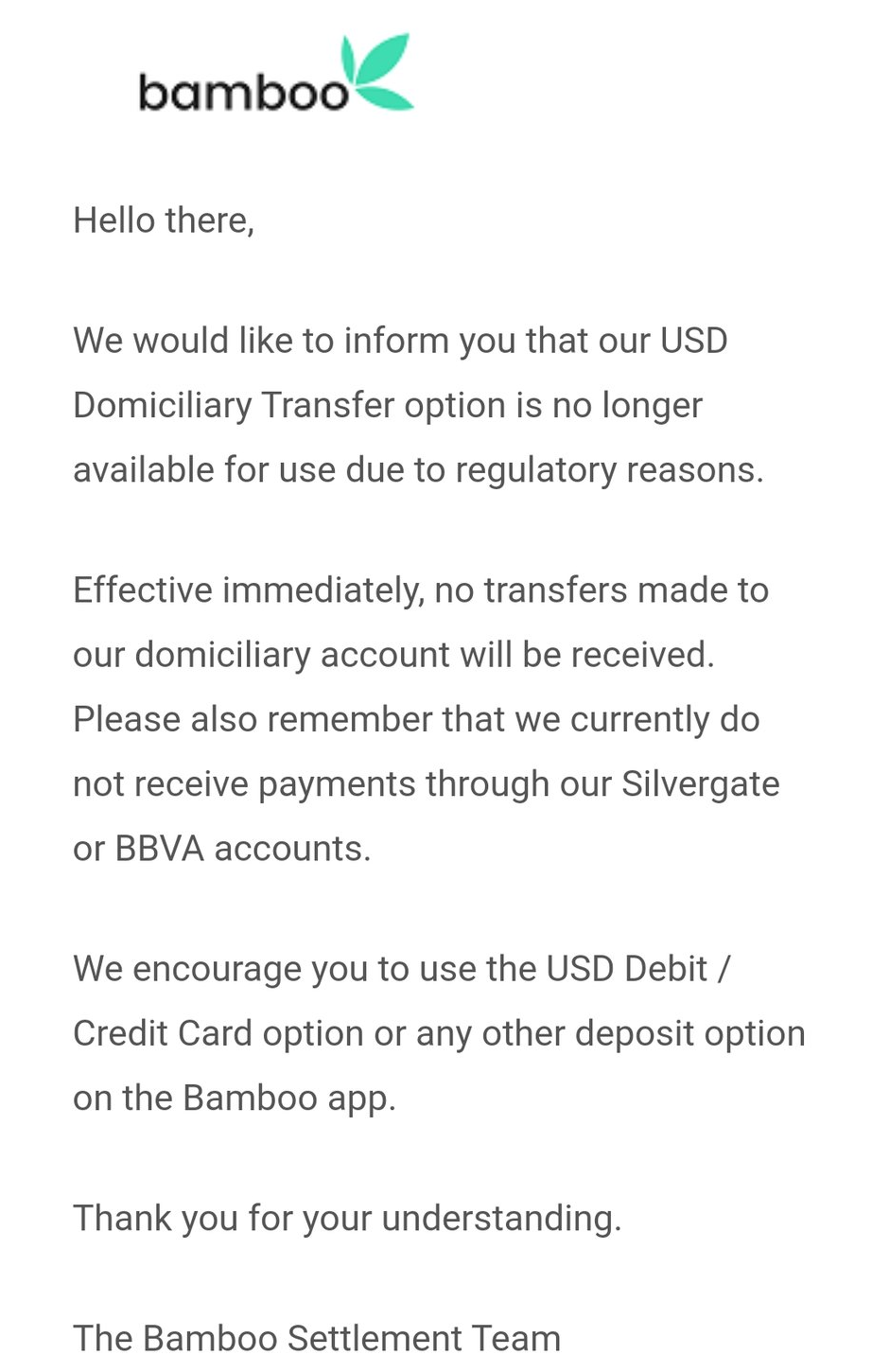
I also share Bamboo’s statement. Samuel Nwite has a detailed piece on this Central Bank of Nigeria (CBN) ban on Tekedia.

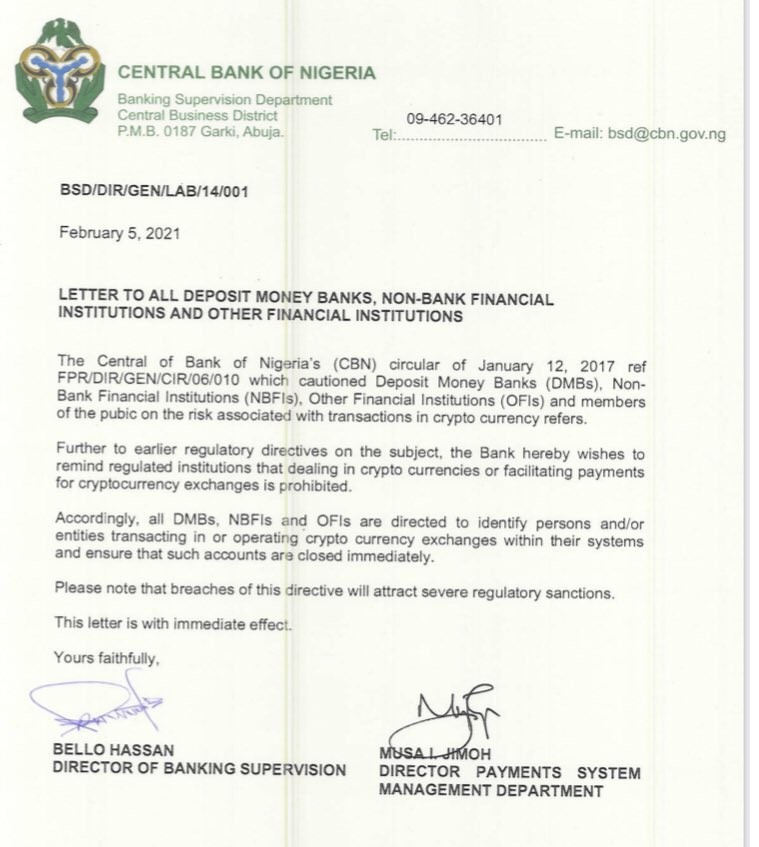
The Central of Bank of Nigeria’s (CBN) circular of January 12, 2017 ref FPR/DIR/GEN/C1R,06/010 which cautioned Deposit Money Banks (DMBs), Non-Bank Financial Institutions (NBFIs), Other Financial Institutions (OFIs) and members of the pubic so the risk associated with transactions In crypto currency refers.

Further to earlier regulatory directives on the subject, the Bank hereby wishes to remind regulated institutions that dealing in crypto currencies or facilitating payments for cryptocurrency exchanges is prohibited. Accordingly, all DMBs.

NBFIs and OFIs are directed to identify persons and/or entities transacting in or operating crypto currency exchanges within tier systems and ensure that such accounts are closed immediately. Please note that breaches of this directive will attract severe regulatory sanctions. This letter is with immediate effect.”

May I also note that our Bitcoin option for Tekedia Institute Mini-MBA payments remains – we just switched off Nigeria for the United States. So, go there and make payments if you have Bitcoin – it would be hard for Nigeria to surprise me.

Nigeria’s Central Bank Bans Cryptocurrency Trading in the Country

Bamboo explores options

Nigeria’s Central Bank Bans Cryptocurrency Trading in the Country

3

In a surprising move on Friday, the Central Bank of Nigeria ordered all banks in the country to close all accounts conducting crypto related transactions.

A circular which was allegedly shared by the apex bank to all financial institutions in Nigeria made reference to 2017 circular by the CBN, which cautioned all Deposit Money Banks about the risks of crypto currency.

LETTER TO ALL DEPOSIT MONEY BANKS, NON-BANK FINANCIAL INSTITUTIONS AND OTHER FINANCIAL INSTITUTIONS

The Central of Bank of Nigeria’s (CBN) circular of January 12, 2017 ref FPR/DIR/GEN/C1R,06/010 which cautioned Deposit Money Banks (DMBs), Non-Bank Financial Institutions (NBFIs), Other Financial Institutions (OFIs) and members of the pubic so the risk associated with transactions In crypto currency refers.

Further to earlier regulatory directives on the subject, the Bank hereby wishes to remind regulated institutions that dealing in crypto currencies or facilitating payments for cryptocurrency exchanges is prohibited. Accordingly, all DMBs.

NBFIs and OFIs are directed to identify persons and/or entities transacting in or operating crypto currency exchanges within tier systems and ensure that such accounts are closed immediately. Please note that breaches of this directive will attract severe regulatory sanctions. This letter is with immediate effect.”

Since the EndSARS protest, which was funded through cryptocurrency donations to evade government’s clampdown on the protest, the Nigerian government has intensified efforts to curb the use of the digital money in the country. To beat the government’s clampdown during the protest, the innovative young minds switched to bitcoin to receive donations. Bitcoin accounted for nearly $400,000 raised in donations.

Consequently, it appears that the CBN has ordered all commercial banks to close all accounts belonging to crypto exchanges and other businesses transacting in cryptocurrency, in a bid to curtail future events such as the protest that could be funded through cryptocurrency.
The shocking move has been widely condemned and described as draconian and unprogressive.

Nigeria ranks tops among the countries using cryptocurrency. In December, Bitcoin trading platform Paxful analyzed the coins transaction flow for the past five years (2015-2020), to find that Nigeria traded more than $566 million worth of bitcoin during the period. It thus becomes the world’s second largest peer-to-peer (P2P) bitcoin market after the U.S. which traded $3.75 billion in the same period.

Paxful’s analysis noted that Nigeria traded the equivalent of 60,215.7 BTC, a transaction record that puts it ahead of other countries apart from the United States with trade volume of 535,660.3 BTC.

Nigeria’s highest volume of trade was recorded in 2020 during the lockdown when a 30% spike was recorded. Paxful said between January to September, it recorded a 137% increase in new registrations from Nigeria.

The interest of Nigerians in cryptocurrency has recorded unprecedented upsurge recently. In September 2020, the Nigerian Securities and Exchange Commission (SEC) had recognized bitcoin as an asset, which led credence to the involvement of many more Nigerians in the trade and transactions of cryptocurrency.

Paxful’s co-founder and Chief Executive Officer Ray Yussef had attributed the high volume of cryptocurrency transactions in Nigeria to cross-border challenges that the West African country has been facing.

“Africa’s largest economy has problems and restrictions in sending and receiving money from inside and outside its borders,” he said.

Nigeria has strict money laundering laws that bitcoin has helped individuals and businesses to beat. It is believed to be among the reasons the central bank has ordered the financial institutions to close the accounts of those dealing in digital currencies, as there is no other way to stop the growing momentum.

“People want to be able to buy and sell, transact internationally and the more the traditional channels are being restricted the more people trade crypto and mainly bitcoin. And the best thing about it is that it’s almost impossible to stop. If you block the exchange it moves to peer-to-peer platforms that are non-custodial,” said Eleanya Eke, co-founder of BuyCoins Africa last year.

With this move, the Nigerian government, who has been advised to develop a regulatory framework that will guide the use of cryptocurrencies in the country, has taken food off the table of many Nigerians who trade cryptocurrencies for a living, and may have sounded a warning that the most populous Black nation in the world is anti-progress.

On Thursday, the world richest man Elon Musk, in a series of tweets hailed bitcoin as the future, and admitted that he’s “late to the party.”

With Nigeria’s government clamor for foreign direct investments, the move to ban cryptocurrency in the country sends a message many investors don’t want to hear.

The Central Bank of Nigeria ATTACKS Cryptocurrency in Nigeria With This Notice

4

Nigeria – we are unique. Yes, the Central Bank of Nigeria (CBN) has released a regulatory hammer: all cryptocurrency entities are banned in the Nigerian banking system. So, exchanges, participants, brokers, dealers, crypto-fintechs, etc are banned. Sure, things will get crazier now as these guys will move to the black market as I am sure no CBN rule can stop young people and their cryptocurrencies.

People will be crying in Lagos now as there are many crypto exchanges that would see their accounts CLOSED immediately. Yet, you cannot blame CBN – it has access to data many of us do not have and you need to respect its position on this.

However, I wish it has done it differently, by having a clear roadmap as I have hinted in the past here.

Why Making Cars Makes Sense for Apple’s Future

0

The iPhone has about four more evolutions before it hits what I have called a finite electronic product maturity phase. It is a phase where changes become exceedingly marginal with the implications that customers do not notice much differences from the previous versions of the same products. Whenever that happens, margins fall on the products.

For the iPhone, that will happen before 2026. So, if Apple hopes to sustain its valuation, it needs to find another engine of growth. For all products and services in the world now, Electric Vehicles with autonomous capabilities would make sense for the technology giant to pursue.

The electric vehicle wars are revving up. Apple is nearing a deal with Hyundai-Kia to produce an autonomous EV in the U.S., CNBC reports, citing anonymous sources. The “Apple Car” could go into production in 2024 and the sources add the tech giant tapped Hyundai because it wishes to collaborate with an “established automaker willing to allow Apple to control the software and hardware that will go into the vehicle.” The announcement comes on the heels of Ford and Google revealing a six-year plan for enhancing Ford’s in-vehicle connectivity.

Apple is not playing in the cloud computing space; Amazon and Microsoft dominate that sector which will become increasingly vital for the future of commerce. The cloud business has a lot of growth ahead of it. But Apple is not there. Looking generally, there is nothing else that can bring a generation-shaping redesign like the one smartphones offered to tech companies, if you remove cloud computing and EV autonomous opportunities.

The astronomical valuation of Tesla is based on this thesis that a shift is about to take place, from fossil-fueled cars, to EV cars with autonomous capabilities, and Tesla is positioned to lead therein. It is that perception that has fueled the surge. If Apple gets into this car, it has a promise. From iPod (Walkman-inspired) to iPhone (Blackberry-inspired) to Apple Watch (pebble-inspired), Apple is not used to starting any category but has a clear record of leading or co-leading once it gets in.

The decision for Apple to pursue an EV future is not a choice: it is the only option because the iPhone cannot carry it forever. Sure, Apple has the iPhone – an exclusive hardware on a proprietary software – but that does not mean it cannot lose margins as the smartphone industry matures. That is why I do think that Apple will pursue an electric car with autonomous capabilities to secure its long-term future. That call will become more evident in the next coming quarters. And as that happens, there would be a signal call to Tesla: be ready.

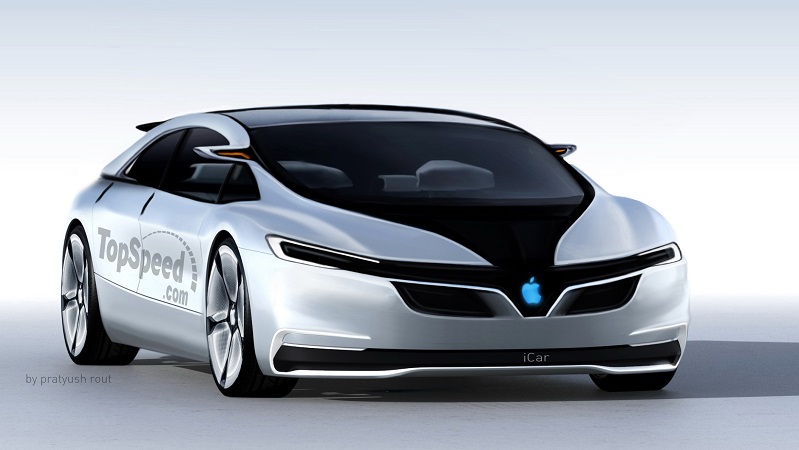
Expect iCar to be a hit because it will come from Apple with world-class engineering. Tesla space could be secured as there is a clear possibility to have 4 big brands in the EV autonomous space. So, the rise of Apple will not mean the fall of Tesla.


LinkedIn Comment on Feed

Comment: “Looking generally, there is nothing else that can bring a generation-shaping redesign like the one smartphones offered to tech companies, if you remove cloud computing and EV autonomous opportunities.” – Ndubuisi

The quote above could be self-limiting, because we do not really know what another decade holds, even with all our predictions and supposed intelligence. Just one event called Covid-19 and look at what our world has turned into. Have three or four Covid-like high impact events, and everything we hold high today could be upended, with entirely new sectors taking centre stage.

On Apple and sustainability of iPhone, well, there’s more to iPhone than a mere smartphone; as long as Appstore remains exclusive to only Apple users, do not expect iPhone to lose significant power in market valuation, until something better comes around; not just about reaching the finite state in electronics.

If Apple manages to come with good EV products, it will still shake up Tesla, because the richest people are on Apple platform, and once it fuses the car with its Store, alongside iPhone and everything Apple; no other brand comes close.

It’s Apple, the master of storytelling, if it clicks, it must resonate.

My Response: “The quote above could be self-limiting, because we do not really know what another decade holds, even with all our predictions and supposed intelligence” – if we wait to know everything, we cannot write. So, based on all that we know, we make calls knowing that the future has not arrived.

“not just about reaching the finite state in electronics. ” – your laptop has reached a finite state even though you have software in it. Windows from Microsoft has reached a stable state that most things are marginal. Apple will get there when the innovations on the services, powered by software become marginal and incremental. It has really nothing to do with the hardware as if you are looking for designs, iPhone hardware is not the winner. So, the electronic is a composition of hardware+software.

I still think Apple, Tesla and 2 others can co-habit as that market typically has 3-4 big brands. I do not think Apple will win it all because no market has one clear dominant car brand. But we will see.

How To Handle Workplace Fatigue

0

Imagine waking up everyday feeling like you need to go back to sleep. You remembered you have to get ready for work and the first thing that comes to your mind is, “That useless work”. You begin to curse your boss and supervisor for stressing you and start wondering if the work is worth it at all. Your mind begins to make up excuses on why you shouldn’t go to work and how you can survive without that job. You finally sighed as you got up the bed because your bills and responsibilities flashed through your mind and jolted you back to reality. Deep down, you know you need the money but you don’t want to work for it because, honestly, you are tired to your marrow.

When you finally prepared for work, you grudgingly left the house, complaining about everything. You complain about bad roads, traffic jams, hawkers, traffic wardens, and even the early morning cool breeze. You hiss at and ignore friendly neighbours, who sent their greetings your way. You shout at the security man in your office because he took a second longer before opening the gate. You played deaf to customers’ complaints and wondered why they won’t try other places. In fact, you just don’t know why everyone won’t allow you to sleep off your day in the office.

But as the day goes by, you become worried because you noticed despite the adrenaline surges from your incessant anger and complaints you still feel tired and spent. You noticed you’re battling anxiety and depression and, even though you know you need to socialise with colleagues to elate your spirit, you just want to be left alone. You may become alarmed because you are becoming forgetful and you can’t even get yourself to concentrate on anything. Maybe before the end of that day, you will consider handing in your resignation because a motivational speaker just told you it’s the best thing to do. Well, before you do that, check if you are experiencing work-related fatigue.

Causes of Work-Related Fatigue

Work-related fatigue happens to a lot of workers, irrespective of the type of work they do. Initially, it was believed that only the people that exert much physical energy (such as lower carder industrial and manual workers) are easily worn out. But today, it has been discovered that anyone can be fatigued, including those at the managerial level. Both those that do physical and mental works are affected. No one is spared.

Causes of fatigue at the workplace have been linked to medical and/or work-related conditions. Medical conditions that lead to fatigue include cancer, anaemia, concussion, failures and/or diseases of vital organs, and so on. Work-related fatigue can be caused by working for long or irregular hours, doing shifts, personnel cut, the intensity of work demands, inadequate sleep, stress, change of jobs, changes in the work environment (such as the introduction of new directives, machines, or work schedule), and negative experiences at work. Experiencing one or more of these factors can drain a worker of his energy and zeal to work. His performance may decrease and he might begin to make mistakes that could cost the office a lot. Accidents have been linked to workplace fatigue and so are several deaths. This makes it imperative for both the employees and the employers to ensure workplace fatigue never happened in the first place.

How Employers Can Prevent Workplace Fatigue

Considering that fatigued workers perform poorly and can make mistakes that cost the company a lot, employers must prevent it from happening in the first place. This can be achieved through the following:

  1. Allowing several break times per day for workers.
  2. Encouraging workers to socialise amongst themselves.
  3. Ensuring workers take time off for leisure. This is usually done through holidays and leaves.
  4. Providing medical support for workers.
  5. Providing a place for workers on late shift to sleep. That way they won’t be worried about going home late.
  6. Overlooking napping employees and having a session with them later.
  7. Exercising patience with workers.

What Employees Should Do In Case of Workplace Fatigue

  1. Talk to your boss when you think you are fatigued; you never can tell how he can help.
  2. Avoid working overtime; try to stick to your work schedule.
  3. Work with your team; don’t try to be the hero by doing works meant for others.
  4. Take your off days (such as weekends) to relax.
  5. Cut down on the number of side jobs; stick to the ones that require less mental and physical works.
  6. Sleep in a well-ventilated noiseless environment.
  7. Seek medical help if it becomes chronic.