DD
MM
YYYY

PAGES

DD
MM
YYYY

spot_img

PAGES

Home Blog Page 5917

News as a Content versus News as a Product in Nigerian Media

0

Like others in the world, the Nigerian media industry has been experiencing a number of changes due to micro and macroeconomic situations in the last 10 years. Beyond this, the industry remains one of the industries with low entry barriers. This has singlehanded be one of the main reasons for the proliferation of media establishments.

However, as the news media organisations emerge easily, they have also been discovered to exit easily because of the inability to compete favourably occasioned by emerging technologies and processes that require people with adequate knowledge and skills to deploy for content production and publication.

One of the factors, our analyst has identified is the inability to create value proposition from the news values that guide reporters and editors’ choice of what get published or reported. Traditionally, news values are the principles which guide editors and journalists towards the stories that resonate most with their audiences. Over the years, the news values are impact, timeliness, prominence, proximity, bizarreness, conflict, and currency before emerging technologies change readers’ needs and news consumption patterns.

Indeed, emerging technologies are impacting the news process, production and dissemination. We are no in the era of immersive journalism [this is yet to be embraced in Nigeria]. In one of the previous analyses, our analyst notes that robot will source, write and edit news in the future.

Developing News Beyond News Values: The Place of Value Proposition

It is high time that news media rethink their approach to news development. The use of news values to only justify what audience you read, watch and listen to is no longer workable absolutely, according to our experience. To improve value capturing for consumers, advertisers, investors and society, news values should be linked with the value proposition. This has been done by a number of media organisations in Europe and America.

We have seen how some media organisations used design thinking for news content creation and dissemination. Having news values dominantly in a news does not fulfil the purpose of value capturing for the audience. They only have opportunity of knowing happenings around them, which qualifies news as a content not as a product.

When news values are only used to determine what the audience should consume, the purpose of value creation is defeated. To avert this, one or two promises must be established within the news story. Promise means the specific benefit that readers, listeners and viewers need to derive from reading, listening and watching the news report. At a glance, especially from the lead of the story, having a value proposition there helps the audience to quickly see what is in the story for them. When this happens, the news becomes a product not a content. News as a product starts from appropriation of the rights news values to the inclusion of promise(s) in lead, main and supporting details.

In our news values and value proposition link circus framework, reporters and editors are expected to think about the value proposition as they think about news values that guide their choice of events or happenings as newsworthy. The thinking must be done in relation to the demographics and psychographics of the potential readers, listeners and viewers.

Exhibit 1: News Values and Value Proposition Link Circus Framework

Source: Infoprations Analysis, 2021

Welcome Japan To Tekedia Mini-MBA – Our 36th Nation

4

Today, we received our first known member from Japan. It is possible we already have members from Japan. But this one is noticeable as this member has laboured for days to transfer money to our US office. Gracious luckily, help came. This marks the 36th nation represented in the Tekedia Mini-MBA global community.

Dear whom it may concern,

Thank you for attending with the payment.

I will be getting help from my Nigerian friend in Japan with a bank account to remit the $140 fee to your bank account.

With the name […].

[….]

The deposit of 50,000 NGN to the bank account suggested has been completed.
Please confirm that it went through.
[…]

Most Kind,

[…]

With hub.tekedia.com, we are building a community of innovators and growth champions. Build connections with innovators and advance the wealth of communities.

Exxon Mobil’s $22.4B Loss, Pfizer’s $15B Projected Vaccine Sales, And Why Africa Needs To Build Resilience Now

0

Case 1: “Oil giant Exxon Mobil suffered its first annual loss in decades last year as the pandemic prompted energy use to plunge. The firm lost $22.4bn as energy prices dropped – at one point falling below zero. The downturn forced the company to make drastic cuts to its workforce and investment plans”.

The pandemic has taken a massive toll on Big Oil as demand has all but dried up, with global travel still largely restricted and swaths of ex-commuters working from home. Energy, according to The Wall Street Journal, was the worst-performing sector in the S&P 500 last year. Exxon and BP both reported annual losses of $22 billion and $18.1 billion, respectively, and for Exxon it was the fourth consecutive loss for the first time in modern history.  Exxon Mobil is investing $3 billion over the next five years in efforts to lower emissions. The CEOs of Exxon Mobil and Chevron spoke last year about combining into one oil giant, reports The Wall Street Journal, citing anonymous sources. The market value of a combined Exxon/ Chevron could surpass $350 billion. (Innews)

Read further for Case 2 on the same site: “Drugs giant Pfizer has said it expects $15bn of sales this year of the coronavirus vaccine it developed with German firm BioNTech. The vaccine was one of the first to be authorised for use by countries including the UK and the US. The vaccine sales represent a quarter of its expected revenue for this year.”

Two companies, two sectors and two different scenarios. The Covid-19 pandemic may provide a thesis on what portfolio managers may have to do when balancing risks. This world is becoming stochastic and that state may be the steady state if the climate change worst case model comes to pass.

That health insurance companies declared massive profit is an irony in a time when the world experienced one of the most challenging healthcare issues in decades. Why did they make money? Lockdowns and restrictions froze hospital visits and with limited hospitalizations, those elective surgeries which cost so much were waived, pushing insurers to keep their premiums. Those premiums give you the massive profits.

 When you look at the different outcomes from Exxon and Pfizer, you will understand the challenge ahead if the projected climate change paralysis happens. Yes, there could be structural redesigns which can change the economic architectures of nations. WIth no resilience, humans will suffer. Africa needs to invest to acquire and deepen its resilience to such shocks. They could be existential. 

Jeff Bezos, Amazon Founder & CEO, To Step Down; Andy Jassy Takes Over

1

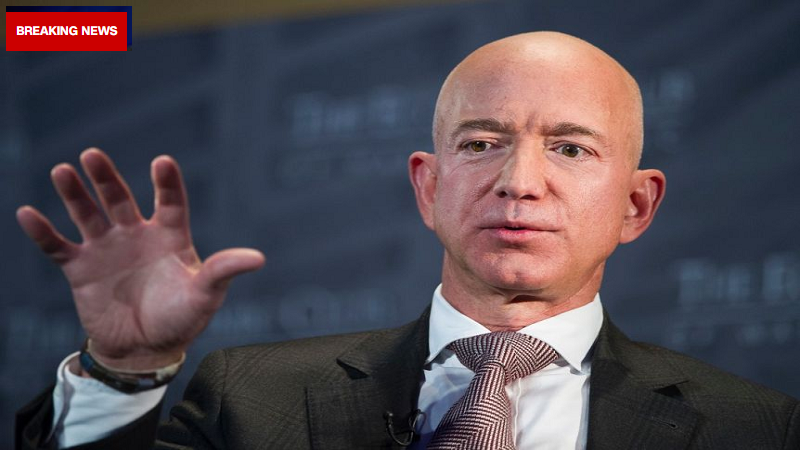
One of his generation’s finest operators with capability to combine amalgam of empires with ease, is stepping down. Yes, Amazon CEO, Jeff Bezos, will step down as CEO. He will move into the Executive Chairman position. Andy Jassy will replace him as CEO. 

If you look carefully, Jeff has determined the future of Amazon by appointing the executive who currently runs the cloud computing unit, Amazon Web Services, the most profitable unit of the digital conglomerate, as Amazon CEO. Through AWS, Amazon taxes the world of commerce and is certainly the future of the empire.

Amazon founder Jeff Bezos will step down from his role as chief executive later this year and transition to the role of executive chair, the company said Tuesday. He will be replaced by Andy Jassy.

Bezos has been Amazon’s CEO since its founding in 1995. He oversaw its growth from an online bookseller into a $1.7 trillion global retail and logistics behemoth, which has also made Bezos into one of the world’s richest people. Jassy has worked for Amazon since 1997 and currently serves as CEO of the company’s cloud business, Amazon Web Services, which is its biggest profit driver. (CNN)
Mr Bezos letter to his staff below.

Fellow Amazonians:

I’m excited to announce that this Q3 I’ll transition to Executive Chair of the Amazon Board and Andy Jassy will become CEO. In the Exec Chair role, I intend to focus my energies and attention on new products and early initiatives. Andy is well known inside the company and has been at Amazon almost as long as I have. He will be an outstanding leader, and he has my full confidence.

This journey began some 27 years ago. Amazon was only an idea, and it had no name. The question I was asked most frequently at that time was, “What’s the internet?” Blessedly, I haven’t had to explain that in a long while.

Today, we employ 1.3 million talented, dedicated people, serve hundreds of millions of customers and businesses, and are widely recognized as one of the most successful companies in the world.

How did that happen? Invention. Invention is the root of our success. We’ve done crazy things together, and then made them normal. We pioneered customer reviews, 1-Click, personalized recommendations, Prime’s insanely-fast shipping, Just Walk Out shopping, the Climate Pledge, Kindle, Alexa, marketplace, infrastructure cloud computing, Career Choice, and much more. If you get it right, a few years after a surprising invention, the new thing has become normal. People yawn. And that yawn is the greatest compliment an inventor can receive.

I don’t know of another company with an invention track record as good as Amazon’s, and I believe we are at our most inventive right now. I hope you are as proud of our inventiveness as I am. I think you should be.

As Amazon became large, we decided to use our scale and scope to lead on important social issues. Two high-impact examples: our $15 minimum wage and the Climate Pledge. In both cases, we staked out leadership positions and then asked others to come along with us. In both cases, it’s working. Other large companies are coming our way. I hope you’re proud of that as well.

Andy Jassy, boss of AWS

I find my work meaningful and fun. I get to work with the smartest, most talented, most ingenious teammates. When times have been good, you’ve been humble. When times have been tough, you’ve been strong and supportive, and we’ve made each other laugh. It is a joy to work on this team.

As much as I still tap dance into the office, I’m excited about this transition. Millions of customers depend on us for our services, and more than a million employees depend on us for their livelihoods. Being the CEO of Amazon is a deep responsibility, and it’s consuming. When you have a responsibility like that, it’s hard to put attention on anything else. As Exec Chair I will stay engaged in important Amazon initiatives but also have the time and energy I need to focus on the Day 1 Fund, the Bezos Earth Fund, Blue Origin, The Washington Post, and my other passions. I’ve never had more energy, and this isn’t about retiring. I’m super passionate about the impact I think these organizations can have.

Amazon couldn’t be better positioned for the future. We are firing on all cylinders, just as the world needs us to. We have things in the pipeline that will continue to astonish. We serve individuals and enterprises, and we’ve pioneered two complete industries and a whole new class of devices. We are leaders in areas as varied as machine learning and logistics, and if an Amazonian’s idea requires yet another new institutional skill, we’re flexible enough and patient enough to learn it.

Keep inventing, and don’t despair when at first the idea looks crazy. Remember to wander. Let curiosity be your compass. It remains Day 1.

Jeff