DD
MM
YYYY

PAGES

DD
MM
YYYY

spot_img

PAGES

Home Blog Page 595

BlockDAG’s Presale Hits $395M as Referral Frenzy Heats Up! AVAX Slows and HYPE Struggles to Break Out

0

The market’s tempo is shifting, and patience is being tested. Avalanche has flattened out, Hyperliquid is catching breath after a historic surge, but BlockDAG is charging forward with a multi-layered strategy. A generous 25% referral bonus, major brand impact, and a well-documented focus on platform security have turned heads. It’s not just buzz; these moves are helping BlockDAG solidify its status as the top crypto to buy right now.

While AVAX wrestles with technical ceilings and HYPE wavers after a wave of activity, BlockDAG is leveraging user incentives, public trust, and product showcases to break ahead. It’s the kind of progress the market tends to reward, especially when momentum elsewhere is fading.

Avalanche Stuck in a Tight Range

Avalanche (AVAX) has seen its price stuck in limbo for weeks, currently holding close to the $23 mark. The pattern is familiar, ranging between a floor at $16 and a resistance ceiling at $26, but with no real breakout in sight. Each attempt to cross $26 gets pushed back, and repeated indecision candles (dojis) on lower timeframes show a lack of confidence in either direction.
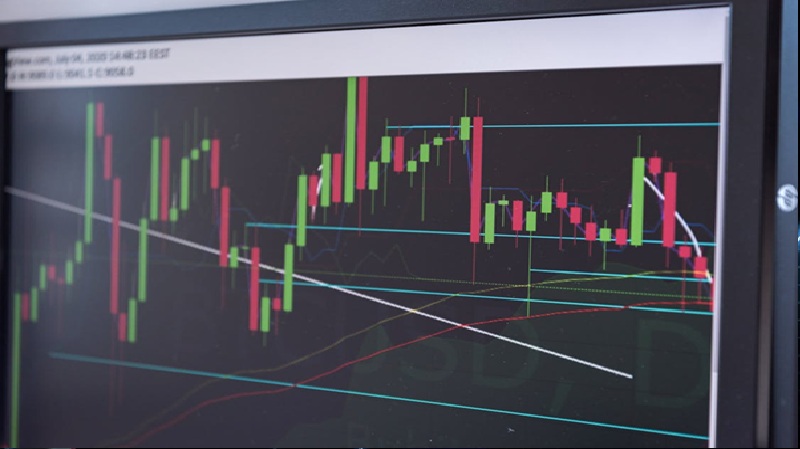
AVAX is hanging just above its 21-day SMA, a level offering near-term support. If sellers pull it under $21, the risk of falling toward $20, or even back to $16, is on the table. On the flip side, a decisive move beyond $26 could spark a rally, potentially up to $36.

The chart paints a cautious picture. Although Avalanche’s ecosystem remains active on the development front, the price structure signals indecisiveness. With momentum lacking, AVAX is fading from attention as other projects, especially ones showing strong traction like BlockDAG, begin capturing the spotlight.

HYPE Volume Soars but Uncertainty Lingers

Hyperliquid’s HYPE is turning heads in DeFi after logging an eye-popping $29 billion in daily trading volume. As a decentralized futures exchange, its platform has processed more than $1.57 trillion in transactions over the past year. In Q2 2025 alone, it raked in over $300 million in revenue, putting it on the radar of major players.

Just last month, volume for July hit $319 billion, a sharp 47% uptick, while daily fee collections reached $7.7 million, fueling consistent HYPE buybacks. The protocol even caught a $21 million long bet placed in USDC, showcasing confidence in the $45 range. With HYPE’s market cap now sitting above $10 billion, it has leapfrogged some major names.

Adding to the mix is HYLQ Strategy Corp., holding 30,000 HYPE coins in a treasury move similar to how MicroStrategy manages Bitcoin. Some analysts are setting their sights on a mid-term HYPE target of $75 to $100, banking on its dominance in the perpetual DEX space. Still, questions around sustained price action remain, and that’s where BlockDAG’s clarity and consistent growth make it feel like a steadier ride.

BlockDAG Builds Trust With Referrals and New Bonus!

While AVAX drifts and HYPE pauses, BlockDAG is keeping the pressure high with real-world traction. Three factors stand out: an aggressive referral campaign, a major presence, and a track record of transparent security.

The 25% referral reward is turbocharging activity. It’s simple: refer and earn BDAG coins, while the new buyer gets a 5% bonus. This model fuels natural growth and keeps momentum going without relying on one-time hype. It’s built for scale and sustainability.

Then there’s visibility. BlockDAG didn’t just show up; it stood out. From Dashboard V4 demos to mining hardware previews, the team delivered substance, not just style. That face time at a major crypto event brought serious eyes to the project.

And when it comes to security, BlockDAG isn’t cutting corners. Audits from CertiK and Halborn verified that key vulnerabilities were handled, while multi-signature protocols and a parallel Proof-of-Work model guard both assets and transparency. It’s a rare mix of tech maturity and forward momentum.

With $395 million raised, 25 billion BDAG coins sold, a Batch 30 price of $0.0013 until October 1, and a confirmed launch price of $0.05, BlockDAG is doing more than promising; it’s delivering. However, in preparation for the BlockDAG Deployment Event, BDAG introduced a $0.0013 flat coin price, ensuring transparency and fairness in the final presale stretch. That’s why so many are naming it the top crypto to buy right now.

Final Thoughts

Avalanche is in holding mode, and Hyperliquid, while breaking volume records, is still waiting on stronger confirmation. BlockDAG, though, is advancing with purpose. The 25% referral bonus keeps growing the user base, the project gained a major boost, and third-party audits backed up its focus on protection and trust.

These aren’t surface-level plays; they’re strategic. BlockDAG blends usability, exposure, and real infrastructure into one package. It’s not just gaining ground, it’s setting the pace. With 2,900% ROI from Batch 1 price of $0.001 to Batch 30 price of $0.003, BlockDAG isn’t chasing the top spot in crypto; it’s already there.

Presale: https://purchase.blockdag.network

Website: https://blockdag.network

Telegram: https://t.me/blockDAGnetworkOfficial

Discord: https://discord.gg/Q7BxghMVyu


Why You Need To Register for Tekedia AI Technical Lab

0

When the web era began, people went to “computer schools” and learnt how to make websites because they needed the ability to create websites for business or personal hobbies. In this fledgling AI era, you need to understand how to make AI tools, especially AI agents.

At Tekedia AI Technical Lab, we will teach how you can do that without being a geek or knowing coding. The recipe is ready, and you walk into the kitchen. Within minutes, you have made the stew. We will help with the slicing of the onion, pounding the pepper, etc, and in the end, you add all the ingredients, and you have “stew” which is your AI agent.

Go here and register here.

A Look At Bank of Japan’s Vague Signal on Rate Hikes

0

The yen’s weakening likely stems from the Bank of Japan’s vague signal on rate hikes, creating uncertainty that markets dislike. Higher interest rates typically strengthen a currency by attracting capital, but the lack of a clear timeline here suggests hesitation, spooking investors.

Japan’s economy has been grappling with low growth and inflation pressures, and the BOJ’s cautious approach might reflect fears of stifling recovery. A weaker yen makes Japanese goods cheaper abroad, potentially boosting exports. This could benefit companies like Toyota or Sony, supporting Japan’s economy, which relies heavily on export-driven growth.

Imports, especially energy and food, become pricier, squeezing household budgets and potentially fueling inflation. Japan imports most of its energy, so this could hit consumers hard. A weaker yen raises the cost of imported goods, which could push inflation higher.

The Bank of Japan (BOJ) might face pressure to tighten policy sooner, though their hesitance suggests they’re wary of derailing growth. A weaker yen could deter foreign investors holding yen-based assets, as their returns diminish in dollar terms. However, it might attract investors to Japanese stocks, as export-driven firms could see profit gains.

Cheaper yen could boost tourism, as Japan becomes a more affordable destination. On the flip side, Japan’s massive public debt (over 250% of GDP) could become costlier to service if inflation spikes and forces rate hikes. The BOJ hinted at potential rate hikes but didn’t commit to a timeline. Markets crave certainty, so this vagueness sparked selling of the yen, as investors speculated on prolonged low rates.

Japan’s near-zero interest rates contrast with higher rates in the U.S. (Federal Reserve’s target at 4.25–4.5% as of recent data) and other economies. A weaker yen reflects capital flowing to higher-yielding currencies like the dollar.

Traders likely interpreted the BOJ’s caution as a sign of economic fragility, reducing confidence in the yen. X posts around this time might reflect bearish sentiment on the yen, with USD/JPY climbing (e.g., nearing 150, a key level recently). The yen is a popular funding currency for carry trades (borrowing in low-yield yen to invest in high-yield assets).

Uncertainty about rate hikes keeps the yen weak, as traders continue these trades. A weakened yen directly impacts Japan’s inflation by increasing the cost of imported goods and services, given Japan’s heavy reliance on foreign energy, food, and raw materials.

A weaker yen raises the cost of imports in yen terms. For example, Japan imports over 90% of its energy (oil, natural gas) and significant portions of food (e.g., wheat, soybeans). If USD/JPY rises (say, from 145 to 150), a barrel of oil priced in dollars becomes more expensive in yen, pushing up costs for businesses and consumers.

These higher import costs feed into consumer prices. Energy prices affect electricity, fuel, and transportation, while pricier food impacts household budgets. This could drive Japan’s CPI (Consumer Price Index) higher, which has been hovering around 2–3% recently, above the BOJ’s 2% target.

If businesses pass on higher costs to consumers, and workers demand higher wages to cope, a wage-price spiral could emerge. However, Japan’s stagnant wage growth (real wages fell 0.6% year-on-year in mid-2025) limits this risk for now.

The BOJ may face pressure to raise rates to curb inflation driven by a weak yen, but hiking too soon could choke economic growth, especially with GDP growth sluggish (projected at 1% for 2025). Their hesitance on rate hikes, as you mentioned, suggests they’re prioritizing growth over immediate inflation control.

Most of Japan’s inflation is currently “imported” (driven by external factors like the yen’s value) rather than demand-driven. This limits the BOJ’s ability to control it through domestic policy alone, as global commodity prices and exchange rates play a big role.

If the yen weakens further (e.g., USD/JPY past 150), inflation could climb another 0.5–1% in the short term, especially if global oil prices stay elevated (around $80/barrel recently). However, deflationary pressures from weak domestic demand could offset some of this.

Polymarket Assigned a 98% Chance That France’s Sept. 8 Confidence Vote Will Fail

0

Polymarket, the decentralized prediction market platform where users bet on real-world outcomes using cryptocurrency.

As of early September 2025, the market titled “French confidence vote fails?”—which resolves “Yes” if French Prime Minister François 8 confidence vote in the National Assembly fails to pass—shows a probability of approximately 98% for failure (or 94% in some recent snapshots, indicating a high consensus among traders). This reflects the platform’s crowd-sourced odds, derived from trading volume exceeding $100,000 in related French political markets.

Bayrou, appointed as PM in late July 2025 amid France’s ongoing political fragmentation following President Emmanuel Macron’s 2024 snap elections, called for this confidence vote on August 25, 2025.

It’s tied to his proposed 2026 austerity budget, which aims to cut €44 billion ($51 billion) in spending to address France’s ballooning deficit (projected at 5.4-5.8% of GDP in 2025, well above the EU’s 3% limit). Key measures include freezing welfare and pension spending, not adjusting tax brackets for inflation, and potentially scrapping two public holidays—unpopular moves that have unified opposition.

France’s National Assembly is deeply divided into three main blocs with no absolute majority: Centrist/pro-government alliance (Macron’s Ensemble and allies): ~210 seats. Left-wing New Popular Front (NFP, including Socialists, Greens, and far-left La France Insoumise): ~180-200 seats, all pledged to vote against. Far-right National Rally (RN): ~123 seats, also opposing due to the budget’s impact on working-class voters.

To pass, Bayrou needs at least 289 votes (simple majority of 577 total seats). With ~353 opposition votes already committed, failure is near-certain unless the Socialists (66 seats) abstain or switch sides—unlikely, as their leaders (e.g., Boris Vallaud) have publicly rejected the plan. Even abstentions might not save it, as the threshold could drop but still fall short.

If the vote fails: Bayrou’s government resigns immediately. Macron must appoint a new PM (his third in under a year), but the hung parliament makes stability elusive. This could trigger a budget stalemate, forcing a provisional 2025 budget rollover into 2026, delaying reforms and risking EU fines or social unrest (protests are already planned for September 10).

Further escalation might lead to another snap election by late 2025, with Polymarket odds at ~39% for an election call by December 31. Polymarket’s 98% odds align with traditional analysts and bookmakers, who see this as a “high-risk gamble” by Bayrou to force clarity but likely backfiring. Related markets show:

96% chance Bayrou is out as PM by September 30, 2025. 8% chance Macron leaves office in 2025 (low, as impeachment odds are just 9%). The news has already rattled markets: France’s CAC 40 index dropped ~2% on August 26, French bank stocks fell sharply, and the 10-year bond yield hit 3.52% (highest since March 2025), signaling investor fears of prolonged instability.

The euro weakened, and spreads on French vs. German bonds widened, echoing 2024’s post-election turmoil. Broader Eurozone growth (already sluggish at 1.2% for France in 2024) could suffer if gridlock persists, potentially pushing debt servicing costs to become France’s largest budget item by 2027.

This situation underscores France’s chronic political deadlock since the 2024 elections, where Macron’s dissolution backfired, creating a “three-way split” parliament. Polymarket’s prediction markets, while not infallible, often outperform polls by incentivizing accurate forecasting through financial stakes—here, bettors are overwhelmingly wagering on failure, backed by opposition statements and parliamentary math.

China Becomes First Major Country to Enforce Mandatory AI Content Labeling on Social Media

0

Chinese social media giants are rolling out new compliance measures that require users to clearly label all AI-generated content uploaded to their platforms, following the implementation of a sweeping new government law.

The rules, which came into force after being drafted in March, mandate that AI-generated content must carry a watermark or explicit on-screen indicator for human users, along with metadata tags to allow web crawlers and algorithms to easily distinguish machine-generated posts from human-made ones, according to the South China Morning Post.

Officials in Beijing say the legislation is aimed at curbing the spread of misinformation, fraud, and coordinated manipulation of public opinion—issues that have intensified amid the rapid adoption of AI tools such as ChatGPT, Midjourney, and DALL-E. The law puts the onus directly on platforms to police their users’ uploads, representing one of the world’s most aggressive approaches to AI regulation to date.

The regulations apply to China’s largest platforms, including Tencent’s WeChat (with over 1.4 billion users), ByteDance’s Douyin (the Chinese equivalent of TikTok, with around 1 billion users), Weibo (over 500 million active monthly users), and social-commerce platform Rednote.

Each of these platforms issued notices in recent days reminding users that uploading AI-generated images, videos, or text without proper labeling violates the new law. They have also introduced user-facing reporting tools to flag unlabeled AI content and warned that improperly tagged material can be removed outright.

The Cyberspace Administration of China (CAC), which oversees internet governance, announced that undisclosed “penalties” would be imposed on violators—particularly those using AI to spread misinformation or covertly manipulate online discourse. Paid commentators, often linked to “astroturfing” campaigns, are expected to face heightened scrutiny.

Global Debate on AI Content Transparency

China’s move comes as governments and standards bodies worldwide wrestle with how to regulate AI-generated material. While Western regulators have largely lagged behind, the issue has quickly gained urgency as deepfakes and synthetic media proliferate.

Just last week, the Internet Engineering Task Force (IETF) proposed a technical standard that would create a new metadata header field to mark AI-generated content, according to Tom’s Hardware. Though not visible to human users, such labels would give algorithms and platforms a way to filter or detect synthetic material.

Meanwhile, Google’s Pixel 10 smartphones now integrate C2PA (Coalition for Content Provenance and Authenticity) credentials into their cameras, the outlet added. These embedded markers allow users to verify whether an image has been altered with AI. However, reports already suggest that tech-savvy users have found ways to bypass the safeguards.

The First Domino?

By moving first, China has set a precedent that could ripple into other jurisdictions. With U.S. policymakers and European regulators actively debating AI safety, experts believe that mandatory content labeling could soon be on the agenda elsewhere.

For context, social media companies in the West have already faced intense scrutiny for their role in shaping teen mental health, misinformation, and political polarization—most prominently with Instagram and TikTok. The arrival of generative AI only amplifies those concerns, raising fears of fake news at scale, hyper-realistic deepfakes, and automated propaganda.

If stricter rules spread globally, the social media experience could fundamentally change. Just as Europe’s GDPR reshaped how companies handle data privacy, China’s AI watermarking law could influence the norms around digital authenticity.

While Beijing has positioned the law as a safeguard against AI abuse, many believe that it also hands the government even greater control over online speech. Content labeling gives authorities more visibility into how AI is being used, particularly in political discourse, while allowing platforms to proactively delete anything deemed “improper.”

However, for now, China has established itself as the first mover in mandatory AI transparency—an experiment the rest of the world is watching closely. Whether Western regulators follow suit, and whether these systems can actually withstand user workarounds, will determine if AI watermarking becomes a global standard or just another regulatory patchwork.