DD
MM
YYYY

PAGES

DD
MM
YYYY

spot_img

PAGES

Home Blog Page 5957

Ambani’s Reliance Jio Under Pressure to Deliver His Multi-billion Dollar Vision Amidst Regulatory Battle in India

0

Amidst the  pressure from international investors and regulatory battle in India, Reliance Jio announced it’s making all off-net domestic voice calls free, from January 1 2021. Indian Telecom Regulatory Authority (TRAI) had a plan to implement a Bill and Keep regime that would end interconnect usage charges (IUC) for all domestic calls.

The Indian behemoth said following the TRAI directive, it will make all off-net domestic calls voice calls free, as a gesture of its commitment to revert off-net domestic voice call charges to zero, as soon as the IUC is abolished.

It was a tactic used by the Mukesh Ambani-owned telecom company even before the directive of TRAI, that helped it to conquer India’s telecom industry with over 400 million subscribers.

“For context, in September 2019, when TRAI extended the timeline for implementation of the Bill & keep regime beyond January 1, 2020, Jio started charging its customers for off-net voice calls, at a rate exactly equivalent to the applicable IUC charge,” Times News noted in a report.

Jio had assured its subscribers that the charges will end as soon as the TRAI directive to abolish the IUC is implemented, a promise it has kept by making the free-call announcement.

“Today, Jio has delivered on that promise and made off-net voice calls free again,” the statement said.

The news impacted Jio’s competitor, Bharti Airtel negatively. Times News reported that its shares slumped 2% in intra-day trades on December 31 after Jio made the announcement.

Bharti Airtel scrip was last seen trading around Rs 508.95, down by Rs 7.70 or 1.5% at 1504 hours on National Stock Exchange (NSE).

Meanwhile, India’s market watchdog handed Reliance Industries 250 million rupees ($3.42 million) and Ambani 150 million rupees for fraudulent trade practices they engaged it while selling a stake in a subsidiary in 2007.

The Securities and Exchange Board of India (SEBI) accused the behemoth of taking derivative short positions in shares of separately listed Reliance Petroleum back in 2007 through third parties before it sold a 5% stake in the business.

SEBI’s decision came with consequences. Reliance was asked to surrender about 4.5 billion rupees plus 12% annual interest for what the regulator said were unlawful gains from that deal. Reliance and some third parties were also barred from trading in derivatives for one year.

Reliance has denied any wrongdoing, saying the trades examined by SEBI during that time were “genuine and bona fide transactions” and that the regulator had “misconstrued the true nature of the transactions and imposed unjustifiable sanctions.”

The group is waiting for a Supreme Court appeal hearing against the 2017 ruling that imposed the penalty.

This is coming at a time when Ambani is under intense pressure to deliver a multi billion dollars investment pledge. The 63-year-old convinced Facebook, Google and other Wall Street big names to buy into his vision of digital transformation in India.

His vision is to be developed through many sectors, as he was working to transform the Jio group into a modern business conglomerate that will represent the digital vision he pitched and supports Prime Minister Narenda Modi’s digital transformation agenda.

Ambani received a $27 billion in investment fund from US tech investors and now he is under their radar to deliver.
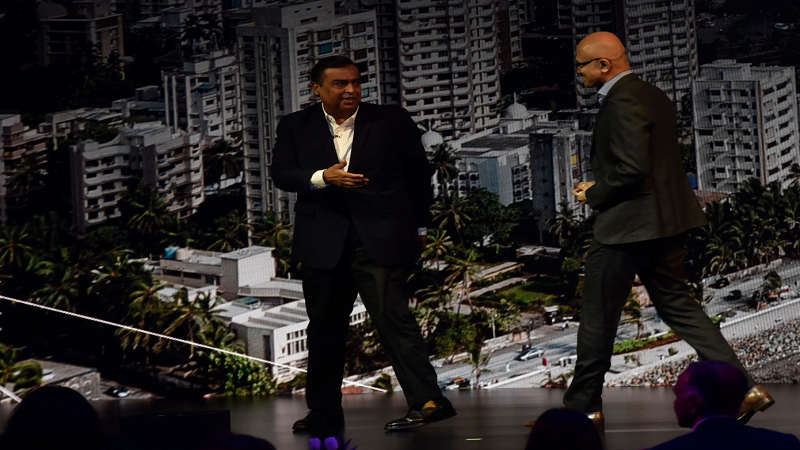
Jio founder

The focus has been on 5G development that he plans to roll out early this year. But other lines of investment were also incorporated into his vision that got the blessings of Silicon and Wall Street’s big names.

According to Bloomberg, these include incorporating Facebook’s WhatsApp payments service into Reliance’s digital platform; integrating the company’s e-commerce offerings with a network of physical mom-and-pop shops across the country; selling a stake in Reliance’s oil and petrochemical units, a deal he had originally hoped would reduce debt and finance his high-tech pivot earlier this year.

Ambani’s top agenda was ridding Reliance of its $22 billion debt that he set 18-months deadline for himself. The deadline was beaten in nine months, spiking the company’s shares. But that was just part of the problems; investors are keenly watching his every move to see how he transforms $168 billion Reliance amidst COVID-19 chaos and fierce competition from Amazon and Walmart.

While the focus has been on 5G roll out, Ambani is hoping that Reliance could cash in on other subsidiaries to deliver the dream. There was a plan to saturate India with $54 Android smartphones backed by Google, which he plans to execute leveraging Reliance’s dominance in India’s telecom sector. Ambani believes the cheap phones will help Indians to embrace the digital life he is about to introduce to them.

And then there is WhatsApp Pay, backed by Facebook, which offers an opportunity of growth to Reliance’s e-commerce venture.

“Reliance views the integration with WhatsApp’s recently approved payments system as a crucial step in the development of its online shopping services,” said the people familiar with the matter.

The company plans to harvest millions of Facebook, Instagram and WhatsApp users for its e-commerce platforms. One more area that Ambani is looking at is streaming.

According to a plan unveiled by Ambani and his eldest children Isha and Akash at the end of Reliance annual shareholder meeting in July, the new tech services to be integrated into their business empire early this year include streaming platform that will bring Netflix, Disney+ Hotstar, Amazon Prime Video and dozens of TV channels under one umbrella.

However promising the plans seem, Reliance’s reputation hangs on actualizing them and so is Ambani’s relationship with those sold his dream to.

“Reliance shares rose as much as 55% this year to an all-time high in September, but they’ve since pared gains as stakeholders look for more evidence that Ambani can execute,” Bloomberg noted.

With the stakes so high, the scuffle between SEBI and Reliance is something Reliance doesn’t really need.
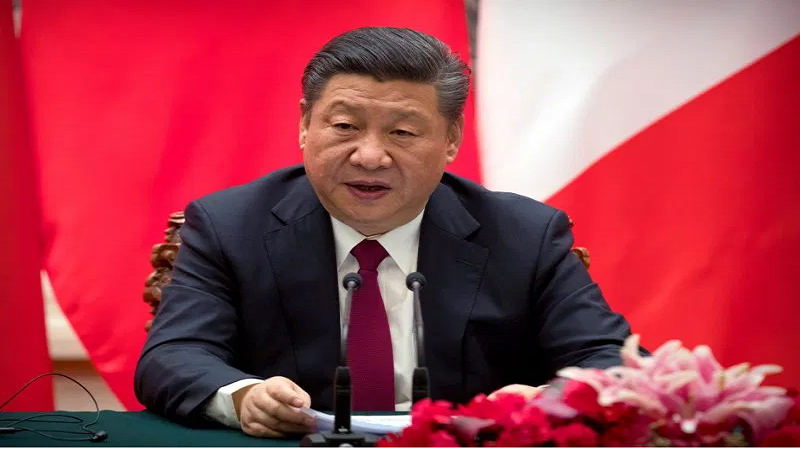
China Vows to Respond to US’ Delisting of Its Firms From NYSE

1

A few days after the United States moved to delist three Chinese telecom companies from the New York Stock Exchange, China has said it will take “necessary measures” to safeguard the interest of its companies.

The Chinese telecom companies, China Mobile, China Unicorn and China Telecom came under the radar of US authorities following allegations of their ties with the Chinese military. The NYSE said on Thursday it would delist the three companies as part of president Trump’s order in November to bar 31 companies that Washington believed to be owned and controlled by the Chinese military.

The November order prohibits American companies and individuals from owning shares – outright or through investment funds – in companies the administration says help the advancement of the People’s Liberation Army.

“The People’s Republic of China (PRC) is increasingly exploiting United States capital to resource and to enable the development and modernization of its military, intelligence, and other security apparatuses,” the president said in the order.

The investment ban will take effect on Jan. 11, before president-elect, Joe Biden takes office. The NYSE said trading in the three companies will be suspended possibly as soon as Jan.7 or as late as Jan. 11.

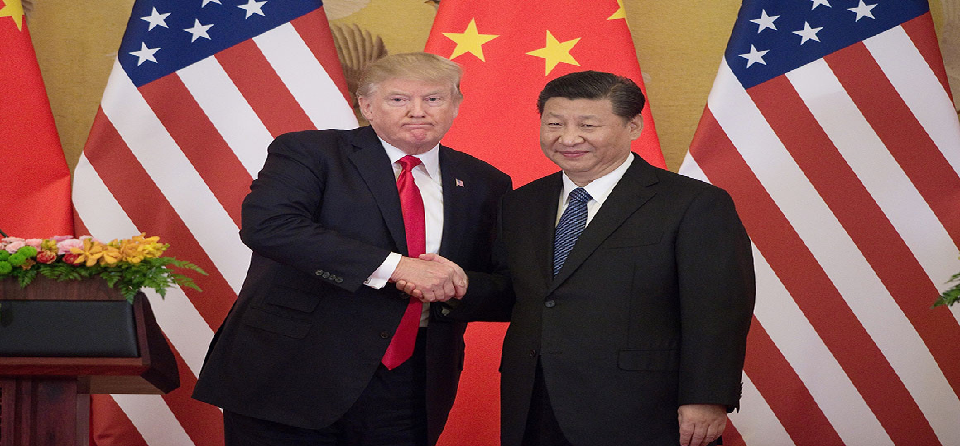
China and US leaders

But China’s commerce ministry said the move violates market rules and it will take action to protect its firms.

“This kind of abuse of national security and state power to suppress Chinese firms does not comply with market rules and violates market magic,” the ministry said in a statement.

“It not only harms the legal rights of Chinese companies but also damages the interests of investors in other countries, including the United States,” it added.

The move appears to be Trump’s final onslaught on Chinese companies before he leaves office this January. The US Commerce Department added a list of Chinese companies to a trade blacklist in December, over allegations that Beijing is using them to harness civilian technologies for military purposes.

The list includes large state-run aerospace and construction companies, as well as technology and communication companies such as Inspur Group, Huawei and China Telecommunications Corp.

China has called on the United States to meet them half-way and go back to the table of bilateral talks. China’s senior diplomat Wang Yi said in a statement published on Saturday, that the relationship between the two world leading economies has reached a “new crossroads” and “a new window of hope” could now be opened.

The Chinese commerce ministry said: “We hope that the US and China will work together to create a fair, stable and predictable business environment for enterprises and investors, so as to get bilateral economic and trade relations back on track.”

COVID-19 deteriorated the already fragile economic relation between the US and China, with Trump calling the pandemic “China virus” and intensified his attack on companies of Chinese origin operating in the United States since 2020.

Beijing hopes that the soured relationship could be amended after Biden becomes president this year. But Biden said on Monday that he would “hold China’s government accountable for its abuses on trade, technology, human rights, and other fronts,” signaling that he may not dramatically alter the US-China relationship.

It is not clear how exactly Beijing is going to respond to the ban. However, the south Asian giant may be hoping in vain for a better treatment from Biden.

President Buhari’s New Year’s Day Speech: The Rhetorics, the Criticism and the Analysis

0

Early morning of January 1st, 2021, the Nigerian President, Muhammadu Buhari addressed the nation in a New Year Speech. The president who felicitated with Nigerians on the transition to a new year harped on the progress made so far by the country as well as challenges facing her as a result of the Covid-19 pandemic, insecurity and economic downturn. The president said “while acknowledging that 2020 was a very tough year, we saw this year put to test our national resilience and ability to survive these tough times and also gave renewed hope that we will again brave any storms that lay ahead in 2021 and beyond.”

The president further said “In the midst of all these challenges, I had initially pledged that as your elected President and Commander-in-Chief, I would ensure that these ongoing challenges will be faced head-on with renewed determination and with all the appropriateness and urgency required.”

In deriving takeaways from the speech, a source identified  ten key points from the president’s speech. The source noted that President Buhari acknowledged the struggles of nation building in the country from independence; recognized the roles of youths and their creative energies; pledged commitment to implement the #EndSARS demands  and then hinted at reorganising the nation’s security apparatus.

Other points noted from the presidential speech included the president’s assurance of revamping the economy; ensuring timely and diligent prosecution of corruption cases as well as recognising the cog in the wheel roles of insecurity in the implementation of FG’s social policy; procuring and distributing the COVID 19 vaccines efficiently and effectively for the country. President Buhari ended the speech by charging the citizenry to also play their roles as the government plays its own part.

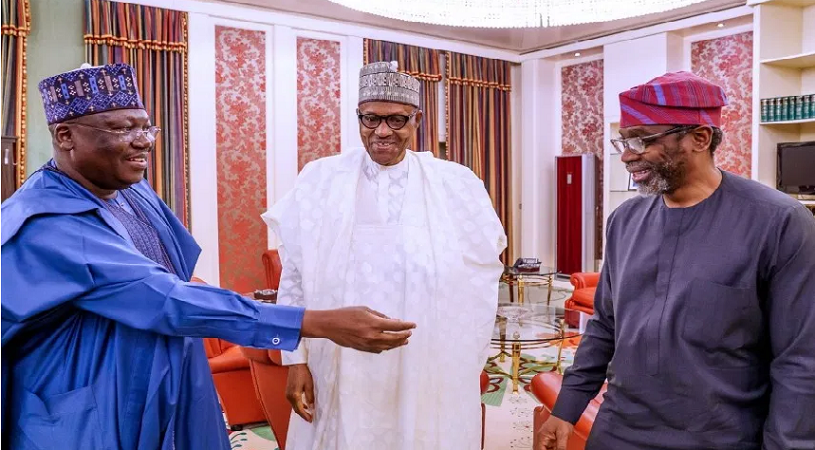
Nigeria leaders

In a reaction to the Presidential New Year Morning Speech, the People’s Democratic Party, the major opposition in the country has described the speech as empty. In a statement signed by the party’s spokesperson, Kola Ologbondiyan, the PDP described the president’s speech as “appalling” and “a regurgitated script full of lame excuses and empty promises that address nothing.” The PDP claimed that “President Buhari has not demonstrated the capacity to play his own part, as he claimed, having failed to find solutions to the security and economic challenges that pervades our nation under his incompetent and lethargic watch.” The party further took the president up on each focus area highlighted in his speech urging Nigerians to come together to collectively tackle the problems confronting the nation.

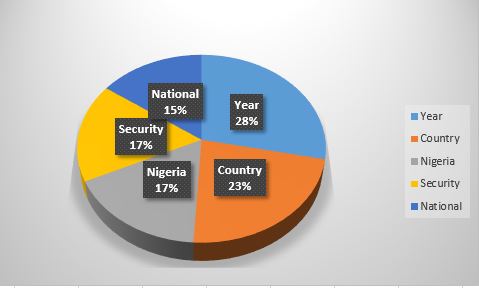
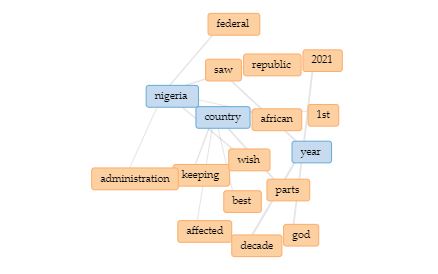
The President’s New Year speech has a total of 1,787 total words with 704 unique word forms. It has a vocabulary density of 0.394 and an average word per sentence stood at  29.8. The president has five most frequently used words consisting of “year”, “country”, “Nigeria”, “security” and “national.” The anchor of the speech centres on the country, Nigeria and year (See Exhibit 1 and 2).


Exhibit 1 : Frequently Used Words in PMB’s Speech (Source: Adebiyi,2021)

Public analysts have said the speech was not reassuring as the president failed to specifically point to definite policy statements on security, plans for COVID 19, recent ASUU strike and other burning issues in the country. Whatever the analysts must have said, the rest of the year as it unfolds will tell.


Exhibit 2: The connection between the words in PMB’s Speech (Source : Adebiyi, 2021)

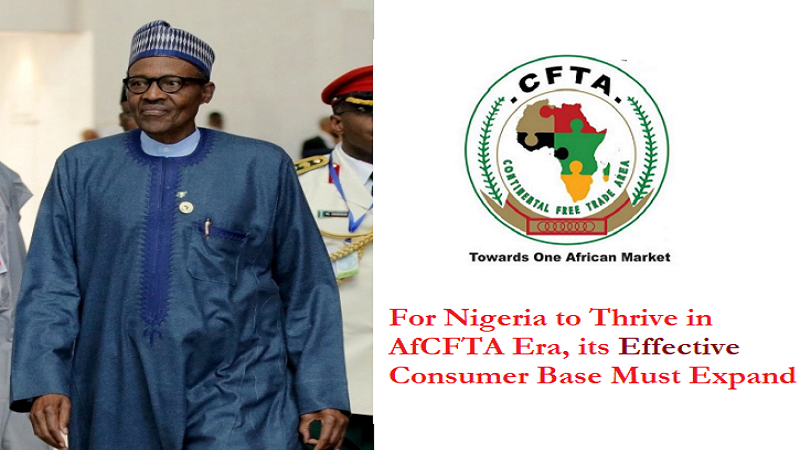
The Illusion of Size And Why Nigeria Must Deepen Its Consumer Base in AfCFTA Era

2

In our programs, we make it clear that we hope for an outcome where many are working and adding values in already established companies. Yes, I do not want everyone to go and start his or her company even though we celebrate entrepreneurial capitalism. Why? A community where everyone is an employer is a poor community. Only big companies can attack big problems in markets and societies, and when the framework is there for companies to become big, communities and nations rise. 

So, while there is the exuberance on minting everyone to become his or her own employer, we like to focus on entrepreneurial capitalism where professionals can become project champions and internal innovators in existing (and of course new) companies. Simply, not all of us must start our own companies. If everyone is a business owner, it means we have a big problem in Nigeria and Africa. Indeed, that must not be celebrated when your company registration docket has millions of new companies in the books!

It is on this thesis that I call  for Nigeria to get serious, as we enter a new phase of continental competition with the float of AfCFTA. Nigeria must develop frameworks to ensure that our small businesses can become middle scale businesses, and the middle scale to move into big companies. The economies of scale are extremely important for the competitiveness of the nation at the continental arena.

“Africa and AfCFTA are today self-reinforcing. The AfCFTA, if done well, will be the platform that turbo-charges investment, innovation and ultimately growth and prosperity for Africa. The private and public sectors must work together to deliver on its promise,” Vera Songwe ECA Executive Secretary said on New Year’s Day.

With this statement, which has been accompanied by so many others to mark the beginning of African Continental Free Trade Area, which takes effect on January 1, 2021, the success of AfCFTA undoubtedly depends on what African leaders do and what they do not do.

The idea, which was born in 2012 from the desire to create a bloc that will spur economic growth through intra-African trade in the continent, went through hurdles to reach this point. It was until 2018 that the AfCTFA agreement was signed due to the hesitation of African Union (AU) member states.

We respect South Africa because they know how to build category-king companies. Nigeria must have a policy where through pure market forces, we can easily make it possible for our brands to grow. I do think, part of that is having a home win. And home wins will mean a good consumer base in the nation. Yes, it comes down to our effective addressable market which must of necessity improve.

So, as we see the exodus and death of companies, I remind everyone that Nigeria has about 30 million people who earn income and can pay for anything. Any model built outside that 30 million will disappoint. I have explained how I arrived at this 30 million number here. With the pandemic affecting that 30 million number, which carries the other 170 million citizens, you will then understand the challenge we have in the near future.

If we do not deepen the home consumer base, it would be hard for our local brands to go international. South African firms do go continent-wide under the strength they receive from their home nation.

Nigeria has this illusion of 200 million people. For years, that illusion has tripped local and foreign companies. Yes, people put money into the economy only to realize that 200 million is actually about 30 million effective (paying) consumers.

This dislocation in our consumer base within this emerging AfCFTA era will be challenging for Nigeria. Our government has to come up with better ideas to ensure we can deepen the middle class,  and that would mean having capacities to build great companies in the nation. Since the early 1990s when the new generation banks were created, Nigeria has not experienced another spark where many companies created many jobs at scale. That has to change.

Our President Should Sign AfCFTA Free Trade after Strengthening “Rule of Origin” Clause

Comment on Feed

Comment: I started reading the “Protocol for Free Movement of Peoples” last night. It would be good for Nigeria’s extra capacity in the SME space.

My response: But notice that it is always hard for any home company to go international without a home run. If Nigeria does not have an expanding consumer base which will support and fund that expansion, most of our firms will struggle. South Africa’s companies get a lot of benefit from the home nation as they expand. So, the competition could be SME and Large firms. AfCFTA cannot magically make an Aba shoe maker a big player without Nigeria making it big first! Our optimistic exuberance must be calibrated before the rule of origin clause comes.

The Challenge Ahead As AfCFTA Takes Effect