DD
MM
YYYY

PAGES

DD
MM
YYYY

spot_img

PAGES

Home Blog Page 5961

Follow These Steps To Collect Your Unclaimed Dividend in Nigeria

26
SEC Nigeria

“Any unclaimed dividend of a public limited liability company quoted on the Nigerian Stock Exchange and any unutilised amounts in a dormant bank account maintained in or by a deposit money bank which has remained unclaimed or unutilised for a period of not less than six years from the date of declaring the dividend or domiciling the funds in a bank account shall be transferred immediately to the trust fund,” the act read.

The act exempts official bank accounts owned by the federal government, state government or local governments or any of their ministries, departments or agencies.

Use these steps to check if you have an unclaimed dividend in Nigeria, courtesy of a source at Whatsapp

Follow these steps to claim your Dividend

Unclaimed dividends increased from N109.1 billion in December 2016 to N130 billion in December 219

Search if you or your loved ones have unclaimed dividends using Security and Exchange Commission Portal and  claim your dividends with these steps.

Step 1: Input your first name and last name into this link http://sec.gov.ng/non-mandated/ to get a list of your shares from SEC. This will give you a screenshot of all the companies you have shares in, and the registrars in charge.

Note: if you have changed your name due to marriage or other reasons, search with your previous name and also try different format of name e.g those with prefixes e.g ‘Olu’, ‘Oluwa’ etc

Step 2: Take note of your registrar’s name. A registrar, is the company that keeps the shareholder’s details for other companies. So, your shares could have data with different registrars.

Step 3: Download and fill your registrar’s form which is beside the company’s name on the website.

Step 4: Submit your form. Some companies require you to go to your bank and get a bankers confirmation, so they can initiate the e-dividend form for you.

Once this is done, your account will be credited automatically with the e-dividend going forward.

The Nigeria’s Dormant Bank Account and Unclaimed Dividend Bad Policy

4
Nigerian president and vice president

When I started my banking career many years ago in Nigeria, I opened  a savings account with Union Bank. I left a standing instruction to run on perpetuity on an instrument therein. But with the new playbook that Nigeria is looking for dormant bank account balances and unclaimed dividends to fund our mindless bureaucracy, I have just informed Union Bank that “I dey here kampe”. Indeed, in Nigeria’s playbook, if you have a bank account and you have not done anything on it for 6 years, you have possibly forgotten it! Why is that a government’s problem?

If they are worried that some deceased people’s wealth is lost to banks, then, they need to make laws, mandating banks to contact the person or the next of kin before getting the government involved. In the US, it is automatic, once the owner is deceased, the bank moves the value to the next of kin. And if that next of kin does not exist, it goes to the next of kin’s track.

“Any unclaimed dividend of a public limited liability company quoted on the Nigerian Stock Exchange and any unutilised amounts in a dormant bank account maintained in or by a deposit money bank which has remained unclaimed or unutilised for a period of not less than six years from the date of declaring the dividend or domiciling the funds in a bank account shall be transferred immediately to the trust fund,” the act read.

The act exempts official bank accounts owned by the federal government, state government or local governments or any of their ministries, departments or agencies.

Also, those useless stocks we all bought ten years ago, during the boom, have been earning dividends. Now is the time to write to the companies that “you dey” in case you are like me who have not cared about those 10k per share dividends; one insurance company declared 2k per share! 

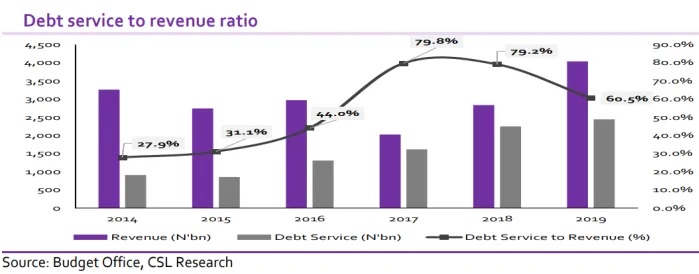
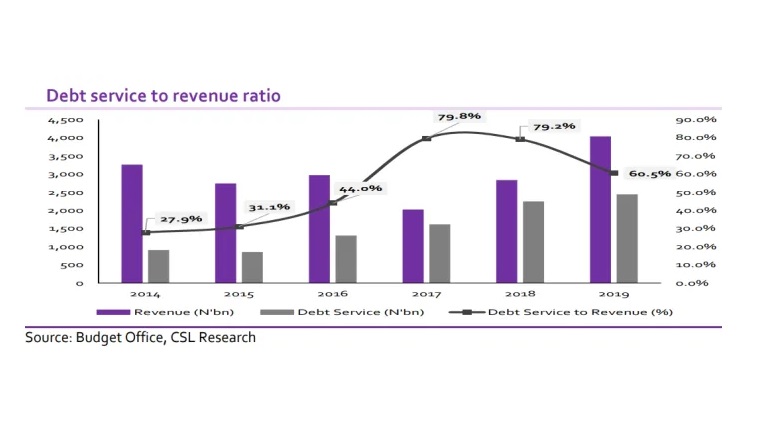
If you waste time and Aso Rock gets hold of the funds, they are gone forever. Nigeria uses 60% of its revenue to service debts. There is no business in the world that can survive with that model. I mean, I am not an accountant, but I passed ICAN’s Intermediate exam before I left banking. If your cost of capital is that high, you have no future.

Do not allow Nigeria to get hold of your money; talk to your bank or stock broker NOW.

Nigeria data

Follow these steps to claim your Dividend

Unclaimed dividends increased from N109.1 billion in December 2016 to N130 billion in December 219

Search if you or your loved ones have unclaimed dividends using Security and Exchange Commission Portal and  claim your dividends with these steps.

Step 1: Input your first name and last name into this link http://sec.gov.ng/non-mandated/ to get a list of your shares from SEC. This will give you a screenshot of all the companies you have shares in, and the registrars in charge.

Note: if you have changed your name due to marriage or other reasons, search with your previous name and also try different format of name e.g those with prefixes e.g ‘Olu’, ‘Oluwa’ etc

Step 2: Take note of your registrar’s name. A registrar, is the company that keeps the shareholder’s details for other companies. So, your shares could have data with different registrars.

Step 3: Download and fill your registrar’s form which is beside the company’s name on the website.

Step 4: Submit your form. Some companies require you to go to your bank and get a bankers confirmation, so they can initiate the e-dividend form for you.

Once this is done, your account will be credited automatically with the e-dividend going forward.

Nigeria’s 60% Debt Service to Revenue Ratio And Push To Borrow from Unclaimed Dividends, Dormant Bank Balances

Consumer Apps: A Non-Intrusive And Direct Touchpoint between FMCGs And Consumers

1

I commenced my marketing career as a digital marketing executive in the music industry. Afterwards, I served at three technology start-ups, an established technology solutions & transaction services business, found my way to a telecommunications business and then went to a digital marketing agency where I managed various fast-moving consumer goods clients. I’ve remained within the fast-moving consumer goods industry ever since, having contributed my expertise to the growth of several global brands across Africa.

FMCG companies are some of my most admired companies in the world. I see the big and oldest FMCGs as the bedrock of many professional functions (e.g. Marketing, Sales, Engineering, Supply Chain Management, Human Resources Management etc.). Their huge investments in cutting edge manufacturing technology blow my mind. FMCGs have stayed relevant over many years & industrialization eras due to their constant innovation especially in manufacturing & product formulation. However, for many years in the FMCG world, communication, insight generation for innovation and consumer engagement has taken place through 3rd parties and several middlemen but with the changing competitive landscape and need for speed, it has become imperative to focus more on direct engagement with consumers and better-optimized use of consumer data. This is where consumer apps come in!

Consumer apps exist in the “digital world” to serve a similar purpose to consumer-packaged goods in the “real world”. In case you do not understand me yet, consumer apps are a wide range of applications available on the internet that serve a wide range of people across demographics, psychographics, nationalities etc. The market-leading consumer apps (e.g. Facebook, WhatsApp, Twitter, TikTok, Spotify, YouTube) are usually mobile apps, popular across Android and iOS app stores. They are listed under various categories, such as health, entertainment, finance, games, music, news, and travel, among others. A key similarity between consumer goods and consumer apps is that both help consumers in their day to day tasks and both form a key part of consumers’ everyday life.

So why should a consumer goods company consider launching a consumer app? There are many reasons why this should be considered however I will touch on the below 3 reasons which I consider to be of utmost importance.

  1. The changing landscape of marketing & advertising: traditional advertising, especially TV advertising is intrusive & disruptive to the viewer. Over the last few years, there has been an increasing focus on engaging consumers through their passion points. Digital has also empowered consumers with choice. They choose what content to consume and what content to ignore. Advertising content has increasingly gained notoriety for being ignored by consumers both online & offline, Ad Blockers are at an all-time high in terms of usage and all these undermine the effectiveness of the advertising budget. The cookie-less world is almost here & data policies are changing such that FMCGs may no longer find 2nd party data providers dependable. Consumer apps provide a new opportunity to invest the marketing & advertising budget, reach and engage a critical mass of consumers and tap into real-time insights that will drive the growth of FMCGs going into the future.

  2. Access to real-time data & larger sample size to drive consumer insight generation & product innovation: today many FMCGs rely on market research agencies for market data & insight generation but it is getting clearer by the day, that many market research agencies lack the speed and agility to generate insights at the fast pace required in the current competitive environment. Consumer apps have the power to bridge this gap. Although consumer apps may not replace research agencies immediately, they hold a huge potential to detect real-time consumer interests and trends at scale. These apps can provide insights to FMCG companies with the speed of light so FMCGs can set their innovation agendas in motion faster than ever. A consumer app reaching 1 million consumers, for example, provides the FMCG business with a larger sample size than most research agencies can provide. Consumer apps can also be harnessed for brand safety purposes including detection of fake products.

  1. Mobile devices are centres of attention, taking up a high share of the consumer’s time every day: why do FMCG brands sponsor big concerts, popular TV shows etc? My answer is that brands do this to leverage the high level of “attention” provided by these platforms. The mobile device has become an always-on centre of attention for the consumer, taking a large chunk of the 24 hours available to every consumer every day. What better way to connect with today’s consumer than to provide them value on a platform with such a high share of their attention? Consumer apps go beyond regular content deployment on social media pages or launching mobile campaigns for temporary transactional engagement, consumer apps can engage consumers on an always-on basis through their passion points & needs on their most used device, the mobile phone.

Against the backdrop of these reasons, you might ask the question – what kinds of consumer apps can FMCGs launch to engage consumers at scale? Just like the previous question, there is an infinite number of consumer app categories that can serve consumer goods, however, I will share 3 consumer app categories which are proven to be valuable to consumers and can be of great benefit to FMCGs.

  1. Passion Point Apps: FMCG brands are built around a boiling pot of passion points, from sports to cooking to beauty to fashion, the list goes on and on. Consumer apps built around relevant passion points can bring target groups together at scale and brands can engage them with content and harness the opportunity to generate insights and drive product innovation. Personalization of marketing communication at scale is also made possible through passion point apps. Nike is a great example of a brand with great passion point apps and this was key to the resilience of the business when the COVID-19 lockdown forced the temporary closure of their stores & experience centres worldwide.

  2. Knowledge & Thought Leadership Apps: consumers have an endless list of questions especially in certain life stages or occasions hence they seek for knowledge. The search for knowledge has been key to the growth of Google over the years and this gives a great cue for FMCGs as well. Consumer apps providing knowledge and thought leadership on specific topics that matter to FMCG brands and their consumers can bring together the target group of the said brands at scale. Categories such as Baby Care, Feminine Care, Pregnancy, Pharmaceuticals etc. can play strongly in terms of engaging consumers through consumer apps that answer their burning questions & provide answers from trusted sources.

  3. Tools & Utility Apps: utility apps are specialized apps that support several personal and business activities like a reminder, to-do list, scheduling & time management apps, travel planners etc. They come handy for consumers daily as they are key to staying organized throughout the day. Many FMCG brands have the opportunity to engage consumers through utility apps, especially consumer good brands that are closely linked to key daily habits of the consumer.

When it comes to technology and marketing, the questions are often endless, and this creates a huge room for constant innovation. One more question I would like to answer is “what goes into the creation & maintenance of consumer apps?” If you are a leader within FMCG and looking to kick-start your consumer app journey, please be sure to take the following into consideration in addition to budgeting.

  1. Consumer Centricity: a precise understanding of consumers and their mobile app usage holds the key to launching a sustainable consumer app. FMCG leaders need to start by conducting in-depth research on consumer behaviour in this area to develop an understanding of consumer motivations, triggers & barriers to the usage of consumer apps, usage patterns, drivers of engagement, drivers of churn, drivers of acquisition as well as a great understanding of what it takes to delight consumers at scale via consumer apps.

  2. Organizational Data Strategy: consumer apps give FMCGs direct access to consumer data hence, it is key to establish an organizational-wide strategy in terms of managing data. The strategy must put into consideration the overarching laws and regulations as touching data privacy. The strategy must also align with industry standards and state clearly how the organisation intends to capture consumer data, analyse, and leverage the same for commercial purposes. All stakeholders involved in the setup and maintenance of consumer apps must have their pulse on the policies, data strategy and other legislation around the subject matter to prevent any violation of relevant policies.

  1. Consumer App Strategy: this should be a part of the overall digital strategy of the organization and it should be a plan stating clearly how the organization intends to engage with consumers via apps. It should cover the Do’s & Don’ts as well as all rules of engagement as touching consumer apps. It is always good to test on one or two brands, take learnings, establish app-market fit before rolling out to other brands or investing in aggressive consumer acquisition via consumer apps.

  2. Cross-Functional Capabilities: historically, some of the skill sets required to build consumer apps have not been internally available within FMCGs, however, when companies choose to hire the technology & software experts, there must be a strong synergy between them and staff who already have a good understanding of the business. This is the only way a successful collaboration can be achieved as FMCGs are not traditionally known for hiring software development talent while software developers outside the FMCG industry are limited in their knowledge and understanding of the workings of an FMCG business. The team responsible for the conceptualization, development, launch & sustenance of a consumer app within an FMCG should consist of Software Subject Matter Experts, Content Creation & Curation Experts, Consumer Engagement Experts, Consumer & Market Insights Experts, as well as Legal & Regulatory Experts, however, this list is not exhaustive.

  3. Agility & Continuous Improvement: this is of the essence if success is to be achieved at scale. The team in charge of a consumer app must be flexible & nimble, taking learnings at the speed of light and improving at the same speed to keep consumers engaged and coming for more. The digital world is filled with excitement and change drives this excitement hence FMCGs looking to launch consumer apps must be ready to change at the pace of excitement. The Facebook suite of apps owe a lot of their success to their speed in terms of change and offering exciting new features to consumers to keep them engaged, which in turn, prevents switching to the competition. The same applies to consumer apps built by FMCGs.

I imagine a future where investment in consumer interaction/consumer-facing digital technology is proven to be just as vital as the investment in capital expenditure such as machinery in the large FMCG world. Given the trends and data on current consumer behaviour, I believe that consumer apps will completely revolutionize the way marketing teams spend their advertising and marketing budget as we proceed into the future. As I drop my pen and anticipate your questions & contributions, I would like to reiterate that the key issue is bridging the gap between FMCGs and their large consumer base. While there are other solutions to this, the use of Consumer Apps provides FMCGs with the opportunity to go beyond transactional data collection relationships with consumers to providing added value to their core products and at the same time access real-time data to drive all 6Ps of marketing including Price, Proposition, Product, Pack, Place and Promotion.

NERC Says Electricity Tariff Hike Not 50%, But It’s Still Not Welcome

0

The Nigerian Electricity Regulatory Commission (NERC) has issued a statement refuting the report that electricity tariff has been increased in Nigeria by 50%.

In a statement titled: Public Notice On Purported 50% Increase in Electricity Tariffs, the Commission published on Tuesday afternoon, it said the report of tariff increment by 50% is misinformation because no such approval has been given by the regulator.

NERC said there has been minor review for service bands A, B, C, D and E which have been adjusted from N2.00 to N4.00, but the tariff of consumers under bands D and E, who get less than 12 hours daily electricity supply for one month remain frozen.

“The attention of the Commission has been drawn to publication publications in the print and electronic media misinforming electricity consumers that the Commission has approved a 50% increase in electricity tariffs.

“The Commission hereby state unequivocally that NO approval has been granted for a 50% tariff increase in the Tariff Order of electricity distribution companies which took effect on January 1, 2021.

“On the contrary, the tariff for customers on service bands D & E (customers being served less than an average of 12hrs of supply per day over a period of one month) remains frozen and subsidized in line with the policy direction of the FG.
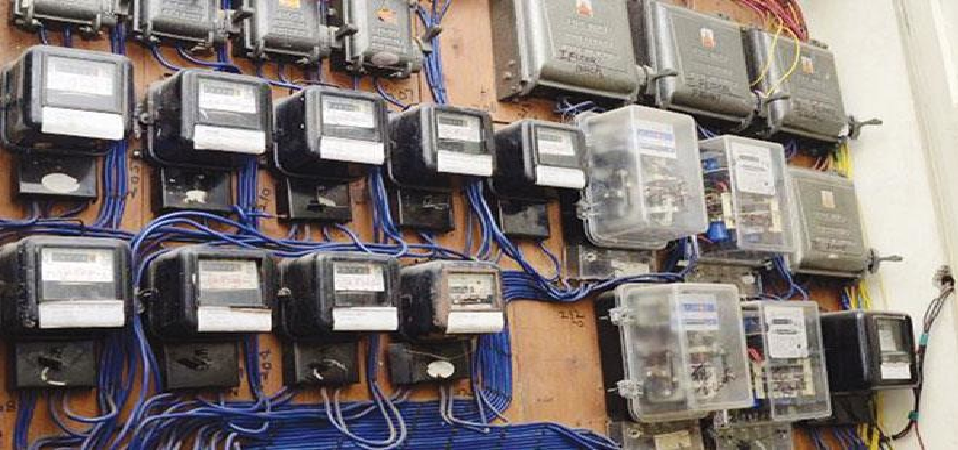
electricity companies nigeria

“In compliance with the provision of the EPSR Act and the nation’s tariff methodology for biannual minor review, the rates for service bands A, B, C, D and E have been adjusted by NGN2.00 to NGN4.00 per KWhr to reflect the partial impact of inflation & movement in forex.

“In the light of strong public interest on this matter, the media is hereby requested to retract their earlier publications misinforming electricity consumers nationwide about a purported 50% increase in electricity tariffs.

“The Commission remains committed to protecting electricity consumers from failure to deliver on committed service levels under the service-based tariff regime,” the statement said.

The regulator also urged customers to report any bill that does not reflect the approved tariff.

The report of 50% tariff increment triggered reactions from Nigerians and the clarification from NERC didn’t help. The Commission admitted that it has adjusted the rates for service bands A, B, C, D and E by N2.00 to N4.00 per KWhr, which means there has been an approved increment which already reflects in consumption.

“Perhaps someone that understands the NERC’s statement can explain it to me. All I know is that I bought N50,000 electricity on 27 December 2020 and got 968.2 units. I then bought the same N50,000 electricity on 4th January 2021 and got only 934.9 units,” Dr. Joe Abah wrote on Twitter, sharing his purchase receipt.

Earlier in September, the Nigerian Electricity Regulatory Commission (NERC), increased electricity tariff from N30.23 per kilowatt-hour to N62.33 per kwh. As a result of the tariff increment, five distinctive bands (A-E) were created to reflect the various service levels and minimum hours of power supply.

Customers were to be allotted electricity supply according to the hours of electricity they consume in their respective Bands. Customers in [Band A] are to enjoy a daily minimum supply of 20 hours, those in [Band B] minimum of 16 hours, [Band C] will have minimum of 12 hours, [Band E] minimum of 8 hours, and those in [Band D], a minimum of 4 hours daily electricity supply.
According to NERC, the increased tariff will only apply to customers in Bands A, B and C, while D and E remain frozen until they are allotted more hours.

Nigerian labor unions threatened to embark on a strike over attempt by the federal government to implement the tariff regime. The proposed strike was averted when the federal government promised to apply subsidies to the tariff.

“We completed our work with Labour on electricity tariffs. The federal government will use Value Added Tax, VAT proceeds from the Nigerian Electricity Supply Industry (NESI), to reduce the September increases by 10 percent to 31 percent for bands A to C, Band D and will remain frozen,” the Special Adviser to the president on Infrastructure, Ahmed Rufai Zakaria said then.

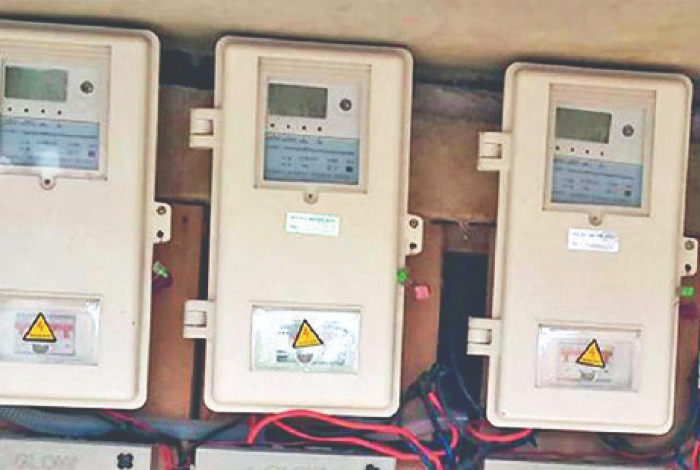
He added that there would be mass metering to ameliorate the raging situation of estimated billing, as over 60% of consumers are still unmetered.

Against this backdrop, the uproar against the increased tariff is still loud even after NERC stated that it’s not up to 50%. Most Nigerian households are still unmetered and the promise of tariff subsidy appears not to reflect on electricity bills.

NERC said they adjusted tariff by NGN2.00 to NGN4.00 per KWhr to reflect the partial impact of inflation and movement in forex, the clarification did nothing to calm the uproar as the welfare of Nigerians has not improved since the last time electricity tariff was hiked.

“The people at NERC approving electricity tariff increase every now & then apparently want to run the masses aground. Many homes & businesses haven’t managed to adjust to the last tariff hike, Fisayo Soyombo said.

“Either you want to chase us out of our country or you want to turn us to overnight thieves,” he added.

Nigeria’s 60% Debt Service to Revenue Ratio And Push To Borrow from Unclaimed Dividends, Dormant Bank Balances

1

I had expected this  to be part of the 2019 electioneering. Of course, ideas do not win elections in Nigeria. People, our debt service to revenue ratio is a real problem. Think about it: if you earn $1,000 as revenue and you spend $600 to service your debt, you will agree that your business has no chance to survive in Nigeria and possibly anywhere on earth. That is exactly what is happening for Nigeria as an institution and the reason why many are fearful.

In 2014, the ratio was about 28%; then it rose close to 80% during the recession and now we are at 60%. When 2020 data comes out, it may be close to 90% considering that revenue was severely affected during the lockdown.

Nigeria will be selling assets in coming quarters as it looks for money. I think nearly all the power plants are gone. Before you wail at Buhari, the state governments are even worse. They have sold what took the states years to acquire largely for nothing! My prediction is that another ASUU strike will end up with a threat of privatizing federal universities.

Besides campuses, are there other things we can sell? Of course Nigeria wants to borrow from unclaimed dividends and dormant bank account balances: “According to the Finance Act 2020 recently signed into law by President Muhammadu Buhari, the trust fund will be a sub-fund of the Crisis Intervention Fund: “Unclaimed dividends and bank account balances unattended to for at least six years will available as special credit to the federal government through the Unclaimed Funds Trust Fund”.

“Any unclaimed dividend of a public limited liability company quoted on the Nigerian Stock Exchange and any unutilised amounts in a dormant bank account maintained in or by a deposit money bank which has remained unclaimed or unutilised for a period of not less than six years from the date of declaring the dividend or domiciling the funds in a bank account shall be transferred immediately to the trust fund,” the act read.

The act exempts official bank accounts owned by the federal government, state government or local governments or any of their ministries, departments or agencies.