DD
MM
YYYY

PAGES

DD
MM
YYYY

spot_img

PAGES

Home Blog Page 5961

NERC Says Electricity Tariff Hike Not 50%, But It’s Still Not Welcome

0

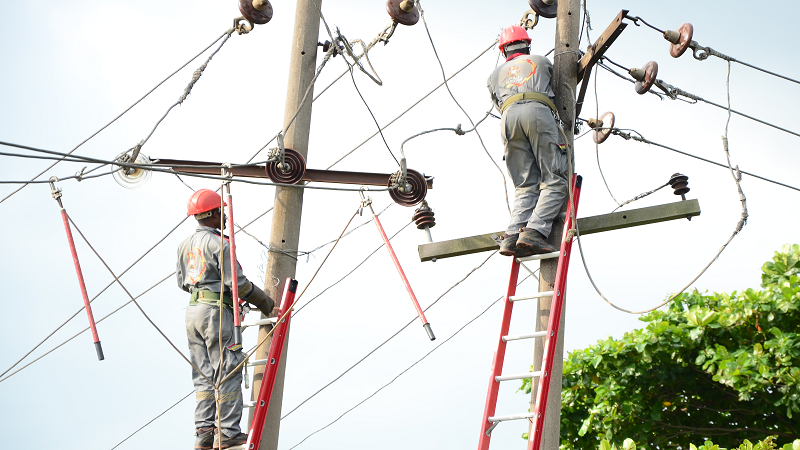
The Nigerian Electricity Regulatory Commission (NERC) has issued a statement refuting the report that electricity tariff has been increased in Nigeria by 50%.

In a statement titled: Public Notice On Purported 50% Increase in Electricity Tariffs, the Commission published on Tuesday afternoon, it said the report of tariff increment by 50% is misinformation because no such approval has been given by the regulator.

NERC said there has been minor review for service bands A, B, C, D and E which have been adjusted from N2.00 to N4.00, but the tariff of consumers under bands D and E, who get less than 12 hours daily electricity supply for one month remain frozen.

“The attention of the Commission has been drawn to publication publications in the print and electronic media misinforming electricity consumers that the Commission has approved a 50% increase in electricity tariffs.

“The Commission hereby state unequivocally that NO approval has been granted for a 50% tariff increase in the Tariff Order of electricity distribution companies which took effect on January 1, 2021.

“On the contrary, the tariff for customers on service bands D & E (customers being served less than an average of 12hrs of supply per day over a period of one month) remains frozen and subsidized in line with the policy direction of the FG.
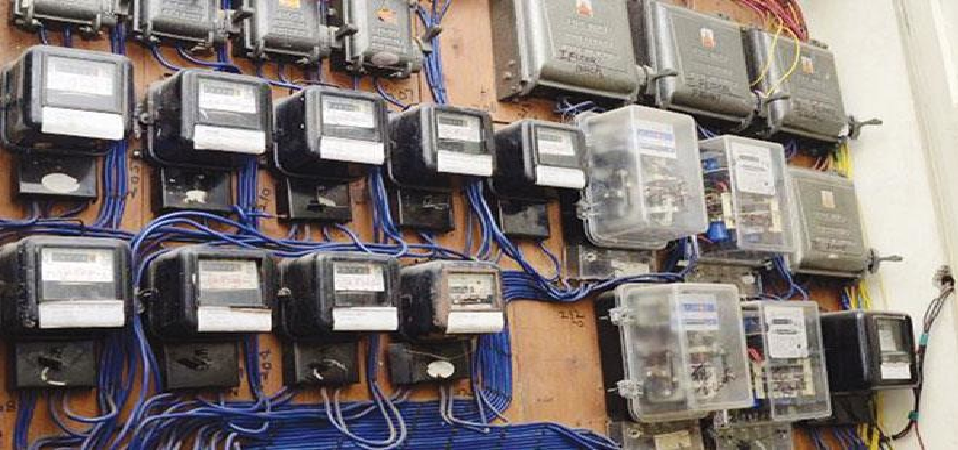
electricity companies nigeria

“In compliance with the provision of the EPSR Act and the nation’s tariff methodology for biannual minor review, the rates for service bands A, B, C, D and E have been adjusted by NGN2.00 to NGN4.00 per KWhr to reflect the partial impact of inflation & movement in forex.

“In the light of strong public interest on this matter, the media is hereby requested to retract their earlier publications misinforming electricity consumers nationwide about a purported 50% increase in electricity tariffs.

“The Commission remains committed to protecting electricity consumers from failure to deliver on committed service levels under the service-based tariff regime,” the statement said.

The regulator also urged customers to report any bill that does not reflect the approved tariff.

The report of 50% tariff increment triggered reactions from Nigerians and the clarification from NERC didn’t help. The Commission admitted that it has adjusted the rates for service bands A, B, C, D and E by N2.00 to N4.00 per KWhr, which means there has been an approved increment which already reflects in consumption.

“Perhaps someone that understands the NERC’s statement can explain it to me. All I know is that I bought N50,000 electricity on 27 December 2020 and got 968.2 units. I then bought the same N50,000 electricity on 4th January 2021 and got only 934.9 units,” Dr. Joe Abah wrote on Twitter, sharing his purchase receipt.

Earlier in September, the Nigerian Electricity Regulatory Commission (NERC), increased electricity tariff from N30.23 per kilowatt-hour to N62.33 per kwh. As a result of the tariff increment, five distinctive bands (A-E) were created to reflect the various service levels and minimum hours of power supply.

Customers were to be allotted electricity supply according to the hours of electricity they consume in their respective Bands. Customers in [Band A] are to enjoy a daily minimum supply of 20 hours, those in [Band B] minimum of 16 hours, [Band C] will have minimum of 12 hours, [Band E] minimum of 8 hours, and those in [Band D], a minimum of 4 hours daily electricity supply.
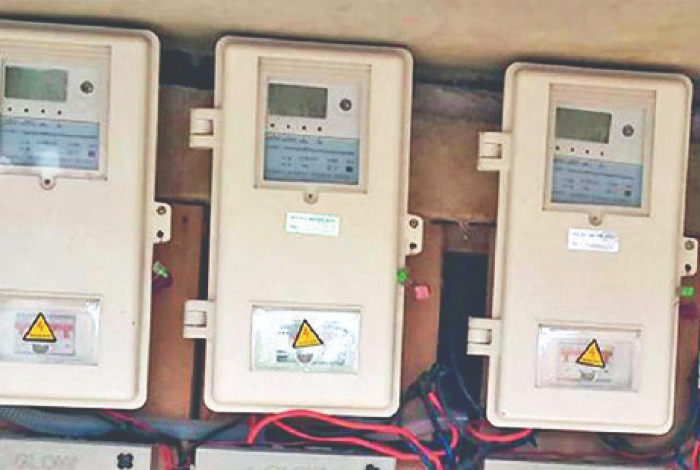
According to NERC, the increased tariff will only apply to customers in Bands A, B and C, while D and E remain frozen until they are allotted more hours.

Nigerian labor unions threatened to embark on a strike over attempt by the federal government to implement the tariff regime. The proposed strike was averted when the federal government promised to apply subsidies to the tariff.

“We completed our work with Labour on electricity tariffs. The federal government will use Value Added Tax, VAT proceeds from the Nigerian Electricity Supply Industry (NESI), to reduce the September increases by 10 percent to 31 percent for bands A to C, Band D and will remain frozen,” the Special Adviser to the president on Infrastructure, Ahmed Rufai Zakaria said then.

He added that there would be mass metering to ameliorate the raging situation of estimated billing, as over 60% of consumers are still unmetered.

Against this backdrop, the uproar against the increased tariff is still loud even after NERC stated that it’s not up to 50%. Most Nigerian households are still unmetered and the promise of tariff subsidy appears not to reflect on electricity bills.

NERC said they adjusted tariff by NGN2.00 to NGN4.00 per KWhr to reflect the partial impact of inflation and movement in forex, the clarification did nothing to calm the uproar as the welfare of Nigerians has not improved since the last time electricity tariff was hiked.

“The people at NERC approving electricity tariff increase every now & then apparently want to run the masses aground. Many homes & businesses haven’t managed to adjust to the last tariff hike, Fisayo Soyombo said.

“Either you want to chase us out of our country or you want to turn us to overnight thieves,” he added.
Nigeria’s 60% Debt Service to Revenue Ratio And Push To Borrow from Unclaimed Dividends, Dormant Bank Balances

1

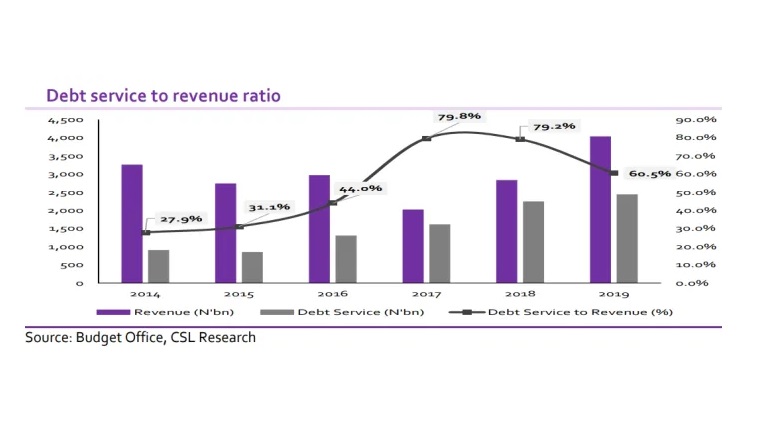
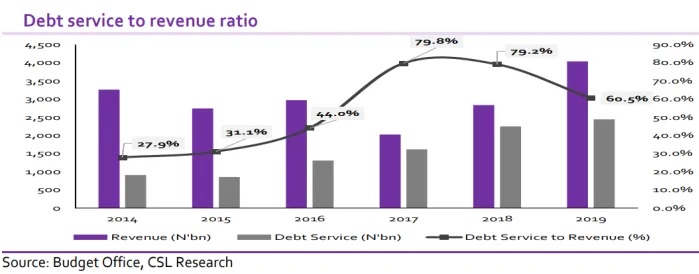
I had expected this  to be part of the 2019 electioneering. Of course, ideas do not win elections in Nigeria. People, our debt service to revenue ratio is a real problem. Think about it: if you earn $1,000 as revenue and you spend $600 to service your debt, you will agree that your business has no chance to survive in Nigeria and possibly anywhere on earth. That is exactly what is happening for Nigeria as an institution and the reason why many are fearful.

In 2014, the ratio was about 28%; then it rose close to 80% during the recession and now we are at 60%. When 2020 data comes out, it may be close to 90% considering that revenue was severely affected during the lockdown.

Nigeria will be selling assets in coming quarters as it looks for money. I think nearly all the power plants are gone. Before you wail at Buhari, the state governments are even worse. They have sold what took the states years to acquire largely for nothing! My prediction is that another ASUU strike will end up with a threat of privatizing federal universities.

Besides campuses, are there other things we can sell? Of course Nigeria wants to borrow from unclaimed dividends and dormant bank account balances: “According to the Finance Act 2020 recently signed into law by President Muhammadu Buhari, the trust fund will be a sub-fund of the Crisis Intervention Fund: “Unclaimed dividends and bank account balances unattended to for at least six years will available as special credit to the federal government through the Unclaimed Funds Trust Fund”.

“Any unclaimed dividend of a public limited liability company quoted on the Nigerian Stock Exchange and any unutilised amounts in a dormant bank account maintained in or by a deposit money bank which has remained unclaimed or unutilised for a period of not less than six years from the date of declaring the dividend or domiciling the funds in a bank account shall be transferred immediately to the trust fund,” the act read.

The act exempts official bank accounts owned by the federal government, state government or local governments or any of their ministries, departments or agencies.

Amazon Air Takes Off for Faster Ecommerce Operations

0

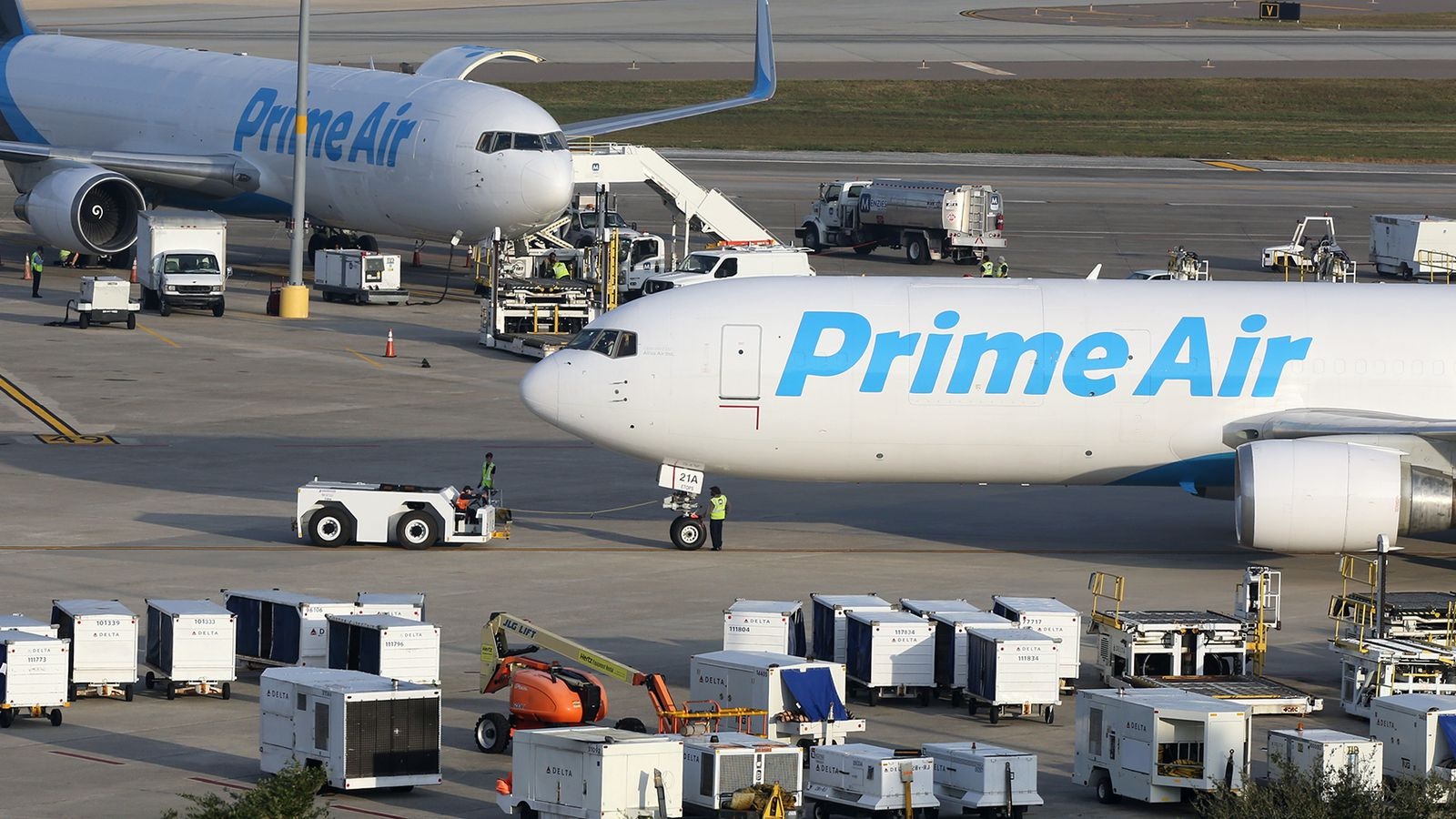
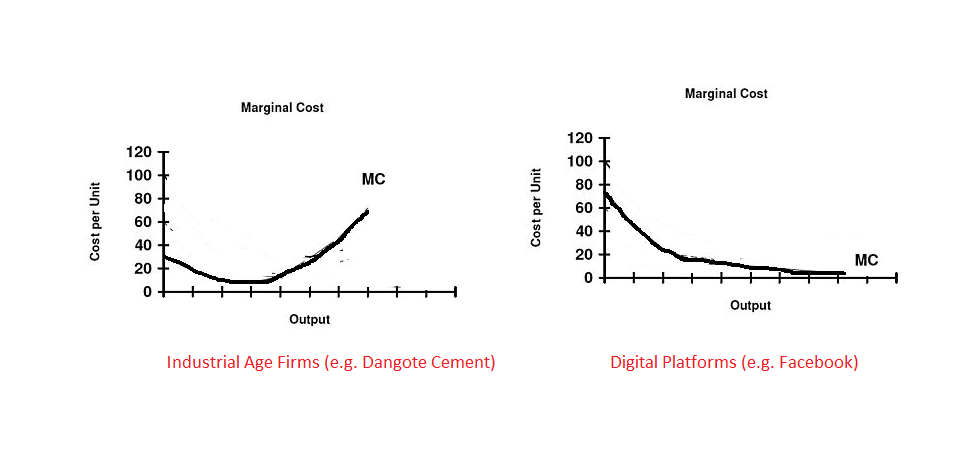
As I have noted, the core component in marginal cost in an ecommerce business is on distribution. And anyone who controls that distribution has an upper hand. The news is that Amazon has purchased many planes; it used to lease. What that implies is that Amazon is going all the way to run an end to end logistics operations, across all nexus and dimensions, from road to air, in order to deliver those packages on time and in full.

Amazon is taking delivery to new heights. For the first time ever, the e-commerce giant has purchased 11 Boeing 767-300 planes, having previously leased aircraft in the past. The move is part of an effort to beef up its cargo operations and to “supplement capacity” from carriers like UPS and FedEx. Amazon expects to have more than 85 planes in service by the end of 2022, according to Bloomberg, to “keep pace in meeting our customer promises.” Amazon is one of the companies that has flourished during the pandemic as consumers have increased online shopping exponentially. (source)

Simply, for Amazon Prime to remain a rainmaker for Amazon, it needs to deliver a new dimension of service. That way Primer membership renewal will continue to happen. Amazon has more than 150 million Prime members globally. If you take an average of $100 per member, you will get $15 billion revenue  which these members pay for the privilege to shop at Amazon. That money could have cost Amazon a lot if it was to be borrowed from a bank. But here, Amazon gets that money interest-free from these members.

More so, because the members have paid this money, many of them are incentivized to shop more at Amazon, creating a virtuous circle which enables Amazon to make more money. Buying planes to keep these customers happy, through faster delivery, is a good call for Amazon.

Understand Your Marginal Cost!

Amazon-Berkshire Hathaway-JPMorgan Chase’s Haven Fails

0

It was seen as a game changer in the American healthcare sector when it was unveiled many months ago. Yes, bringing JP Morgan Chase, Amazon and Berkshire Hathaway  together to invent a new system was a big deal. But healthcare is not an ecommerce operation which you can optimize easily. Of course, it is not banking, and certainly falls outside the domain of Warren Buffett’s investment sagacity. 

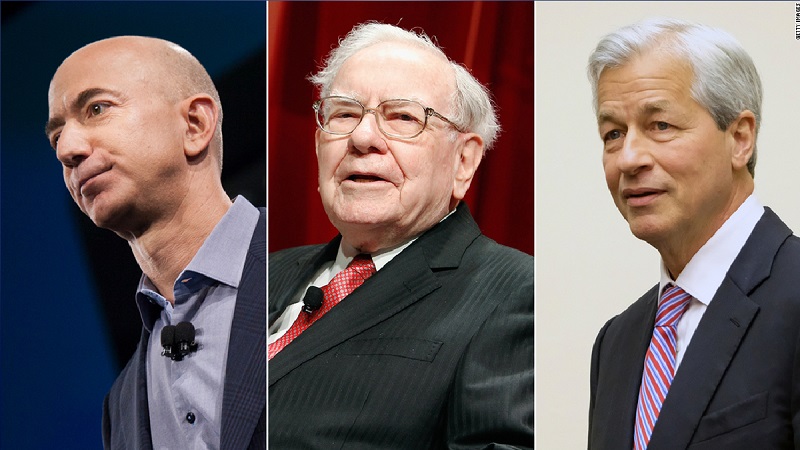
So, the news is that Haven, a  joint venture between the CEOs of Amazon, Berkshire Hathaway and JPMorgan Chase, has informed employees that it will shutter by the end of the month, reminding everyone of the difficulty of changing the highly regulated healthcare sector in the United States..

  • Haven began informing employees Monday that it will shut down by the end of next month, according to people with direct knowledge of the matter.

  • Many of the Boston-based firm’s 57 workers are expected to be placed at Amazon, Berkshire Hathaway or JPMorgan Chase as the firms each individually push forward in their efforts, the people said.

  • One key issue facing Haven was that each of the three founding companies executed their own projects separately with their own employees, obviating the need for the joint venture to begin with, according to the people, who declined to be identified speaking about the matter.

Sure, the experiment will offer many insights to the companies as LinkedIn noted: “Three years ago, the trio sent shock waves through the medicine world with hopes its new company could innovate in the primary care, insurance and prescription drug space. Haven’s collapse reflects how hard it is to “radically improve” America’s “complicated and entrenched” health care system, per CNBC.”

The lesson here is evident: the human system is different and sometimes the most valuable thing is not measured in financial terms. While we can improve banking, investment thesis and ecommerce,  no one can optimize how doctors work because the systems they work on are evidently unique and different.

Tekedia Mini-MBA Early Registration Ends Soon; Register Now for Great Benefits

0

Frictions. Capabilities. Products. Yes, markets have frictions, and you need capabilities to fix them. Those capabilities help you arrange and organize factors of production to create products and services. Products and services are forces which overcome those “frictional forces” which exist in markets.

 I was a very good physics student in secondary school: if there is a force, you need a force to overcome it. Your customers’ problems are market frictions for you. The products or services you deliver are the forces you are creating to overcome them. Make those products great, moments come.

I ask you to join me and other 90 faculty members at Tekedia Institute mini-MBA where we educate on the mechanics of markets and business systems. I promise you – you will see things differently. You will learn of new frameworks and models. You will ADVANCE.

Besides, you get a free course on Facyber.com cybersecurity training, our published books like The Dangote System, Africa’s Sankofa Innovation, etc plus free access to our Innovation Week, and Career  Week (not for jobs, but for the physics of great careers).

Our early bird ends soon; register now to beat it and get those benefits. Click here and register.

Tekedia Mini-MBA Edition 4