DD
MM
YYYY

PAGES

DD
MM
YYYY

spot_img

PAGES

Home Blog Page 5962

The Unification Google Does Not Want

2

Google has changed over the last few years, looking from the outside. That is expected as our world, and indeed everything, has changed. First is the advertising devaluation: if you needed 20,000 page views to make $1, Google could just wake up one day, and shift the goal post to 50,000 views for the same $1. 

That is why in most websites, especially in Nigeria, media houses are adding ads everywhere just to make up what was “lost”; it is a vicious circle as they have no chance. You can call that free market pricing under market forces. But you need to understand that Google owns the open search and advertising planet, with Facebook participating via its walled planet.

It is extremely bad: you grow traffic, and you make less money. That is the world Google has given publishers. Sure, it can claim that advertisers are paying less. That is not true; Google’s profit continues to improve, and what that tells me, is that it is using its market power to extract more value from small publishers around the world. It is very fearful if you look deep on the power one company has.

So, the news that its workers want to form a union is a good one. I wish them good luck and hope they can change this company for good, not just internally but externally. But let this be known: this is one unification or “organizing” Google will fight, even as it promises to “organize” the world information!

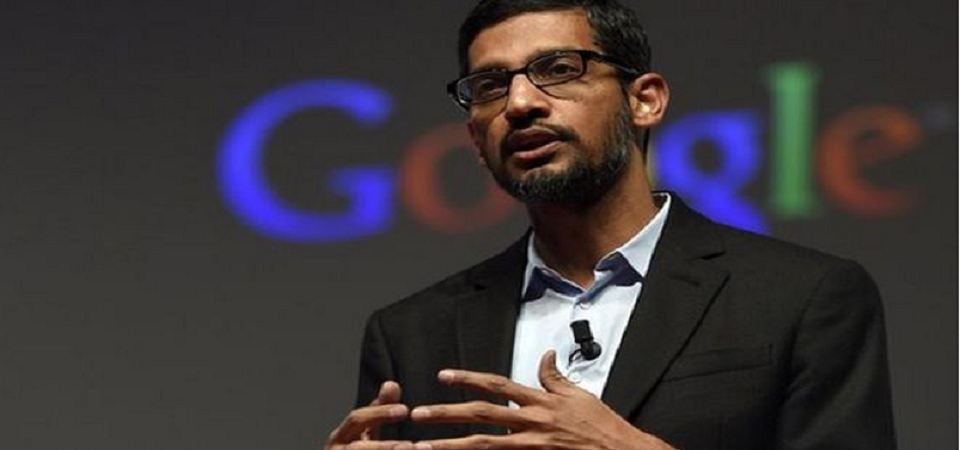
CEO of Google

In one of the first Big Tech unions, more than 225 workers at Google have formed a “minority union” with the Communications Workers of America. The more informal grouping allows for the inclusion of contractors at the Alphabet-owned company, who outnumber full-time workers, and doesn’t require contract negotiations. The announcement comes after demands by workers on such issues as pay and harassment, and is aimed at giving “structure and longevity to activism at Google,” according to the workers, writes The New York Times.

On the union, Samuel Nwite has a detailed report on it here for Tekedia: “This statement suggests that Google will not recognize the newly formed union and will carry on like before. But the union leaders said their goal isn’t to force a new system, but to ensure that things are done right. So for the year 2021, it is not going to be business as usual at Google.”

Let’s hope they include how Google prices its products for many independent publishers. 

Everyone wants to be a publisher and depends on ads. But watch out, after six months, the vision goes. Google’s power on ad is more power than whatever Rockefeller did on oil many decades ago. This has made visiting local Nigerian newspapers challenging as they put adverts everywhere, pursuing an illusion.

We Have Had Enough: Google Workers Form A Union


We Have Had Enough: Google Workers Form A Union

0

The year started differently at Google. The web search giant’s workers have kicked off a long anticipated movement that will alter the status quo and ensure more accountability from their employer.

On January 4, the workers announced that they have formed a union of more than 200 employees who believe that Google needs to do better. The union comes at the heels of culminating controversies between Google and its workforce that have kept the Silicon Valley big name in the bad page of the news recently.

There have been issues of moral questions which spiraled into a degenerating toxic relationship between Google and its employees. The staff believe the situation can be ameliorated if there is a strong union to question some of the decisions of those at the helm. Google was said to have used its artificial intelligence technologies in military contracts among other things.

On Nov, 1, 2018, about 200 Google employees teamed up with employees of other subsidiaries of Alphabet, Google’s parent company, including Waymo and Verily to stage a global demonstration. The protest had been based on the company’s inability to take action against cases of alleged sexual misconduct and racial discrimination. Two executives who were fingered in the allegation were paid tens of millions of dollars, and the company did little to amend the situation that enabled the impunity.

Two years later, nothing seems to have changed. The case of Timnit Gebru, a leading artificial intelligence researcher who was recently fired amplified the concerns of the employees – now they have had enough.

In a statement published by New York Times, the union leaders listed series of culminating events at Google that prompted the coalition of employees to take action. They have been silently working on the move for about a year.

The two of us are software engineers, and we were recently elected executive chair and vice chair of the Alphabet Workers Union, a group of more than 200 workers in the United States who believe our company’s structure needs to change.

For far too long, thousands of us at Google — and other subsidiaries of Alphabet, Google’s parent company — have had our workplace concerns dismissed by executives. Our bosses have collaborated with repressive governments around the world. They have developed artificial intelligence technology for use by the Department of Defense and profited from ads by a hate group. They have failed to make the changes necessary to meaningfully address our retention issues with people of color.

Most recently, Timnit Gebru, a leading artificial intelligence researcher and one of the few Black women in her field, said she was fired over her work to fight bias. Her offense? Conducting research that was critical of large-scale A.I. models and being critical of existing diversity and inclusion efforts. In response, thousands of our colleagues organized, demanding an explanation. Both of us have heard from colleagues — some new, some with over a decade at the company — who have decided that working at Alphabet is no longer a choice they can make in good conscience.

Workers have mobilized against these abuses before. Organized workers at the company forced executives to drop Project Maven, the company’s artificial-intelligence program with the Pentagon, and Project Dragonfly, its plan to launch a censored search engine in China. Some of Alphabet’s subcontractors won a $15 minimum hourly wage, parental leave, and health insurance after an employee outcry. And the practice of forced arbitration for claims of sexual harassment was ended after the November 2018 walkout — albeit only for full-time employees, not contractors. A few months later, Google announced that it would end forced arbitration for employees for all claims.

To those who are skeptical of unions or believe that tech companies are more innovative without unions, we want to point out that these and other larger problems persist. Discrimination and harassment continue. Alphabet continues to crack down on those who dare to speak out, and keep workers from speaking on sensitive and publicly important topics, like antitrust and monopoly power. For a handful of wealthy executives, this discrimination and unethical working environment are working as intended, at the cost of workers with less institutional power, especially Black, brown, queer, trans, disabled, and female workers. Each time workers organize to demand change, Alphabet’s executives make token promises, doing the bare minimum in the hopes of placating workers.

It’s not enough. Today, we’re building on years of organizing efforts at Google to create a formal structure for workers. So far, 226 of us have signed union cards with the Communications Workers of America — the first step in winning a recognized bargaining unit under U.S. law. In other words, we are forming a union.

We are the workers who built the Alphabet. We write code, clean offices, serve food, drive buses, test self-driving cars and do everything needed to keep this behemoth running. We joined Alphabet because we wanted to build technology that improves the world. Yet time and again, company leaders have put profits ahead of our concerns. We are joining together — temps, vendors, contractors, and full-time employees — to create a unified worker voice. We want Alphabet to be a company where workers have a meaningful say in decisions that affect us and the societies we live in.

As union members, we have created an elected leadership and representative structure with dues-paying members. Our union will be open to all Alphabet workers, regardless of classification. About half of the workers at Google are temps, vendors or contractors. They are paid lower salaries, receive fewer benefits, and have little job stability compared with full-time employees, even though they often do the exact same work. They are also more likely to be Black or brown — a segregated employment system that keeps half of the company’s work force in second-class roles. Our union will seek to undo this grave inequity.

Everyone at Alphabet — from bus drivers to programmers, from salespeople to janitors — plays a critical part in developing our technology. But right now, a few wealthy executives define what the company produces and how its workers are treated. This isn’t the company we want to work for. We care deeply about what we build and what it’s used for. We are responsible for the technology we bring into the world. And we recognize that its implications reach far beyond the walls of Alphabet.

Our union will work to ensure that workers know what they’re working on, and can do their work at a fair wage, without fear of abuse, retaliation or discrimination. When Google went public in 2004, it said it would be a company that “does good things for the world even if we forgo some short-term gains.” Its motto used to be “Don’t be evil.”

We will live by that motto. Alphabet is a powerful company, responsible for vast swaths of the internet. It is used by billions of people across the world. It has a responsibility to prioritize the public good. It has a responsibility to its thousands of workers and billions of users to make the world a better place. As Alphabet workers, we can help build that world.”

Google said in a statement following this announcement that it will continue to interact  directly with staff.

“We’ve always worked hard to create a workplace that supports and rewards our workforce,” said Kara Silverstein, Google’s director of people operations. “Of course, our employees have protected labor rights that we support, but as we have always done, we will continue to interact directly with all of our employees.”

This statement suggests that Google will not recognize the newly formed union and will carry on like before. But the union leaders said their goal isn’t to force a new system, but to ensure that things are done right. So for the year 2021, it is not going to be business as usual at Google.

Use Vetifly To Transport Valuable Items (gold, cash, securities, etc)

0

Vetifly – fly over traffic, bad roads, etc in Nigeria! We are adding more routes across the nation. If supply chain powers commerce, we are excited for the promise in Nigeria. If you are in logistics or moving extremely valuable items (gold, cash, securities, etc), Vetifly is here to transport them safely. Email me and I will connect you with our Lagos or Dubai team.

  • Ndubuisi Ekekwe, PhD
  • Board Member & Co-Founder Vetifly

Jack Ma’s Disappearance and China’s Message to the World

2
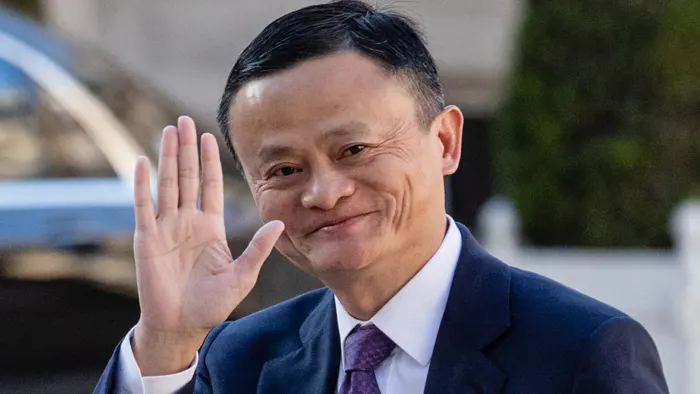
Founder of Alibaba

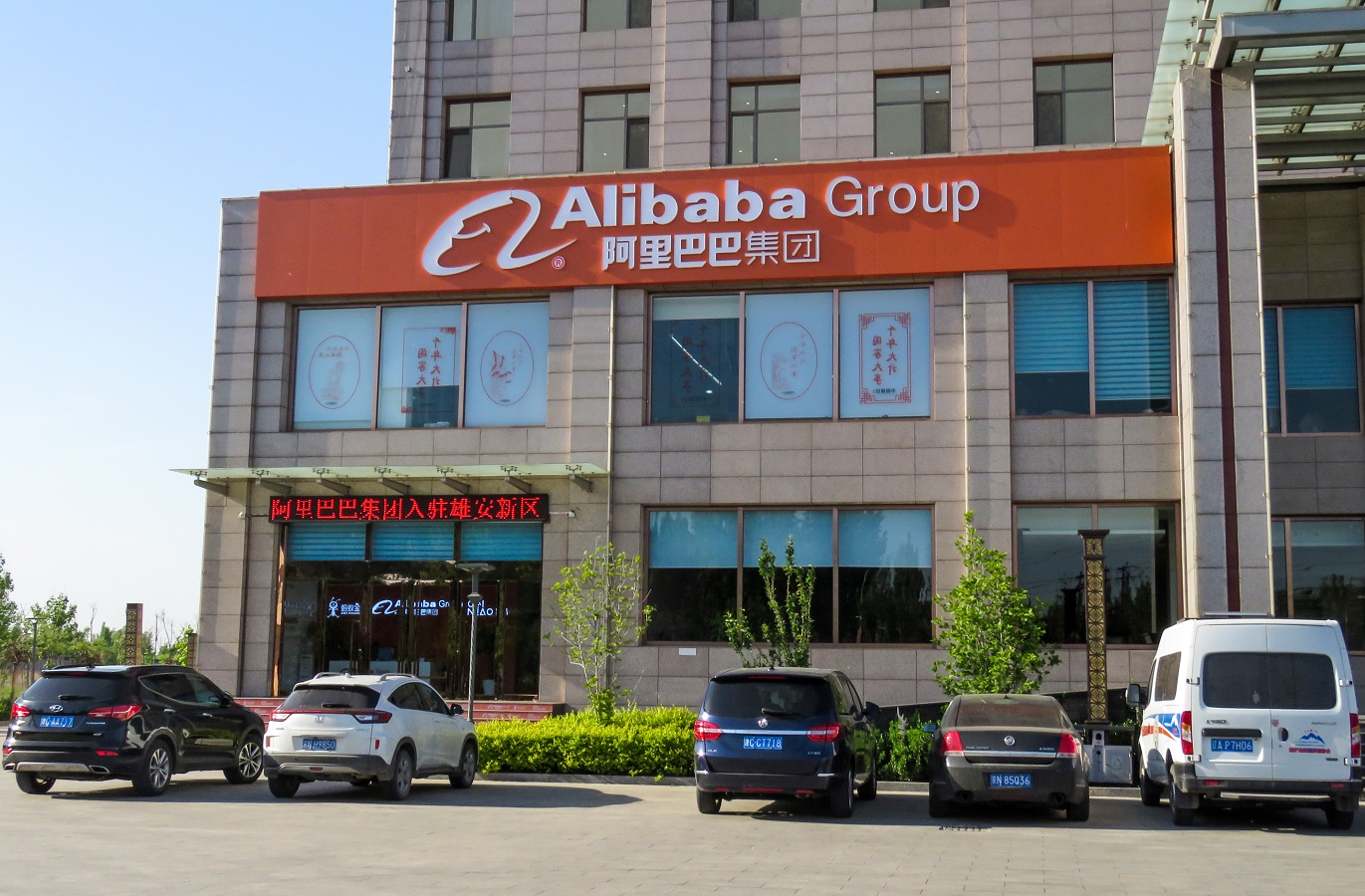
The founder of Alibaba, Jack Ma, has been missing from the public view for about two months now, instigating speculations about his safety in the face of altercation between his business empire and the Chinese authorities.

In October, Ma publicly criticized Chinese regulators at a conference in Shanghai, for some rules of the financial sector. He described the regulations as “old people’s club” and said that “we can’t use yesterday’s method to regulate the future.” Ever since then, things had not been the same for the 56 years old billionaire. He was invited by regulators for investigation, and vanished from public eyes ever since.

In late December, Chinese regulators launched an antitrust investigation into the country’s biggest e-commerce company, Alibaba. That’s after the government introduced rules that halted scheduled initial public offering for Ant Group, Ma’s fintech company.

Another event that stoked suspicion took place in November. Ma was removed as a judge on the African Business Heroes, an African talent show he founded. He was billed to appear in the finale, and tweeted that he couldn’t wait to meet with the finalists, but was abruptly replaced.

Alibaba office

Last week, the Chinese government ordered Ant Group, the owner of Alipay, China’s largest digital-payment platform, to scale back its operations and rectify some business practices.

While all these happened, Ma’s voice was not heard nor was he seen in the public, betraying the outspokenness and poster boy attributes he has been known for.

In 1999 when Ma convinced his friends to lend him $60,000 to start a new business in China, it was in a bid to develop an e-commerce idea he conceived while he traveled to the United States. He had been shown the internet while on his trip and he vowed to make something out of it. So in the corner of his bedroom, Ma gave birth to Alibaba, an online market store which has metamorphosed into an estimated $51 billion platform.

Considering his poor background, it was a grass-to-grace story, and it made him a darling of the Chinese Communist Party, and he was even seen as an ambassador who would bridge the technology gap between the US and China.

The former English teacher has gone ahead ever since to develop other tech ideas, including the Ant Group, formerly known as Ant Financial and Alipay, an affiliate company of the Alibaba Group. Alipay has become the largest digital payment platform in China, making Ma the richest person in the South Asian country until recently, when his page in the good book of Chinese government was revisited.

Therefore, Ma is no longer the darling he used to be. The Communist Party has other priorities which they deem more important than the internet evolution that is creating billionaires in China, challenging US’ dominance. Ant Group’s $37 billion initial public offering which would have valued the company at more than $300 billion, and was going to be the largest in history was halted.

But that was just the beginning of Ma’s pangs of distress. Triggered by his October comments, the Chinese government’s regulatory clampdown on his online empire has instigated 17% decline in Alibaba’s market value, and dropped the once China’s richest man in the third position with a $63.1 billion net worth, according Bloomberg Billionaires’ Index.

“The fintech clean-up considerations would not have been an issue [for the authorities]. But everything changed after the speech… Xinhua News agency publicly attacked Ma,” professor of finance at the Hong Kong University, Chen Zhiwu, told Financial Times.

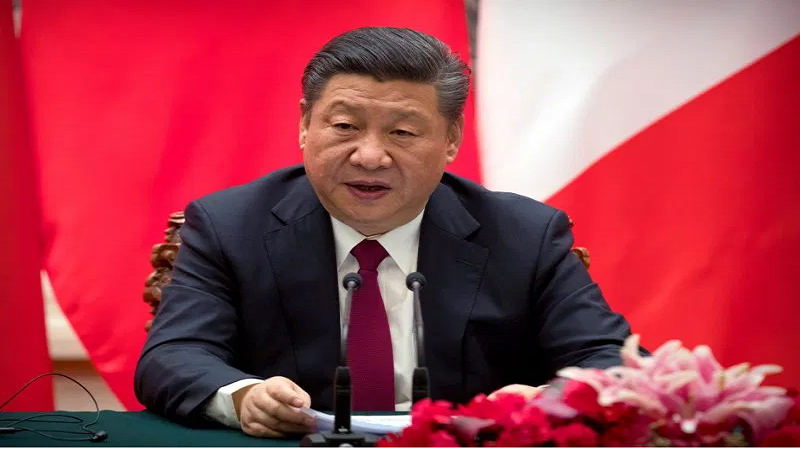
Although events like this are not new in China, Beijing has a history of ruthlessly clamping down on its internal critics no matter the economic cost. In March, a property tycoon vanished after he called Chinese president Xi Jingpin a clown, in a defiant criticism of how he handled the coronavirus outbreak.

In 2014, another billionaire businessman, Guo Wengui, got in the way of the authorities and had to flee China. He made a video interview in 2019 where he described himself as a whistleblower who exposed corruption in the country. One thing he said that people can’t stop talking about now is that Ma would likely end up in jail because China wanted to “take back” Ma’s lucrative Ant Group.

Considering China’s record in handling dissents, Ma’s disappearance is not far from all the speculations so far. But it may spell doom for the country’s economy, especially as the second largest economy in the world is working to build post-COVID-19 economy in the face of degenerating economic sanctions from the US.

Ma has been a leading light of China’s unique approach to generating wealth in accordance with its strict communist framework, and represents an economic future which many investors want to reckon with. His disappearance is stoking so many questions about China’s readiness to operate a free market, and sends a clear message that there is no sacred cow in Beijing’s determination to quell dissension. And that’s a scary development that will hurt investments in companies of Chinese origin, and will undermine the country’s prospects of overtaking the US as the world’s largest economy.

Invest in Customer Perceptions, and Change Basis of Market Competition

0

In this 2021, are you focusing on meeting the Needs of your customers or are you improving to serve at the level of their Expectations? Great companies go beyond Needs and Expectations to Perceptions of customers. To bring that Perception in the minds of customers, it could be a “word” on your packaging. 

Walmart works on customer perception here by adding “organic” on the native  toothbrushes, many decades after Intel invented a simple sticker to change the PC industry on the highly successful “Intel Inside” campaign.

In a Harvard Business Review piece, I explained that the “Intel Inside” sticker does demonstrate that innovators could come from any angle, beyond coding and broad technology. The marketing or brand manager who invented that sticker contributed immensely to Intel success.

Look for little things which can shape your customer Perception. Find your “organic” word. Find your “inside” word. Simply, find ways to create a new basis of competition in your business through perception.

Do what Elon Musk does by continually making Tesla “uncatchable” through the perception he has put in the electric vehicle (EV) business. Others are building EVs to meet market needs, Elon keeps changing the goal post by making it clear that Tesla software can change daily, and you need a subscription to get them. 

In other words, there is nothing to benchmark with as Tesla continues to “build” the car through software updates even as you drive them. Yes, even the users do not know the new capabilities which they cars can deliver by next month!

LinkedIn Feed Comment

Yes, customer perception is key for business growth. Customer perception is immensely dependent on meeting and surpassing customer expectations.

Customer interactions are key to meeting customer expectations. Business leaders should sometimes act like customers in order to understand what the current customer perception is and how same can be improved.

For instance, a Bank MD should sometimes use regular ATM machines ?

A lot of businesses are a far cry from having great customer perception because they don’t even know their customers and do not meet their expectations.

Tesla is the World’s Best Software & Services Company in Automobile Sector