DD
MM
YYYY

PAGES

DD
MM
YYYY

spot_img

PAGES

Home Blog Page 5966

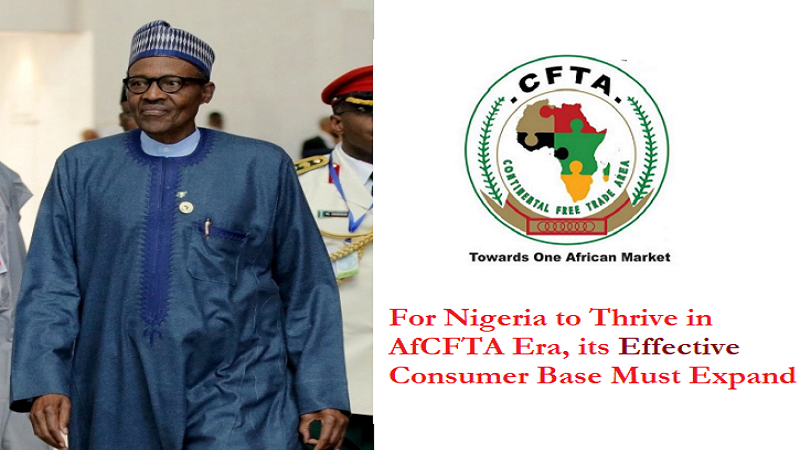
The Illusion of Size And Why Nigeria Must Deepen Its Consumer Base in AfCFTA Era

2

In our programs, we make it clear that we hope for an outcome where many are working and adding values in already established companies. Yes, I do not want everyone to go and start his or her company even though we celebrate entrepreneurial capitalism. Why? A community where everyone is an employer is a poor community. Only big companies can attack big problems in markets and societies, and when the framework is there for companies to become big, communities and nations rise. 

So, while there is the exuberance on minting everyone to become his or her own employer, we like to focus on entrepreneurial capitalism where professionals can become project champions and internal innovators in existing (and of course new) companies. Simply, not all of us must start our own companies. If everyone is a business owner, it means we have a big problem in Nigeria and Africa. Indeed, that must not be celebrated when your company registration docket has millions of new companies in the books!

It is on this thesis that I call  for Nigeria to get serious, as we enter a new phase of continental competition with the float of AfCFTA. Nigeria must develop frameworks to ensure that our small businesses can become middle scale businesses, and the middle scale to move into big companies. The economies of scale are extremely important for the competitiveness of the nation at the continental arena.

“Africa and AfCFTA are today self-reinforcing. The AfCFTA, if done well, will be the platform that turbo-charges investment, innovation and ultimately growth and prosperity for Africa. The private and public sectors must work together to deliver on its promise,” Vera Songwe ECA Executive Secretary said on New Year’s Day.

With this statement, which has been accompanied by so many others to mark the beginning of African Continental Free Trade Area, which takes effect on January 1, 2021, the success of AfCFTA undoubtedly depends on what African leaders do and what they do not do.

The idea, which was born in 2012 from the desire to create a bloc that will spur economic growth through intra-African trade in the continent, went through hurdles to reach this point. It was until 2018 that the AfCTFA agreement was signed due to the hesitation of African Union (AU) member states.

We respect South Africa because they know how to build category-king companies. Nigeria must have a policy where through pure market forces, we can easily make it possible for our brands to grow. I do think, part of that is having a home win. And home wins will mean a good consumer base in the nation. Yes, it comes down to our effective addressable market which must of necessity improve.

So, as we see the exodus and death of companies, I remind everyone that Nigeria has about 30 million people who earn income and can pay for anything. Any model built outside that 30 million will disappoint. I have explained how I arrived at this 30 million number here. With the pandemic affecting that 30 million number, which carries the other 170 million citizens, you will then understand the challenge we have in the near future.

If we do not deepen the home consumer base, it would be hard for our local brands to go international. South African firms do go continent-wide under the strength they receive from their home nation.

Nigeria has this illusion of 200 million people. For years, that illusion has tripped local and foreign companies. Yes, people put money into the economy only to realize that 200 million is actually about 30 million effective (paying) consumers.

This dislocation in our consumer base within this emerging AfCFTA era will be challenging for Nigeria. Our government has to come up with better ideas to ensure we can deepen the middle class,  and that would mean having capacities to build great companies in the nation. Since the early 1990s when the new generation banks were created, Nigeria has not experienced another spark where many companies created many jobs at scale. That has to change.

Our President Should Sign AfCFTA Free Trade after Strengthening “Rule of Origin” Clause

Comment on Feed

Comment: I started reading the “Protocol for Free Movement of Peoples” last night. It would be good for Nigeria’s extra capacity in the SME space.

My response: But notice that it is always hard for any home company to go international without a home run. If Nigeria does not have an expanding consumer base which will support and fund that expansion, most of our firms will struggle. South Africa’s companies get a lot of benefit from the home nation as they expand. So, the competition could be SME and Large firms. AfCFTA cannot magically make an Aba shoe maker a big player without Nigeria making it big first! Our optimistic exuberance must be calibrated before the rule of origin clause comes.

The Challenge Ahead As AfCFTA Takes Effect

The Challenge Ahead As AfCFTA Takes Effect

0

“Africa and AfCFTA are today self-reinforcing. The AfCFTA, if done well, will be the platform that turbo-charges investment, innovation and ultimately growth and prosperity for Africa. The private and public sectors must work together to deliver on its promise,” Vera Songwe ECA Executive Secretary said on New Year’s Day.

With this statement, which has been accompanied by so many others to mark the beginning of African Continental Free Trade Area, which takes effect on January 1, 2021, the success of AfCFTA undoubtedly depends on what African leaders do and what they do not do.

The idea, which was born in 2012 from the desire to create a bloc that will spur economic growth through intra-African trade in the continent, went through hurdles to reach this point. It was until 2018 that the AfCTFA agreement was signed due to the hesitation of African Union (AU) member states.

Nigeria, Africa’s largest economy was late to the party, signing the agreement in July 2019 when most African countries had penned their approval. The development signaled that there could be further hurdles in the future, as Africa pushes to create the biggest bloc in history since 1995 when WTO was created. So far, only 31 countries out of the 54 AU member states who signed the agreement since it went into force on May 30, 2019 have ratified their instruments.

The main objectives of AfCFTA are: To create a single continental market for goods and services, with free movement of business, persons and investments; expand intra-Africa trade across the regional economic communities and the continent in general; and enhance competitiveness and support economic transformation.

It has been the biggest move made by African leaders to boost the continent’s economy through the promotion of intra-African trade. But it has come with a lot of challenges ranging from Rule of Origin (RoO) to AU member states’ attitude toward integration.

In august 2019, a month after it signed the AfCFTA agreement, Nigeria closed its borders to other West African states, citing smuggling of weapons and alarming inflow of contraband rice, which are stymieing the country’s fight against terrorism and its goal to attain food sufficiency through farming. The decision rang a bell of worry as one of the instruments for the development of the new bloc lies on the Regional Economic Communities (RECs) such as ECOWAS, SADC, EAC etc., and about eight of them have been recognized by AfCFTA.

AU members

In 2019, the respective share of Africa’s intra-REC trade emphasized the essence of the regional communities in AfCFTA. Intra-SACU share in intra-Africa export by all African countries was 21%, while the respective shares of intra-ECOWAS, intra-EAC and intra-CEMAC were 17%, 3% and 0.4%, with South Africa and Nigeria leading in their regions. Intra-REC exports as a percentage of total African exports by REC show that most countries trade more with their REC counterparts apart from AMU and ECCAS members.

As Nigeria grudgingly ratified AfCFTA in December, the border closure which had thrown ECOWAS into trade dispute was resolved. The borders were once again opened, allowing the commencement of intra-REC export. But it has set a trajectory that many are concerned would undermine the future prospects of the bloc.

Ghana, another member of the ECOWAS community was also caught in a conduct unbecoming of the AfCFTA’s objectives. The Ghanaian government had asked Nigerian traders operating in Ghana to close their shops or pay $1 million for trading license fee, an unaffordable demand for the Nigerian traders which is believed to be a “go back to your country” message. The persecution has prompted many traders of Nigerian origin in Ghana to quit.

In South Africa, xenophobic attacks on foreigners of African origin blew out of proportion once again in 2019. The locals attacked businesses and even killed owners in a protest against foreign nationals operating successful businesses in their country. That included members of SADC and SACU, who made up the South African REC.

Against this backdrop, the success of AfCFTA depends much on activities taking place across the borders, and will require more efforts from member states to address.

The AfCFTA protocol does not stipulate the penalty for breaching the single transport market rules, apart from the reciprocity that may come from the offended member state. And it goes beyond border and xenophobic issues to the RoO.

Rule of Origin is a clearance enabling goods to circulate duty-free within a free trade area as long as the goods are ascertained to originate from the trade area. The rule define criteria that must be met for a product to be considered as originating from the exporting country within the bloc, and thus qualifies for preferential treatment which means no import duties and zero import tariffs.

“The AfCFTA is a landmark achievement in the continent’s history of regional integration and is expected to generate significant gains. But it is the rules of origin that will determine whether preferential trade liberalization under AfCFTA can be a game changer for Africa’s industrialization,” said UNCTAD Secretary-General Mukhisa Kituyi.

UNCTAD said the gains of AfCFTA could be easily undermined if rules of origin are not appropriately designed and enforced to support preferential trade liberalization. However, it has come with a challenge that is rooted in underdevelopment among other factors.

In countries like Nigeria, where infrastructure deficit is responsible for the higher cost of goods and services compared to other members of the ECOWAS bloc, consumers would likely prefer goods from neighboring countries. This means its REC members would have a larger share of the intra-REC export for common goods. Manufacturers are worried that ECOWAS members could rebrand goods from outside the REC or even outside the continent as their own and sell at lower costs in their countries due to cost differences. If that happens, the preferential treatment may be withdrawn, undermining the essence of AfCFTA.

2020: Tech Industry’s Formidable Year of Boom

0

As 2020, which remarkably was filled with economic and health turmoil, winded down to an end, 2021 begins a fresh journey under which businesses may continue in strains or blossom. COVID-19 pandemic brought the world economy on its knees and left many gasping for a fresh year in the hope of a better economic future.

Close to 2 million people have died and more than 84 million others infected globally as the unprecedented toll of the pandemic impacts crippling effect on human behavior as well as means of livelihood.

As both humans and businesses struggle to cope with the exigencies, solution lies in actions not date and time. After all, while many cried, others were smiling in the heat of the 2020’s crises. In Asia, Europe and America, markets showed such resilience that added and elevated many business figures to the billionaire’s club.

Bloomberg analyzed 2020’s performance and published some figures that could only be imagined early this year. Although the energy, hospitality and travel industries were suffocated with the bitter taste of the pandemic, the tech industry salivated through a tasty recipe it made from the downside of it.

In the United States, the market went from bear to bull in a surprising flip as technology companies defied the pandemic through innovative concepts. While many like Zoom, Amazon, Facebook, Google, Apple, and Microsoft among others used virtual life to push through the storm, Tesla, an electric vehicle maker, stuck to tradition and shone the brightest. To the glory of its CEO Elon Musk, who added $140 billion to his fortune and became the second richest person in the world.

Tesla stock was flying so high flying that it was inducted into S&P 500 in the last month of 2020. The S & P 500 went from peak to trough to peak again within 175 days as investors killed the fear of lockdown and prolonged recession to go back to the stock business. After pandemic-induced low-yields, the benchmark has rallied 68%, smashing old records and adding about $14 trillion in value. At the end of 2020, the gauge was 16% high.

“Believers in billionaire Elon Musk helped spark a 743% stock-surge in Tesla Inc., propelling the company’s market value to a dizzying $669 billion. Investor enthusiasm about the electric-vehicle maker’s addition into S&P 500 and the prospect of higher growth for the sector as more consumers and policy makers embrace clean energy also helped fuel 2020’s meteoric rise,” Bloomberg said.

Tech product

Tesla defined itself in 2020 in three outstanding ways; it was the top performer on the S&P 500, with its gain more than double those of the second-best stock, Etsy Inc.; its shares now account for about 1.7% of the index’s weight, lagging Apple, Microsoft, Amazon and Facebook; its shares also worth more than five times General Motors, Ford Motors and Fiat Chrysler Automobile combined.

For other tech stocks, virtual life became a force that drove the indexes to record highs. Apple, Amazon and Netflix led the space of companies who beat the expectations.

“A boom in e-commerce spending sent Amazon surging 76%, while Apple became the first-ever $2 trillion company amid strong demand for its iphone 12 models and optimism about its self-driving car efforts. Stuck-at-home consumers spent more time streaming television shows and movies, sparking a rally in Netflix shares,” Bloomberg noted.

The e-commerce boom also resulted in spurred growth in digital payment. Paypal and other digital payment platforms had a share record that Bulls expect to continue as consumers who enjoy the comfort of making purchases from home amplify.

“The surge in online shopping and the rush to deploy vaccines across the country helped to fuel delivery services companies like FedEx, and United Parcel Service Inc. FedEx, which has jumped 72%, reported quarterly sales that topped expectations four straight times which helped push its market value above $79 billion earlier in December. Meanwhile UPS managed to cut delivery times by a day on 10% of its ground packages. The stock climbed 44% last year,” the report said.

The status quo is expected to be maintained in 2021 as vaccines continue to be rolled out and the US government working on another stimulus package. While signs of recovery are yet to be seen, the tech industry has proved innovative enough in dealing with 2020 that the spikes of COVID-19 second wave will not alter the trajectory.

Prospects and Challenges of Crowdfunding

0

One of the things that hinder innovation and business progress is finance. Many people have ideas but lack the funds with which to execute them. Some lose hope and drop their dreams while others sell theirs. There are those that go from place to place and from person to person to search for who will sponsor their projects and businesses. One efficient way of raising money to fund the execution of such ideas is through crowdfunding.

Crowdfunding is the act of raising a huge amount of money from a large number of people. It is usually done through online platforms. Crowdfunding is effective when there is a need to attract funds for new ideas and projects. It has also proved effective in funding projects that will solve existing societal problems. In Nigeria, humanitarian activities, especially those involving charities, are usually sponsored through crowdfunding. Start-up companies and businesses seeking expansion have also gained from this medium. What is more, investors here are not restricted by land borders because the events usually take place online. This means that through crowdfunding, beneficiaries can locate sponsors outside their countries.

Challenges of Crowdfunding

Crowdfunding presents a lot of benefits but it is not without challenges. The first difficulty encountered by people that opt for this method of fundraising is finding investors. Usually, social media platforms, such as Twitter and Facebook, are used for this purpose. You must have noticed where people call on the public to make donations towards sponsoring a project. For Nigerians, these calls are usually for charities and they are well responded to. Apart from using social media platforms, crowdfunding websites, such as Kickstarter, Naijafund, Fundanenterprise, Circleup, and so on help people to raise funds through many investors. Nevertheless, it is difficult to determine which of the channels provides access to good investors. Going for the wrong channel will make it difficult to attract the right investors.

As implied above, attracting the right investors is another challenge encountered while opting for crowdfunding. Ordinarily, novel ideas that can solve existing societal problems should attract many investors but that is always the case. Many campaigns for crowdfunding have been ignored despite how good and useful the intended projects were. Reasons for this could be because the entrepreneurs did not present their ideas in a clear and organised manner, which gave the impression that they are amateurs. Since no investor wants to invest in a business that might fail, they will overlook the request. 

Furthermore, when the integrity of an entrepreneur or organisation is questionable, it will be hard for them to receive funds from the public. The third reason for this lack of response could be because the audience has no interest in the project(s). For instance, if an entrepreneur that wants to establish a language school starts a campaign for crowdfunding in a platform for medical practitioners, he will not attract much attention to his project.

Hence, for an entrepreneur to attract investors, he needs to capture their interests and present his ideas in an organised and clear manner. In this case, it is advised that he meets with crowdfunding experts, who could help him to achieve these.

Always Remember

  1. Don’t let finance stop you from achieving your goals. All you need is to conduct further research on crowdfunding and find crowdfunding experts that will help you communicate to the right audience.
  2. Find the right platform for the type of crowdfunding you are going for (article on types of crowdfunding will be published soon). Remember that using the right platform means you will meet the right investors. You can discuss this with your consultants or you can research the various crowdfunding websites and social media platforms to make your choice.
  3. It will be good to find out the type of projects and ideas investors have interests in. As mentioned earlier, innovative ideas may not capture the interests of investors. As a result, you need to know the possibility of your idea being interesting investors so you can make proper decisions before posting the funding campaign.
  4. Be patient. Remember it is not easy to release funds to people you barely know, especially when the integrity of many people are doubtful. So, give it time but be persistent. One more thing, nothing is as easy as it sounds. So, plan for hard work and disappointments.

Looking for a Pricing Expert for “Effective Product & Service Pricing” Course

0

Good People, I am looking for a product/service pricing expert to help develop a course for Tekedia Mini-MBA.  An experience in consumer-facing business (FMCGs, telecoms, etc) would be great. We already have marketing, sales, and sales management courses. But after speaking with members over the last few days, I do think we need to have one specifically on pricing. Some members are struggling with pricing strategies

The course working title is “Effective Product & Service Pricing, Accelerated Revenue, Profit Maximization”. 

If interested, email tekedia@fasmicro.com with your LinkedIn profile.