Good People, I am looking for a product/service pricing expert to help develop a course for Tekedia Mini-MBA. An experience in consumer-facing business (FMCGs, telecoms, etc) would be great. We already have marketing, sales, and sales management courses. But after speaking with members over the last few days, I do think we need to have one specifically on pricing. Some members are struggling with pricing strategies
The course working title is “Effective Product & Service Pricing, Accelerated Revenue, Profit Maximization”.
If interested, email tekedia@fasmicro.com with your LinkedIn profile.
This is my playbook: Rwanda, Gambia and most less populated African countries are not good places to launch a business to consumer (B2C) startups except in healthcare and broad food areas. In those countries, I only get interested if the company is in business to business (B2B) space. I do think the population is small to provide numbers which can enable leverageable factors towards scaling a business. In other words, in those countries, B2B could work but B2C will struggle as the scalable advantages are severely limited.
But when it comes to Nigeria, Kenya, and South Africa, anything is possible. You can launch a B2C or B2B because they have the numbers.
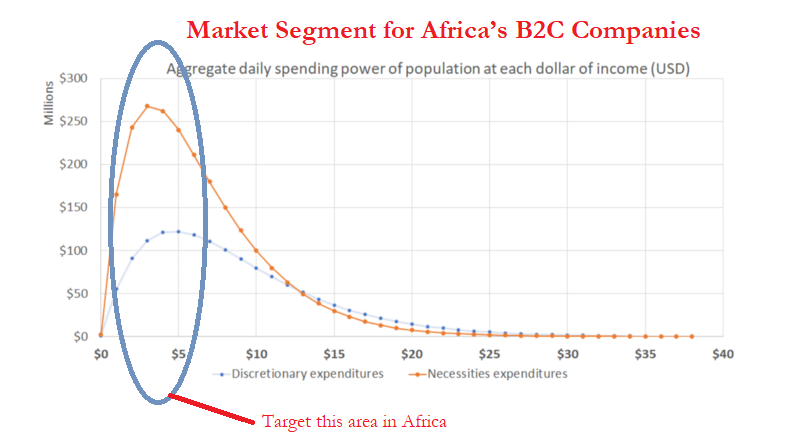
Now, you want to do business in the B2C space in Nigeria, the question is “where do you position the company”? You need to go back to this plot (above). It iscalledthe Fortune at the middle of the pyramid: “the most significant opportunity for African B2C startups lies with consumers who earn between $4 — $8 per day … This is largely because that income band holds the highest concentration of discretionary spending power on the continent, as the graph below shows.”
Companies like Bigi Cola and La Casera understand this redesign. You can also make a case that the sachetization in places like Nigeria where everything is now bundled in sachets has a root therein. Simply, there are not many consumers outside that $4-$8 per day segment for any big B2C business (if you focus outside this segment, your business must have a dose of B2B).
Interestingly, that is also where I see a big percentage of my popular 30 million people who earn relatively decent income in Nigeria; those 30 million are the core of the consumer market.
This is the full summary from DFS Lab, the researcher which did the study:
Africa is growing fast, has a young and urban population, and many opportunities for improvements in productivity and resource utilization — thus there is much cause for optimism in the tech sector! But purely consumer focused apps will face unique challenges with monetization relative to markets like China, Indonesia, or Latin America.
Many consumer-focused apps will find easy early traction going after the relatively wealthy $10/day and above segment but will risk a niche business as growth stalls due to the limited size of this population.
The largest economic opportunity in a pure sense are consumers between $4-$8/day. Here is the largest density of discretionary income due to the capacity to spend beyond simple necessities, and much larger population numbers. That said, costs to acquire and serve these larger numbers of customers will be prohibitive to most and will be the critical factor in success.
Conversely, those who can create innovative, low cost ways to acquire and serve users in the $4-$8/day category (e.g. partnering with community groups, government, USSD interfaces, viral peer marketing, etc) have the potential to create massive amounts of value by opening these consumers to new markets.
Also, businesses that focus on primary necessities (by selling directly or improving the value chain efficiency) have a much larger market to target.
Further, models such as gig work, or seller market places that can dramatically increase people’s income break the logic presented here and could potentially generate large revenue from relatively lower income populations (while improving their income as well, hopefully)
Finally, while the picture this data paints implies B2C models will face headwinds, we do think that B2B business models that focus on organizing value chains, improving efficiency and resource utilization, digitizing SMEs, and generally increasing productive capacity have huge potential — we will cover this in another piece.
Dr Solomon Uwagbole, PhD finished reading, and left these words on the Board: “Nice job, thanks! A great read to start a prosperous year journey.” Yes, “The Dangote System: Techniques for Building Conglomerates” changes mindsets and provides a basis to see things differently. Critics love it. Register for Tekedia Mini-MBA and get an immediate access.
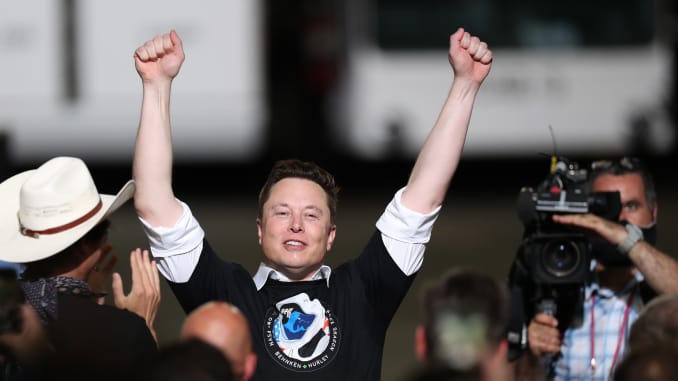
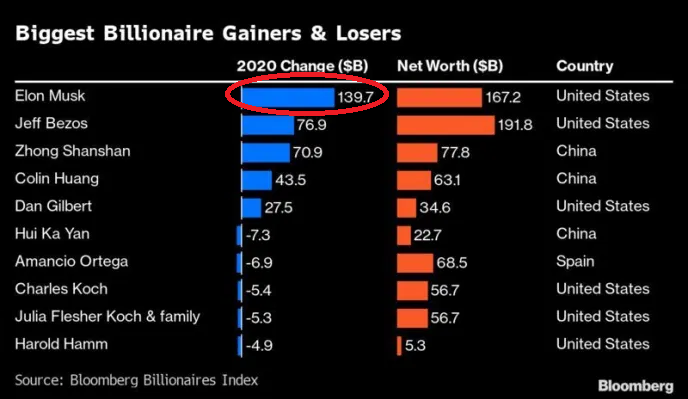
Elon Musk made $140 billion in 2020! He is now worth $167 billion. This is supremely insane, but pure. Yes, it feels like America and China have a different concoction on this drink called “entrepreneurial capitalism”. If you go with purchasing power parity, China might have minted dozens who added excess of $10 billion in their big purses in 2020!
Billionaires have always traveled in a different orbit than the rest of us. Nicer things, more power, rocket-launching stations. But 2020 threw that gulf into stark relief.
While much of the world grappled with soaring unemployment and plunging growth, the 0.001% benefited from unprecedented wealth creation.
The world’s 500 richest people added $1.8 trillion to their combined net worth this year and are now worth $7.6 trillion, according to the Bloomberg Billionaires Index. Equivalent to a 31% increase, it’s the biggest annual gain in the eight-year history of the index and a $3 trillion jump from the market’s nadir in March.
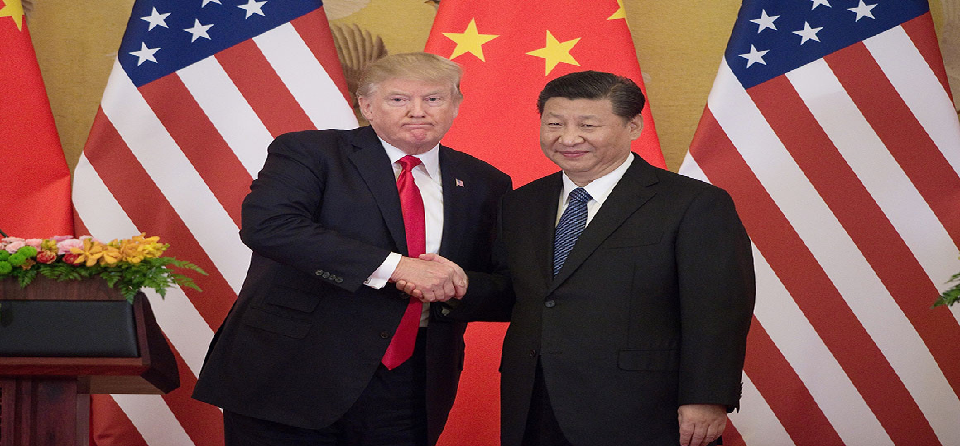
As a result of a recent US executive order, the New York Stock Exchange will delist China Mobile, China Unicom and China Telecom, symbolically. These giant Chinese telecommunication companies are alleged to have military ties with China. This severance is unprecedented and goes into the core nexus that we will have two internets in coming years – the Chinese-led and the American-led. I am not sure there is any global-interest commonality between these two superpowers anymore.
The New York Stock Exchange will deslist China’s three largest state-run telecommunication companies to comply with an executive order that bars U.S. investments in Chinese companies with suspected military ties. China Mobile, China Unicom and China Telecom will be suspended from trading by Jan. 11 in a “symbolic severing of longstanding ties between the Chinese business world and Wall Street,” per The New York Times. The executive order, issued by the Trump administration in November, was part of a broader effort to decouple the U.S. and Chinese economies.
When the US banned Huawei from its semiconductor technologies, I wrote that any asymmetric reaction from China could result in Trump “delisting” Chinese firms in New York. To a large extent, China has not really done much, in direct retaliation, except ramping favorable balance of trade against the United States, being the manufacturing heart of the world.
With this delisting announcement, we will see what will happen, and what specifically China will do. Sure, I expect it to stay cool until it gets the signal on how Joe Biden will run his show. But if the trajectory continues, American companies like Apple, Dell, Tesla and practically anyone that makes “hardware” better get ready for an unpredictable future.
And finally, how far with that your book, on the free market, and capitalism? There is no ritual in the world – you have to do what works for you. China has invented its model. The U.S. has it. But when the heat comes, they can change colors. Poor NYSE on this reality!