DD
MM
YYYY

PAGES

DD
MM
YYYY

spot_img

PAGES

Home Blog Page 597

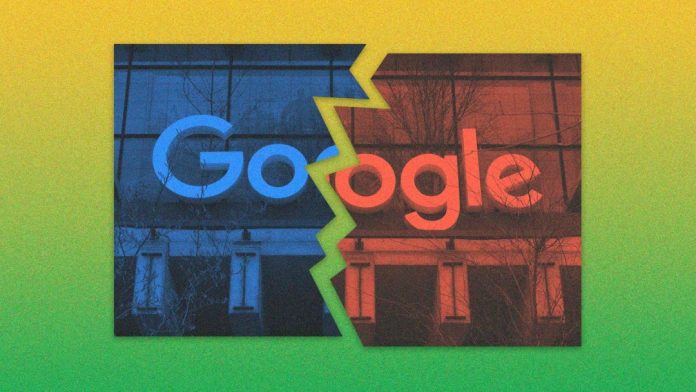
Google Escapes Being Broken Into Pieces As AI Competitors Help

0

In the golden decade of General Motors, it made it easier for competitors to find opportunities. Around 1957 when IBM was a leading company in America, it asked for competitors. In both cases, when you have a competitor, the court and the nation look at things differently when it comes to issues of competition and antitrust.

Today, Google celebrates that it is not going to be broken into pieces. Why? In the age of AI with OpenAI and Anthropic on the rear mirrors, no court will mindlessly hand over those emergent companies wins by taking the digital eyes of Google Search (the Chrome browser) or Google’s rep in the mobile age (Android).

So, in the end, we have a neutral state: “Google must share search data with rivals and is barred from exclusive deals to be the default search engine on devices and browsers, a federal judge ruled in a landmark antitrust case — but it does not have to sell off its Chrome browser or Android operating system. The search giant also can still pay for placement, with restrictions. Government regulators had been advocating for a breakup of the company after the judge ruled last year that Google had an illegal monopoly in online search.’ – LinkedIn News

If we do not have OpenAI and Anthropic, the outcome would have been different for Google. It must celebrate that these competitors exist, at least for this particular court case.

A federal judge on Tuesday declined to impose the most severe penalties in the landmark antitrust case that found Google guilty of illegally monopolizing the internet search market.

The decision marks a dramatic turn in a trial that began in September 2023 and culminated in August 2024, when the U.S. District Court for the District of Columbia ruled that Google violated Section 2 of the Sherman Act. While the ruling confirmed that Google abused its dominance in search and search advertising, the remedies judgment delivered by U.S. District Judge Amit Mehta offered the company a lifeline.

No Forced Breakup of Chrome or Android: Court Spares Google Harshest Antitrust Penalties, With AI Boom Shaping Outcome

WTO Chief, Okonjo-Iweala, Warns of Deepening Global Trade Disruptions as Share of MFN-Based Trade Falls to 72%

0

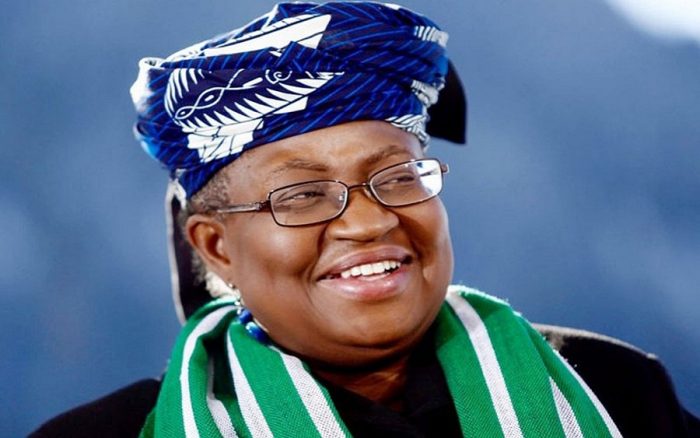
The World Trade Organization (WTO) is facing what its Director-General, Ngozi Okonjo-Iweala, describes as the biggest disruption to international trade rules since World War II, as the share of global trade conducted under the organization’s Most Favored Nation (MFN) principle drops to 72% from about 80%.

Reuters reports, citing WTO data, that since U.S. President Donald Trump began imposing higher import tariffs this year on most trading partners, the share of global trade conducted under the WTO’s Most Favoured Nation (MFN) terms has dropped from about 80%. The MFN principle requires members to treat one another equally in terms of tariffs and access, and the decline has stoked concerns that the 30-year-old organization, created to uphold free trade, is being sidelined.

“We’re experiencing the largest disruption to global trade rules, unprecedented in the past 80 years,” WTO chief Ngozi Okonjo-Iweala told Reuters in an interview at the start of her second term at the helm of the Geneva-based trade watchdog.

“So it’s not surprising that some would question the global trading system… and predictability,” she said, adding: “As long as the majority of trade is taking place on MFN terms, I think we should celebrate that. We’re a long way from 50%.”

She also cautioned that the WTO has little leverage when tariffs are wielded as geopolitical weapons.

“If tariffs are used in a geopolitical and geostrategic manner, there’s nothing we can do about it,” she said.

Okonjo-Iweala further warned that world trade could feel the effects of tariffs “later down the line” into 2026, as the recent surge in global commerce—driven by frontloading of goods during the first half of the year—begins to subside. This uptick contributed to the WTO raising its global trade growth forecast from 0.2% to 0.9% in August.

“Possibly down the line, we’ll begin to see some other impacts, as the goods in the warehouses are exhausted, and impacts begin to come in, but we’ll see next year,” she said, noting that “some growth” was still expected.

US Funding Concerns

The WTO chief, a former Nigerian finance minister, also voiced concern at the Trump administration’s plans to slash $29 million in funding to the WTO, alongside other multilateral organizations.

“The announcement is concerning, but I think that I’ll just say this: we’re working with USTR (the U.S. Trade Representative),” she said, adding that she had not yet received any definitive pronouncement.

In March, Reuters reported that the U.S. had paused contributions to the WTO. The trade body had an annual budget of 205 million Swiss francs ($232.06 million) in 2024, of which Washington was due to contribute about 11%.

Trump’s Longstanding Hostility

The tension between Trump and the WTO leadership carries a deeper backstory. Trump was openly opposed to Okonjo-Iweala’s appointment as Director-General in 2020, insisting she was too aligned with global institutions he viewed as “anti-American.” His administration had backed a South Korean candidate instead, leaving her appointment uncertain for months until the Biden administration reversed the U.S. opposition in early 2021, clearing the way for her confirmation as the first woman and first African to lead the WTO.

There is a belief that this history underscores why Trump would not be swayed by Okonjo-Iweala’s concerns over his tariff policies. His decision to impose broad tariffs on allies and rivals alike fits his longstanding skepticism of multilateral bodies, and signals a willingness to ignore WTO rules outright.

China and Reform Hopes

Despite this backdrop, WTO reform remains a top priority for Okonjo-Iweala, and she said an openness from China to address industrial policies could help advance discussions.

“I feel that there’s a chance, there’s an opening on the part of many members, including China,” she said.

Documents seen by Reuters in July showed that WTO members are aiming to streamline decision-making processes and promote fairer industrial policies, including subsidies, amid a string of reform proposals.

Countries are trying to break years of paralysis in trade negotiations to revitalize a system which former WTO chief Robert Azevedo declared “dead” in April.

“I’m done with pessimism. I am done with fear. What we need to do is look at optimism and those who are trying to actually solve problems,” Okonjo-Iweala said, pointing to Britain, Australia, and the United Arab Emirates as examples of constructive engagement.

No Forced Breakup of Chrome or Android: Court Spares Google Harshest Antitrust Penalties, With AI Boom Shaping Outcome

0

A federal judge on Tuesday declined to impose the most severe penalties in the landmark antitrust case that found Google guilty of illegally monopolizing the internet search market.

The decision marks a dramatic turn in a trial that began in September 2023 and culminated in August 2024, when the U.S. District Court for the District of Columbia ruled that Google violated Section 2 of the Sherman Act. While the ruling confirmed that Google abused its dominance in search and search advertising, the remedies judgment delivered by U.S. District Judge Amit Mehta offered the company a lifeline.

Alphabet shares jumped 8% in extended trading on Tuesday following the ruling.

No Forced Breakup of Chrome or Android

The Department of Justice had sought sweeping remedies, including the divestiture of Google’s Chrome browser and potentially even its Android operating system — both viewed as central to Google’s data and advertising power. But Judge Mehta rejected those measures, calling them overreach.

“Google will not be required to divest Chrome; nor will the court include a contingent divestiture of the Android operating system in the final judgment,” he wrote. “Plaintiffs overreached in seeking forced divestiture of these key assets, which Google did not use to effect any illegal restraints.”

Instead, the court ordered narrower remedies: Google must scale back exclusive contracts that guaranteed its search engine’s default status, stop “compelled syndication” deals designed to freeze rivals out, and share portions of its search index and user interaction data with competitors. Ads data, however, will remain off-limits.

Mehta ordered both parties to meet by Sept. 10 for the final judgment.

Limited Penalties, But New Rules

The ruling still imposes restrictions on Google’s business practices. Google can continue making payments to partners — including Apple, which receives billions annually to keep Google Search as the iPhone’s default — but it can no longer condition those payments on exclusivity.

“Cutting off payments from Google almost certainly will impose substantial—in some cases, crippling—downstream harms to distribution partners, related markets, and consumers, which counsels against a broad payment ban,” Mehta wrote.

The Department of Justice hailed the outcome as a partial victory.

“The court’s ruling today recognizes the need for remedies that will pry open the market for general search services, which has been frozen in place for over a decade,” the DOJ said. “The ruling also recognizes the need to prevent Google from using the same anticompetitive tactics for its GenAI products as it used to monopolize the search market.”

Apple stock rose 4% in after-hours trading following the ruling.

AI as a Game-Changer

Perhaps the most striking element of Mehta’s 226-page ruling was the weight he placed on artificial intelligence. He devoted nearly 30 pages to explaining the generative AI market, describing it as “highly competitive” with “numerous new market entrants” and “a lot of capital.”

Mehta wrote that the rise of AI fundamentally altered the remedies debate. “The emergence of GenAI changed the course of this case,” he said. While Google remains dominant in search, generative AI has introduced new dynamics that prevent a simple replay of past monopolistic tactics.

“Google cannot use the same anticompetitive playbook for its GenAI products that it used for Search,” Mehta said.

Generative AI startups were repeatedly referenced in the ruling: OpenAI appeared 30 times, Anthropic six, and Perplexity 24. The court noted that when the case was first filed, companies like Anthropic (founded in 2021) and Perplexity (founded in 2022) did not even exist. By contrast, OpenAI was still a niche lab before its ChatGPT launch in late 2022 ignited the AI boom. ChatGPT alone was mentioned 28 times in the ruling.

“Today, tens of millions of people use GenAI chatbots, like ChatGPT, Perplexity, and Claude, to gather information that they previously sought through internet search,” the filing stated.

Other rivals mentioned include Elon Musk’s xAI, DuckDuckGo’s Duck.ai, Meta, and China’s DeepSeek.

Google and DOJ Responses

Google expressed mixed feelings in a blog post. “Now the Court has imposed limits on how we distribute Google services, and will require us to share Search data with rivals,” the company said. “We have concerns about how these requirements will impact our users and their privacy, and we’re reviewing the decision closely.”

Lee-Anne Mulholland, Google’s vice president of regulatory affairs, emphasized how much the industry had changed.

“Today’s decision recognizes how much the industry has changed through the advent of AI, which is giving people so many more ways to find information.”

The DOJ, however, stressed the decision’s significance for both present and future markets.

“The remedies will reach GenAI technologies and companies,” it said, underscoring the government’s intent to keep Google’s dominance in check as AI reshapes the competitive landscape.

For all the legal fireworks, the case has also become a referendum on the next era of technology. Nearly a year after Google’s monopoly was first declared, it is the rise of generative AI — not the breakup of Chrome or Android — that may ultimately prove to be the company’s biggest challenge.

OpenAI, Meta Announce New Teen Safety Features After Lawsuit, Rising Concerns Over Chatbots and Suicide

0

Artificial intelligence chatbot makers OpenAI and Meta say they are adjusting how their systems respond to teenagers asking questions about suicide or showing signs of emotional distress, amid mounting pressure over the safety of AI in vulnerable contexts.

OpenAI, maker of ChatGPT, said Tuesday it is preparing to roll out new parental controls that allow parents to link their accounts with their teen’s. Under the new framework, parents will be able to disable certain features and “receive notifications when the system detects their teen is in a moment of acute distress,” according to a company blog post. OpenAI said the changes will go into effect this fall.

The company added that regardless of a user’s age, its chatbots will attempt to redirect the most distressing conversations to more capable AI models that can deliver a better response.

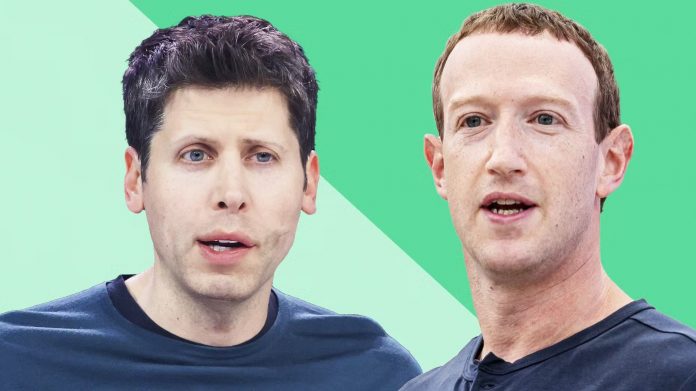
The announcement follows a lawsuit filed last week by the parents of 16-year-old Adam Raine, who died by suicide in California earlier this year. His parents allege that ChatGPT coached him in planning and carrying out the act, and they are suing OpenAI and CEO Sam Altman for negligence.

Jay Edelson, the family’s attorney, dismissed OpenAI’s new measures as “vague promises to do better” and “nothing more than OpenAI’s crisis management team trying to change the subject.” He added that Altman “should either unequivocally say that he believes ChatGPT is safe or immediately pull it from the market.”

Meta, the parent company of Instagram, Facebook, and WhatsApp, also announced new restrictions on its own chatbots. The company said it will now block teens from engaging chatbots in conversations about self-harm, suicide, disordered eating, or inappropriate romantic topics, instead directing them toward expert resources. Meta already has parental control options for teen accounts.

Concerns over AI and mental health safety have been building. A study published last week in the journal Psychiatric Services highlighted inconsistencies in how three popular AI chatbots—OpenAI’s ChatGPT, Google’s Gemini, and Anthropic’s Claude—responded to suicide-related queries. The study did not evaluate Meta’s chatbots.

The research, led by Ryan McBain of the RAND Corporation, concluded that the tools require “further refinement.” McBain, also an assistant professor at Harvard Medical School, said Tuesday that while steps like OpenAI’s new parental controls and Meta’s content filters are “encouraging,” they are “incremental.”

“Without independent safety benchmarks, clinical testing, and enforceable standards, we’re still relying on companies to self-regulate in a space where the risks for teenagers are uniquely high,” he said.

The broader backdrop is one of intensifying debate over tech accountability. For years, social media companies have faced criticism for exposing teens to harmful content, from cyberbullying to eating disorder communities. Social media giants like Instagram and TikTok have faced accusations that their algorithms amplify harmful content, worsen body image issues, and contribute to rising levels of depression and anxiety among teens. Meta, in particular, came under fire after internal research leaked in 2021 suggested Instagram could exacerbate feelings of inadequacy and self-harm risk among adolescent users.

The parallels between those cases and the present concerns over AI chatbots highlight a broader challenge: as new technologies emerge, companies often move faster than regulators, leaving parents, children, and advocacy groups to grapple with risks long before comprehensive safeguards are in place.

Against this backdrop, the lawsuit against OpenAI could become a test case for the industry, much as earlier legal battles forced changes in social media platforms’ moderation of teen content. Advocates argue that, like pharmaceutical companies or medical device makers, AI firms may eventually need to prove the safety of their products through rigorous clinical testing before marketing them to young users.

Unity Bank Shareholders to Decide Providus Merger Terms in September Court-Ordered Meeting

0

Unity Bank shareholders will, on September 26, 2025, gather for a decisive meeting that could seal the bank’s future under a proposed merger with Providus Bank Limited.

Under the terms of the scheme, shareholders are set to receive either N3.18 per share or 18 Providus shares for every 17 Unity Bank shares they currently hold. The Federal High Court in Lagos, presided over by Hon. Justice D. I. Dipeolu, issued an order convening the meeting where shareholders will deliberate on the payouts, the transfer of assets and liabilities, and other elements of the merger.

The court’s order also empowers Unity Bank’s directors to make adjustments as required by regulators, including the Securities and Exchange Commission (SEC), the Central Bank of Nigeria (CBN), or the court itself.

If approved, the merger will see all of Unity Bank’s assets, liabilities, properties, intellectual rights, and pending litigations transferred to Providus Bank. The scheme also proposes canceling Unity Bank’s share capital, effectively dissolving the bank without winding it up, with Providus Bank’s certificate of incorporation covering the enlarged entity.

Shareholders will also vote on whether to grant directors the authority to implement the scheme and authorize Unity Bank’s solicitors to seek court sanctioning if necessary.

Backstory and Financial Underpinnings

The merger traces back to August 2024, when the Central Bank of Nigeria gave formal approval for the Unity-Providus deal. A day later, the CBN authorized a N700 billion bailout loan to facilitate the recapitalization of the new banking entity, marking the first major Nigerian banking merger in five years.

The deal was projected to create a combined network of 231 branches nationwide, with CBN funding cushioning what might have otherwise been a turbulent transition.

A large chunk of the bailout was dedicated to clearing Unity Bank’s heavy debt pile:

  • N303.7 billion in obligations, including N92 billion owed to First Bank of Nigeria.
  • N51.7 billion owed to the CBN under the Anchor Borrower Scheme.
  • N135 billion owed to NIRSAL (Nigeria Incentive-Based Risk Sharing System for Agricultural Lending).

The remainder, N392.3 billion, was earmarked for investment in a 20-year Federal Government bond, qualifying as tier-2 capital for the merged entity.

What Shareholders Should Know

The upcoming meeting will be conducted by poll, with shareholders allowed to vote in person or through representatives. Joint shareholders will vote according to the order of seniority listed in the company’s register.

Votes or instructions must be submitted to the company secretary by September 23, 2025. The results will then be presented to the court by the Chairman, Mr. Hafiz Mohammed Bashir, the Managing Director, Mr. Ebenezer A. Kolawole, or any other director appointed by shareholders.

The Merger: Lessons from History

The Unity-Providus deal brings a flashback from the Nigerian banking industry history, which has witnessed many banks collapse under the weight of a toxic balance sheet due to a lack of early intervention from the central bank.

The Nigerian banking crisis of 2009, for example, saw institutions like Oceanic Bank and Intercontinental Bank fall apart after the CBN found massive holes in their books. Unlike Unity Bank’s situation today, both banks were eventually acquired after their shareholders were nearly wiped out, with the government forcing mergers to stabilize the sector.

Similarly, Savannah Bank, once a prominent player, lost its license in 2002 after years of insolvency and could not survive because no structured bailout or merger partner was arranged in time. Shareholders in such cases walked away empty-handed.

However, the situation has since changed for the better following the recapitalization of the banks in 2004 – 2005, with the Nigerian apex bank improving its regulatory oversight to arrest situations of toxic balance sheets early on and proffer a merger solution.

Thus, Unity Bank’s ongoing merger and the CBN’s financial intervention signal a more managed approach aimed at preventing total collapse while protecting shareholder and depositor confidence.